Pixel Flow Level 179 Solution | Pixel Flow 179 Walkthrough
How to beat Pixel Flow Level 179: Video solution & walkthrough. The fastest way to pass Pixel Flow 179.
Is this the wrong level layout?🤔
Pixel Flow randomizes levels for different players. Don't worry, just upload a screenshot of your board, and our AI will find the correct video instantly.
Pixel Flow Level 179 Walkthrough
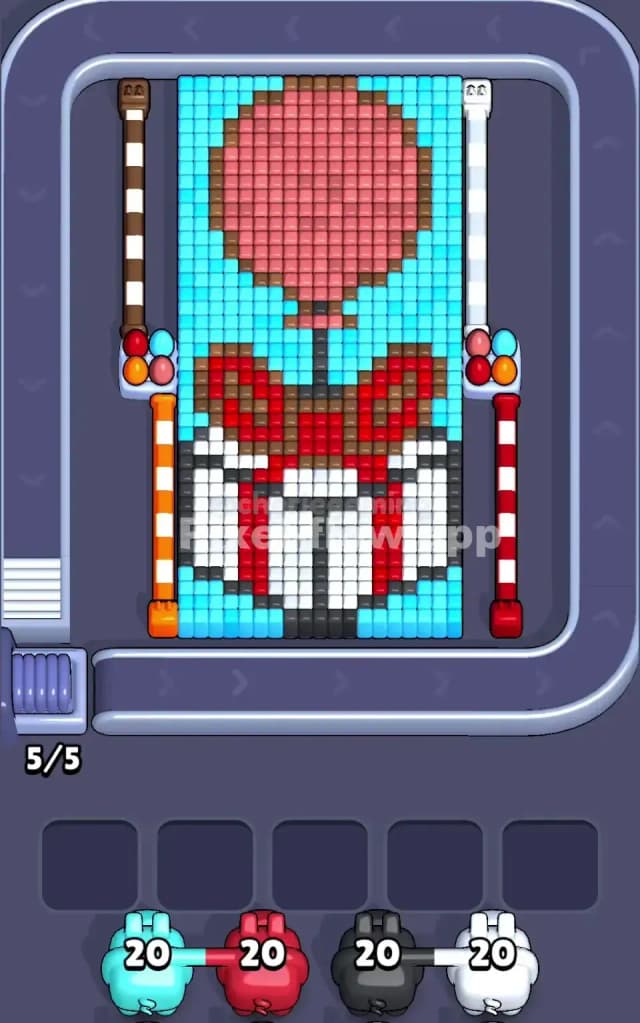
This level features a festive celebration scene: a large white gift box tied with a thick red ribbon, floating underneath a massive pink balloon. The entire image is set against a solid, light blue background.
The main challenge here is the vertical separation. You have the balloon up top (pink/brown) and the gift box below (white/red/black). They are connected by a thin string, but clearing them requires attention to different color groups entirely.
Is this a difficult stage? No. It’s actually quite straightforward because the color blocks are large and distinct. It is not a very hard level.
Pixel Flow Level 179 Overview
Imagine a birthday party scene. The bottom half is dominated by a square white gift box. It’s wrapped in a chunky red ribbon that forms a cross and a bow on top. The gift sits on a dark grey/black shadow.
Floating directly above the gift is a large, round pink balloon. It has a bit of brown shading on its edges to give it a 3D effect. The string connecting the balloon to the gift is thin and black.
Everything floats in a sea of light blue sky.
The most dangerous part of this board is the "neck" where the balloon meets the gift. If you focus too much on the balloon, you might clog your slots with white pigs meant for the box. If you focus too much on the box, you might get stuck with pink pigs that can't reach the upper layers yet. The key is to clear the massive background first to open up firing lines for everyone.
Step by step solution walkthrough for Pixel Flow Level 179
First Color Zone to Erase in Pixel Flow Level 179
Start with Light Blue (Cyan).
This is the most critical move. Look at the board: the light blue background wraps around everything—the balloon, the string, and the box. It is the "wrapper" for the whole level.
- Why? The light blue blocks are the outermost layer. Until you remove this sky, your other pigs (especially the Red and White ones needed for the gift box) will likely hit the blue pixels instead of their targets, or just sit in your waiting slots uselessly.
- Strategy: Prioritize every Light Blue pig you see on the conveyor belt. Let them strip away the left and right columns completely. This exposes the sides of the gift box and the balloon, giving you much better angles for the next steps.
How to pass Pixel Flow Level 179 without power ups or boosters
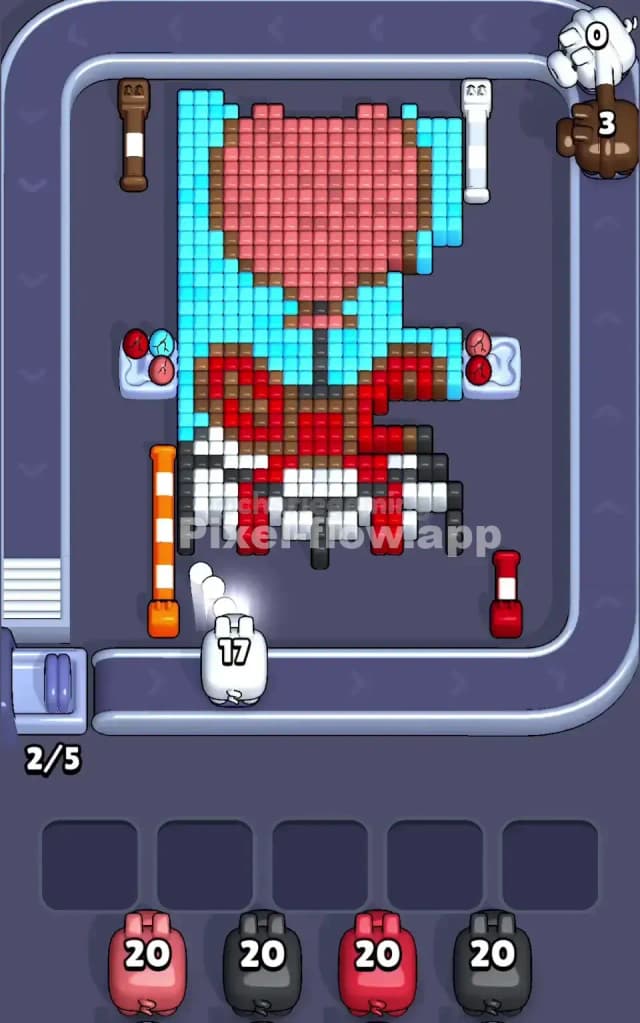
Once the blue sky is mostly gone, the level looks like a floating totem pole: a pink circle on top of a white/red square.
- Attack the Gift Box (White and Red): Now that the sides are exposed, send in the White pigs. They have a huge target area in the bottom half. This clears the bulk of the "gift" shape.
- Ribbon Duty (Red): While clearing the white box, mix in Red pigs. They need to take out the vertical and horizontal stripes of the ribbon. Be careful here—sometimes the red ribbon is on a slightly higher layer than the white box. If a White pig drops into a slot and won't fire, you probably need to peel off a Red layer first.
- The Balloon (Pink and Brown): While you are dismantling the box, you can start chipping away at the balloon. Use Pink pigs for the main body. The Brown pigs are for the shading on the balloon's edge and the bow's knot.
- The Trap: Do not ignore the Black/Dark Grey pigs. These are for the string and the shadow under the box. If you let these accumulate in your slots while trying to clear the big pink balloon, you will run out of space. Clear the dark pixels as soon as they are exposed to keep your slots empty.
Last Details You Clean Up in Pixel Flow Level 179
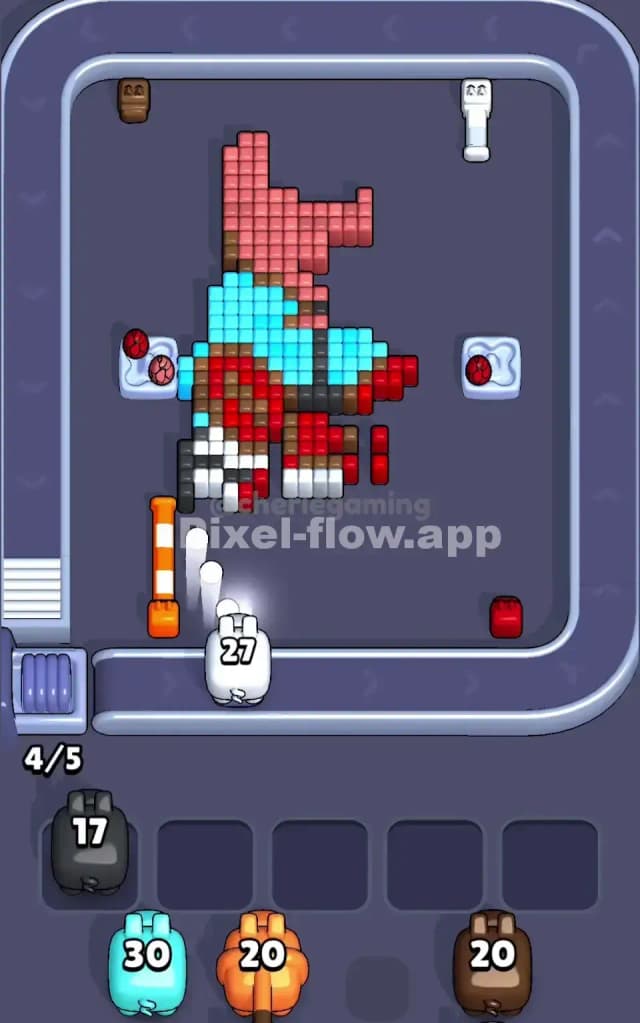
By the end, you should be left with the "guts" of the image. This usually means:
- The deep Brown pixels that make up the shading behind the red bow.
- The final Black pixels of the string connecting the balloon.
- A few stray Pink blocks at the very center of the balloon (the thickest part of the voxel model).
Keep your eyes on the waiting slots. If you have a Brown pig stuck there, find the one specific brown pixel hiding behind a red ribbon fragment and blast it. The level ends cleanly once the center of the balloon pops.

