Pixel Flow Level 178 Solution Walkthrough | Pixel Flow 178
How to solve Pixel Flow level 178? Get instant solution for Pixel Flow 178 with our step by step solution & video walkthrough.


Pixel Flow Level 178 Overview
The Board Layout and Color Distribution
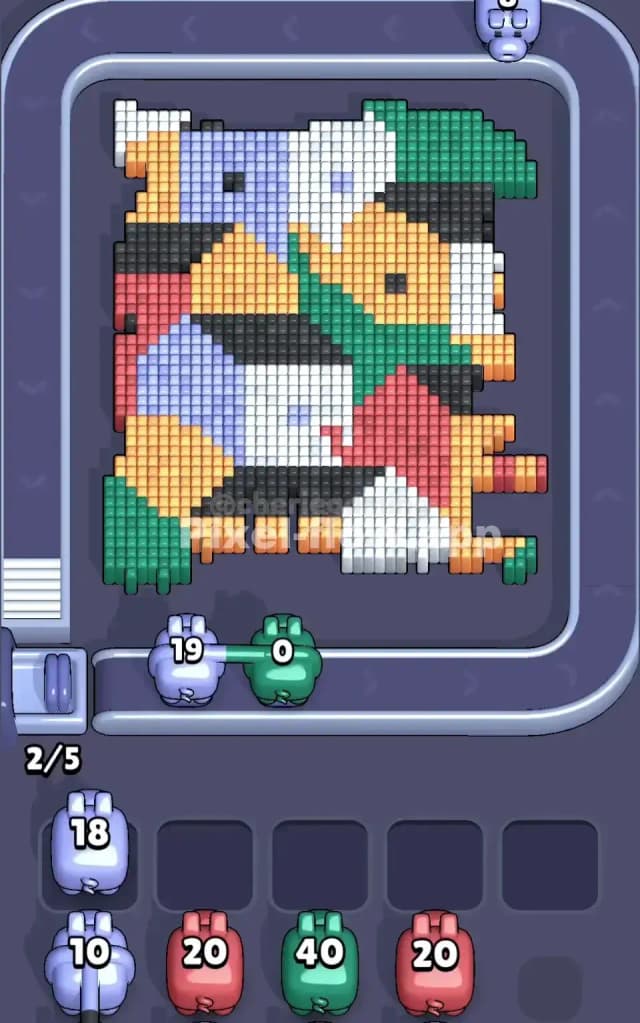
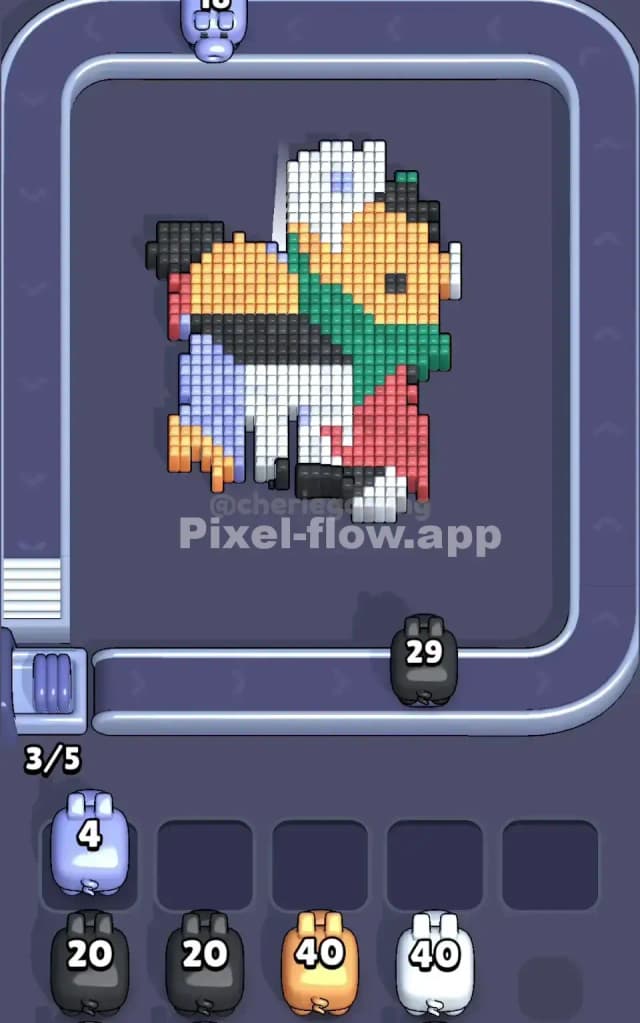
Pixel Flow Level 178 presents a charming pixel-art animal portrait—specifically a adorable creature with expressive eyes and warm tones—rendered across a multi-layered voxel grid. The dominant colors you'll encounter are orange, white, green, black, red, and light blue, each representing distinct regions of the image. Orange occupies a substantial central area and the creature's body, while white and green form large blocks on either side and in background regions. Black creates strong outline and shadow details, red appears in smaller accent patches, and light blue fills in subtle mid-tone areas. The composition is densely packed, meaning there's very little wasted space—nearly every cube on the board has a purpose. What makes Pixel Flow Level 178 particularly challenging is that these colors aren't evenly distributed, and some regions are completely hidden behind foreground layers until you've cleared specific blocking cubes.
Win Condition and Deterministic Mechanics
Your objective in Pixel Flow Level 178 is straightforward: clear every single voxel cube from the board by using your five pigs' ammo wisely. The pigs arrive in a fixed order, each carrying a predetermined amount of ammunition matching their color (green: 20, white: 40, orange: 20, red: 20, white: 40). Every cube you destroy costs exactly one ammo from that pig's reservoir, and the order in which pigs enter the belt is completely deterministic. This means there's no luck involved—if you understand the pig queue and count your ammo carefully, you can plan your success multiple moves ahead. The trick is managing your five waiting slots so that pigs don't get permanently stuck with unused ammunition, which would create an unrecoverable jam.
Why Pixel Flow Level 178 Feels So Tricky
The Green and White Ammo Bottleneck
Here's where Pixel Flow Level 178 will make you want to pause and reassess: the first white pig arrives with a massive 40 ammo, but white cubes are scattered across the board in small, isolated patches rather than clustered together. Similarly, green comes early with only 20 ammo, yet green occupies a huge visible area. If you're not careful, you'll find yourself in a situation where the white pig is half-spent and can't find any more white targets—forcing it into a waiting slot—while you still have large green areas blocked by other colors. Suddenly you've consumed three of your five buffer slots, and you haven't even reached the second orange pig yet. This bottleneck is the primary threat to your success in Pixel Flow Level 178, because once your waiting slots fill up, you're locked into a specific play sequence that might not align with the board's actual clearability.
Hidden Layers and Color Sequencing Nightmares
Another subtle trap in Pixel Flow Level 178 is the layering of the image itself. Several regions of black, red, and orange cubes sit on top of white and green areas that you can't even see at the start. If you greedily clear all the orange you can find before setting up your black and red pigs properly, you'll expose white cubes that can't be matched by the first white pig—it'll already be jammed in a waiting slot. The light blue color is particularly deceptive because it's sparse and easy to miss; you might have blue cubes hidden behind orange or black that won't reveal themselves until late in the sequence. This forces you to think in layers and anticipate which colors block which others, not just react to what's visible.
The Ammo-to-Target Mismatch
A third frustration specific to Pixel Flow Level 178 is that the second white pig (40 ammo) arrives near the end of your pig queue, long after most white cubes should have been cleared. This creates a timing paradox: you need white out of the way early to expose deeper layers, but your early white firepower is limited. Meanwhile, the first white pig might have 30+ ammo remaining if you haven't exposed enough white targets yet, leading to another waiting-slot hostage situation. I remember spending several attempts blindly clearing colors without counting ahead—it felt like I was constantly one pig short of success or one color off schedule. The breakthrough came when I realized I had to work backward from the final pig and build my strategy in reverse, ensuring that by the time each pig enters, its targets were either fully exposed or strategically blocked until later.
Step-by-Step Strategy to Clear Pixel Flow Level 178
Opening: Prioritize Black and Green to Expose Depth
Start Pixel Flow Level 178 by deploying your green pig (20 ammo) first if possible, targeting the largest green clusters on the right and upper portions of the board. Green occupies prominent space, so clearing even half of it will immediately expose underlying colors. Simultaneously, identify your black cubes—they form outlines and shadow details all over the board. Your strategy should funnel the first two or three pigs toward a combined black-and-green sweep. Don't try to fully deplete either color; instead, aim to break up large solid blocks so that white and light blue gaps become visible. This opening phase should consume roughly 2–3 pig arrivals and leave you with at least 3 waiting slots still empty. Keep a mental note of where you see trapped white and orange cubes beneath the surface; those are your depth-layer clues. The goal isn't to finish any one color but to shatter the board's visual density and create a roadmap for the colors that follow.
Mid-Game: Sequence Pigs to Match Exposed Layers and Park Safely
Once you've cleared the initial black-and-green pass, Pixel Flow Level 178 demands careful ammo accounting. Watch as each new pig enters: if it's a white pig (40 ammo) and you've exposed, say, 30 white targets, deploy it immediately and let it burn through those cubes. However, if a pig finds fewer valid targets than its ammo count, you must decide: should you wait and let it work partially, or park it in a waiting slot to preserve buffer space? The mid-game is where you'll likely have 3–4 pigs on the board simultaneously, and this is your moment to execute the layer-exposure strategy. Target orange and red regions that sit atop hidden green and white, so that when you rotate back to a second pass of green or white, fresh ammo becomes available. Importantly, never fill more than two waiting slots during the mid-game phase; you need to preserve flexibility for the endgame crush. I found it helpful to reload the level a few times just to watch the pig queue and count the colors, so I could identify exactly where the "hard stops" and bottlenecks would be before committing to a real run.
End-Game: Empty the Buffer and Avoid Last-Minute Jams
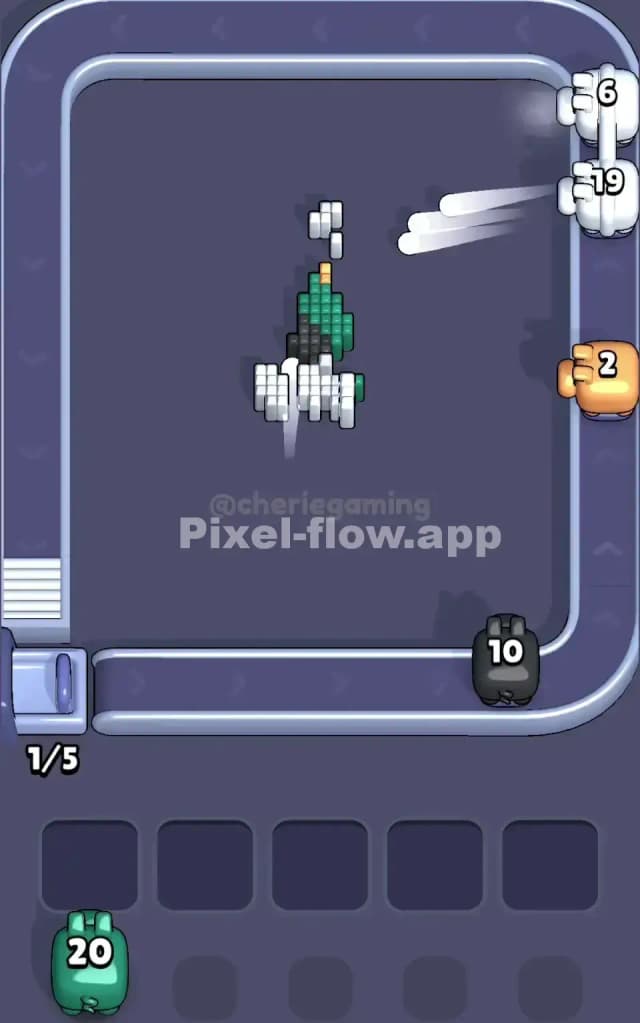
As Pixel Flow Level 178 approaches its final turns, you should have fewer than 100 cubes remaining and ideally only 1–2 pigs still waiting. The endgame is where perfect ammo matching becomes essential. If your final white pig still has 15 ammo and there are only 12 white cubes left on the board, you're in trouble—that pig will jam, and you'll be stuck. Plan around this by either (a) ensuring you've already depleted earlier pigs of matching colors, so the final pigs have clean targets, or (b) engineering the sequence so that a half-empty pig gets parked safely and a fresh pig of a different color finishes the remaining cubes. The very last colors you clear should be the smallest, most isolated ones—reds and light blues that sit alone—because you want your final pigs to have zero wasted ammo. Count your remaining cubes by color every few moves during the endgame; this paranoia will save you from a heartbreaking failure on your last move.
The Logic Behind This Pixel Flow Level 178 Plan
Why Order and Ammo Mastery Beats Guessing
The beauty of Pixel Flow Level 178, once you understand it, is that success is purely logical rather than reflexive. Your pig queue is fixed and immutable: green, white, orange, red, white, then done. Your ammo counts are predetermined: 20, 40, 20, 20, 40. Given these constraints, the board becomes a puzzle with a limited set of valid solutions. By working backward from your final pig and asking "how many red cubes do I actually have, and is 20 ammo enough?"—you can preemptively identify which colors must be cleared early and which can wait. This deductive approach transforms Pixel Flow Level 178 from a slot-machine-like experience into a satisfying tactical challenge. You're not hoping to get lucky; you're architecting a sequence that mathematically works.
Staying Calm and Counting Two Pigs Ahead
The final lesson from Pixel Flow Level 178 is the power of patience and lookahead. Before you deploy a pig, glance at the upcoming queue and ask yourself: "If this pig gets stuck in a waiting slot with leftover ammo, will my next pig have valid targets?" If the answer is no, either (a) clear more of that pig's matching color first, or (b) park a different pig in the buffer instead. By consistently looking two or three pigs ahead, you avoid the cascading failures that make Pixel Flow Level 178 feel unfair. The level genuinely isn't unfair—it's just punishing overconfidence and reactive play. Stay calm, count your cubes and ammo, and execute your plan methodically, and Pixel Flow Level 178 will fall. The satisfaction of clearing that final cube with zero wasted ammo and an empty buffer is absolutely worth the mental effort.