Pixel Flow Level 182 Solution | Pixel Flow 182 Walkthrough
How to beat Pixel Flow Level 182: Video solution & walkthrough. The fastest way to pass Pixel Flow 182.
Is this the wrong level layout?🤔
Pixel Flow randomizes levels for different players. Don't worry, just upload a screenshot of your board, and our AI will find the correct video instantly.

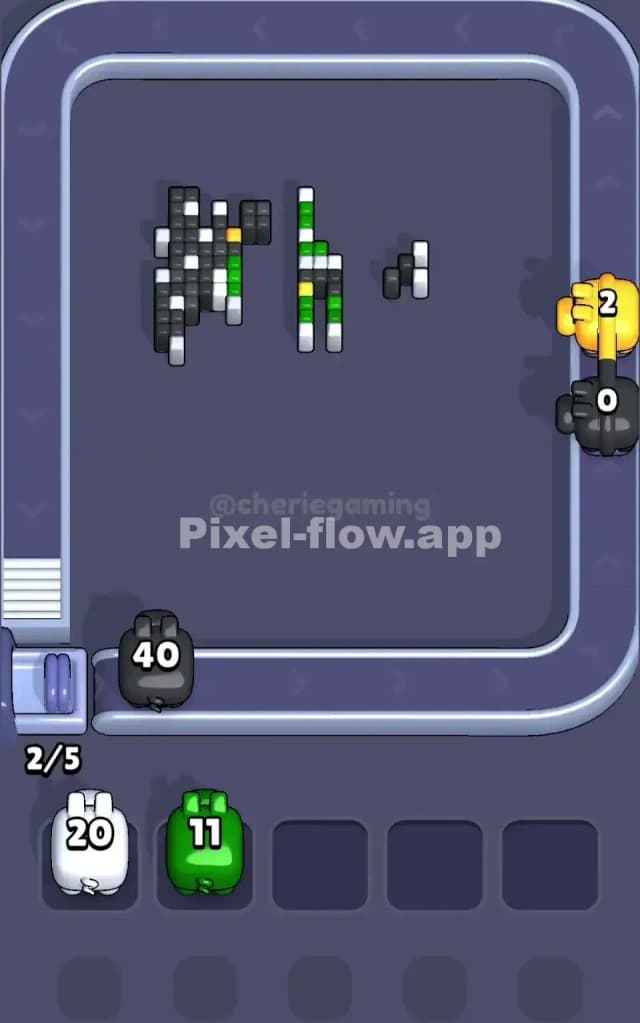
Pixel Flow Level 182 Walkthrough
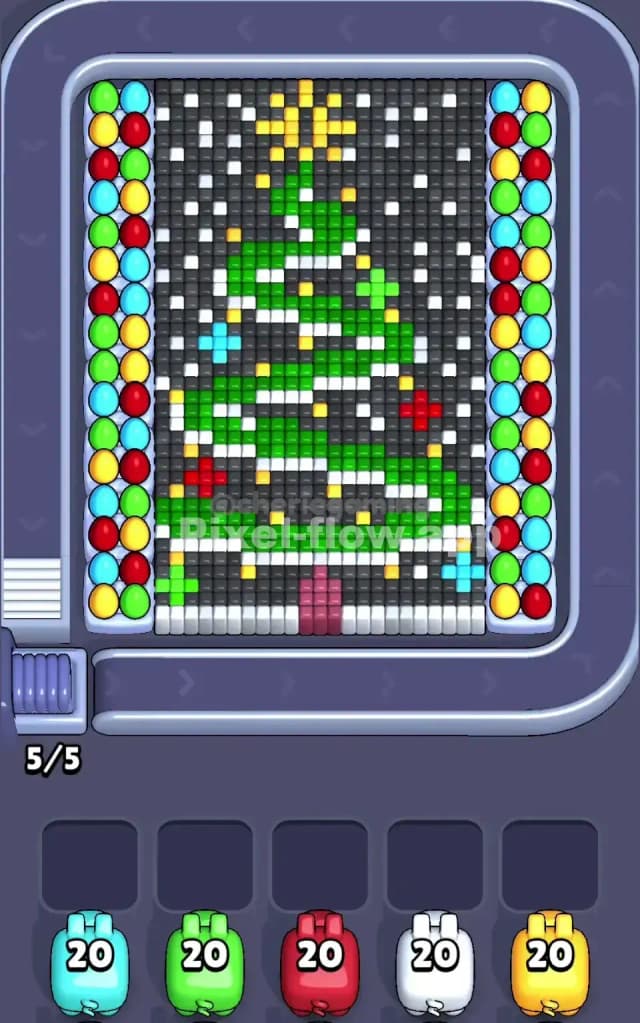
Level 182 is a holiday-themed puzzle featuring a large Christmas tree set against a dark, snowy night sky. The challenge here is the dense layering. You have a central green tree structure cluttered with "snow" (white blocks) and a very thick background of dark grey/black pixels representing the night.
To beat Pixel Flow Level 182, you must aggressively peel back the outer layers of snow and night sky to reach the green core and the ornaments hidden deep inside. The board is symmetric, but the sheer volume of black and white pixels makes it easy to clog your waiting slots if you aren't careful. This is a very hard level simply due to the high ammo counts required for the background colors.
Pixel Flow Level 182 Overview
The artwork depicts a classic Christmas scene. In the center stands a tall, triangular green pine tree. It is decorated with diagonal stripes of white (garlands or snow), yellow baubles, a red ornament on the right, and a blue one on the left. At the very top sits a bright yellow star. The tree rests on a white snowy ground with a small brown trunk at the base.
The background is the real killer here. It’s a wall of dark grey pixels speckled with single white "snowflake" pixels.
Key Visual Threats:
- The Snowflake Trap: The background isn't solid black. It's interrupted constantly by single white pixels. This means if you commit a Black Pig to clear the sky, it will constantly stop shooting when it hits a white snowflake, forcing it into your waiting slot.
- The White Floor: The bottom row is almost entirely white. This is a solid foundation, but it blocks access to the brown trunk and the lower green branches.
- The Side Columns: Notice the vertical columns of colored balls on the far left and right (Yellow, Green, Red, Blue). These act as blockers for your pigs on the conveyor belt, but they are generally easy to clear if you match the color sequence.
Step by step solution walkthrough for Pixel Flow Level 182
First Color Zone to Erase in Pixel Flow Level 182
Start with the White Pigs.
Narratively, you are clearing the blizzard to see the tree. Logically, this is the safest opening move because the white pixels are scattered everywhere on the top layer. There are white pixels in the sky (snow), white stripes on the tree (garlands), and a solid white floor.
Sending White Pigs early does three things:
- It decimates the bottom row, opening up lines of sight for other colors.
- It removes the "snowflakes" in the sky that would otherwise interrupt your Black Pigs.
- It usually drains the pig's ammo completely because there are so many valid white targets across the entire board.
If you don't have a White Pig immediately, Yellow is a decent backup starter to hit the star and the side columns, but prioritize White the moment it appears.
How to pass Pixel Flow Level 182 without power ups or boosters
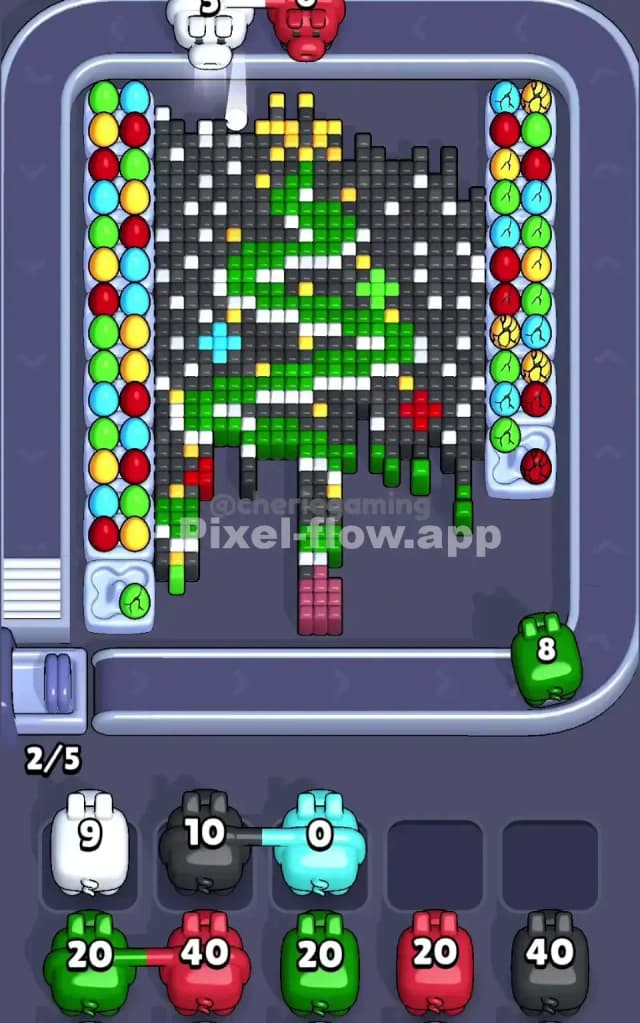
Once the initial layer of white snow is gone, the picture looks half-destroyed. You will see a fragmented black sky and a patchy green tree.
The Mid-Game Shift: Now you must focus on Black and Green.
The danger here is the "Swiss Cheese" effect. Because you cleared the white snowflakes, the black background now has holes in it.
- Use Black Pigs cautiously: Only send a Black Pig if you see a clear, vertical column of black pixels. If the column is too broken up, the pig will shoot two blocks and then drop into your slot. Do not clog your slots with high-ammo Black Pigs!
- Prioritize Green: The tree is the thickest part of the level. Green Pigs will almost always find targets because the tree's core is solid green. Clearing the green opens up the inner layers where the red and blue ornaments are hiding.
The Side Column Strategy: Don't ignore the side columns of colored balls. As the conveyor belt moves, watch for pigs that match the colors of those side barriers (Red, Blue, Yellow). Send them out specifically to break these walls. If you leave these walls up, your pigs in the center might waste ammo trying to hit the tree from bad angles.
Last Details You Clean Up in Pixel Flow Level 182
In the final phase, you are likely left with:
- The Brown Trunk: This is often the very last thing to go because it's buried at the bottom center under layers of green and white. You might need a specific Red or Brown pig (depending on the exact shade the game gives you for the trunk) to snipe it.
- Straggler Ornaments: There might be a single Red or Blue block left from an ornament that was hidden behind a green branch.
- Top Star Fragments: Sometimes a single yellow pixel from the star remains at the very top.
Save your low-ammo pigs for these specific snipes. If you have a pig with only 2-3 ammo left, it is perfect for cleaning up that last bit of trunk or the final star pixel. Do not waste a fresh 20-ammo pig on a single leftover block if you can avoid it. Clear the trunk, pop the last bauble, and the level is yours.