Pixel Flow Level 183 Solution | Pixel Flow 183 Walkthrough
How to beat Pixel Flow Level 183: Video solution & walkthrough. The fastest way to pass Pixel Flow 183.
Is this the wrong level layout?🤔
Pixel Flow randomizes levels for different players. Don't worry, just upload a screenshot of your board, and our AI will find the correct video instantly.
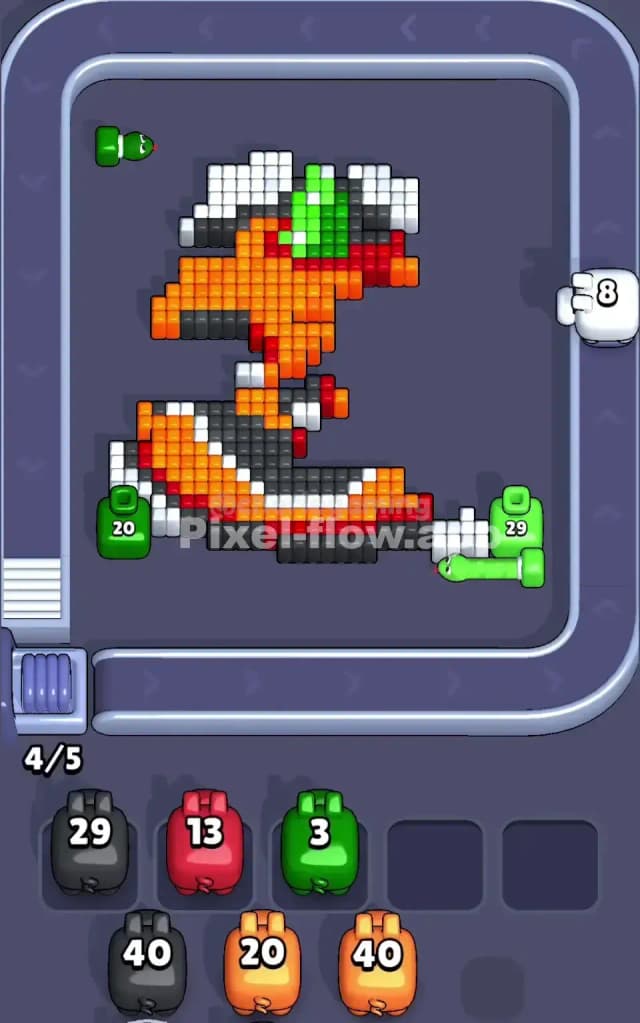

Pixel Flow Level 183 Walkthrough
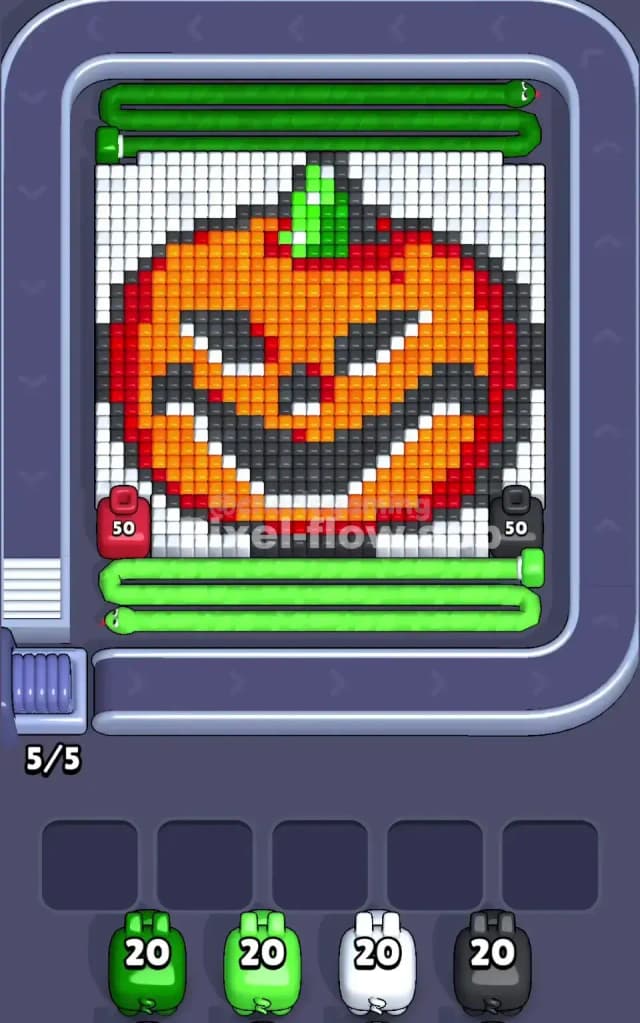
This level features a classic voxel art Jack-o'-lantern, grinning wide with a jagged black mouth and triangular eyes. The main challenge here isn't the pumpkin itself; it is the heavy obstructions surrounding it. You are dealing with four distinct barriers: two massive snakes clamping down on the top and bottom rows, and two high-HP "Weight" blocks guarding the bottom corners.
The combination of high-health blockers and restricted shooting angles makes this a very hard level. You have to chew through specific barriers before you can even touch the main artwork.
Pixel Flow Level 183 Overview
Think of this board as a fortress. The central character is a bright orange pumpkin with a green stem, sitting against a white tiled background. It has deep black features for the face and reddish shading on the far left and right edges.
However, you can’t simply start painting the pumpkin. The board is locked down:
- Top: A long, Dark Green Snake spans the entire width, protecting the stem.
- Bottom: A Light Green Snake mirrors it, blocking the pumpkin’s chin.
- Bottom Left: A massive Red Weight block with 50 HP.
- Bottom Right: A massive Black Weight block with 50 HP.
This setup is asymmetrical in terms of threat. The snakes block "access" to rows, but the Weights are ammo sponges. They don't just block a row; they sit there until you dump 50 units of specific colored ammo into them. Until those Weights break, the bottom corners of your picture are essentially invincible.
Step by step solution walkthrough for Pixel Flow Level 183
First Color Zone to Erase in Pixel Flow Level 183
Your first moves must be surgical. Ignore the Orange pumpkin flesh for a moment. You need to remove the physical lids off this box.
Start with the Dark Green and Light Green pigs.
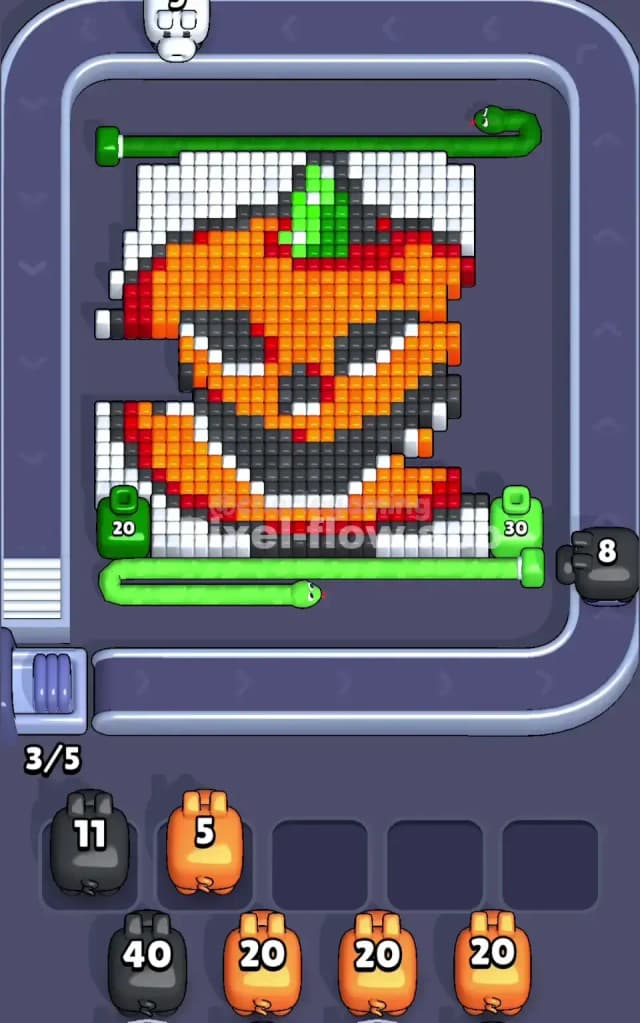
- The Dark Green pigs target the top snake. Getting rid of this snake is crucial because it exposes the stem and the top white background. Once the top is open, your White and Orange pigs have valid targets to hit deep in the stack.
- The Light Green pigs target the bottom snake. This clears the floor.
Do not send out Orange or White pigs first if you can avoid it. If the snakes are still there, those pigs might have "valid" targets behind the snakes, but the snakes often physically block the shots, wasting time or causing weird pathing. Strip the green bars away first.
How to pass Pixel Flow Level 183 without power ups or boosters
Once the snakes are gone, the board looks messy. You likely have the top and bottom rows exposed, but those 50 HP Weights are still sitting in the corners like boulders.
Here is the mid-game priority list to survive without boosters:
- Focus Fire on Weights: You need to prioritize Red pigs and Black pigs immediately. The Red Weight (Left) has 50 HP. The Black Weight (Right) has 50 HP. That is 2.5 full pigs worth of ammo each. Every time you see a Red or Black pig, grab it. Do not let them clog your waiting slots. You must chip these down early, or you will run out of space later.
- The White Background Trap: Be careful with White pigs. The background is huge. If you spam White pigs while the Weights are still up, you might clear the top corners, but you aren't helping with the main obstruction. Only use White pigs if your slots are getting full or if the path to the white pixels is totally clear.
- The Orange Core: Use Orange pigs steadily throughout the middle phase. The pumpkin face is the largest reservoir of ammo usage. Clearing the orange blocks helps "thin out" the center, which often exposes the sides of the Weights or the remaining Black facial features.
If you reach the halfway point and those 50 HP blocks are still standing, you are in trouble. You will likely lose because you won't have enough valid targets for other colors, and your slots will fill up with useless pigs while you wait for Red/Black ones.
Last Details You Clean Up in Pixel Flow Level 183
In the final moments of Pixel Flow Level 183, the board usually looks like a hollowed-out shell. The center of the pumpkin (nose and mouth) is gone, but the "wings"—the far left and right edges of the pumpkin—often remain.
This happens because the Weights protected those bottom corners for so long. You will likely be left with:
- A few vertical strips of Orange and Red on the far edges.
- Stray White pixels that were hiding behind the stem or the corner weights.
- The final Green blocks of the pumpkin stem.
Save a few precision pigs (single color types) for the end. Don't panic if the waiting slots look full; as long as you cleared those heavy 50 HP blocks earlier, the final cleanup is just a matter of matching the last few stragglers.