Pixel Flow Level 188 Solution | Pixel Flow 188 Walkthrough
How to beat Pixel Flow Level 188: Video solution & walkthrough. The fastest way to pass Pixel Flow 188.
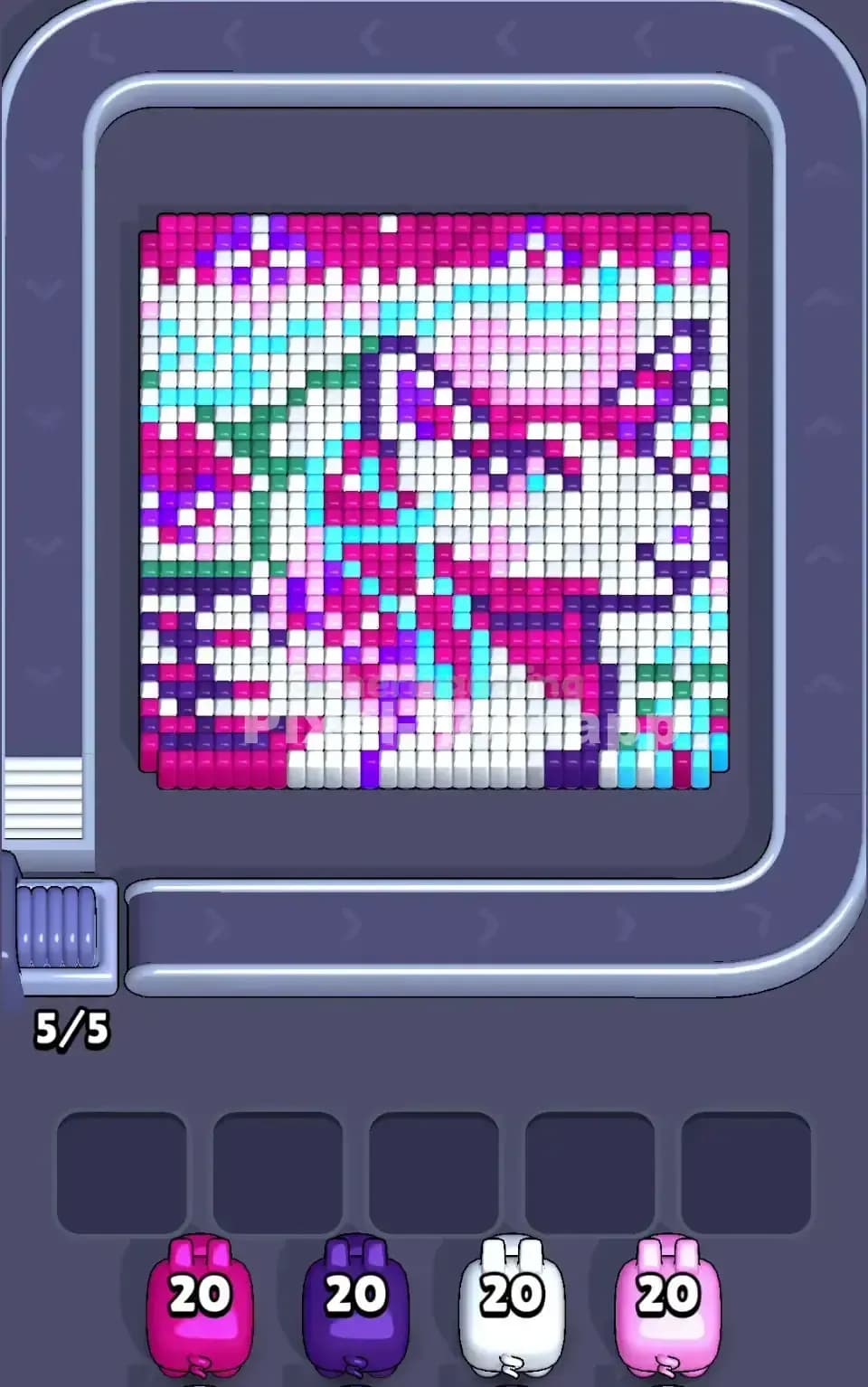
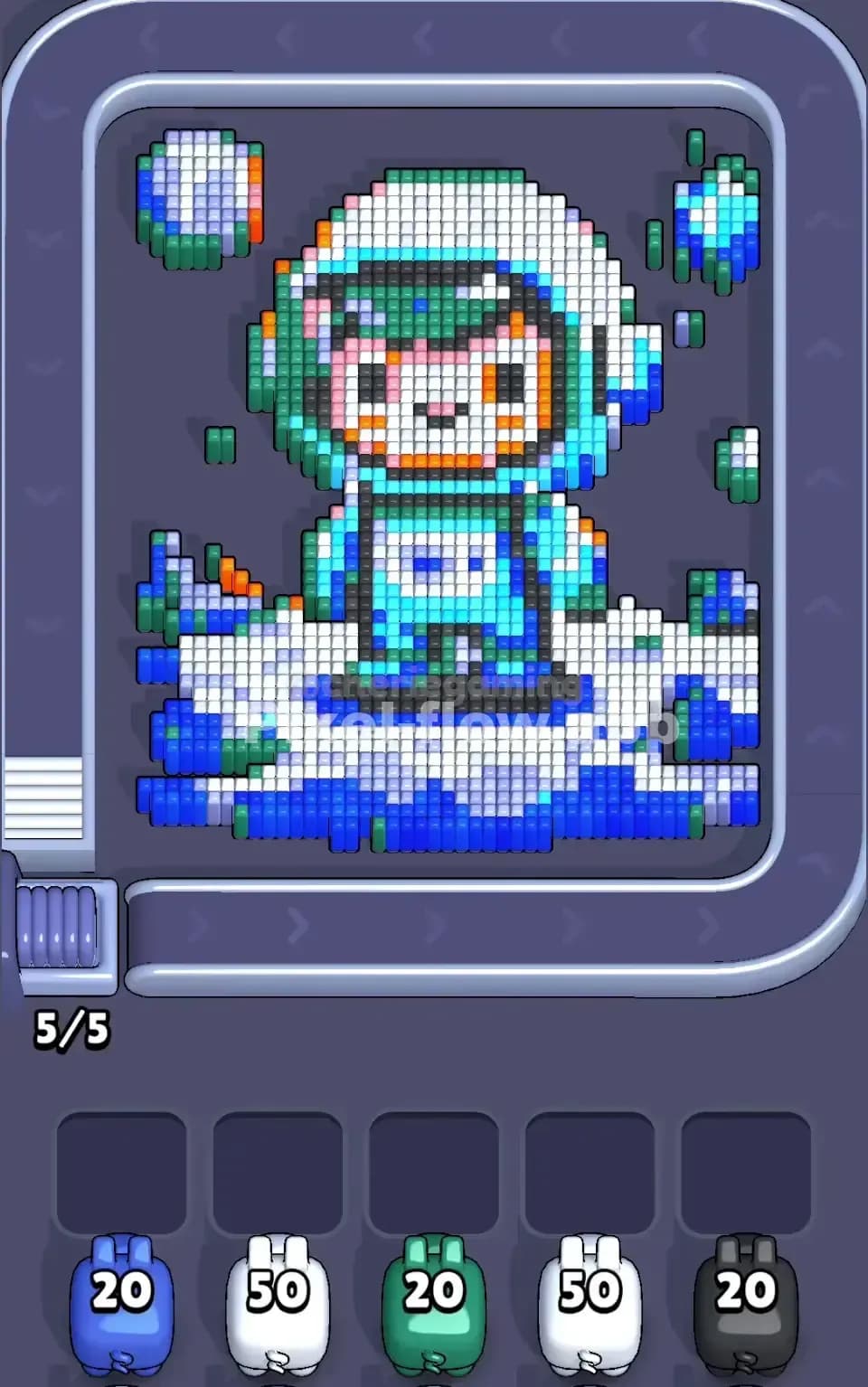
Is this the wrong level layout?🤔
Pixel Flow randomizes levels for different players. Don't worry, just upload a screenshot of your board, and our AI will find the correct video instantly.

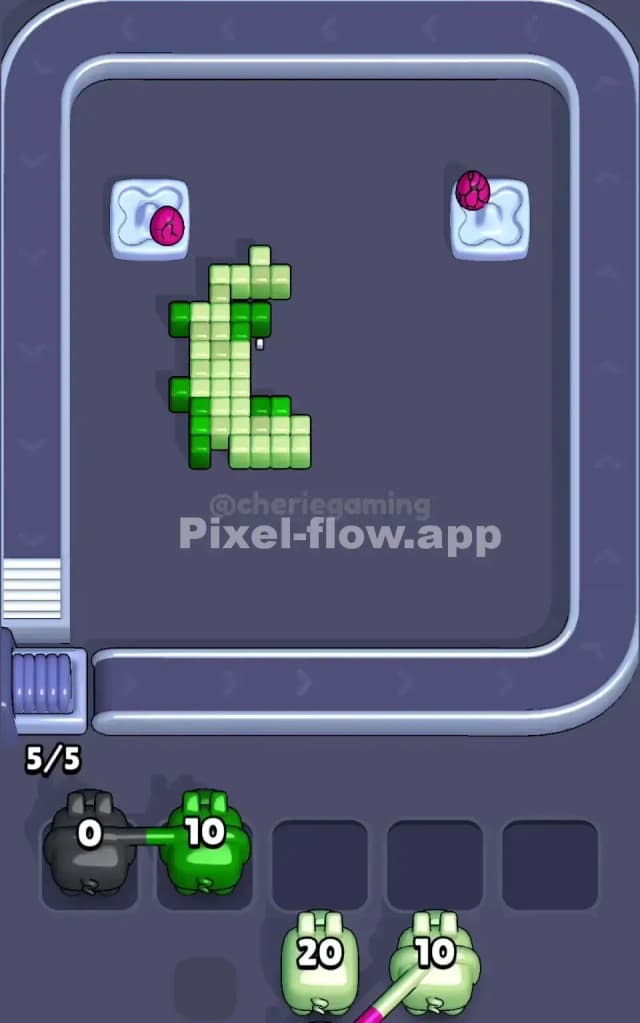
Pixel Flow Level 188 Walkthrough
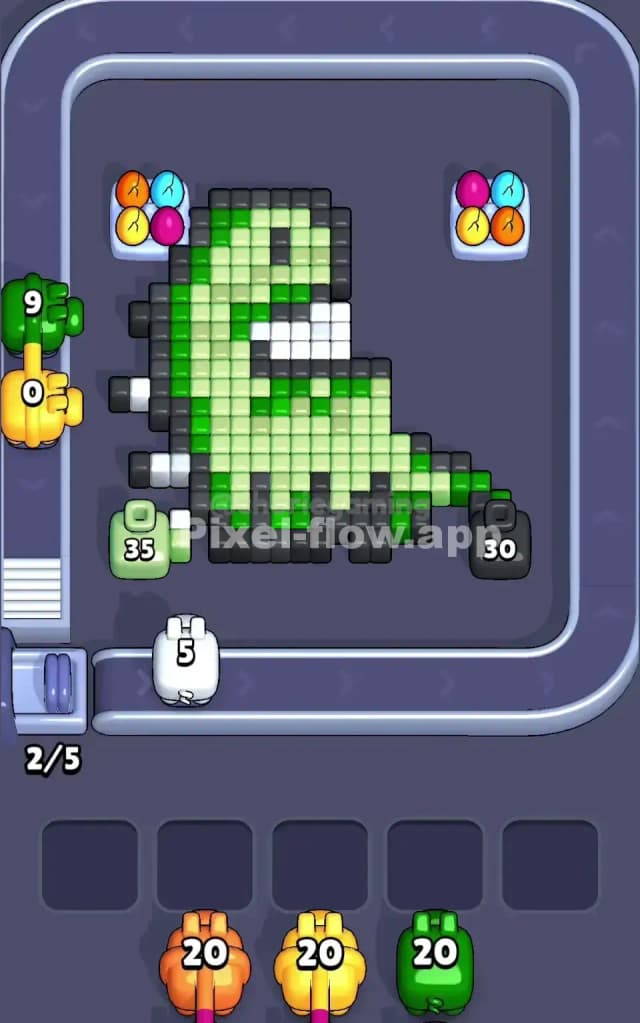
You’re looking at a cute, long-necked dinosaur—a Brachiosaurus, maybe—standing on a strip of grass. The background is a solid wall of white. Your goal is simple: clear the white sky first, then the black outlines, and finally the green dino itself.
The layout is deceptive. You have huge chunks of white pixels surrounding the dinosaur, but they are blocked by specific color zones. The real challenge here is the order of operations. You need to manage your "waiting slots" carefully because the initial pigs provided (White 40, White 20, White 40) are aggressive. If you don't clear a path for them immediately, they will clog your board. Is this a very hard level? No, but it punishes impatience. It is a medium-difficulty logic puzzle.
Pixel Flow Level 188 Overview
Imagine a pixelated Jurassic Park. Our green friend takes up the center-left of the board. He has a long neck curving up and to the right. The entire background is filled with White pixels representing the sky.
Here is the asymmetric trap:
- The Bottom: A solid row of light green "grass" sits at the very bottom.
- The Outline: A thick Black border traces the dinosaur's spine and legs.
- The Corners: The top left and top right corners have small clusters of colored eggs (orange, blue, pink, yellow). These are purely decorative obstacles initially but might hide pixels underneath.
The critical thing to notice is the huge amount of white space. It dominates the board. However, the game gives you three White pigs right away in the conveyor belt (40, 20, 40 ammo). You absolutely must use these effectively, or you will run out of slots instantly.
Step by step solution walkthrough for Pixel Flow Level 188
First Color Zone to Erase in Pixel Flow Level 188
You have no choice but to start with White. Look at the conveyor belt in the screenshot: three white pigs are queued up.
- Prioritize the Left Sky: The dinosaur faces left, but the bulk of the white pixels are behind its neck and above its tail.
- Why White First? You literally cannot place other colors yet. If you pull a green or black pig from later in the queue, it will just sit in a slot doing nothing because the white layer covers almost everything.
- The "Sky" Strategy: Let the first White pig (40 ammo) decimate the top half of the board. It will chew through the background. Be careful not to let it finish too early if there are still stray white pixels isolated in corners. You want the big 40-ammo pig to hit the main clusters.
How to pass Pixel Flow Level 188 without power ups or boosters
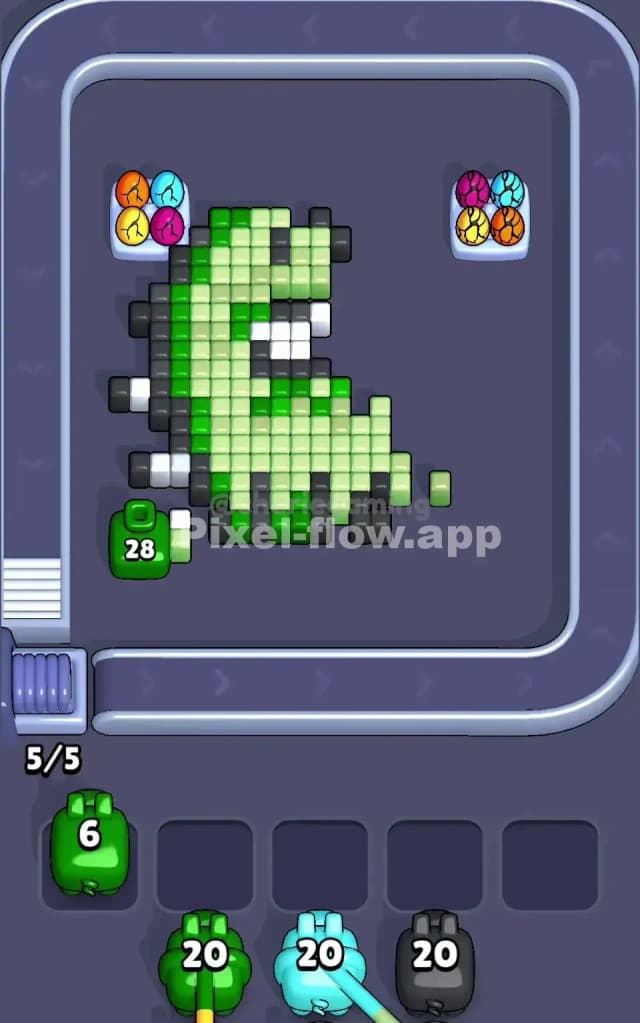
Once the white sky is gone, the board looks radically different. You are left with a floating green dinosaur outline.
- The Black Outline is Key: The dinosaur has a distinct black spine. Often, the game hides green pixels inside or behind this black outline. Once the white is gone, prioritize Black pigs if they appear. Clearing the black outline exposes the inner green meat of the dinosaur.
- The Grass Trap: The bottom row is light green. Do not ignore it. Sometimes a pig will target the body but ignore the grass row because it's a slightly different shade or disconnected. Ensure you use a Green pig specifically for that bottom strip if a generic Green pig doesn't auto-target it.
- Pig Management: In the mid-game, you will likely see Green and Black pigs mixing on the belt.
- If you have a Green pig but the green pixels are "inside" the black outline, do not drop the Green pig. It will have zero targets and waste a slot.
- Wait for the Black pig to strip the outline first. This is the #1 reason players fail Level 188: dropping the inner color (Green) before stripping the outer shell (Black).
Last Details You Clean Up in Pixel Flow Level 188
At the very end, you will be left with the dinosaur's core body.
- The Eye: There is often a white pixel or two making up the eye. If you missed this during the initial "White" phase, it might be stuck behind black pixels. A final White pig might be needed, or a bomb power-up if you are desperate (but you shouldn't need it).
- The Neck Curve: The last pixels to go are usually the thickest part of the neck.
- Stray Grass: Check the bottom corners. Sometimes a single green pixel hides in the bottom left corner, detached from the main dinosaur body. Make sure your final Green pig has enough ammo (usually 10-20 is plenty) to sweep that bottom row clean.
Victory is just a stripped dino skeleton away. Good luck!