Pixel Flow Level 189 Solution | Pixel Flow 189 Walkthrough
How to beat Pixel Flow Level 189: Video solution & walkthrough. The fastest way to pass Pixel Flow 189.
Is this the wrong level layout?🤔
Pixel Flow randomizes levels for different players. Don't worry, just upload a screenshot of your board, and our AI will find the correct video instantly.

Pixel Flow Level 189 Walkthrough
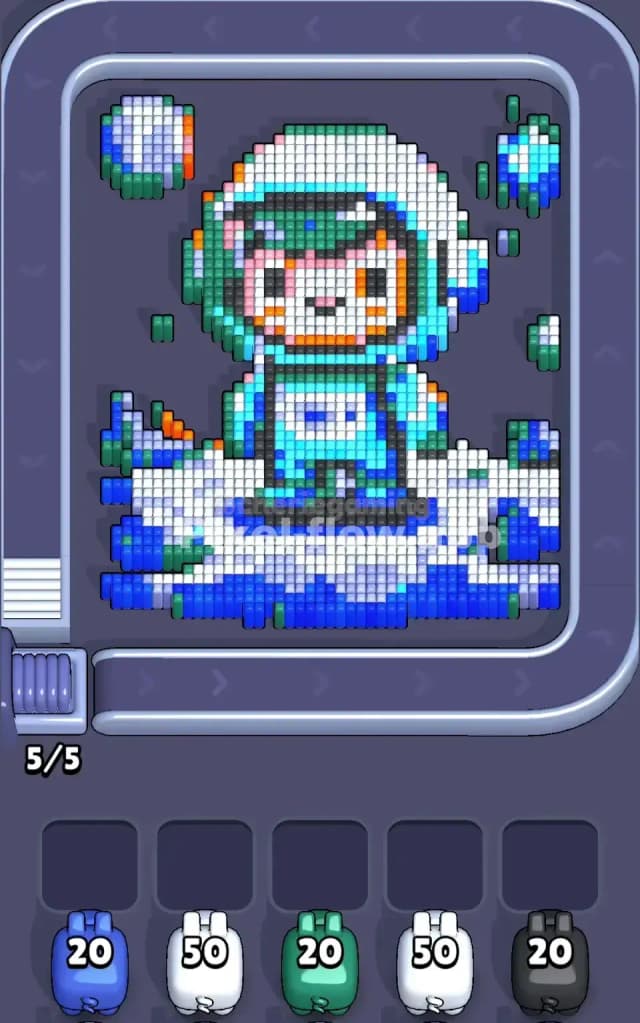
This level features a cute astronaut character—looks like a little bear or cat—standing proudly on a rocky, moon-like surface. The dominant colors are White (helmet, suit, ground), Cyan/Light Blue (suit details), Dark Green (helmet trim, suit outlines), and Dark Blue (shadows on the ground). There are also splashes of Orange on the cheeks and side panels.
To beat Pixel Flow Level 189, you must manage your pig queue carefully. The white sections are massive and thick, meaning white pigs will spend a long time shooting. If you clog your waiting slots with low-ammo colors while waiting for a white pig to finish, you will fail.
Is it hard? Yes, it is a very hard level. The sheer volume of white blocks on the bottom layer creates a bottleneck that traps impatient players.
Pixel Flow Level 189 Overview
The scene is adorable but deceptive. You have a small astronaut figure centered in the frame. The helmet is a large, rounded shape dominated by white and cyan. The character stands on a wide, jagged platform that looks like moon rocks or clouds, heavily shaded with dark blue at the bottom and white on top.
Floating around the astronaut are small debris clusters—little asteroids or stars made of green, white, and blue pixels.
Key visual hazards:
- ** The "Moon" Base:** The bottom third of the screen is a dense, multi-layered cake of blue and white. It looks flat, but it's deep. You cannot clear the feet or lower body until this base is shaved down.
- The Helmet Rim: The head is encased in white and green. The green acts as a "cage." You often have to peel off the green outline before you can access the orange cheeks or inner face details.
- Floating Debris: The small clusters in the top left and right corners are easy to ignore, but they can waste a high-ammo pig if you aren't careful. Don't deploy a 50-ammo pig just to hit 3 stray blocks in the corner.
Step by step solution walkthrough for Pixel Flow Level 189
First Color Zone to Erase in Pixel Flow Level 189
Start with the Dark Blue base.
Narratively, you need to clear the ground so the astronaut can "land." Logically, the dark blue row at the very bottom is the most accessible "outer layer." It wraps around the bottom and sides of the white platform.
Clearing the blue first does two things:
- It exposes the massive white layer underneath.
- It uses up blue pigs quickly, keeping your slots open. If you try to attack the white helmet first, you might get stuck because the white blocks there are mixed with cyan and green, causing your pig to stop shooting while still full of ammo. The bottom blue layer is a consistent, uninterrupted strip.
How to pass Pixel Flow Level 189 without power ups or boosters
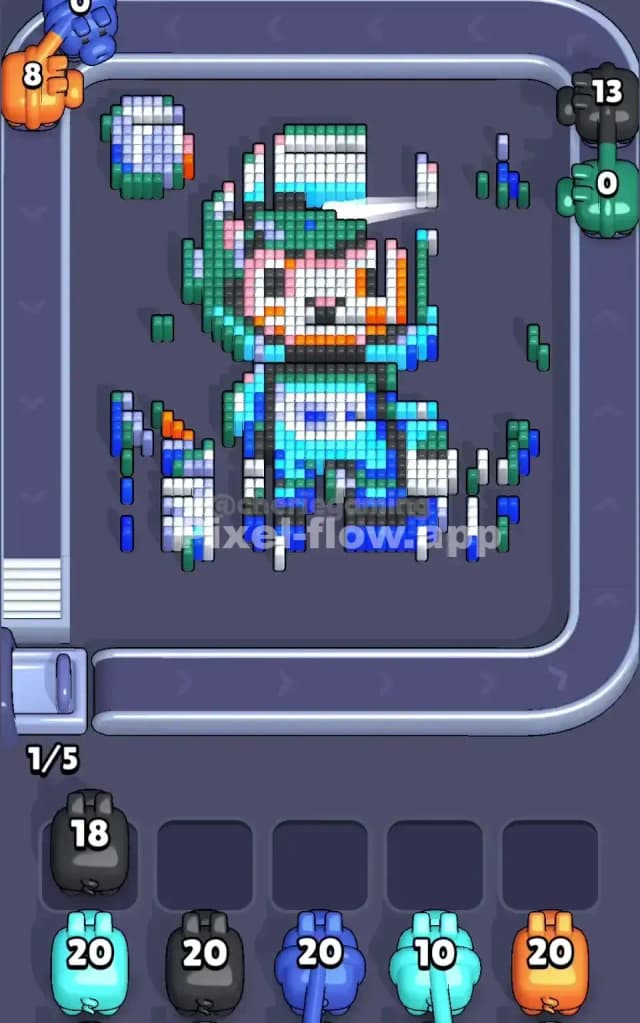
Once the bottom blue "shadow" is gone, the level enters its dangerous middle phase. The picture will look half-destroyed—a floating head above a jagged white floor.
The Danger Zone: At this stage, you will see a lot of White pigs. Do NOT spam them. The white layer on the ground is huge, but the white layer on the helmet is separate.
- Focus on the Green Outline: You will likely see Green pigs appear. Use them immediately to strip the outer rim of the helmet. The green layer is thin but blocks access to the face. Removing the green helmet rim opens up the orange cheeks and the white interior of the helmet.
- The Cyan Trap: The suit body is heavy on Cyan (Light Blue). Do not let Cyan pigs sit in your queue. The moment you see exposed light blue on the chest or legs, send the pig. If you wait, you might bury the cyan blocks under falling debris from the head, making them harder to hit.
Priority Rule: If you have a White pig and a smaller color (like Orange or Green) available, play the small color first if it has a valid target. White pigs take forever to empty. You want your slots empty while the white pig works.
Last Details You Clean Up in Pixel Flow Level 189
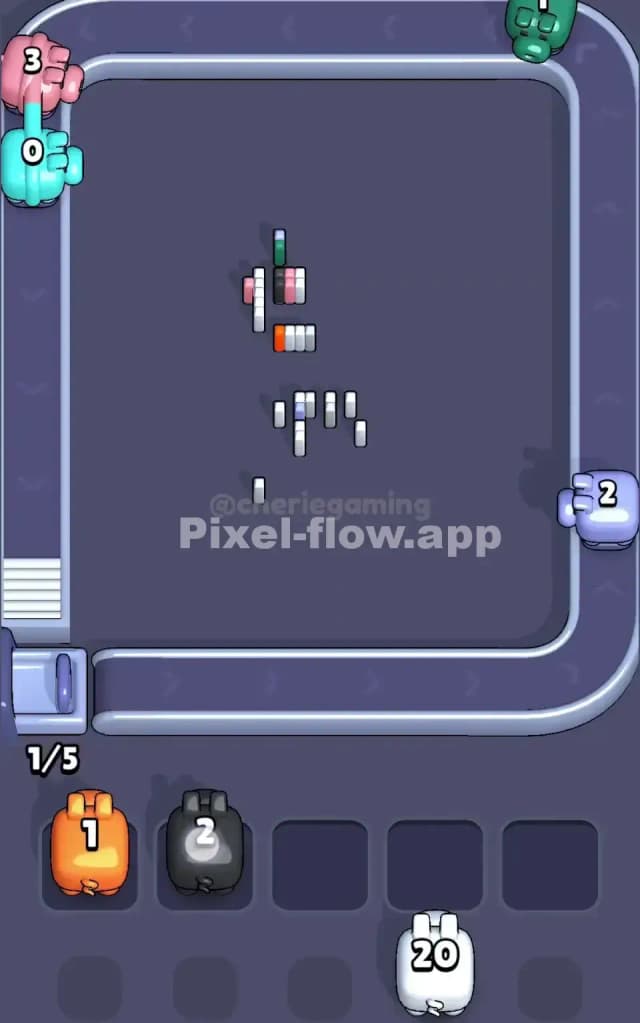
As you near the end, the "Moon" base will be gone, and the helmet will be fractured. The final moves usually involve:
- The Orange Cheeks: These are often the last to go because they are buried deep inside the face layers. You might have an Orange pig sitting in your slot for half the game waiting for this moment. Be patient.
- Stray Floating Blocks: Watch out for the tiny floating debris in the top corners. Sometimes a single green or white block hides up there.
- The Black/Dark Grey Visor: The eyes and visor outline are usually the deepest layer. You will likely finish Pixel Flow Level 189 by popping the final black pixels of the astronaut's eyes. Make sure you save a Black/Dark Grey pig for this exact moment; don't waste it earlier on a "maybe" shot.