
Pixel Flow Level 190 Solution | Pixel Flow 190 Walkthrough
How to beat Pixel Flow Level 190: Video solution & walkthrough. The fastest way to pass Pixel Flow 190.
Is this the wrong level layout?🤔
Pixel Flow randomizes levels for different players. Don't worry, just upload a screenshot of your board, and our AI will find the correct video instantly.
Pixel Flow Level 190 Walkthrough
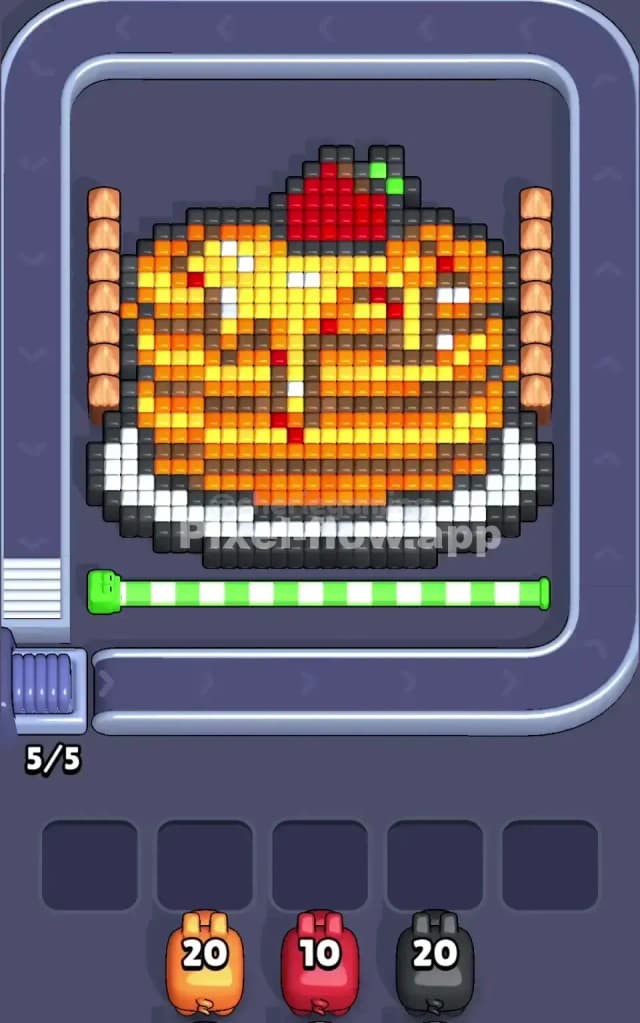
This level serves up a giant stack of pancakes topped with a strawberry, but don't let the tasty visual fool you. The layering here is dense and deceptive. You are dealing with a tall central mass flanked by two vertical wooden barriers. The main challenge is the "syrup logic"—colors trickle down vertically, meaning a single column might have three or four color changes from top to bottom.
You have to peel this voxel breakfast like an onion. Outer crusts first, gooey center last. Because of the heavy distinct layering and the side blockers that waste your ammo if you aren't careful, I judge Pixel Flow Level 190 to be a very hard level.
Pixel Flow Level 190 Overview
Think of this board as a breakfast fortress. The central tower is a fat stack of golden-orange pancakes. It sits on a wide white plate with a black rim. Perched on top is a red strawberry with a tiny green stem.
The trickiest visual elements are the highlights. You’ll see patches of bright yellow and white simulating butter and glinting syrup. These aren't just decoration; they represent buried layers you can't touch until you clear the darker orange "cooked" parts of the pancake.
Notice the sides. Two tall, tan wooden columns stand like sentries on the left and right. These are massive annoyances. They physically block your pigs from shooting the sides of the pancake stack. Until those wooden pillars are gone, your side-angle shots are effectively useless against the main target.
Step by step solution walkthrough for Pixel Flow Level 190
First Color Zone to Erase in Pixel Flow Level 190
Focus immediately on the Black outline and the Orange crust.
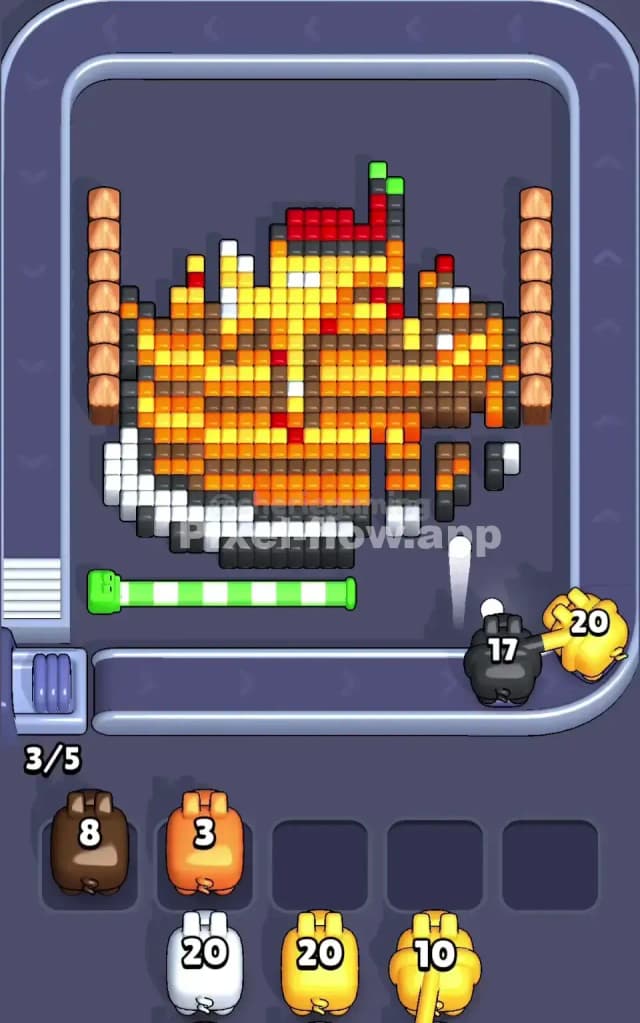
The Black voxels form the rim of the plate and the outline of the strawberry. They are the "wrapping paper" of the level. If you see a Black pig, use it instantly. Clearing the black rim at the bottom exposes the White plate. Clearing the black outline on top exposes the Red berry.
If Black isn't an option, dump your ammo into Orange. The pancakes are mostly orange on the surface. Unlike the sporadic yellow highlights, the orange bands are wide and continuous. This guarantees that an Orange pig will almost always empty its clip without clogging your waiting slots. Do not try to snipe the red strawberry early unless you have a clear shot; it’s too small and often blocked by its own outline.
How to pass Pixel Flow Level 190 without power ups or boosters
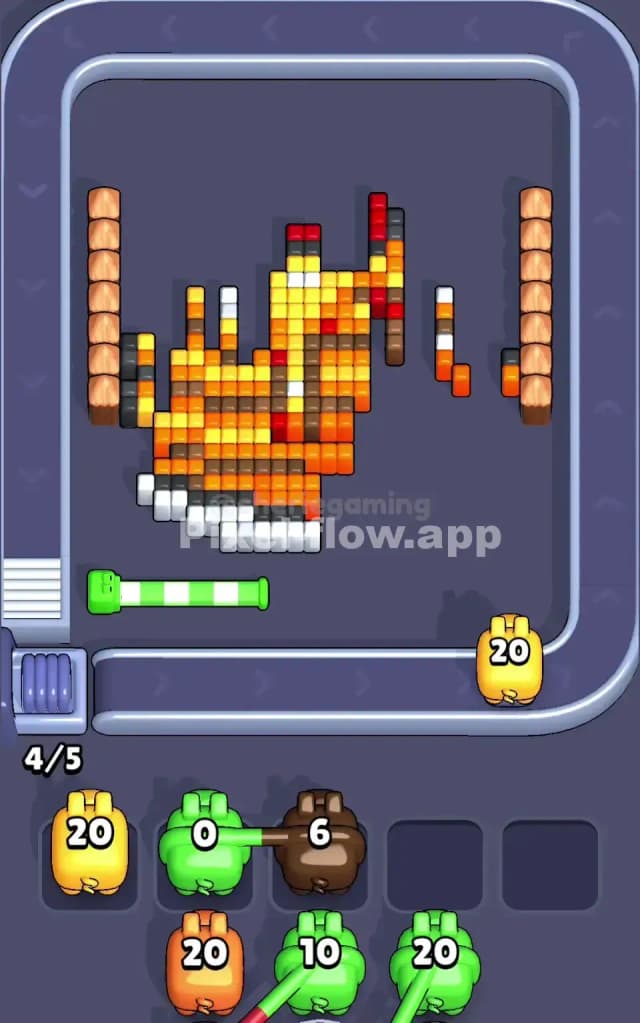
The mid-game is where most players lose Level 190. You’ll likely have the front face of the pancakes chewed up, revealing a jagged mess of Yellow and Brown inside.
Here is the danger: The Side Wood Columns.
At this stage, your conveyor belt will bring pigs to the vertical left and right sides of the screen. If you have not prioritized the Tan/Light Brown pigs to clear those wooden side columns, your other pigs will have no line of sight to the pancakes. They will just stare at the wood, unable to shoot, and drop into your waiting slots.
Prioritize clearing the side columns aggressively. As soon as a pig matching that wood color appears, clear a path. Once the wood is gone, your pigs on the side rails can shoot directly into the center of the pancake stack, cleaning up the messy jagged edges that front-facing pigs can't reach. If you ignore the wood, you choke your board.
Last Details You Clean Up in Pixel Flow Level 190
Victory in Pixel Flow 190 usually comes down to the "butter."
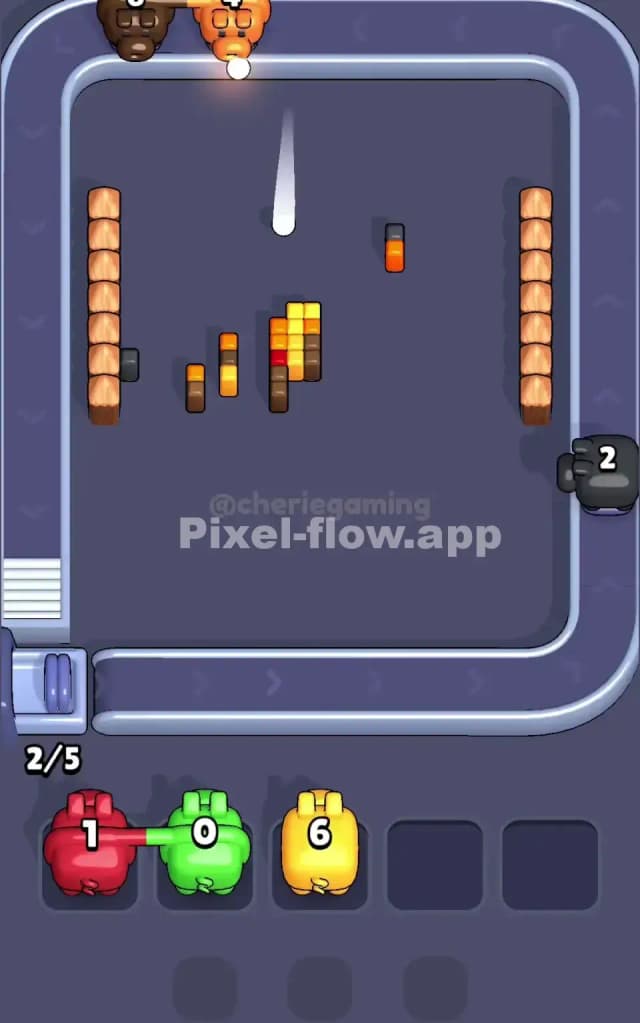
The deepest layer of this image is the bright Yellow core representing the fluffy inside of the pancakes and the melting butter. These voxels are often hidden behind the dripping brown syrup lines.
Watch out for the Green stem. It is tiny—maybe 2 or 3 voxels total. It’s easy to forget about it while you focus on the yellow mass. Keep a Green pig in reserve in your last slot if you see one; otherwise, you might cycle through twenty pigs just to find the one you need for those final three pixels. Clear the yellow bulk, pop the green stem, and the level is done.