Pixel Flow Level 192 Solution | Pixel Flow 192 Walkthrough
How to beat Pixel Flow Level 192: Video solution & walkthrough. The fastest way to pass Pixel Flow 192.
Is this the wrong level layout?🤔
Pixel Flow randomizes levels for different players. Don't worry, just upload a screenshot of your board, and our AI will find the correct video instantly.
Pixel Flow Level 192 Walkthrough
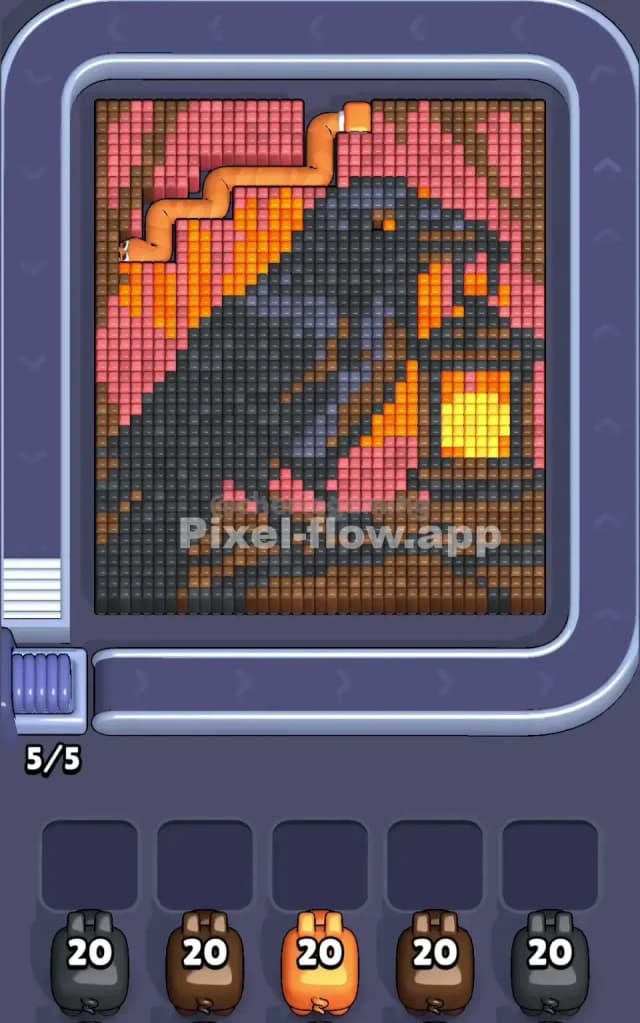
This level features a large, dark pixel art scene of a raven (or crow) perched next to a glowing lantern against a pink and orange sunset sky. The board is dense. You are dealing with a massive block of black in the center, surrounded by scattered pinks and browns, with a tricky multi-colored lantern on the right.
The rule to beat Pixel Flow Level 192 is simple but punishing: you need to prioritize the massive black section early to prevent your waiting slots from clogging. Because the bird takes up about 40% of the board, the game will throw high-ammo black pigs at you constantly. If you ignore the bird to pick at the edges, you will run out of space for new pigs. This is definitely a very hard level because of how the lantern layers hide behind the wood and bird, forcing precise shots.
Pixel Flow Level 192 Overview
Picture a gothic evening scene. In the center, a massive Dark Grey/Black raven dominates the view, facing right. It’s sitting on what looks like a Brown wooden fence or branch that runs along the bottom and climbs up the right side. To the right of the bird, tucked into the wood, is a square lantern glowing with Orange and a Yellow center.
The background is where things get messy. It’s a mix of Pink and patches of Orange, representing a sunset. The asymmetry here is dangerous: the left side is mostly the bird's back and the pink sky, while the right side is a complex knot of the bird's beak, the brown wood structure, and that layered lantern.
The colors feel heavy. The Black is a solid, towering wall. The Brown forms a "U" shape or frame around the bottom and right. The Pink fills in the gaps. Your eyes might be drawn to the bright lantern, but don't let it distract you; the dark masses are what will kill your run if you don't manage them.
Step by step solution walkthrough for Pixel Flow Level 192
First Color Zone to Erase in Pixel Flow Level 192
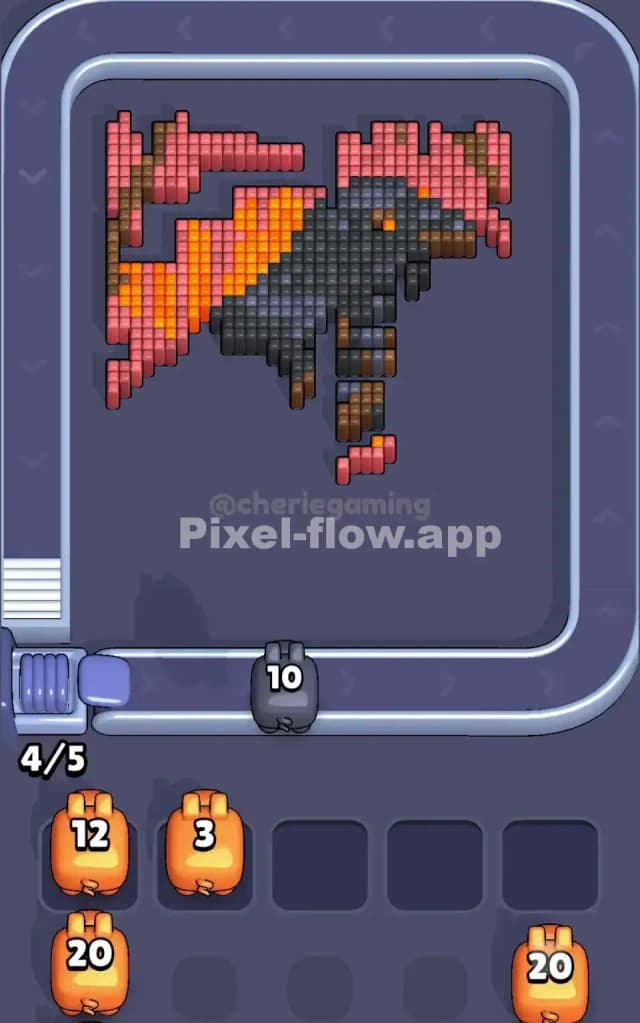
You need to start by attacking the Black Raven in the center.
Here is the logic: Looking at your starting queue, you likely have a Black pig with 20 ammo right at the front or second in line. The raven is the single largest contiguous block of color on the board. It is the "meat" of the level. Many players try to be cute and clear the Pink sky first because it looks like the top layer, but the Pink is scattered and thin.
If you try to clear the Pink first, you might find your pigs missing shots or running out of valid targets because the pink blocks are disconnected by the bird’s head or the lantern. The Black zone is a massive, easy target. By shaving off the raven's body immediately, you burn through that dangerous 20-ammo count without dropping a pig into your holding slots. Plus, removing the bird’s body often reveals the connection points for the Orange sunset behind it and the Brown wood beneath it.
How to pass Pixel Flow Level 192 without power ups or boosters
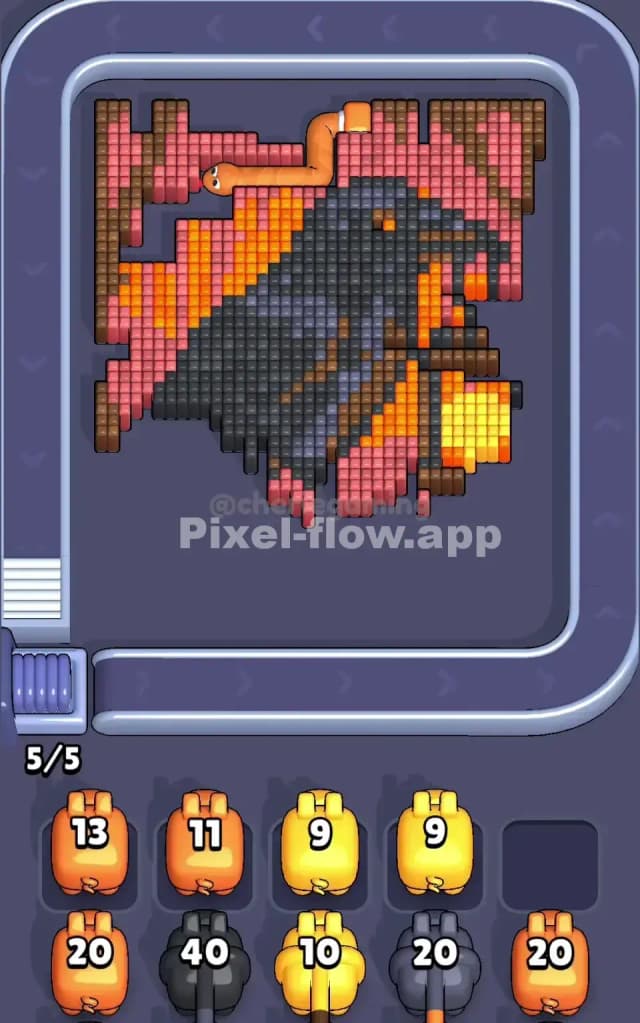
Once the main body of the raven is thinned out, the board usually looks half-destroyed, with jagged edges of Pink and Brown remaining. At this stage, you face a specific risk: the Lantern Trap.
The lantern on the right is made of an Orange ring and a Yellow core. However, there are also Orange blocks in the sky (the sunset).
- The Trap: You will get Orange pigs. You might be tempted to use them on the sunset sky on the top left.
- The Fix: Always check if you can hit the Lantern Orange first. The lantern is often surrounded by Brown wood blocks that block your shots. If you clear the sky orange but leave the lantern orange for last, you might get stuck with an Orange pig that physically cannot shoot the lantern because a Brown block is in the way.
Prioritize clearing the Brown wood on the right side as soon as a Brown pig appears. This wood acts as a shield for the lantern. If you don't break that shield, you can't clear the lantern, and you can't reach the background layers behind the right side of the board. So, mid-level priority is: Brown Wood (Right Side) > Orange Lantern > Pink Sky.
Last Details You Clean Up in Pixel Flow Level 192
As you close out Pixel Flow Level 192, you will likely be left with the Yellow center of the lantern and a few stray Pink pixels in the top corners.
The Yellow is almost always the deepest layer in this specific artwork. You literally have to hollow out the lantern (remove the orange rim) to hit it. Save your small-ammo pigs for this. If a 20-ammo Yellow pig drops and you only have 4 yellow blocks left, you are in trouble unless you have empty slots. Ideally, you want to clear the Yellow as soon as it is exposed.
The final few moves are usually just mopping up the top-left and top-right corners where the Pink sky tends to hide single, isolated cubes. Watch the conveyor belt closely; don't let a Pink pig drop into a slot if you can snipe that last corner pixel immediately.