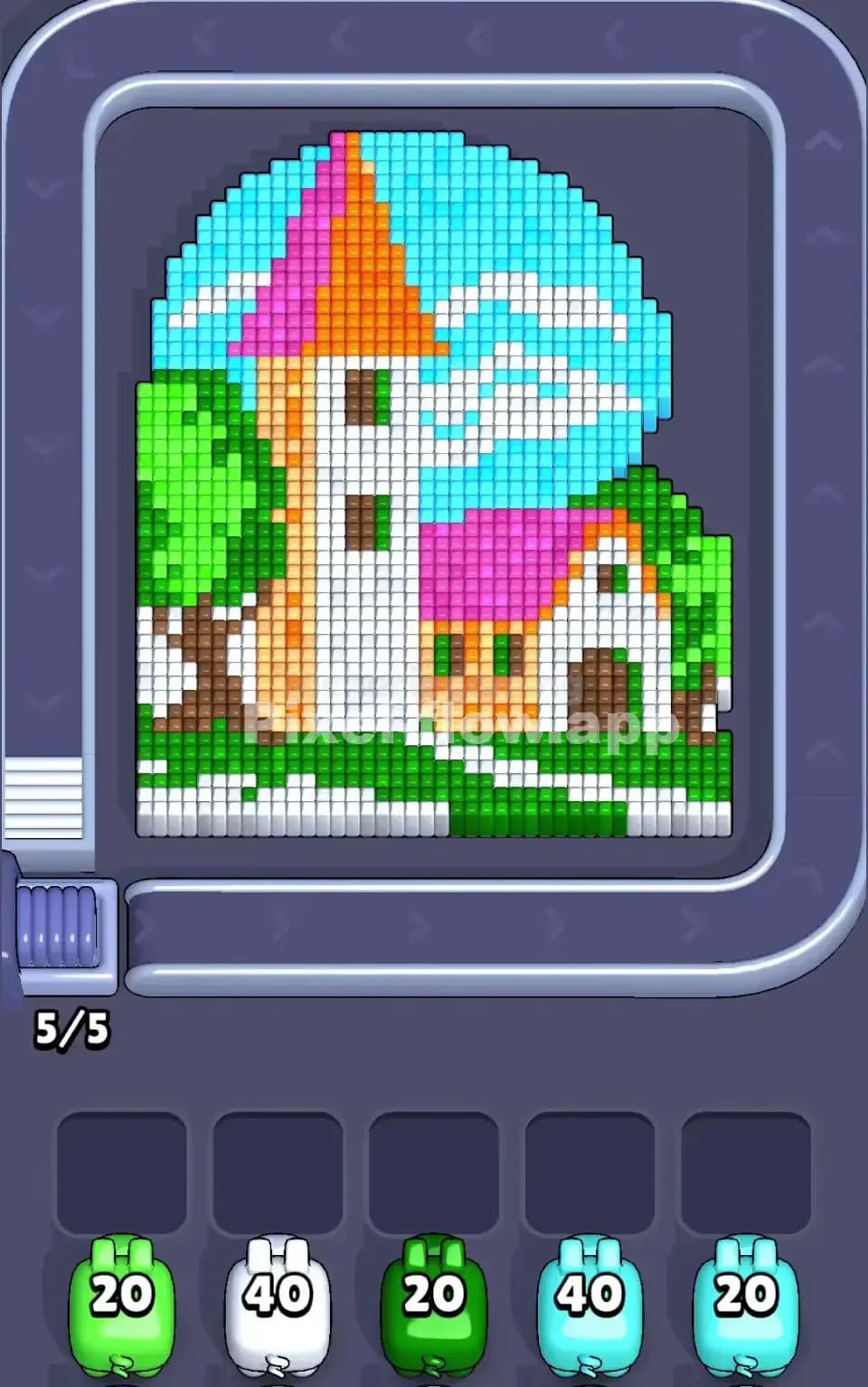
Pixel Flow Level 194 Solution | Pixel Flow 194 Walkthrough
How to beat Pixel Flow Level 194: Video solution & walkthrough. The fastest way to pass Pixel Flow 194.
Is this the wrong level layout?🤔
Pixel Flow randomizes levels for different players. Don't worry, just upload a screenshot of your board, and our AI will find the correct video instantly.

Pixel Flow Level 194 Walkthrough
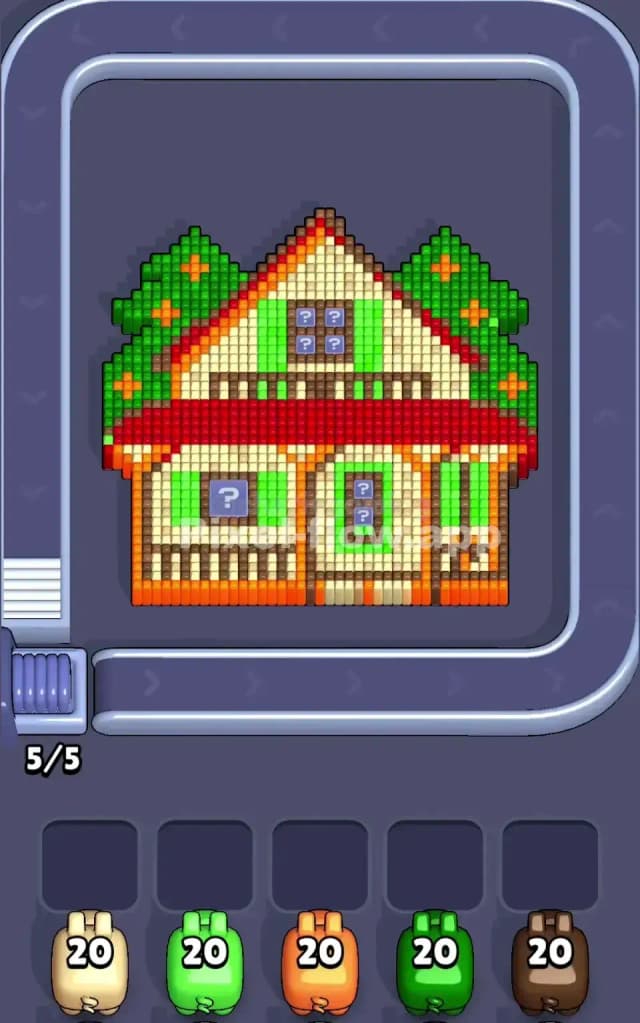
This level features a charming, cozy cottage with a prominent red roof and two large green trees flanking the attic. The color palette is dense. You have a lot of cream/beige for the walls, vibrant green for the foliage and window shutters, deep red for the roofline, and orange accents along the base and in the tree ornaments.
The rules are deceptively simple: tap a pig on the conveyor belt to make it shoot cubes of its matching color. If it runs out of ammo (hits 0), it disappears. If it still has ammo but hits a "wall" of the wrong color, it drops into one of the five slots at the bottom. Fill all five slots with useless pigs, and you lose. Is this a very hard level? Not extremely, but it is tricky because the large cream sections can trick you into deploying cream pigs too early when their targets are actually blocked by the roof.
Pixel Flow Level 194 Overview
The artwork depicts a classic A-frame style cottage. It feels like a gingerbread house or a holiday cabin. The center is dominated by a large cream-colored triangle (the attic wall) sitting above a red horizontal stripe (the roof overhang).
Here is the asymmetric trap:
- The Left Tree: This green mass is slightly more accessible early on.
- The Right Tree: Similar to the left, but notice how the red roof tiles wrap around it.
- The Base: The bottom layer is a mix of orange and dark brown wood framing.
The critical danger zone is the Red Roof Belt. This horizontal red strip acts as a barrier. It sits on top of the lower cream walls and below the upper attic triangle. If you try to clear the cream walls below the red line before clearing the red, you might find your cream pigs have no valid targets because the "hitbox" is obscured by the red overhang.
Step by step solution walkthrough for Pixel Flow Level 194
First Color Zone to Erase in Pixel Flow Level 194
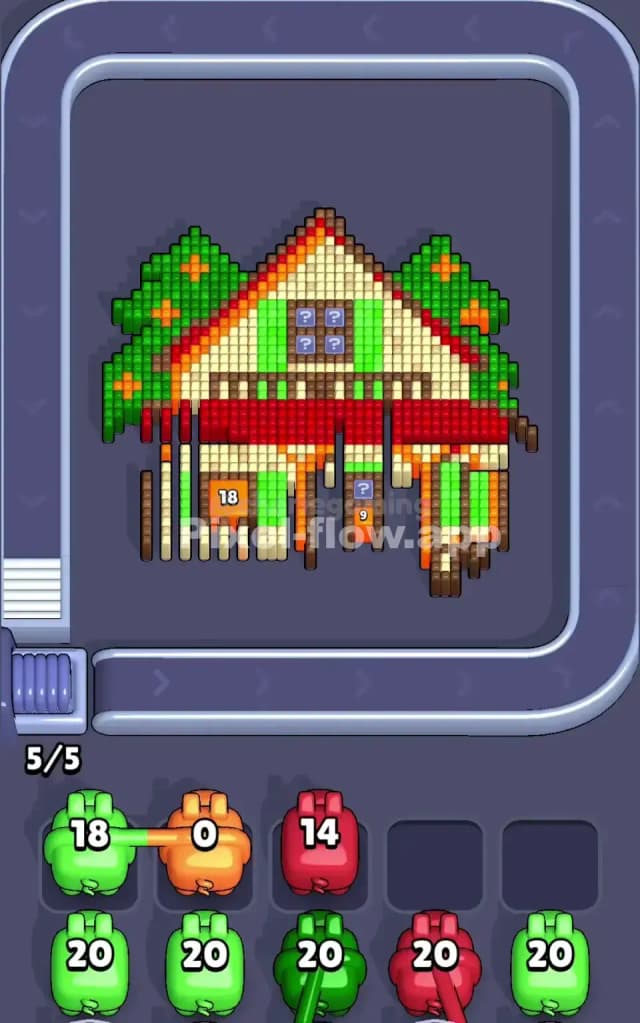
I start by attacking the Orange base and the Green trees.
Here is the logic. The orange row at the very bottom is the "closest" layer to the screen physically. It’s unobstructed. Clearing that bottom orange strip opens up the vertical lines for the wood (brown) framing. Simultaneously, the green trees on the left and right are huge, solid blocks. They aren't hiding behind anything complex. Sending in green pigs early is safe because they will dump 20+ ammo into those trees without getting stuck in your slots.
Avoid the Cream/Beige pigs initially. While there is a ton of cream on the screen, most of it is protected by the red roof or the brown wood beams. If you click a cream pig now, it will likely hit two blocks and then jam your slot.
How to pass Pixel Flow Level 194 without power ups or boosters
Once the orange base and the bulk of the green trees are gone, the house looks "half-shaved." You will see the skeletal structure of the brown wood beams and the solid red stripe across the middle.
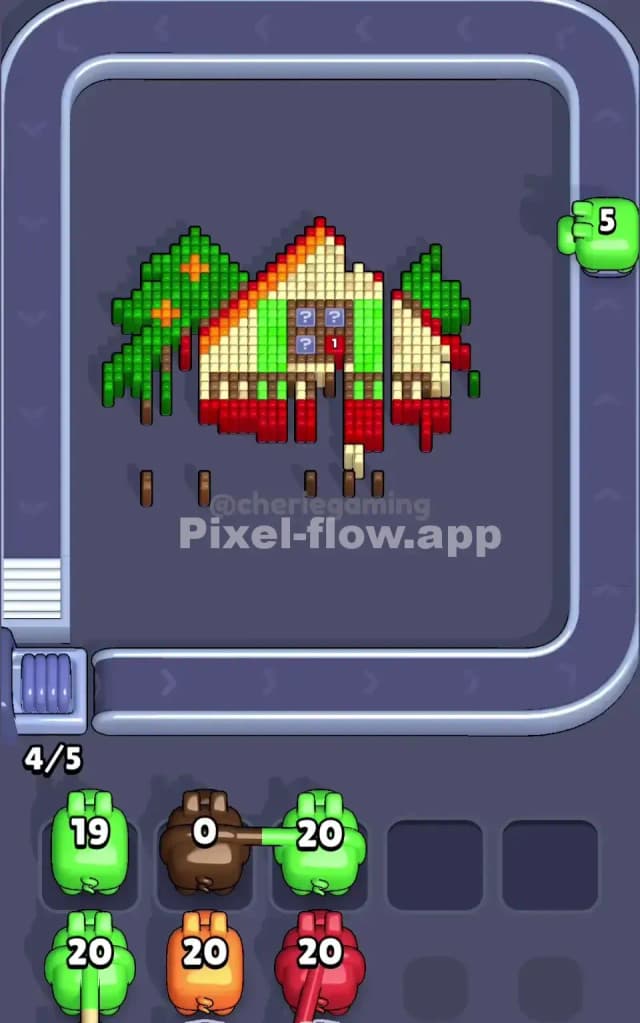
Now, prioritize the Red pigs. You must remove that horizontal red roof line. It is the "belt" tightening the whole level. Until the red is gone, the upper attic and lower walls are separated. By clearing the red, you merge the top cream triangle and the bottom cream rectangles into one accessible layer.
If you refuse to use power-ups, patience with the Brown pigs is key. The brown wood frames (vertical lines on the bottom floor) often block the cream wall behind them. You might see a brown pig and think "useless," but you need to clear those vertical beams to expose the cream "meat" of the house. Check the conveyor belt. If a brown pig appears and you have a clear shot at the door frame, take it. Do not let brown pigs clog your slots if they can't hit the door frames yet.
Last Details You Clean Up in Pixel Flow Level 194
In the final phase, you are left with the Cream/Beige core. The roof is gone, the trees are stumps, and the orange base is history.
Now you can unleash the cream pigs. They will tear through the attic and the main living room walls rapidly. Watch out for the Question Mark Blocks (Unknown Color Blocks) hidden in the windows. These usually reveal themselves as blue or grey glass. Do not panic when they appear; they are usually small groups (4-6 blocks). Just make sure you have at least one empty slot available to hold the specific color pig needed for those windows, as they are the very last layer to be exposed. The level ends when you pop that final window pane.