Pixel Flow Level 21 Solution | Pixel Flow 21 Walkthrough
How to beat Pixel Flow Level 21: Video solution & walkthrough. The fastest way to pass Pixel Flow 21.
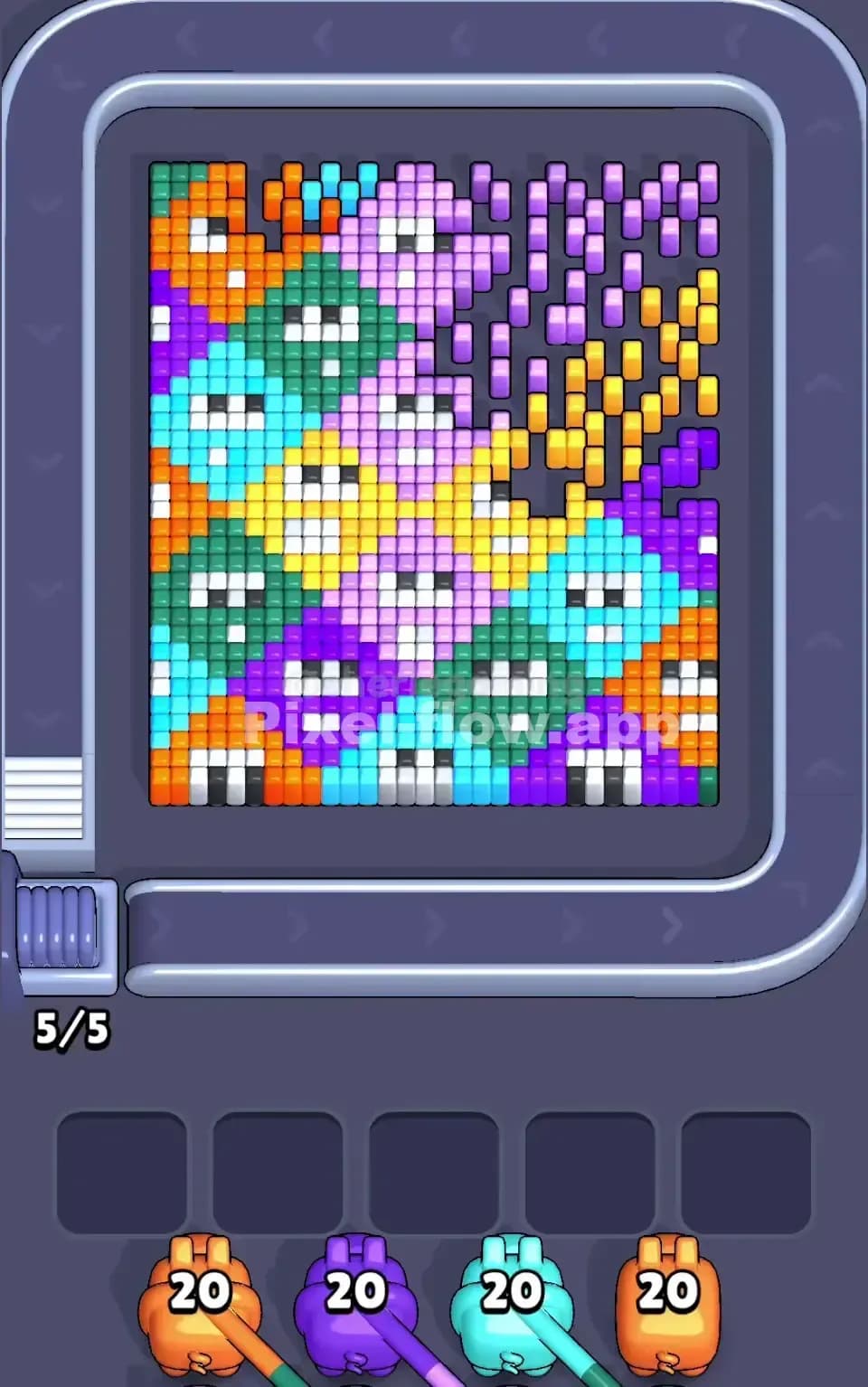
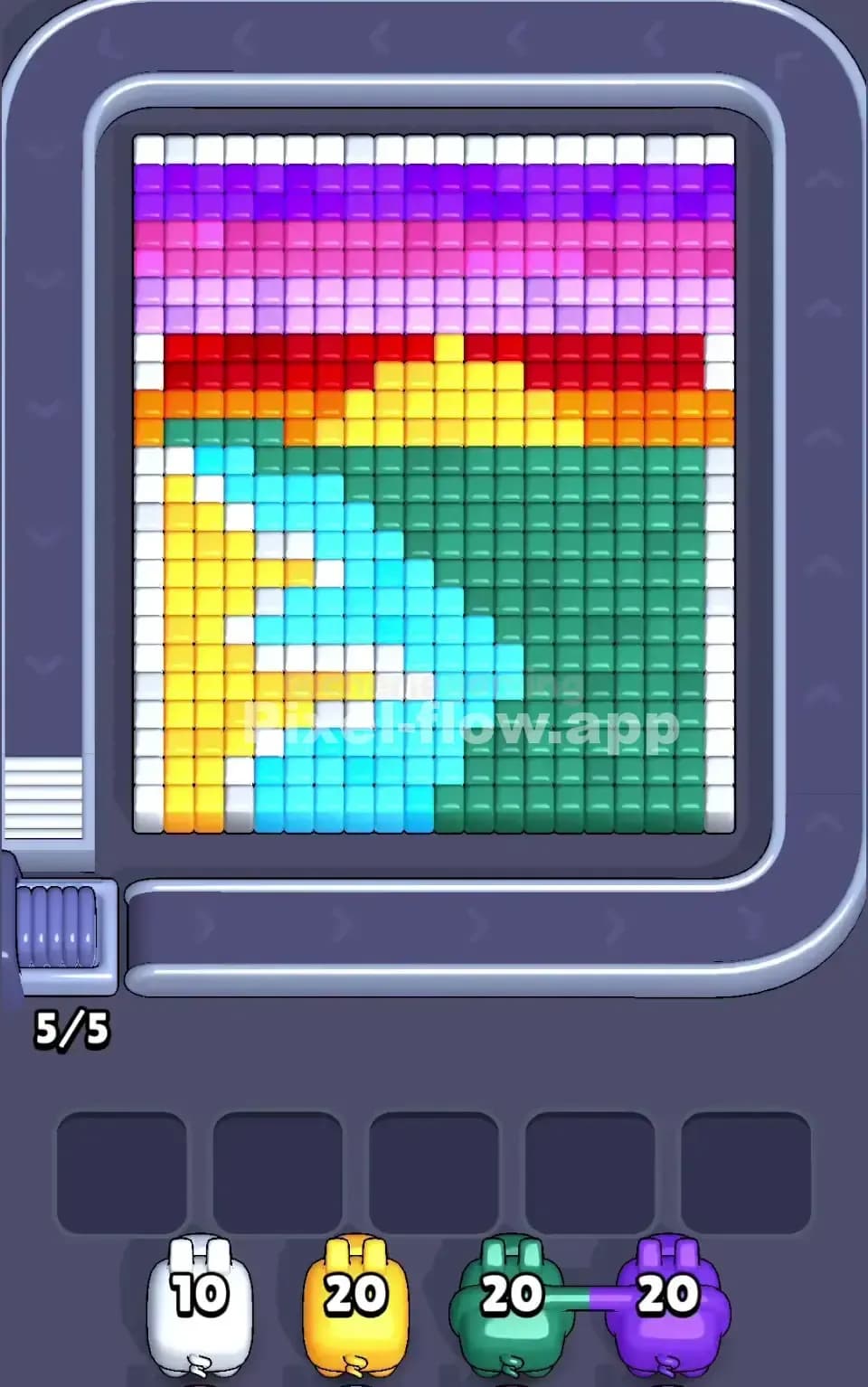
Is this the wrong level layout?🤔
Pixel Flow randomizes levels for different players. Don't worry, just upload a screenshot of your board, and our AI will find the correct video instantly.

Pixel Flow Level 21 Overview
The Board Layout and Starting Colors
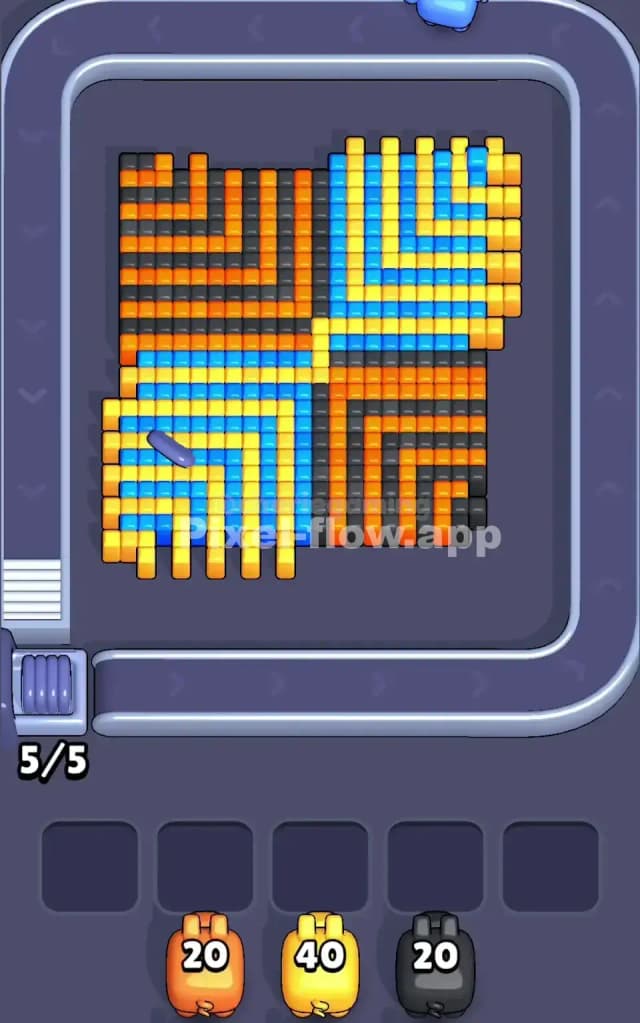
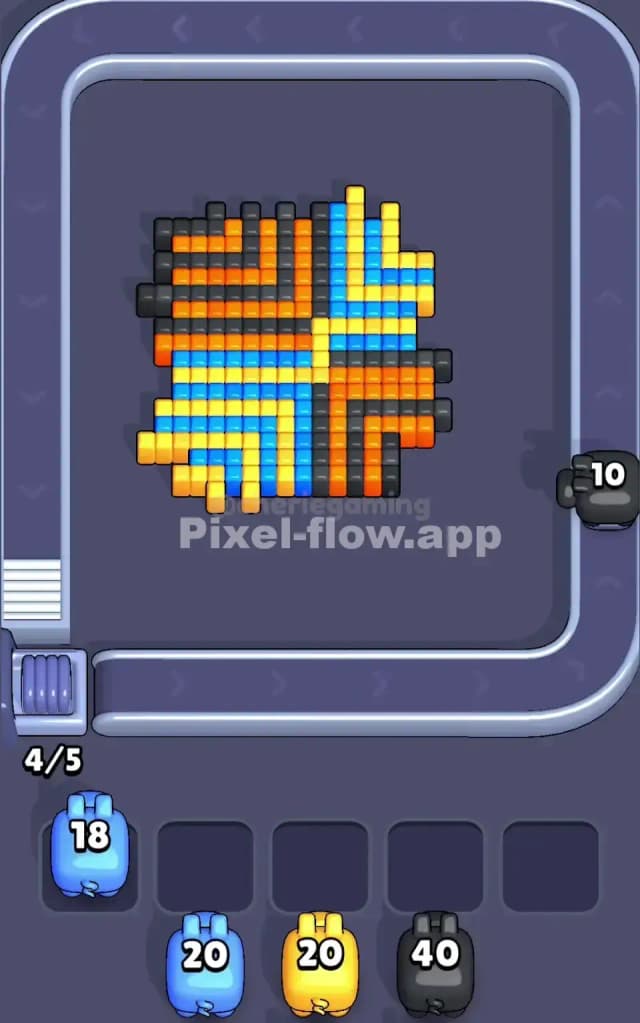
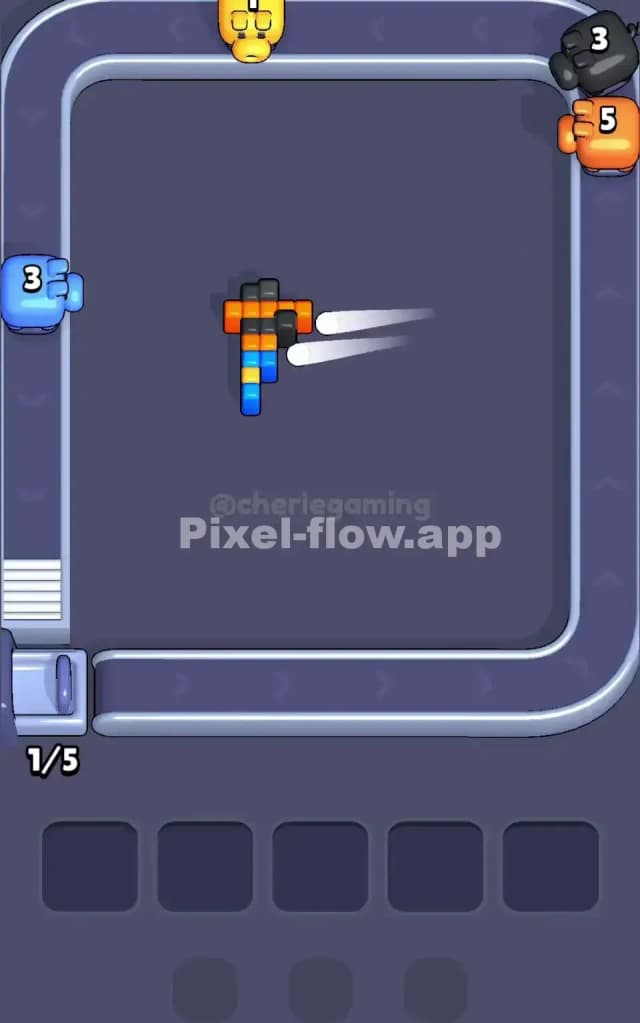
Pixel Flow Level 21 presents you with a dense, multi-layered voxel mosaic that demands careful sequencing from the very first move. The board is dominated by orange, yellow, blue, and dark gray cubes arranged in a complex pattern that forms what appears to be a stylized digital landscape or abstract geometric composition. Orange occupies a substantial wedge on the left and bottom-right sections, yellow spreads across the middle-right area in thick bands, blue creates vertical and diagonal stripes throughout, and gray acts as a binding layer that's scattered strategically between the brighter colors. What makes Pixel Flow Level 21 particularly challenging is that these colors don't sit neatly in isolated regions—they interlock and overlap, meaning you'll constantly be trading one pig for another as you hunt for remaining cubes of the same color.
Your incoming pig queue shows three pigs: one cyan pig with 20 ammo, one dark pig with 20 ammo, and one dark pig with 40 ammo. These ammo counts are deterministic and exact, so every cube you destroy must be accounted for in your planning. The win condition, as always in Pixel Flow, is to clear every single voxel cube on the board without filling all five waiting slots with stuck pigs that can't fire anymore.
Understanding the Win Condition
To beat Pixel Flow Level 21, you need to strip away all layers of the pixel art until nothing remains. Each pig will fire at matching-colored cubes, spending exactly one ammo per cube destroyed. The waiting slots below the board are your buffer zone—when a pig runs out of valid targets, it drops into one of those five slots. If all five slots fill up and your remaining pigs still can't find targets for their remaining ammo, you'll lose immediately. The key insight is that your three pigs have exactly 80 ammo combined (20 + 20 + 40), which means the board contains precisely 80 cubes you need to eliminate. Nothing's wasted, nothing's extra—it's all perfectly balanced, which is both a blessing and a trap. One miscalculation in pig sequencing, and you'll jam the buffer before the final cubes vanish.
Why Pixel Flow Level 21 Feels So Tricky
The Orange Bottleneck
The biggest threat in Pixel Flow Level 21 is the orange color spread. Orange appears densely in the left wedge and again in the bottom-right corner, but between these regions lie thick bands of yellow and blue that actually sit on top of some orange cubes you can't access yet. Your dark 40-ammo pig will be your primary orange worker, but here's the problem: early on, when blue and yellow are blocking your view, you might not have enough orange targets to keep that 40-ammo pig busy. If you're careless, you'll drop that heavy pig into a waiting slot still holding 30+ ammo, and then you're completely stuck—none of your other pigs can fire orange, so that ammo is wasted. You'll watch helplessly as the remaining three slots fill up and the level becomes unwinnable before you're halfway done.
Color Interlock and Visibility
Pixel Flow Level 21 deliberately hides cubes under other colors in a way that forces you to think in three dimensions. The yellow sections that look solid from the front actually conceal blue and orange layers underneath, and the blue stripes cut across orange patches in unexpected ways. This means you can't just "clear all orange, then all yellow"—you have to be surgical about which cubes you target so that hidden colors become visible at exactly the right moment. If you expose blue too early while your blue pig still has ammo, you might run out of targets before all blue is gone, and again, another stuck pig in the buffer. The gray cubes scattered throughout add insult to injury: they're neutral anchors that don't get removed by any pig, so you have to mentally edit them out when counting your targets.
The Ammo Mismatch Fear
Here's the subtle frustration that makes Pixel Flow Level 21 unique: your cyan pig arrives first with only 20 ammo, but when you look at the board, you might count 30+ blue cubes at first glance. This isn't a math error—it's a layer problem. Some of those blue cubes you see are actually deeper in the voxel stack, blocked by orange or yellow that hasn't been cleared yet. The moment you realize this, the level stops feeling like a simple color-match game and starts feeling like a genuine 3D puzzle. You have to trust your ammo counts and understand that the game will give you exactly the right number of targets if you sequence your pigs correctly, but if you sequence them wrong, you'll expose the wrong colors in the wrong order and paint yourself into a corner.
The Moment It Clicks
I'll be honest: the first few attempts at Pixel Flow Level 21 feel chaotic. You drop your cyan pig, watch it fire at blue, then suddenly it runs out of targets with 8 ammo still loaded, and there's your first stuck pig in slot one. You restart, frustrated. But then—maybe on attempt four or five—you realize that you need to not fire at blue immediately. Instead, you target some of the early orange, expose fresh blue underneath, then come back to blue with better geometry. That's when Pixel Flow Level 21 finally reveals its elegant design: it's not random at all; it's a locked puzzle where every move unlocks exactly one more move, and if you understand the layer order, you'll glide through to victory.
Step-by-Step Strategy to Clear Pixel Flow Level 21
Opening: Controlling the Buffer
Your first move in Pixel Flow Level 21 sets the tone for everything that follows. Don't fire your cyan pig at blue immediately, even though blue is clearly visible. Instead, pause and scan the board for an early orange target—there are several orange cubes in the upper-left corner that aren't blocked by anything. Send your cyan pig into the queue (don't fire it yet), and when the dark 20-ammo pig arrives, deploy it against those exposed orange cubes. Fire 5–8 times until you've carved a small notch into the orange wedge. This accomplishes two things: it proves you're not going to jam the buffer immediately (you're making deliberate choices), and it begins exposing lower layers. After your dark 20-ammo pig drops into a waiting slot, now your cyan pig comes up and fires at blue, using maybe 12–15 ammo on the now-partially-exposed blue stripes. Keep at least two waiting slots free at all times; this is your safety margin against miscalculation.
Mid-Game: Layer Sequencing and Ammo Discipline
Once you're past the first three pigs and into the mid-game portion of Pixel Flow Level 21, your dark 40-ammo pig arrives—this is your heavy hitter, and you need to deploy it with surgical precision. At this point, your cyan and first dark pigs are locked in the waiting slots (or close to it), and the board has begun to reveal its internal structure. The yellow sections that looked solid are now showing gaps, and you can see blue and orange weaving through them. Here's the critical move: fire your 40-ammo pig at orange strategically, clearing the bottom-right corner and the remaining left wedge, but do it in stages. Don't dump all 40 ammo into one region; instead, target 15–20 orange, then stop. This forces the 40-ammo pig into a waiting slot temporarily, which opens the queue for a recycled pig from the buffer to come back out if it has new targets. This is Pixel Flow Level 21's hidden mechanic: you can cycle pigs back out by keeping the queue moving. While your big pig rests, grab any remaining blue or yellow targets that are now exposed. Count obsessively—every single cube you destroy must match a pig's color. When your 40-ammo pig's waiting slot is eventually freed (because another pig fires and creates new orange targets), it'll come back to the queue and finish its remaining orange work.
End-Game: The Clean Finish
The final stretch of Pixel Flow Level 21 is all about rhythm and trust. By the time you're in the last 15–20 cubes, you should have a mental map of exactly which colors remain and in what order. Your remaining pigs will fire in a predetermined sequence; you don't control that. What you do control is how many times each pig fires before dropping into the buffer. The goal is to engineer a situation where your very last pig fires its very last shot and clears the final cube with zero ammo left over. This requires advance planning: if you have two pigs left and three colors showing, you need to mentally calculate which pig will handle which color and ensure the math works. Fire your second-to-last pig conservatively—maybe use only half its ammo before letting it drop into the buffer. Then, when all remaining cubes are of one color, your last pig sweeps them all away and the level clears. The silence after that final cube vanishes is incredibly satisfying, because you earned it through logic, not luck.
The Logic Behind This Pixel Flow Level 21 Plan
Why This Strategy Beats Random Firing
Random firing is Pixel Flow Level 21's trap. If you just tap your cyan pig and watch it auto-fire at every blue cube it sees, you'll quickly discover that blues run out before you finish, and then your pig is stuck. The strategy above works because it respects two core rules of Pixel Flow: (1) pig order is fixed and deterministic, and (2) waiting slots are a limited resource. By delaying certain pigs and cycling others through the buffer, you're essentially controlling when colors are exposed, which means you can match pig arrival times to the moment when enough of that color becomes visible. It's like conducting an orchestra—you're not making the musicians play faster or slower, but you're choosing which section plays when so the whole symphony flows.
Counting Ammo and Planning Ahead
Every time you're about to fire a pig in Pixel Flow Level 21, count the remaining cubes of that color on the board. If a blue pig has 20 ammo and you see 25 blue cubes, pause and ask: are some of those blues hidden under other layers? The answer is almost always yes in Pixel Flow Level 21. Instead of panicking, trust the game's design and plan two or three moves ahead. Watch the queue at the bottom—you know which color pig is coming next and roughly how much ammo it'll have. Use that information to decide whether to fire the current pig fully, partially, or not at all. This forward-thinking mentality transforms Pixel Flow Level 21 from a frustrating scramble into a satisfying puzzle where every decision matters.
Staying Calm Under Pressure
The moment you feel panic rising—that's usually when you're about to jam your buffer and lose. Take a breath. Pause the game if you can. Scan the board one more time and count your remaining resources: how many waiting slots are free, how many pigs are in the queue, and how much total ammo is left? Nine times out of ten, you're fine; you just lost track. In Pixel Flow Level 21, the math always works if you stay disciplined. The level was designed so that 80 ammo clears exactly 80 cubes when deployed in the correct sequence. Your job isn't to make the impossible possible; it's to stay organized and trust the elegance of the design. Breathe, think, and fire with purpose, and Pixel Flow Level 21 will reward your patience with a clean victory.