Pixel Flow Level 20 Solution Walkthrough | Pixel Flow 20

How to solve Pixel Flow level 20? Get instant solution for Pixel Flow 20 with our step by step solution & video walkthrough.

Share Pixel Flow Level 20 Guide:
Pixel Flow Level 20 Gameplay
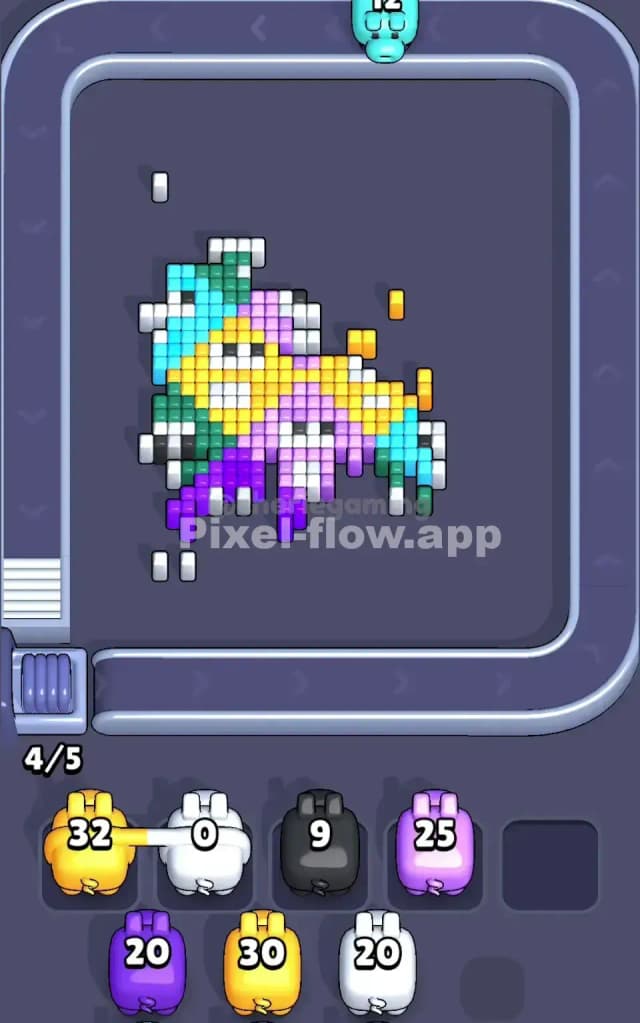
Pixel Flow Level 20 Solution 1
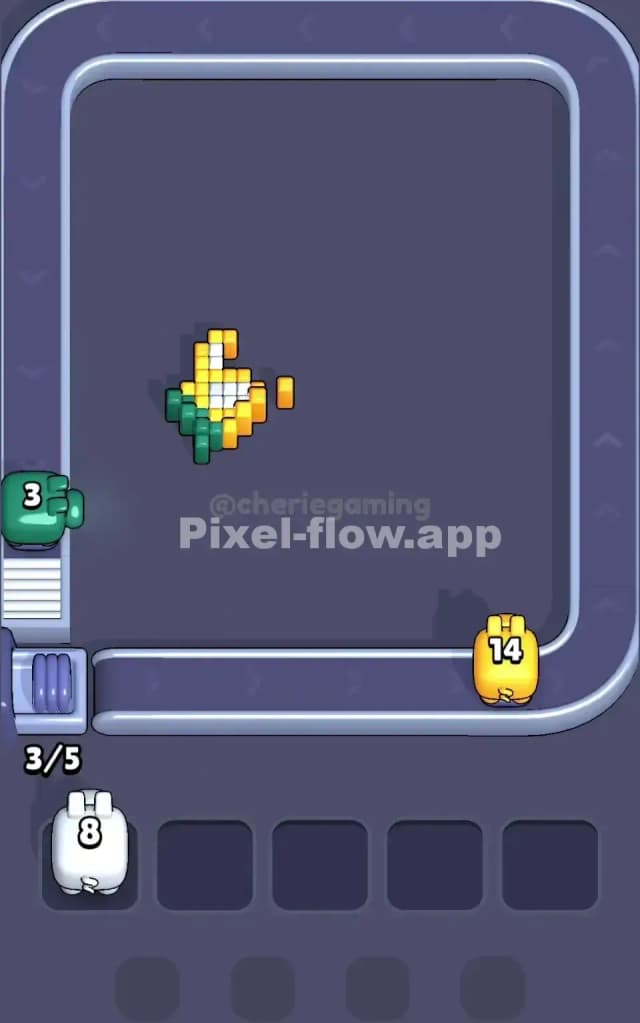
Pixel Flow Level 20 Solution 2
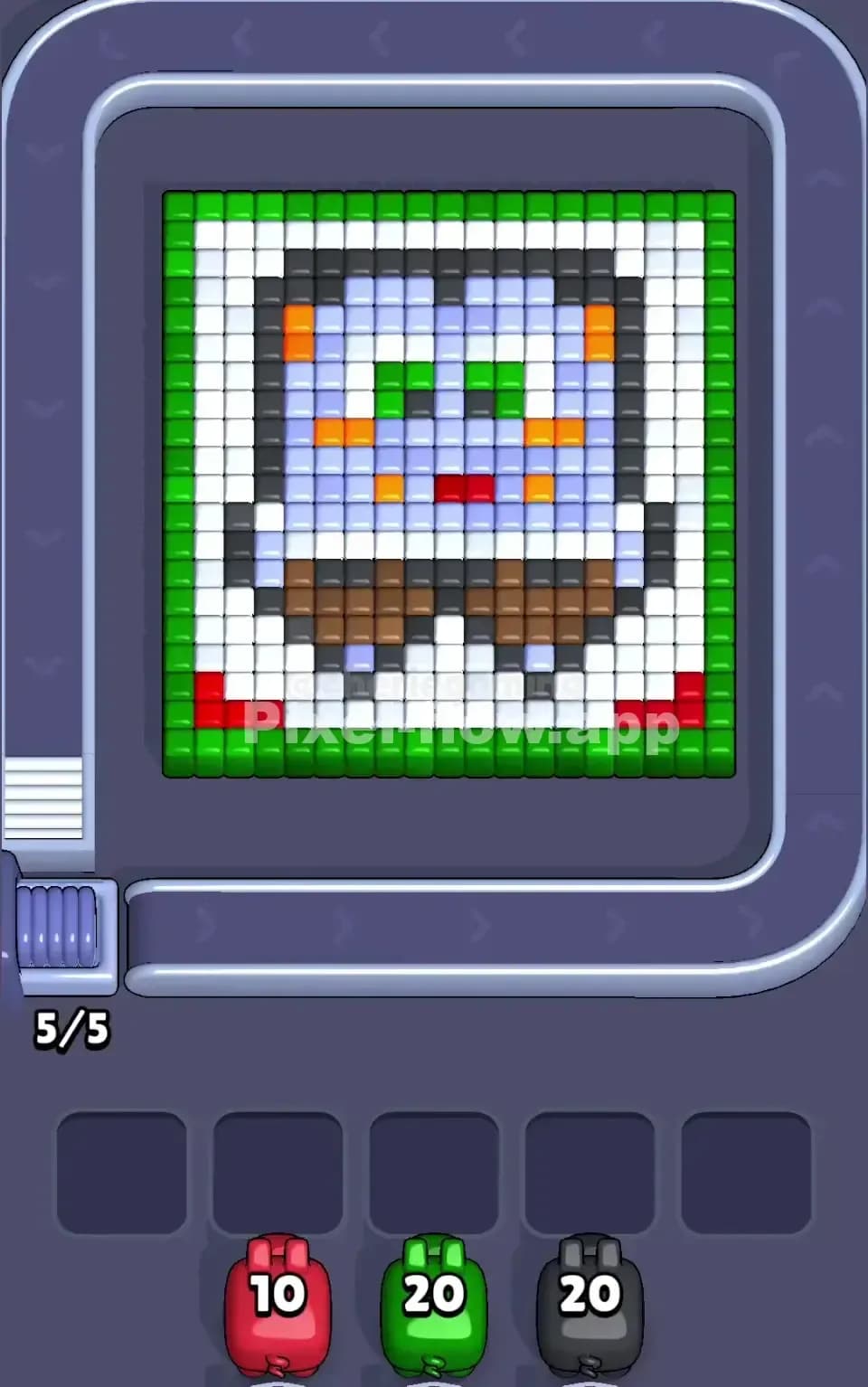
Pixel Flow Level 20 Solution 3

Pixel Flow Level 20 Overview

The Starting Board and Visual Layout

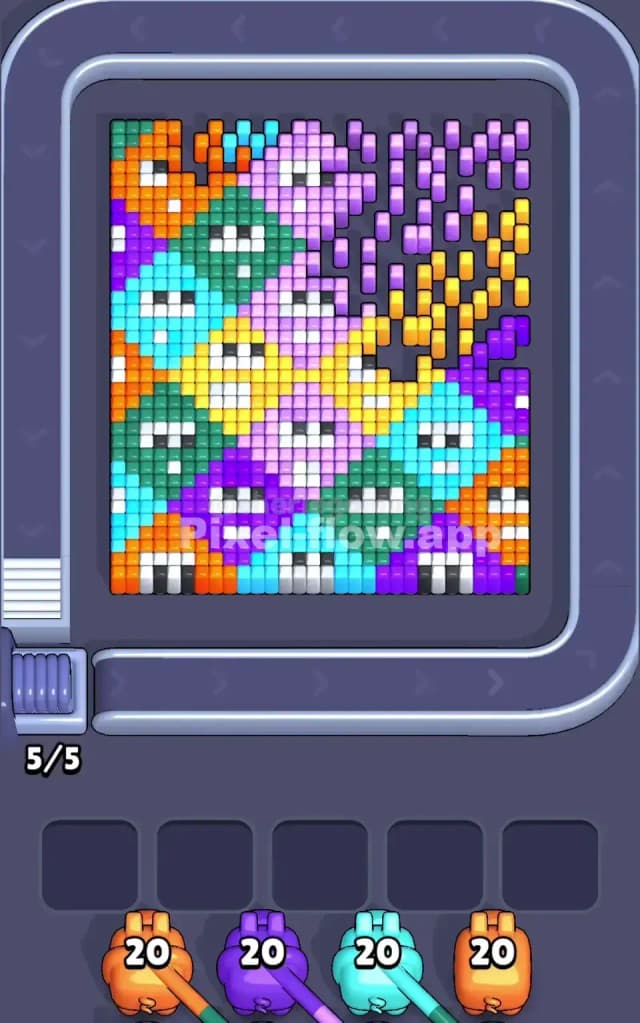
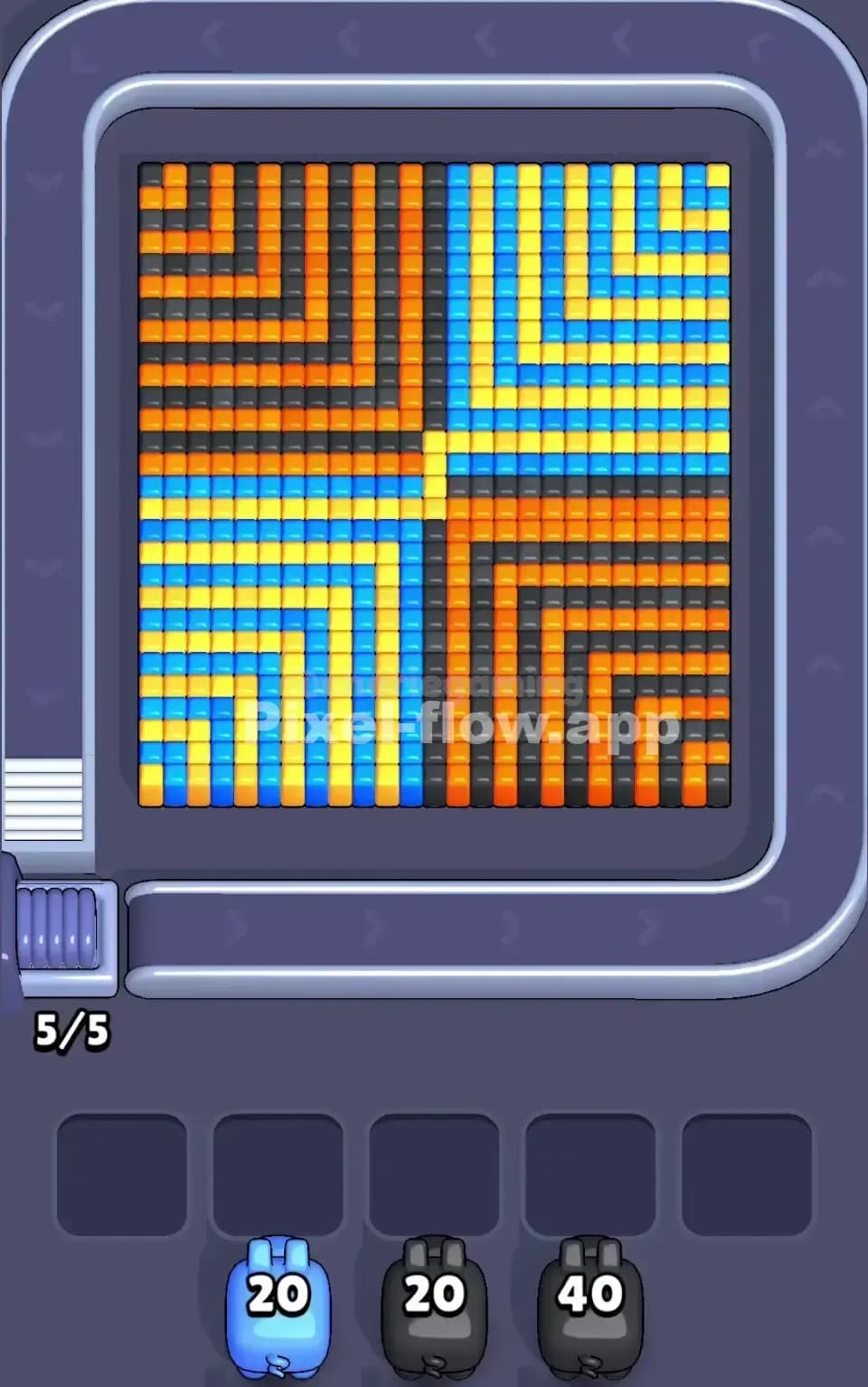
Pixel Flow Level 20 presents a vibrant, multi-layered voxel portrait that's deceptively complex. The board features a rich character face composed of dominant color bands—orange, cyan, purple, yellow, and green—arranged in sweeping horizontal and vertical patterns that form distinctive facial features, eyes, and expression details. White accent cubes are scattered throughout, acting as subtle shading that adds depth to the design. What makes Pixel Flow 20 particularly tricky is that the colors aren't evenly distributed; some zones (like the orange and cyan regions) are densely packed, while others (like the purple and yellow areas) are more spread out across the board. This asymmetry means you can't simply blast through colors in order—you'll need to strategically sequence your pigs to avoid leaving orphaned cubes that block access to deeper layers.

The Win Condition and Deterministic Nature

Your goal in Pixel Flow Level 20 is straightforward: eliminate every single voxel cube on the board. The level shows you have exactly five pigs in queue, each with twenty ammo—a total of one hundred shots to work with. Since each matching color cube costs one ammo, the math is deterministic; you'll need to clear all cubes with the ammo you have. What makes this satisfying (and occasionally maddening) is that there's one correct sequencing path that clears the board cleanly. You're not solving a puzzle of randomness; you're solving a puzzle of logic and order.


Why Pixel Flow Level 20 Feels So Tricky

The Critical Bottleneck: White and Mid-Layer Colors

The biggest threat to your success in Pixel Flow Level 20 is the white cube placement. White accents scattered throughout the design act as visual detail but functionally become orphaned tiles once you clear the colors around them. If you're careless with your color sequencing, you'll end up with white cubes exposed but no pig assigned to white in your queue, forcing those cubes to persist while your five pigs jam up the waiting slots. This creates a cascade failure where you run out of buffer space before clearing the board. The key frustration here is that white acts as both a feature and a trap—it's aesthetically necessary but mechanically dangerous if you mismanage your pig order.

Subtle Problem Spots and Awkward Gaps

Pixel Flow 20 hides three or four problem areas that trip up most first attempts. First, the purple pigs come in the middle of your queue, but the purple cubes are scattered across the right and lower portions of the board. If you fire the purple pig too early, you'll waste ammo on far-flung targets while closer, more critical colors remain. Second, the cyan region is massive and densely packed near the left and center; if you don't prioritize cyan early enough, you'll leave a wall of unerasable tiles that block access to what's underneath. Third, there's a thin band of yellow cubes that forms part of the "mouth" detail in the portrait. Yellow comes late in your pig queue, but if orange or purple cubes are sitting on top of that yellow zone, you'll never reach it. These overlapping dependencies make Pixel Flow 20 feel less like a straightforward shooter and more like a Jenga puzzle where every move affects three other regions.

The Moment It Clicked

I'll be honest: my first four attempts at Pixel Flow Level 20 felt chaotic. I was firing pigs reactively, watching the board fill up, and panicking when the waiting slots started to overflow. The level made me feel like I wasn't thinking strategically at all—just pulling the trigger and hoping. But then I stopped, zoomed out mentally, and traced the layers of the portrait. I realized that white cubes were outliers, not targets. I mapped out which color zones were truly blocking others. Once I accepted that Pixel Flow 20 required planning two or three pig moves in advance instead of reacting to each shot, the strategy crystallized. That shift from "what should I do now?" to "what order solves everything?" transformed the level from frustrating to deeply satisfying.


Step-by-Step Strategy to Clear Pixel Flow Level 20

Opening: Securing Your Buffer and Targeting the Right Zone First

Start your Pixel Flow Level 20 run by firing your first orange pig. Orange cubes dominate the left side of the board and the upper-left corner, forming the foundation of the portrait's hair and facial structure. Clearing orange first accomplishes two things: it frees up massive space on the left flank, and it exposes underlying cyan and purple layers that would otherwise remain invisible. Don't worry about achieving a perfect clear on the orange pig's first volley; your goal is to spend its twenty ammo on the densest orange cluster, leaving yourself with at least three empty waiting slots. This breathing room is critical. As the orange pig fires, you'll naturally have cyan and purple pigs queued behind it, ready to rotate in. Let the orange pig finish its ammo and drop into a waiting slot, but make sure you time this transition so that cyan comes on the conveyor belt before you hit four occupied slots.

Mid-Game: Layering, Ammo Management, and Strategic Parking

This is where Pixel Flow Level 20 really tests your discipline. Once orange is expended, immediately deploy your purple pig. Purple cubes are scattered across the right side and the lower-middle of the board, forming eye highlights and detail elements. However—and this is crucial—don't empty the purple pig completely on its first run. Fire it until you've cleared the densest purple clusters, then let it drop into a waiting slot. You still have your cyan pig fresh on the conveyor. Cyan is your workhorse. The cyan region is massive and spans from the left-center all the way to the bottom-right, forming the skin tones and base shading of the portrait. Your cyan pig should blast through at least fifteen of its twenty ammo in one or two passes, clearing huge swathes of the middle layers and exposing yellow, white, and green beneath.

Here's the subtle timing trick in Pixel Flow Level 20: as your cyan pig runs low on ammo, your orange pig (now in a waiting slot) has already been inactive. When cyan finishes and drops, you cycle orange back onto the conveyor if there are any remaining orange cubes lurking in newly exposed zones. This second pass with orange clears any stragglers you missed, freeing more waiting capacity. Next, fire your second orange pig (yes, you have two). This final orange volley polishes off any remaining orange cubes and prepares the board for the final color pushes. By mid-game, you should have cleared approximately 60–70 of your 100 ammo while maintaining at least two free waiting slots.

End-Game: The Final Colors and the Clean Exit

As Pixel Flow Level 20 enters its final phase, your remaining ammo is distributed between your leftover purple pig (still holding ammo), yellow, and green. Yellow forms the lower face details and mouth region, while green anchors the hair and side features. At this point, your board is mostly excavated, and you're chasing isolated pockets of color. Fire your yellow pig next, targeting the lower half of the board where yellow forms contiguous blocks. Yellow should burn through most of its twenty ammo in one or two bursts, leaving only scattered yellow cubes hidden in recesses. Then deploy your green pig. Green cubes cluster on the left side and upper corners; this pig should sweep through the remaining green zones efficiently.

The final trick to clearing Pixel Flow Level 20 without jamming is to save your second purple pig for last. This pig will hunt down the last five to ten scattered purple cubes that remain in hard-to-reach zones after all other pigs have finished. By delaying purple's second pass, you ensure that your waiting slots stay fluid throughout the late game, and you avoid the scenario where a pig runs dry with one stray cube left on the board. As your second purple pig empties its last ammo, the board should light up with the victory animation—all cubes gone, all pigs exhausted, all five waiting slots finally full with contented pigs.


The Logic Behind This Pixel Flow Level 20 Plan

Exploiting Order, Ammo Distribution, and the Waiting Buffer

The strategy for Pixel Flow Level 20 isn't random; it's built on understanding how the game's deterministic systems interlock. Each pig has exactly twenty ammo, and each cube costs one ammo. The board contains one hundred cubes, and you have five pigs: the math is perfectly balanced, but only if you sequence correctly. The waiting slots are your real resource—they're not penalties; they're a strategic tool. By deliberately parking a half-spent pig in a waiting slot, you're preserving its ammo for a second pass later, while keeping the conveyor free for a fresh pig. This is the core insight that makes Pixel Flow Level 20 solvable: you're not trying to empty every pig in one go; you're staggering their deployments to match the board's color layering.

Staying Calm: Reading the Queue, Counting Ammo, and Planning Ahead

The final layer of mastery in Pixel Flow Level 20 is staying calm and methodical. Before firing each pig, pause for two seconds and ask yourself: "Where are the densest pockets of this color? Are there hidden cubes of this color beneath other layers? Will this pig's ammo be exhausted, or will it survive for a second pass?" Watch the queue carefully. You can always see which pig is coming next, and the one after that. Use this information to predict when your waiting slots will fill and plan your parking accordingly. Count ammo mentally as your pig fires; if a pig still has five shots and no visible targets of its color, it's time to let it drop. Never panic when the waiting slots start filling—that's part of the design, and you've prepared for it by staggering your pig deployments. Pixel Flow Level 20 rewards patience and forward-thinking over reflexes, and once you internalize that rhythm, the level becomes not just clearable but genuinely fun.