Pixel Flow Level 224 Solution Walkthrough | Pixel Flow 224

How to solve Pixel Flow level 224? Get instant solution for Pixel Flow 224 with our step by step solution & video walkthrough.

Share Pixel Flow Level 224 Guide:
Pixel Flow Level 224 Gameplay
Pixel Flow Level 224 Solution 1
Pixel Flow Level 224 Solution 2
Pixel Flow Level 224 Solution 3

Pixel Flow Level 224 Overview

The Starting Board and Visual Puzzle

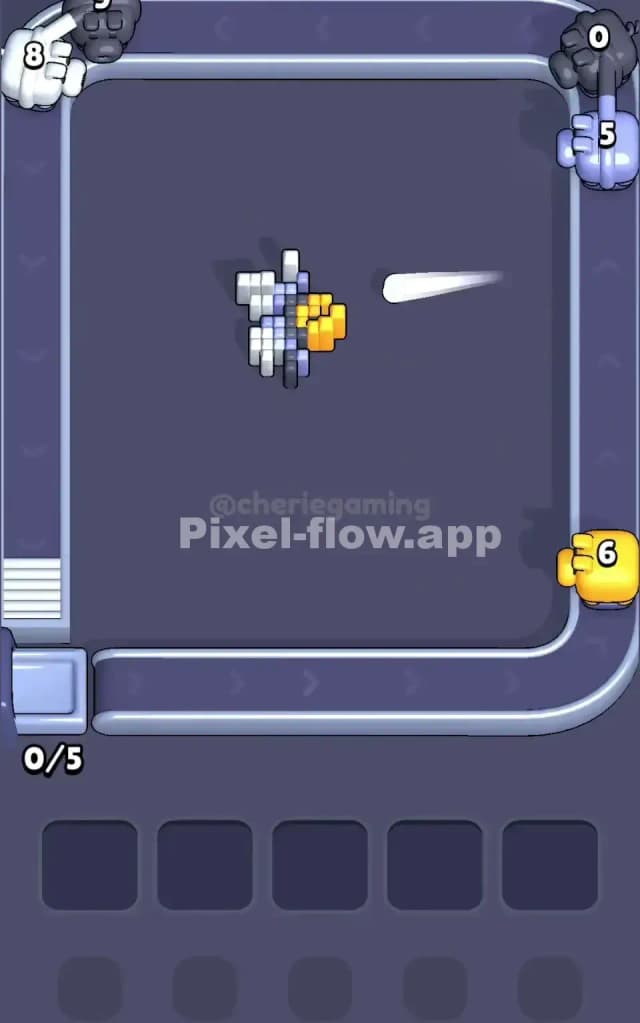
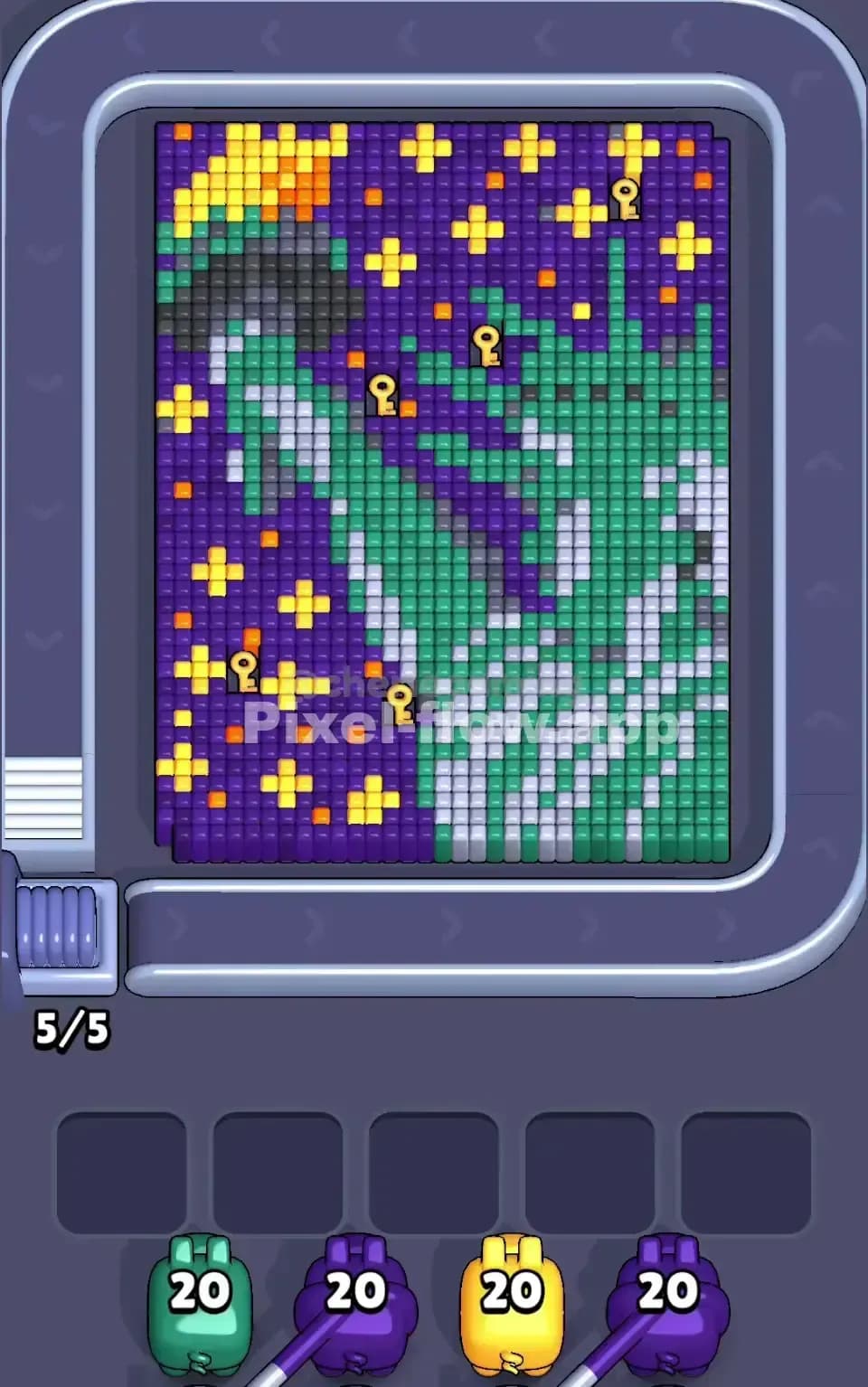
Pixel Flow Level 224 presents a striking voxel portrait of a character's face surrounded by a colorful, symmetrical border design. The main image is rendered primarily in white, light blue, and gray tones, which form the core of the puzzle you'll need to dismantle. Arranged around this central face are vibrant color blocks—magenta, cyan, purple, red, yellow, orange, blue, and green patches—each positioned at distinct cardinal points around the board. The symmetry here is deceptive; while the layout looks balanced, the color distribution and ammo counts create an asymmetrical challenge that demands careful sequencing.

The board structure in Pixel Flow 224 reveals multiple layers beneath the surface. As you clear the outer colored blocks and white voxels, you'll expose deeper shades of blue and gray that form the facial features and shadows. This layering is crucial to understanding your win condition: you must completely clear every single cube from the board by strategically firing each pig's ammo into matching-colored targets until nothing remains.

The Win Condition and Deterministic Mechanics

Your goal in Pixel Flow Level 224 is straightforward—eliminate all voxel cubes—but the path to victory is locked in stone. You're given five pigs, each with exactly 20 ammo, positioned at the bottom of the screen in a fixed order: white, cyan, white, blue, and green. These pigs will roll onto the conveyor belt in that exact sequence, and each will automatically fire at matching cubes until their ammo runs dry or no valid targets exist. The game is fully deterministic; there's no luck involved, only planning and patience. If you reach a state where all five waiting slots are filled with pigs that have leftover ammo but no cubes to hit, you've locked yourself into failure. Understanding this constraint is the foundation of solving Pixel Flow 224.


Why Pixel Flow Level 224 Feels So Tricky

The Bottleneck: The Gray and Dark Blue Core

The toughest obstacle in Pixel Flow Level 224 is the dense gray and dark blue core hidden beneath the colorful outer layers. These darker cubes form the bulk of the facial features and shadows, and here's the problem: you won't have direct access to them until you've cleared enough of the white and light blue voxels covering them. Your initial five pigs are white, cyan, white, blue, and green—none of which directly target gray. This means you must rely on the white pigs to excavate the overlying white cubes, strategically exposing the grays and darker blues underneath, all while managing your waiting slots so you don't jam the system with pigs holding wasted ammo.

The Subtle Problem Spots

One tricky aspect of Pixel Flow 224 is the uneven distribution of colored patches around the border. The red and orange blocks appear on the left side, while green and blue dominate the right. You have no red, orange, or purple pigs in your queue, which means those colored cubes must already be positioned beneath surfaces that don't exist—a trap that can catch you off guard. If you miscalculate and accidentally expose a color you can't shoot, you'll waste waiting slots parking useless pigs.

Another subtle gotcha is the cyan clusters scattered throughout the board. Cyan is your second pig, but you'll likely need to save that ammo for the mid-game phase when the cyan blocks become your primary target. If you're too aggressive early and blow through your cyan pig's ammo on isolated cyan cubes, you might not have enough ammunition left when the deep cyan patches emerge from beneath the white.

Additionally, the boundary between white cubes and light blue ones isn't always visually crisp on the screen. This can lead you to misjudge which color a pig is actually firing at, leaving you with unexpected misses or wasted shots. I found this particularly frustrating during my first few attempts at Pixel Flow 224—I'd think my white pig had finished when it actually had three or four cubes remaining in a hidden pocket.

When the Level Clicked

Honestly, Pixel Flow Level 224 felt nearly impossible until I stopped rushing and started counting. I was firing pigs almost reflexively at the first visible target, and naturally I hit a wall where the waiting slots filled up and I was stuck. The breakthrough came when I realized I needed to map out the rough sequence beforehand: which pig should target which region, and in what order, to expose the deeper layers without jamming the buffer. Once I accepted that this puzzle required foresight rather than reactive play, the solution became much clearer, and the level's elegant structure really shone through.


Step-by-Step Strategy to Clear Pixel Flow Level 224

The Opening: Establish Your Foundation and Preserve Slots

Your first move in Pixel Flow Level 224 should be to deploy your opening white pig and let it fire away at the white border regions. The white blocks form substantial clusters, particularly in the upper-center area of the board, and you want to chip away at these early to expose the light blue and gray layers beneath. Fire your first white pig and let it spend most of its 20 ammo on the visible white voxels. Don't panic if there are leftover white cubes; that's what your second white pig (the third in the queue) is for.

Keep a close eye on your waiting slots throughout this phase. As your first pig empties, don't immediately deploy the cyan pig. Instead, let the first white pig drop into a waiting slot once it runs out of targets. Your goal is to maintain at least two free waiting slots at all times—this buffer gives you flexibility and prevents an accidental lock-up. Deploy your cyan pig only after you've confirmed that the first white pig is safely parked and a couple of waiting slots remain open.

Mid-Game: Layer Exposure and Ammo Synchronization

This is where Pixel Flow Level 224 becomes a puzzle of sequencing and timing. Once your cyan pig is active, it should focus on the cyan clusters scattered around the board's perimeter. There are cyan blocks on both the left and right sides, and your cyan pig will need to weave between them, clearing out these patches. The key here is recognizing that the cyan blocks partially overlap with or sit adjacent to white cubes; as you remove cyan, you're simultaneously exposing more white underneath, which primes the board for your second white pig to come in and finish the job.

After your cyan pig has depleted most or all of its ammo, deploy your second white pig. This pig is your heavy hitter for exposing the underlying layers. The second white pig should aggressively target any remaining white cubes, particularly those clustered around the face's outline. While this pig fires, the gray and light blue layers will gradually become visible. Park your cyan pig in a waiting slot—don't leave it on the belt—because it's likely to get stuck without valid targets.

Now you're reaching the critical juncture. Before deploying your blue pig, take a mental inventory of what's visible. The blue pig will target the light blue voxels that form much of the facial structure. Light blue cubes are extensive in Pixel Flow Level 224, and your blue pig's 20 ammo should make a serious dent. However, don't expect it to clear all of them in one pass; the blue pig will likely need to be interleaved with other pigs or parked partway through.

End-Game: The Clean Finish and Final Slot Management

As you enter the final phase of Pixel Flow Level 224, your board should be significantly cleared, with gray and remaining blue cubes dominating the visible area. Your green pig (the last in the queue) is your final piece. Deploy it and let it target the green voxels, which appear on the right side of the board. Green cubes are fewer in number than white or blue, so your green pig will likely finish relatively quickly.

The trick to a clean end-game in Pixel Flow Level 224 is ensuring that your last pig to leave the queue—the green pig—finishes its ammo exactly when the board is nearly empty. If you've managed your earlier pigs correctly, the board should have minimal remaining cubes when your green pig comes out. Let it fire, and watch the final voxels disappear. If a few isolated gray cubes remain, don't panic; they're likely unreachable because you have no gray pig, which means they shouldn't have been your problem to begin with.

The final danger in Pixel Flow Level 224 is the temptation to micromanage the waiting slots in the end-game. If you've reached this point with two or three pigs already parked, resist the urge to redeploy them. Let them stay put. Your incoming pig should finish the job cleanly. If the board still has a substantial cluster of cubes when you deploy your last pig, you've likely made an error earlier, and you should reset and reconsider your mid-game pig sequencing.


The Logic Behind This Pixel Flow Level 224 Plan

Exploiting Pig Order and Waiting Slots as Core Strategy

The genius of Pixel Flow Level 224's design is that your pig order is completely fixed, and you can't change it. So instead of fighting the order, you must embrace it and build your strategy around it. The sequence white → cyan → white → blue → green is intentional. The two white pigs together carry 40 ammo, which is precisely what you need to clear the white border and foundation. Cyan and blue pigs together target approximately 40 cubes worth of light cyan and light blue, which form the mid-layers. Green handles the remaining green border pieces.

Your waiting slots aren't a burden—they're a tool. By parking pigs strategically and only deploying new pigs when you've created meaningful progress, you're controlling the tempo of the puzzle. Each waiting slot acts as a "pause point," allowing you to assess the board, count remaining cubes, and decide whether the next pig in the queue is the right choice or whether you should wait. This is why maintaining two free slots is so critical; it gives you the breathing room to think.

Staying Calm Under Pressure: Counting, Planning, and Reading Ahead

The final secret to clearing Pixel Flow Level 224 is adopting a mindset of deliberate, methodical play. Every time a pig is deployed, count its ammo as it fires. Watch which cubes it targets and which regions it exposes. Before you deploy the next pig, scan the entire board and identify the next most abundant color or the most strategically important region to hit. Are there white cubes blocking access to blue? Then hold off on the blue pig and deploy your second white pig instead.

Additionally, plan two or three pigs ahead whenever possible. When your first white pig is firing, you should already be thinking about whether your cyan pig will have enough targets when it emerges, and whether the second white pig will be necessary before the blue pig. This forward-looking approach prevents last-minute panics and waiting-slot jams. You'll find that Pixel Flow Level 224 rewards patience and foresight far more than speed. Take your time, count carefully, and trust that if you're sequencing your pigs logically, the solution will emerge naturally. Good luck!