Pixel Flow Level 223 Solution | Pixel Flow 223 Walkthrough
How to beat Pixel Flow Level 223: Video solution & walkthrough. The fastest way to pass Pixel Flow 223.
Is this the wrong level layout?🤔
Pixel Flow randomizes levels for different players. Don't worry, just upload a screenshot of your board, and our AI will find the correct video instantly.

Pixel Flow Level 223 Walkthrough
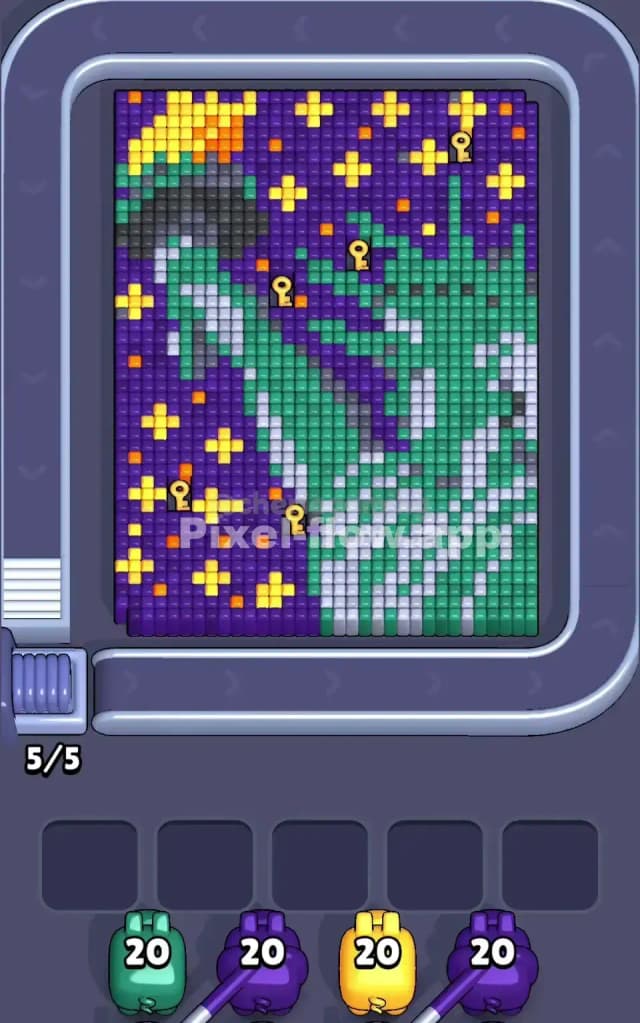
This level depicts the iconic Statue of Liberty set against a night sky full of stars. The main colors here are deep purple for the night sky, yellow/orange for the stars and torch flame, and a mix of teal/green/grey for the statue itself.
The rule to beat Pixel Flow Level 223 is straightforward but tight on space. You must clear the top layer of purple sky and scattered stars to reach the statue's details underneath. Is it hard? Yes, this is a very hard level because the colors are extremely mixed in the top left corner (the torch flame) and the purple sky acts as a massive "lid" preventing you from reaching deeper layers. One wrong pig in the waiting slots can ruin your run.
Pixel Flow Level 223 Overview
Think of this picture as a night scene in New York. The Statue of Liberty dominates the right and center of the board, rendered in classic oxidized copper green and shadowed grey. The background is a solid wall of dark purple representing the night sky. Scattered across the sky are yellow plus-shaped stars and smaller orange dots.
The most critical asymmetric feature is the Torch Flame in the top left corner. It's a dense cluster of bright yellow and orange pixels that sits right next to the purple sky. This area is dangerous. If you ignore it, you end up with too many yellow pigs clogging your queue later.
Also, notice the Keys. There are several gold keys embedded in the statue and the sky (around the head and torch). These usually lock up lower layers, meaning you must prioritize clearing the blocks directly on top of them to progress.
Step by step solution walkthrough for Pixel Flow Level 223
First Color Zone to Erase in Pixel Flow Level 223
You need to start with Purple.
Narratively, you have to clear the "night" to see the "statue." Logically, purple is the most abundant color on the top layer, covering almost the entire left side and the background behind the head. It acts as a blocker.
If you don't clear the purple first, your teal and grey pigs will just sit in the waiting slots with full ammo because their targets are buried underneath the sky. Grab every purple pig you see on the conveyor belt immediately. Clearing that large purple mass on the left side exposes the yellow stars and the torch flame, which are your next biggest threat.
How to pass Pixel Flow Level 223 without power ups or boosters
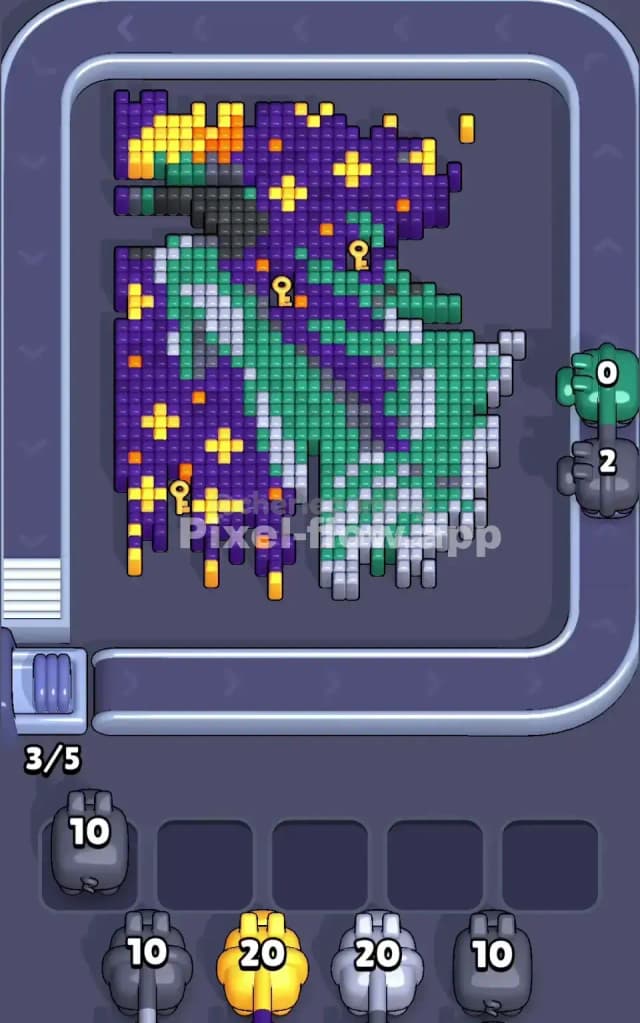
Once the purple sky is thinned out, the board looks messy. You’ll have the teal statue body exposed, but the top left corner will still be a stubborn chunk of yellow and orange (the torch).
Here is the mid-game danger: The Grey/Teal Trap. The statue has vertical stripes of grey and white running down the robes. These layers are deep. Do not focus on the bottom right of the statue yet.
Instead, shift your focus to the Yellow pigs. The torch in the top left is thick. If you let yellow pigs pass by on the belt while trying to fix the statue's robes, you will fail. You need to strip the yellow flame down to nothing. This often reveals hidden keys or clears the path for the final layer of the arm.
Your priority order in the middle section should be:
- Yellow: Clear the torch and big stars.
- Orange: Finish the tips of the flame.
- Teal/Green: Start shaving the main body of the statue.
- Grey/White: Only when the surface green is gone.
If a grey pig drops into your slot early, don't panic, but don't let three of them stack up. You won't have targets for them until the green layer is peeled back.
Last Details You Clean Up in Pixel Flow Level 223
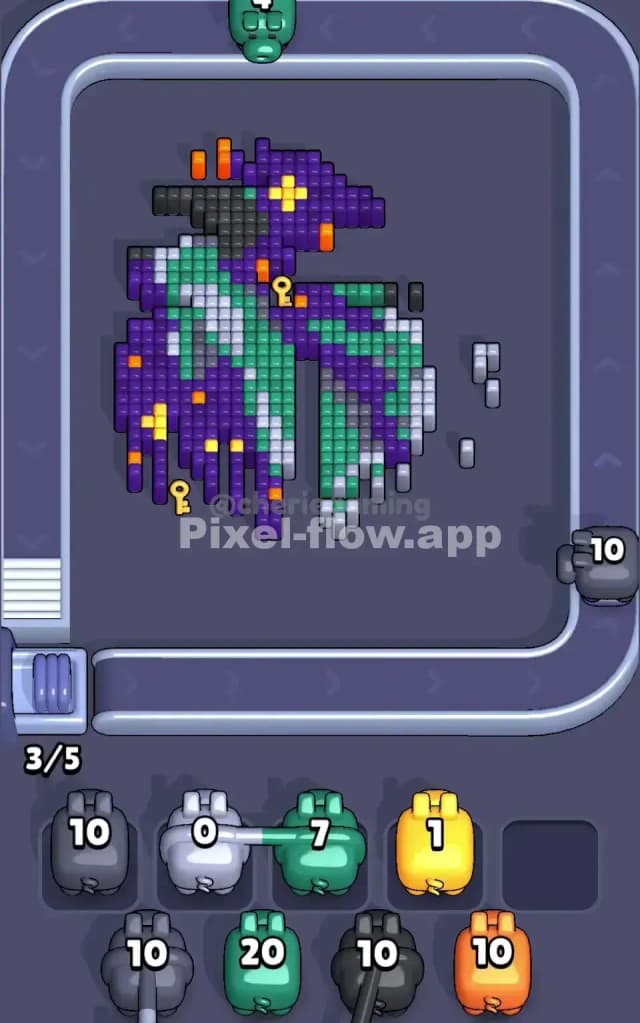
In the final moves of Pixel Flow Level 223, you are usually left with the intricate folds of the statue's gown. These are vertical lines of White and Grey pixels.
The tricky part here is that single stray pixels often hide near the bottom edge or tucked under the armpit area of the statue. Watch out for single Orange blocks that might have been part of a star you missed earlier. They can be hard to spot against the dark background.
Your final pigs will likely be Grey or White. Ensure you have at least two open slots in your waiting area before the end-game, because the game often throws a random color at you right at the end that you can't use immediately. Keep those slots clear to absorb the "junk" while you hunt for the last white robe pixels.