Pixel Flow Level 231 Solution Walkthrough | Pixel Flow 231
How to solve Pixel Flow level 231? Get instant solution for Pixel Flow 231 with our step by step solution & video walkthrough.


Pixel Flow Level 231 Overview
The Board and Its Visual Complexity
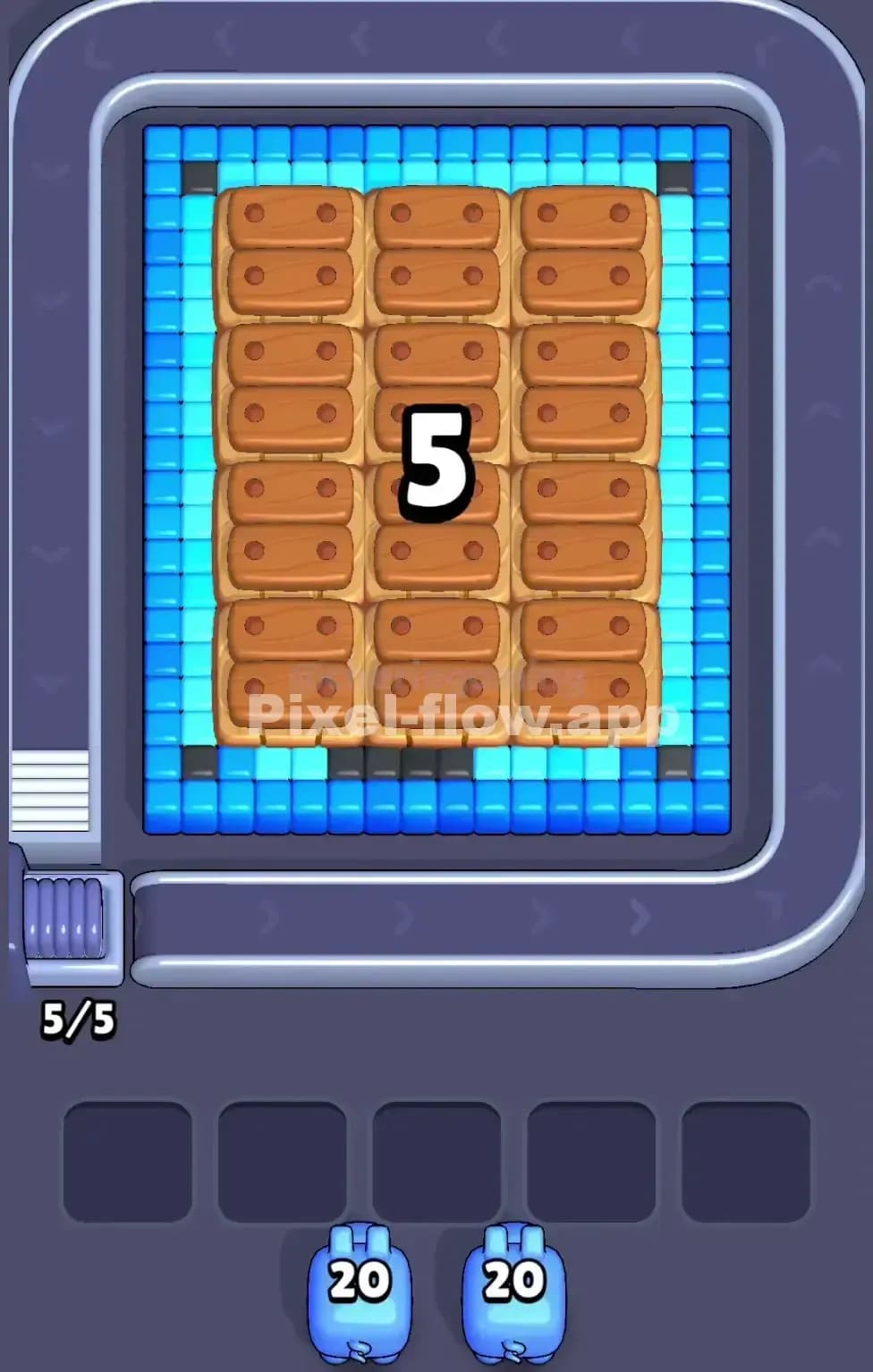
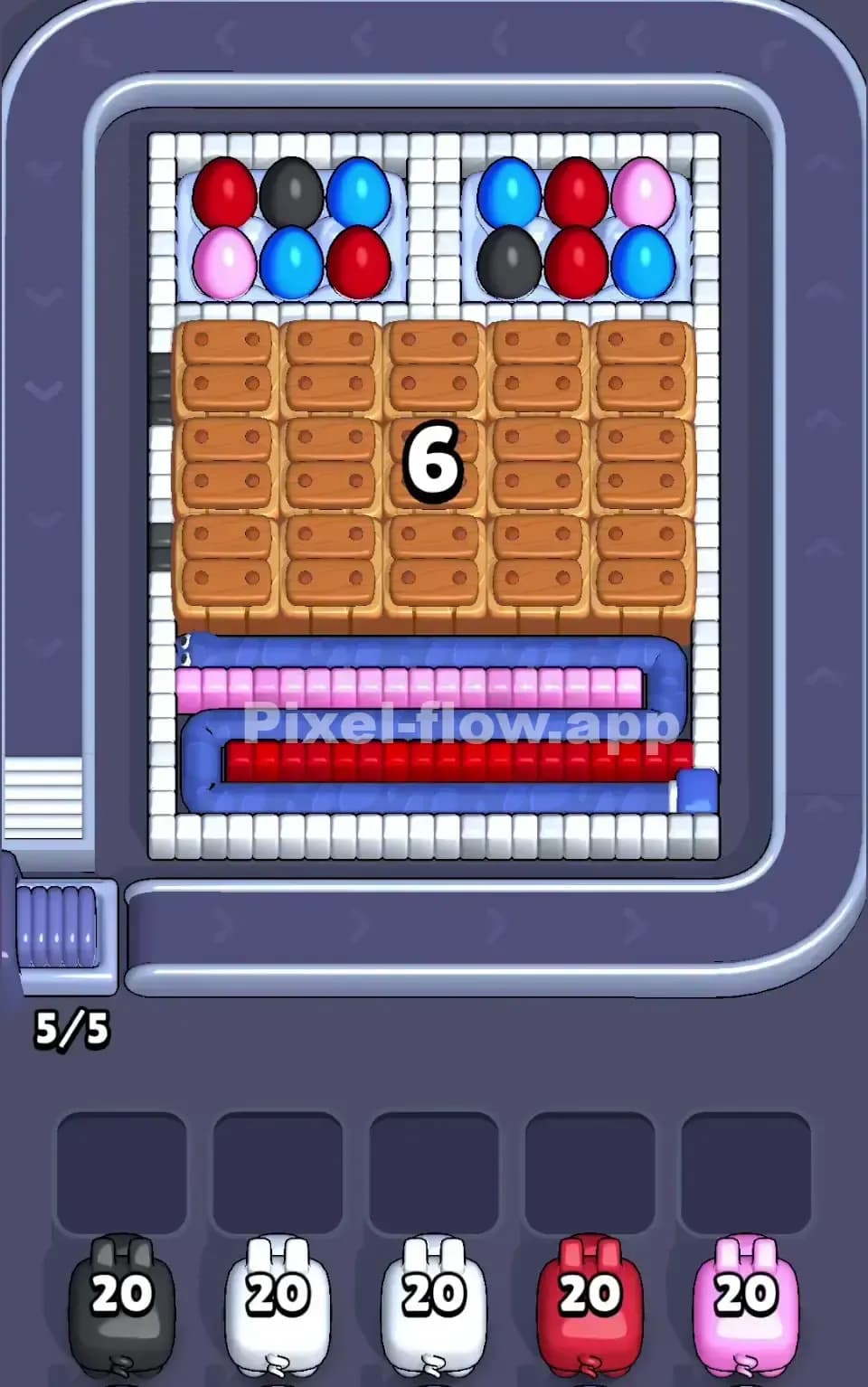
Pixel Flow Level 231 presents a beautifully layered symmetrical design—think of it as a sprawling voxel mandala with brown forming the outer frame, white creating diagonal axes down the center, and a vibrant mix of red, green, magenta, cyan, and additional brown tones arranged in a radial pattern. The board is genuinely striking, but that aesthetic complexity translates into a real strategic puzzle. You're looking at multiple color zones distributed across the four quadrants, with each zone containing a different number of cubes. The center holds tan-colored ammo blocks that you'll want to clear early to give yourself working room, and the overall structure demands that you expose inner layers by systematically removing outer colors first.
Win Condition and Deterministic Flow
Your goal in Pixel Flow Level 231 is straightforward: clear every single cube on the board. What makes this level interesting is that the outcome is completely deterministic—the pig queue order and each pig's ammo count are fixed from the start. You're given three pigs with 20 ammo each (two white, one brown), and your challenge is to sequence them so their shots land perfectly on available cubes without leaving any pig stranded in the waiting slots with unused ammo. If you jam all five waiting slots and still have trigger-happy pigs that can't find targets, you'll lose instantly. The key to success in Pixel Flow Level 231 lies in planning moves two or three pigs ahead rather than reacting to whatever's convenient right now.
Why Pixel Flow Level 231 Feels So Tricky
The Central Bottleneck
The biggest threat to your run on Pixel Flow Level 231 is the tan ammo block cluster occupying the center of the board. These 10 cubes don't match any of your initial three pigs' colors, which means they'll sit there untouched while you're trying to clear the outer layers. Here's the problem: if you spend your first pig's ammo on the surrounding red and white cubes without a plan, you might expose deeper layers that still can't be reached by your remaining pigs. That forces you into a waiting slot, and suddenly you've burned through one of your five slots for nothing. The central tan blocks represent a hidden timer—you need to sequence your moves so that by the time you've cleared enough of the board, you'll have the right colored pig available to tackle them, or you'll face a cascade failure where multiple pigs drop into waiting slots.
Awkward Color Pockets and Hidden Layers
Pixel Flow Level 231 also hides several color pockets that aren't immediately obvious. The red cubes cluster in the lower left and lower right quadrants, the green occupies the upper center-left and lower center-right, and the magenta appears in isolated patches on the upper right. What's sneaky is that some of these colors sit deeper than others—you might think you've cleared all the red, only to find another red cube hiding behind white or brown. The green cubes present a similar trap because there's no green pig in your starting queue, meaning any green you expose accidentally becomes dead weight that fills your waiting slots. White is technically your biggest ammo resource, but if you burn both white pigs early on border cubes, you'll struggle to clear the interior white sections that connect different color zones.
The Frustration Point and the "Click" Moment
I'll be honest: the first time I attempted Pixel Flow Level 231, I burned through my brown pig on random shots and immediately regretted it. I wasn't counting ammo carefully, and I didn't realize that the waiting slots were filling up faster than they should. The frustration came from feeling like I was being punished for exploring, but the real issue was that I wasn't reading the board as a layered structure. Once I sat down and mapped out which colors existed in which layers, and realized that white was the key to accessing the magenta and deeper sections, everything clicked. Pixel Flow Level 231 went from feeling like a luck-based nightmare to feeling like a logic puzzle I could actually solve. That shift—from reactive to proactive—is what separates a failed attempt from a clean victory.
Step-by-Step Strategy to Clear Pixel Flow Level 231
Opening: Target Brown and White Borders First
Start Pixel Flow Level 231 by feeding your brown pig first and having it clear as much of the brown border as possible. Your brown pig has 20 ammo, and there's plenty of brown cubes forming the outer frame, so this is a safe opening that won't jam your waiting slots. Brown is the easiest color to spot and the lowest priority for depth access, so spending your brown pig's ammo here keeps your two white pigs in reserve for the trickier mid-game sequences. As your brown pig fires, keep an eye on how many waiting slots you're using—you should aim to keep at least two slots completely empty at all times. Brown should take 15–18 shots to clear the visible frame, leaving that pig with 2–5 ammo remaining. If it drops into a waiting slot after clearing the obvious brown, that's fine—you've reserved your white pigs for the critical moves ahead.
Mid-Game: Exposing Layers and Parking Half-Spent Pigs
Once brown is mostly done, feed your first white pig. This is where Pixel Flow Level 231 gets tactical. White forms the diagonal cross pattern and appears in several layers, so you'll want this pig to attack the white cubes that are blocking access to the magenta and green zones. Start with the white sections that directly overlie other colors—specifically, the upper-right white patches that sit above magenta, and the center white blocks that separate the quadrants. Your first white pig should spend roughly 12–15 ammo here, deliberately leaving some white cubes untouched if they're not blocking anything critical. When this pig reaches 5 ammo or fewer, stop and let it drop into a waiting slot. You're not wasting ammo; you're parking a backup pig safely so that the second white pig can come through clean.
Now feed your second white pig and target the remaining interior white. This pig should clear the white cubes that directly overlie the tan center blocks and any white that's shielding red or green from below. By now, you're roughly 60 moves into Pixel Flow Level 231, and you should have a clear view of the red, green, and magenta distribution. Your second white pig will likely run out of ammo either on the interior white or on some of the red/green cubes it accidentally encounters. Don't panic if it drops into a waiting slot with 2–3 ammo remaining—that's expected and manageable.
End-Game: Clearing Color Zones and the Final Push
At this point, you've used up your three initial pigs, and you're relying on the waiting slots to recycle new pigs automatically. The waiting slots should now have your half-spent pigs, and new pigs (likely red, green, cyan, and magenta based on the level design) should be surfacing from the queue. Feed the red pig and have it clear the red cubes in the lower left and lower right. Red shouldn't have too many targets left because white already cut through some of the red zones, so this pig should finish relatively quickly. Then feed green and handle the green patches in the upper-left and lower-right areas. Magenta and cyan come next, each targeting their respective zones.
The final step is critical: ensure that your last few pigs have just enough ammo to clear their last targets without getting stuck. If you see a pig with 3 ammo left and only 2 cubes of its color remaining, you've nailed Pixel Flow Level 231. If a pig has 5 ammo and only 1 cube left, you've slightly miscalculated, but it'll still drop into a waiting slot without killing your run. The goal is to empty all five waiting slots and clear the board cleanly.
The Logic Behind This Pixel Flow Level 231 Plan
Exploiting Pig Order and Ammo Precision
The strategy for Pixel Flow Level 231 works because it respects the fixed queue order and each pig's ammo budget. By spending your brown pig on the easiest targets first, you preserve white for the high-stakes layering decisions. By deliberately parking half-spent white pigs in waiting slots, you create breathing room and avoid the trap of forcing a pig to find invalid targets. The logic assumes that the level designer balanced ammo counts so that if you sequence correctly, every cube can be cleared with no conflicts. Once you trust that assumption and stop second-guessing your own plan, Pixel Flow Level 231 becomes solvable.
The Calm, Analytical Approach
The secret to Pixel Flow Level 231 is staying calm and keeping a running count of your waiting slots and upcoming ammo. Watch the pig queue constantly—know which color is coming next so you can plan around it. Count how much ammo your current pig has spent and how many cubes of that color are still visible. Ask yourself: "If I fire now, will my pig have ammo left over?" and "Do I have space in the waiting slots if it does?" By thinking two or three pigs ahead and recognizing that Pixel Flow Level 231 has a logical solution, you shift from frustration to confidence. The board will clear, and you'll wonder why it ever felt so hard.