Pixel Flow Level 234 Solution Walkthrough | Pixel Flow 234
How to solve Pixel Flow level 234? Get instant solution for Pixel Flow 234 with our step by step solution & video walkthrough.


Pixel Flow Level 234 Overview
The Board Layout and Main Challenge
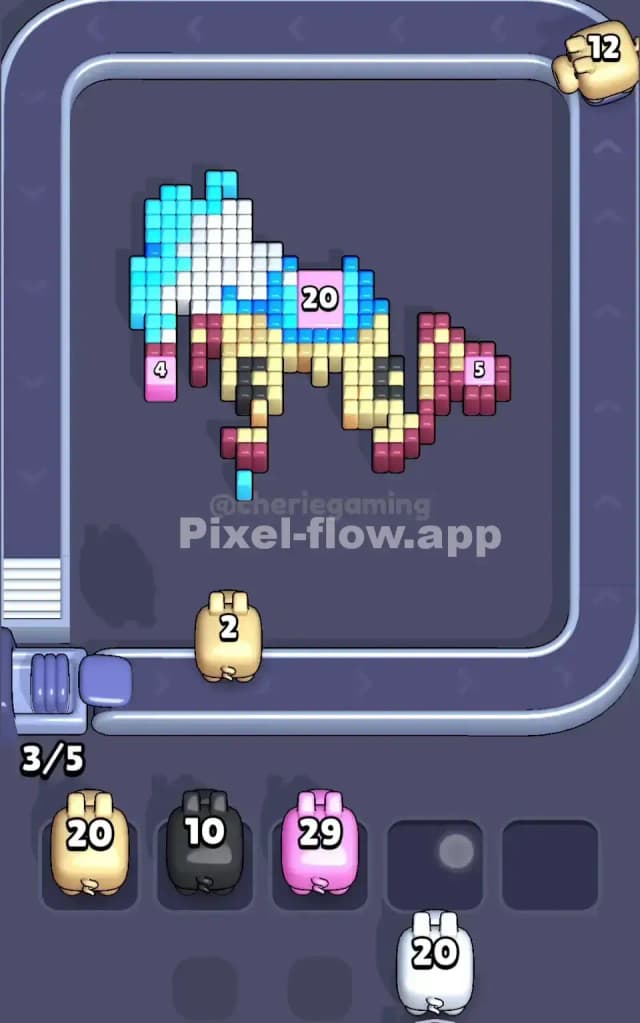
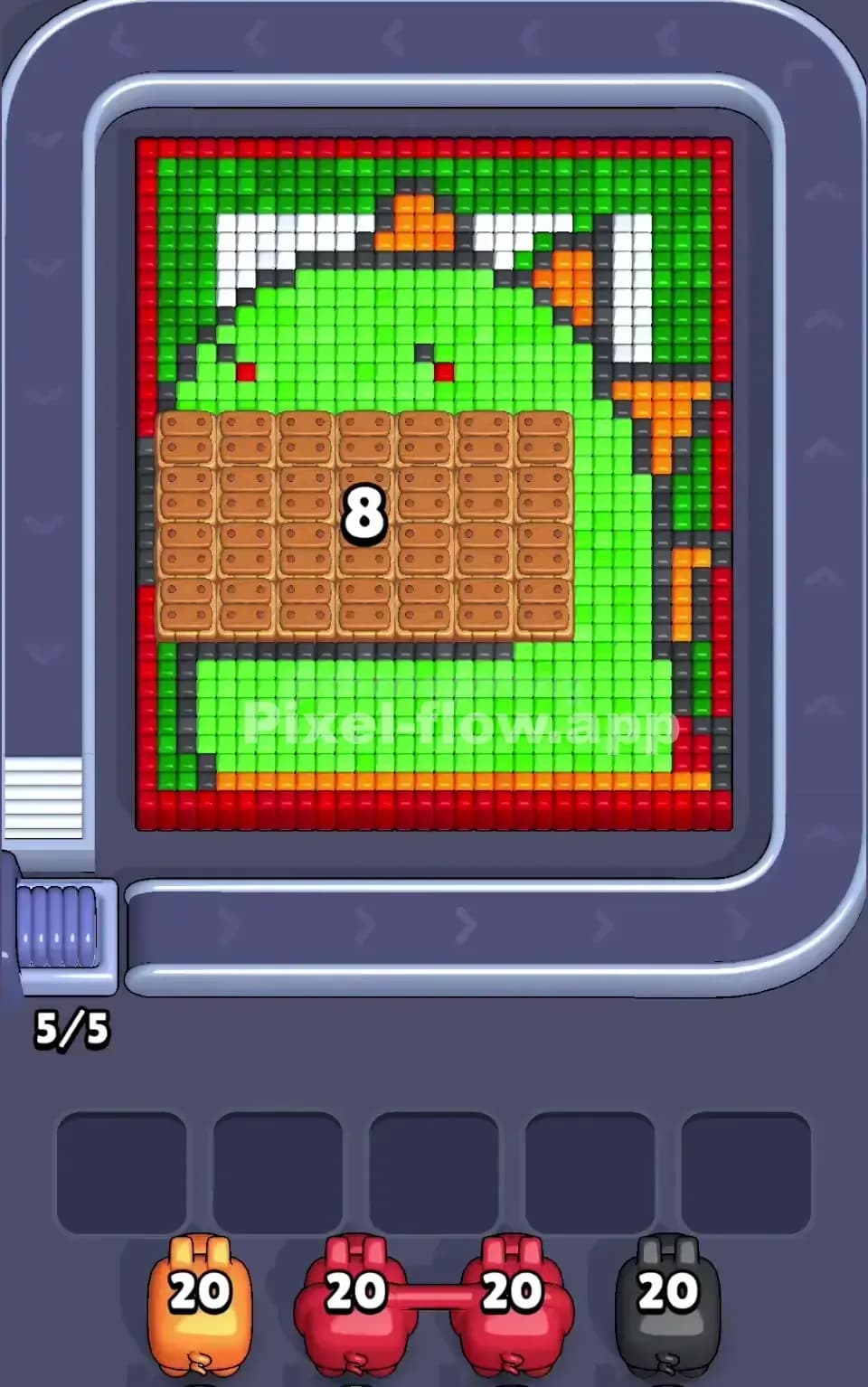
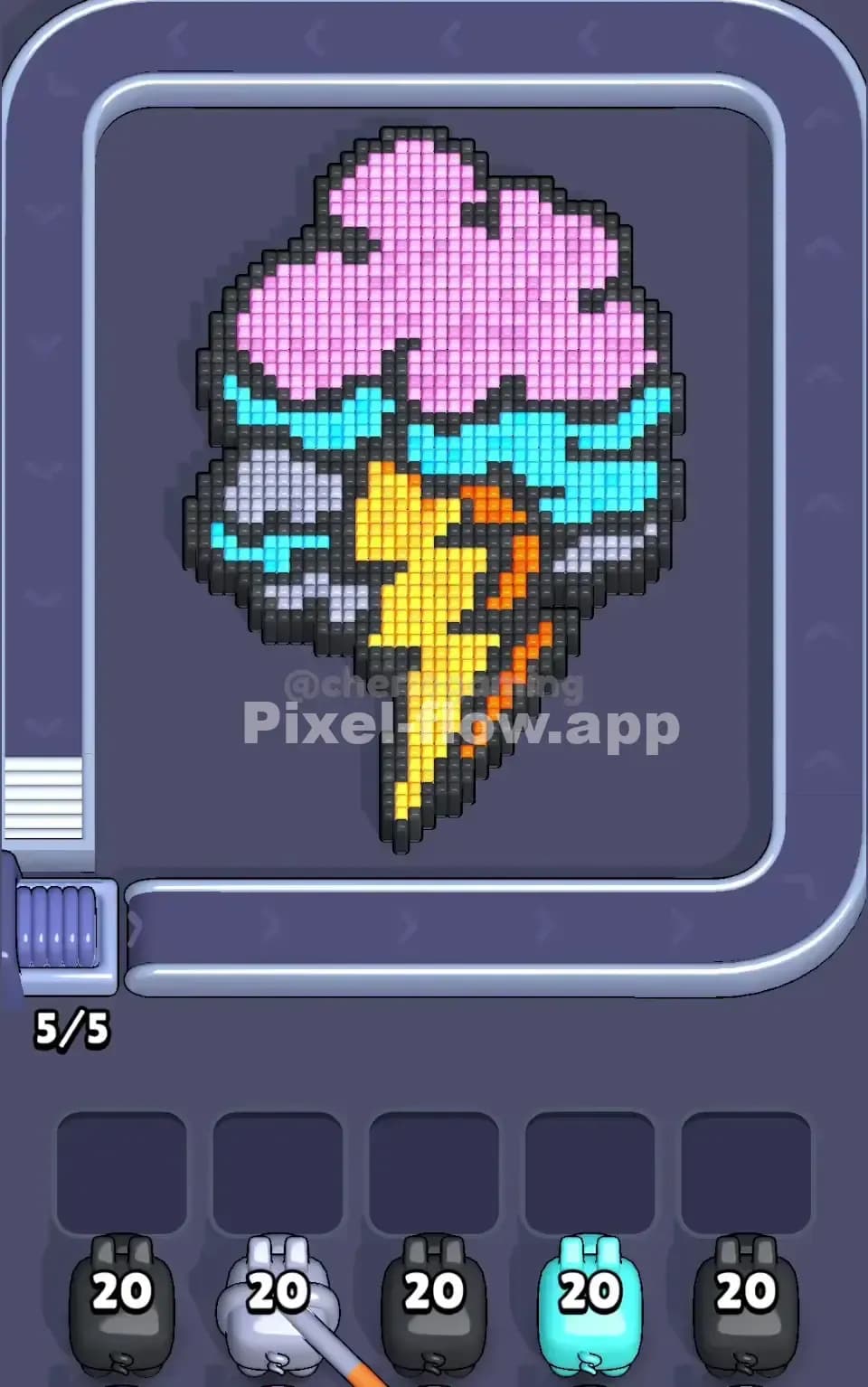
Pixel Flow Level 234 features a charming pixel-art owl face as its centerpiece, composed of multiple color layers that you'll need to dismantle strategically. The dominant colors are cyan, white, yellow, magenta, and dark blue, with a cheerful expression formed by black eyes and a cream-colored beak. The owl's head is surrounded by a thick cyan border, and you'll notice a mysterious question mark in the center—that's your hint that there's something hidden beneath the surface layers. The overall structure creates a compact, symmetrical design that looks manageable at first glance but demands careful sequencing to avoid getting your pigs stuck in the waiting slots.
You're working with three color-coded pigs: a dark blue pig with 20 ammo, a cyan pig with 20 ammo, and a white pig with 20 ammo. Your goal in Pixel Flow Level 234 is straightforward—clear every single cube on the board—but the path to victory requires understanding how pig order, ammo counts, and layer exposure interact. Since every move you make is deterministic (each pig shoots its specific color and has a fixed ammo pool), there's no randomness to blame; it's pure puzzle logic.
The Win Condition and Deterministic Nature
Winning Pixel Flow Level 234 means reducing the board to zero cubes while keeping all five waiting slots empty or at least not completely jammed. The pigs arrive in a fixed order—you can't choose which pig comes next—so your job is to sequence your selections wisely so that when you call on a pig, its ammo actually has targets to hit. Once you understand that the pig queue and ammo values never change, you'll realize that there's exactly one or two optimal solution paths, and your task is to find it through careful planning.
Why Pixel Flow Level 234 Feels So Tricky
The Cyan Bottleneck
The biggest trap in Pixel Flow Level 234 is the sheer volume of cyan cubes surrounding and filling the owl's face. With 20 cyan ammo available, you'd think clearing cyan would be straightforward, but here's the catch: cyan is layered underneath white and yellow sections. If you fire the cyan pig too early, you'll expose deeper layers before you're ready, and you'll run out of waiting slots trying to park the other pigs. Conversely, if you delay the cyan pig too long, you'll find yourself with a half-empty waiting bench and a pig that has nowhere to go—forcing it into a stuck slot and triggering a cascade failure. The cyan border wrapping around the owl's perimeter is especially deceptive because it looks like the first thing you should target, but jumping straight at it is exactly what the level wants you to avoid.
Awkward Color Patches and Ammo Mismatches
Within Pixel Flow Level 234, you'll notice magenta accents on the owl's cheeks and chin that are scattered across multiple depth layers. These magenta cubes don't belong to any of your three pigs, which means they're either baked into the background or they'll need to be exposed by clearing the colors in front of them. The real problem is that the yellow beak and the white center of the face are positioned in a way that creates two competing priorities: do you clear yellow first to expose what's underneath, or white first to reveal the hidden layers near the question mark? If you pick the wrong sequence, you'll end up with a white pig that has 8 ammo left but no valid targets, sitting in your waiting bench while your cyan and blue pigs are backed up behind it.
Personal Reaction and the "Aha" Moment
I'll be honest—Pixel Flow Level 234 frustrated me for a solid fifteen attempts. I kept trying to bulldoze the cyan border right away, thinking brute force would work, and I'd inevitably end up with three pigs in the waiting slots all desperately needing targets that didn't exist. The turning point came when I realized I was thinking about it backwards: instead of asking "which color should I clear first?" I started asking "which pig can I afford to park safely while I expose what it'll need later?" Once I accepted that some pigs need to wait their turn and that the waiting slots are actually a resource, not a failure state, the solution clicked. Pixel Flow Level 234 went from impossible to elegant in about thirty seconds.
Step-by-Step Strategy to Clear Pixel Flow Level 234
Opening: Establish Your Slot Buffer
Your first move in Pixel Flow Level 234 should be to deploy the blue pig (20 ammo) against the dark blue cubes in the bottom corners and any other blue spots scattered across the board. Dark blue appears in the lower sections and edges, and it's a relatively small cluster, so the blue pig should burn through its ammo quickly without overexposing the board. This accomplishes two things: it clears a straightforward color with a manageable footprint, and it gets one pig off the conveyor belt so you've got breathing room in your waiting slots. After the blue pig finishes, you should have at least 3–4 empty slots available.
Next, deploy the white pig (20 ammo), but do not go all-in on the white sections yet. The white cubes form the owl's main face and eyes, and they're hiding yellow and cyan underneath. Instead, target only the white patches that are guaranteed to not expose deeper colors you're not ready for—essentially, skim the surface. This might only burn 7–10 of your white ammo, which means your white pig will likely drop into a waiting slot. That's fine; you're intentionally parking it. The key is that you're clearing some white without committing to a full white sweep, keeping your options flexible.
Mid-Game: Layer Exposure and Pig Parking
Once blue and partial white are out of the way, it's time to tackle yellow in Pixel Flow Level 234. The yellow cubes form the owl's beak and cheeks, and clearing them will expose the magenta accents and potentially some of the hidden cyan beneath. Deploy your cyan pig (20 ammo) and target the cyan border and any cyan cubes exposed by the yellow removal. Since cyan makes up such a large portion of the board, you're likely to burn 12–16 of the cyan pig's ammo here. If the cyan pig still has ammo left (4–8 shots), it'll drop into a waiting slot—and again, that's your plan, not a failure.
Now here's the crucial sequencing move: look at what's left on the board. You should have exposed the hidden layers beneath the surface, and you'll see pockets of yellow, white, and potentially cyan still remaining. If your white pig is sitting in a waiting slot with ammo available, and you can see white cubes to target, pull the white pig back onto the conveyor. It'll resume firing and deplete its remaining ammo. The same applies to your cyan pig if more cyan surfaces. In Pixel Flow Level 234, the waiting slots aren't punishment—they're a holding pattern that lets you delay until the right moment to finish a pig off.
End-Game: The Final Sequence
As you approach the end of Pixel Flow Level 234, your board should be mostly clear except for scattered pockets of yellow, white, or cyan. By this point, you've likely got one or two pigs already in the waiting slots with a handful of ammo left. The final phase is about flushing those pigs cleanly. If your white pig is waiting with 3 ammo and you can see 3+ white cubes, deploy it. If your cyan pig is parked with 5 ammo and there's cyan scattered around, bring it back. The goal is to deplete every pig's ammo completely while clearing the last cubes, finishing with an empty board and empty waiting slots.
The very last cubes in Pixel Flow Level 234 are usually the trickiest to target because they're so few and far between. You might have a pig with 4 ammo remaining but only 2 visible cubes of its color. Don't panic—those last 2 shots will expose what's beneath, and if you planned correctly, there'll be more cubes of that color waiting underneath. The question mark in the center might be one of these hidden reveals. If all five waiting slots fill up and you still have a pig with unspent ammo and nowhere to go, you've deviated from the optimal path; reset and try a different opening sequence.
The Logic Behind This Pixel Flow Level 234 Plan
Why Order and Ammo Counting Matter
The core insight for Pixel Flow Level 234 is that you're not just moving pieces around; you're choreographing a precise sequence where each pig's job impacts whether the next pig will have valid targets. The blue pig goes first because its color is isolated and small—it clears quickly and doesn't expose anything you're not ready for. The white and cyan pigs are interleaved because their colors are layered together, and you need to sequence them so that when one finishes, the other has fresh targets revealed. If you reverse the order or get greedy and try to deplete one pig all at once before it's ready, you'll jam the waiting slots with stuck pigs, and that's an unrecoverable failure.
Counting ammo is equally critical in Pixel Flow Level 234. Each pig has exactly 20 shots. By counting visible targets of each color before you start, you can predict how many ammo shots will be "wasted" (i.e., which pig will hit all its targets and which will have leftovers). A pig with 8 visible targets and 20 ammo will definitely overshoot; a pig with 25 visible targets and 20 ammo means you're leaving some cubes on the board. The balance you're hunting for is a pig that either depletes all its ammo exactly (ideal) or leaves behind only 2–4 ammo so it drops into a waiting slot briefly before you resurrect it for cleanup.
Staying Calm and Planning Ahead
Here's the honest truth about Pixel Flow Level 234: it's easy to panic when a pig drops into a waiting slot. Your instinct is to think you've made a mistake. But remember, waiting slots are part of the game design. Your real job is to watch the queue, count ammo, and think 2–3 pigs ahead. Before you tap a pig, ask yourself: "If this pig has leftover ammo, will the next pig or two expose more targets for it?" If the answer is yes, you're good. If the answer is no, you might need to adjust your approach.
Pixel Flow Level 234 rewards deliberate play and punishes rushing. Every move is reversible in your planning phase—on paper, sketch out which color you'll hit in which order, estimate how many cubes will be cleared, and predict which pigs will land in waiting slots. Once you commit and start playing, trust your plan. If it fails, you've learned something concrete about ammo distribution or layer order, and your next attempt will be smarter. The level's difficulty isn't about reflexes or luck; it's about understanding the logic of the puzzle, and that's something you can absolutely master.