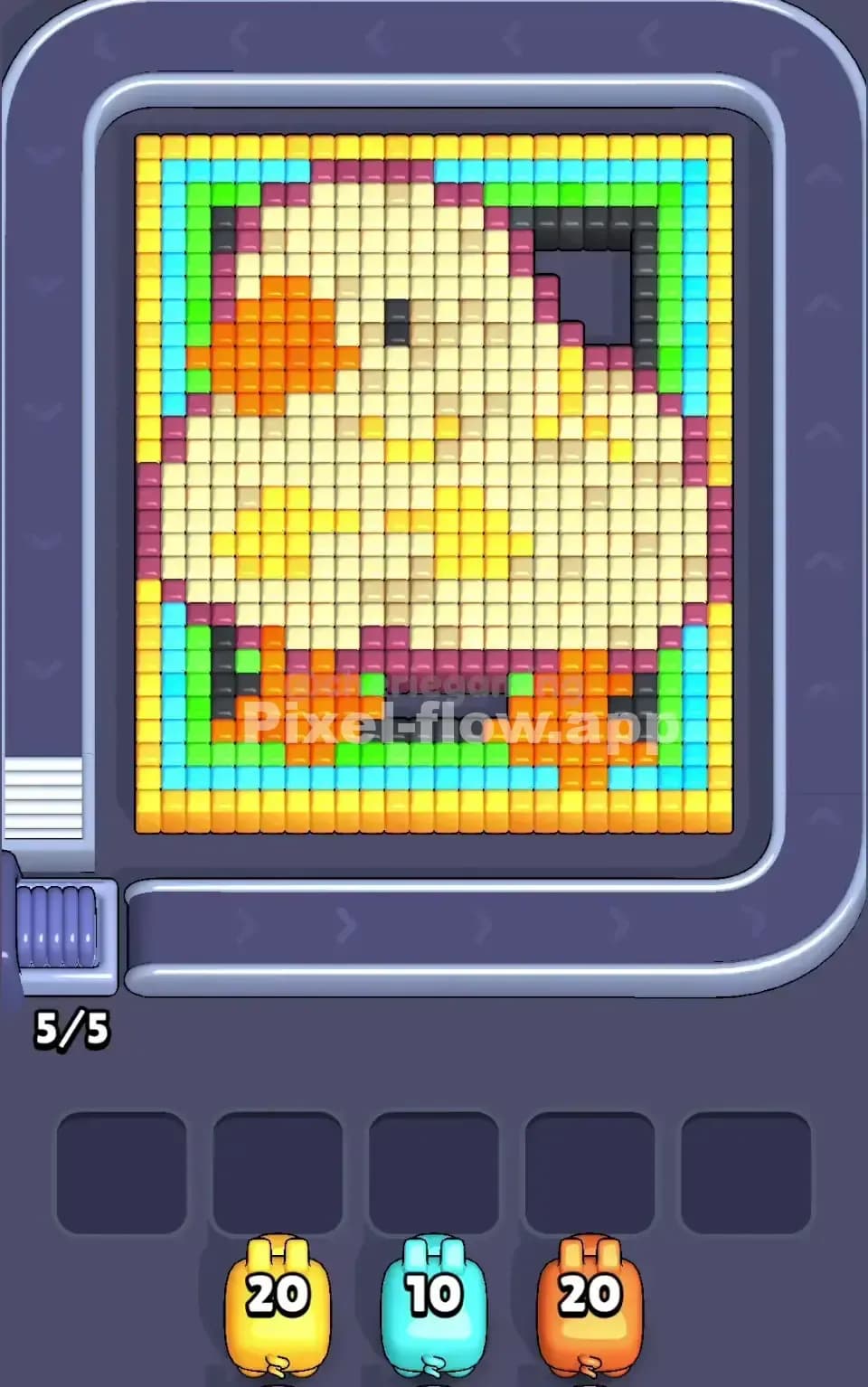
Pixel Flow Level 237 Solution | Pixel Flow 237 Walkthrough
How to beat Pixel Flow Level 237: Video solution & walkthrough. The fastest way to pass Pixel Flow 237.
Is this the wrong level layout?🤔
Pixel Flow randomizes levels for different players. Don't worry, just upload a screenshot of your board, and our AI will find the correct video instantly.



Pixel Flow Level 237 Overview
The Board Layout and Visual Challenge
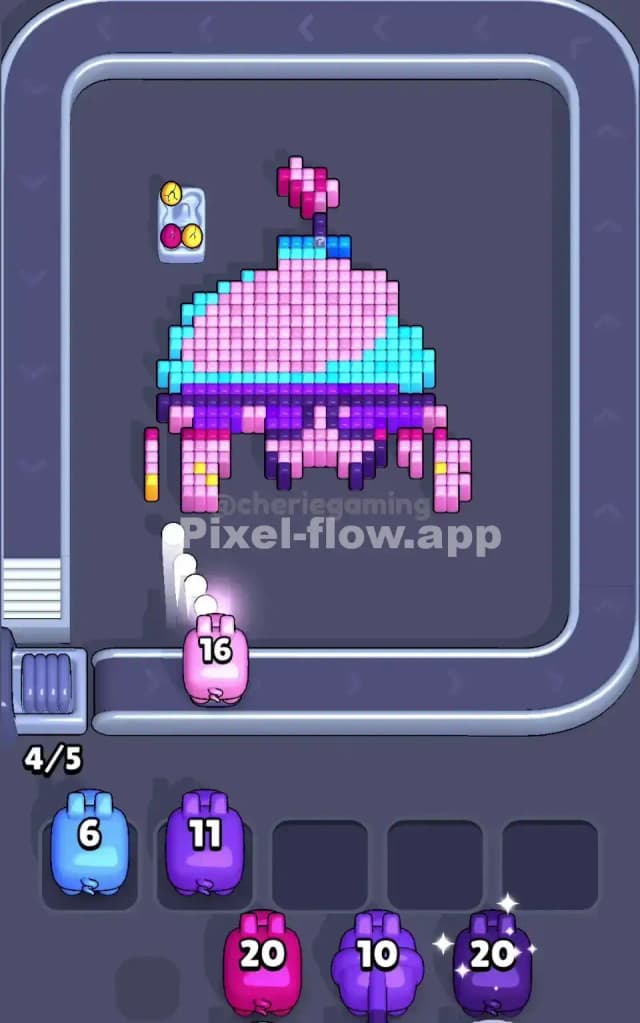
Pixel Flow Level 237 presents you with a stunning retro pixel-art portrait that demands careful color sequencing to dismantle. The board features a layered composition dominated by cyan, pink, magenta, purple, and yellow voxel cubes, with a magenta heart-shaped accent at the top and a detailed facial structure woven throughout the middle layers. The outer perimeter is heavily rimmed with cyan cubes, creating a natural frame that you'll need to systematically clear. Multiple color zones overlap and interlock, which means you can't simply blast one color in isolation—you're working with a deeply interconnected puzzle where exposing one layer often depends on clearing another first.
Your pig roster consists of four pigs carrying 20, 40, 40, and 20 ammo respectively, giving you a total of 120 shots to spend. Each pig shoots cubes matching its own color, and once a pig runs out of ammo or has no valid targets, it drops into one of five waiting slots below the board. Understanding this deterministic ammo count is crucial because Pixel Flow Level 237 requires you to match every single cube on the board—no extra shots to spare, and no room for wasteful targeting.
Win Condition and Deterministic Nature
Your goal in Pixel Flow Level 237 is straightforward: clear every voxel cube on the board. What makes this level tick is the fact that pig order and ammo are completely deterministic. You know exactly how much ammo each pig has and the sequence they'll arrive in. This isn't luck or chance—it's pure logic. If you plan correctly, your final pig will fire its last shot just as the board reaches empty. If you don't plan, you'll jam your waiting slots with stuck pigs that have ammo but nowhere to aim, and the level fails. That's the elegant trap of Pixel Flow Level 237.
Why Pixel Flow Level 237 Feels So Tricky
The Cyan Bottleneck
Here's where Pixel Flow Level 237 typically catches players off guard: cyan absolutely dominates the perimeter and inner structure. The sheer volume of cyan cubes means you need a pig with enough ammo to handle them, but you also need to time that pig correctly so it doesn't lock up your waiting slots before you've cleared enough of the interior. If you fire a 40-ammo cyan pig too early and it still has 15 shots left with no more cyan targets visible, it'll drop into a waiting slot and sit there uselessly while other pigs pile up behind it. The cyan bottleneck is the primary pressure point in Pixel Flow Level 237, and mismanaging it almost always leads to a jammed buffer and a failed run.
Hidden Color Pockets and Ammo Misalignment
Pixel Flow Level 237 loves to hide small pockets of color beneath the surface layers. You might see, say, only a handful of yellow cubes in the visible area, but once you clear the pink and magenta layers above them, suddenly there's a whole cluster of yellow waiting to be exposed. The trick is that your yellow pig arrives early in the sequence and might fire all its ammo before those hidden cubes ever become targetable. Similarly, some colors form thin stripes or scattered single cubes that are easy to miss when counting visible targets. I've restarted Pixel Flow Level 237 more than once because I miscounted purple cubes and watched my purple pig drop into the buffer with 8 ammo still loaded—a soul-crushing moment that teaches you to count methodically.
Personal Breakthrough and the "Aha" Moment
Honestly, Pixel Flow Level 237 frustrated me for a solid 10 attempts. I kept assuming I needed to clear the perimeter first, but that left me trapped with pigs that had ammo but no clear shots. The breakthrough came when I realized I needed to think backwards: start by identifying which pig has the tightest ammo budget (the one with the least margin for error), and then build the entire sequence around ensuring that pig has exactly the right targets at exactly the right time. Once I flipped my brain to "plan the hard pig first," Pixel Flow Level 237 became a satisfying puzzle of careful sequencing rather than a frustrating guessing game.
Step-by-Step Strategy to Clear Pixel Flow Level 237
Opening: Establishing Early Momentum and Buffer Safety
Start Pixel Flow Level 237 by deliberately targeting the magenta heart accent at the top of the board. Your first pig (20 ammo) should focus on clearing the accessible magenta patches that form the upper decorative layer. This accomplishes two things: it gives you early wins that feel good, and more importantly, it begins to expose the cyan and pink layers beneath without immediately flooding your waiting slots. Fire deliberately—don't just mash the first pig's entire magazine into one area. You want to clear about 12–15 of those 20 shots and then let that pig drop with 5–8 ammo still loaded into a waiting slot. This "parking" strategy keeps your buffer from being completely empty while you transition to your second pig.
Never fill more than two waiting slots in your opening phase. Keep at least three slots free as a safety buffer. This is non-negotiable on Pixel Flow Level 237.
Mid-Game: Layering and Strategic Pig Sequencing
Once your first pig is parked, send in your first 40-ammo pig. This is your workhorse, and you're going to use it to systematically crack open the cyan perimeter on the left and right sides of the board. Fire roughly 25–30 ammo into the visible cyan framework, but resist the urge to finish it off. Your goal isn't to empty this pig completely; it's to expose inner color layers and create new targeting opportunities for the upcoming pigs. After about 30 shots, let this pig drop into a waiting slot with 10 ammo remaining. You should now have two pigs waiting.
Next comes strategic patience. Your second 40-ammo pig (the second in queue) is your pink and magenta specialist. Pixel Flow Level 237's interior is thick with pink voxels, and this pig needs to carve through them systematically. Spend roughly 30–35 ammo here, exposing the yellow and purple layers that sit beneath the pink. This is the turning point where your board transforms from "dense and intimidating" to "clearly structured." Let this pig park as well.
At this point in Pixel Flow Level 237, you've used roughly 80 ammo and have three waiting slots occupied. Your final 20-ammo pig is your cleanup crew. By now, the board is far more exposed, and you'll have precise, visible targets for your last pig to finish off the scattered cyan, purple, and yellow cubes. Count carefully—does your final pig have exactly enough ammo to clear what remains? It should, if you've sequenced correctly.
End-Game: The Final Stretch and Buffer Clearance
As you enter the final stages of Pixel Flow Level 237, your last pig fires its remaining ammo into the clearly visible, deeply nested color pockets. Every shot should be high-confidence and purposeful. You're not hunting for hidden cubes anymore; you're executing a series of precise eliminations. Watch your waiting slots: the moment your final pig fires its last shot and drops into a slot, your board should be completely clear. If there are still cubes visible on the board when all five slots are filled, Pixel Flow Level 237 fails. That's why the mid-game parking strategy is so critical—it ensures your buffer doesn't fill up before the board empties.
The Logic Behind This Pixel Flow Level 237 Plan
Why This Strategy Exploits the Game's Determinism
Pixel Flow Level 237 rewards planning precisely because the pigs and ammo counts are fixed. You're not reacting to randomness; you're choreographing a sequence where each pig's role is predetermined. The strategy above works because it acknowledges that your first two pigs are "layer-breakers"—they expose hidden colors and prepare the board for your cleanup pigs. By parking your first three pigs strategically rather than emptying them, you're essentially saying: "I trust that my final pig will have exactly what it needs because I've set it up that way." This mindset shifts Pixel Flow Level 237 from feeling chaotic to feeling like elegant puzzle design.
Staying Calm and Counting Methodically
The final key to conquering Pixel Flow Level 237 is developing the habit of pausing between pig launches. Before you fire your second pig into the board, spend 10 seconds counting the remaining cyan, pink, and magenta cubes. Are there more than your remaining ammo can handle? Adjust your first pig's strategy. Before your third pig launches, count again. This deliberate, methodical approach transforms Pixel Flow Level 237 from a frantic scramble into a calm, executable sequence. You're thinking two pigs ahead, anticipating which colors will become visible, and ensuring your waiting slots never fill faster than your board empties. That's the mindset that wins Pixel Flow Level 237.