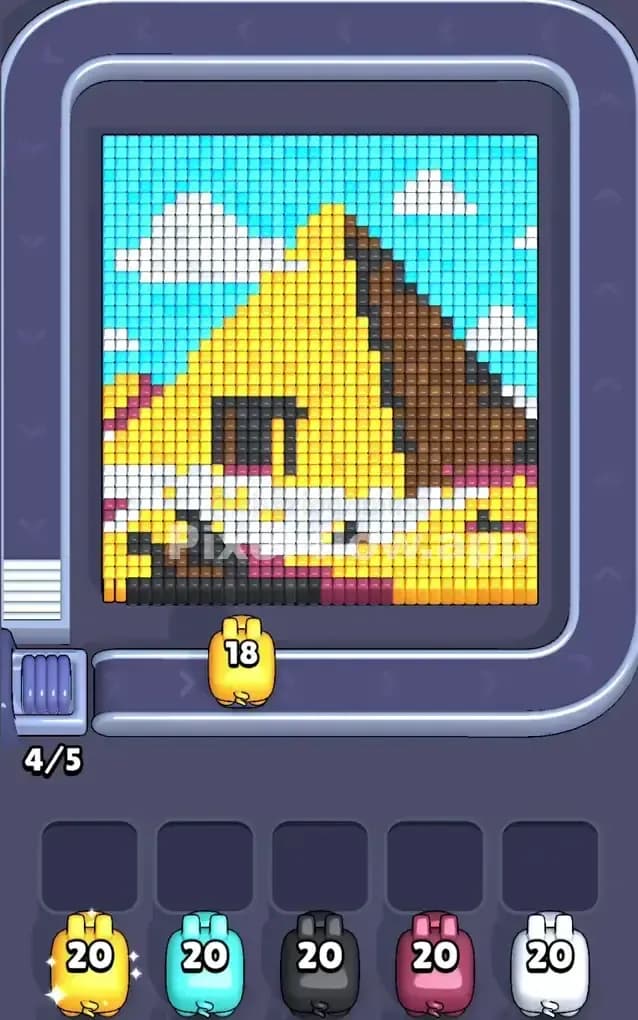
Pixel Flow Level 257 Solution | Pixel Flow 257 Walkthrough
How to beat Pixel Flow Level 257: Video solution & walkthrough. The fastest way to pass Pixel Flow 257.
Is this the wrong level layout?🤔
Pixel Flow randomizes levels for different players. Don't worry, just upload a screenshot of your board, and our AI will find the correct video instantly.

Pixel Flow Level 257 Walkthrough
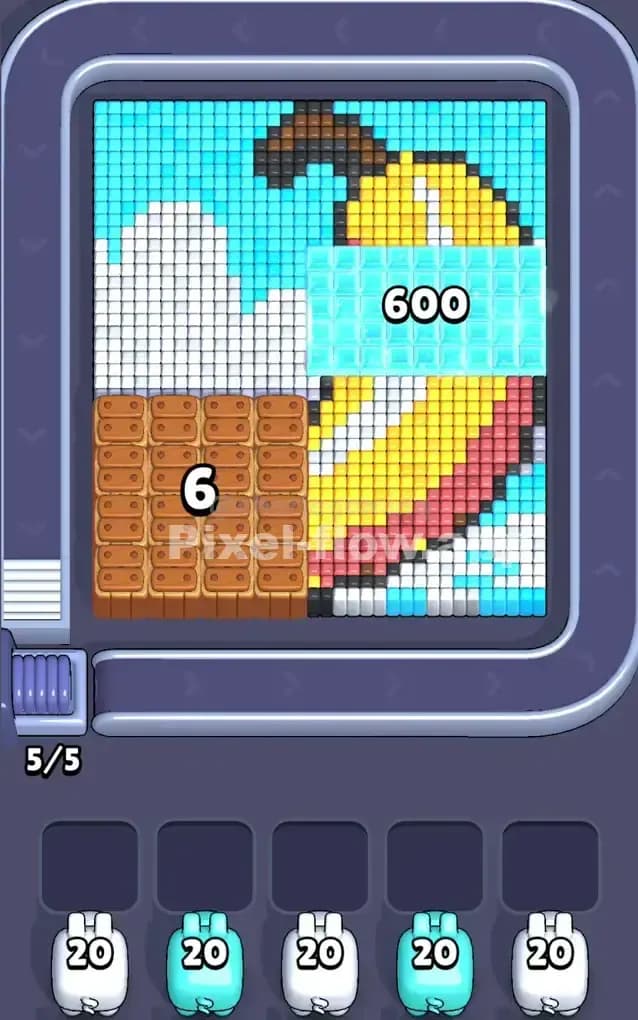
This level is a visual trap. You are looking at a giant pixel art banana floating in a blue sky, but the game has slapped two massive obstacles right in your face. There is a stack of brown wooden crates labeled "6" blocking the bottom-left corner, and a massive strip of blue ice labeled "600" frozen right across the middle of the fruit.
Your job is simple: clear the sky to melt the obstacles. If you try to attack the banana too early, you will clog your slots and fail. Because of the heavy obstruction and the high pixel count hidden behind that ice, I consider Pixel Flow 257 a very hard level.
Pixel Flow Level 257 Overview
The scene is classic 8-bit art: a bright yellow banana with a dark brown stem and reddish shading, set against a background of cyan sky and white clouds. However, you can hardly see the subject at the start.
The board is asymmetrical and cruel. The left side is dominated by that wooden crate structure. It sits directly on top of the white cloud layer. This means even if you have White pigs, they can only target the exposed clouds on the right side of the board; the left side is totally armored.
The center is even worse. The "600" Ice block acts as a shield for the yellow pixels. You effectively have a "Don't Touch" zone right in the center of the screen. The game flow forces you to work the edges. The top left corner (pure Cyan sky) and the bottom right corner (White/Cyan mix) are your only safe entry points.
Step by step solution walkthrough for Pixel Flow Level 257
First Color Zone to Erase in Pixel Flow Level 257
Ignore the banana completely. Your first priority is Cyan (Sky).
Look at your starting pig queue. It is likely loaded with Cyan and White pigs. This is not random. The game gives you these colors because the Sky is the only layer not completely ruined by the obstacles.
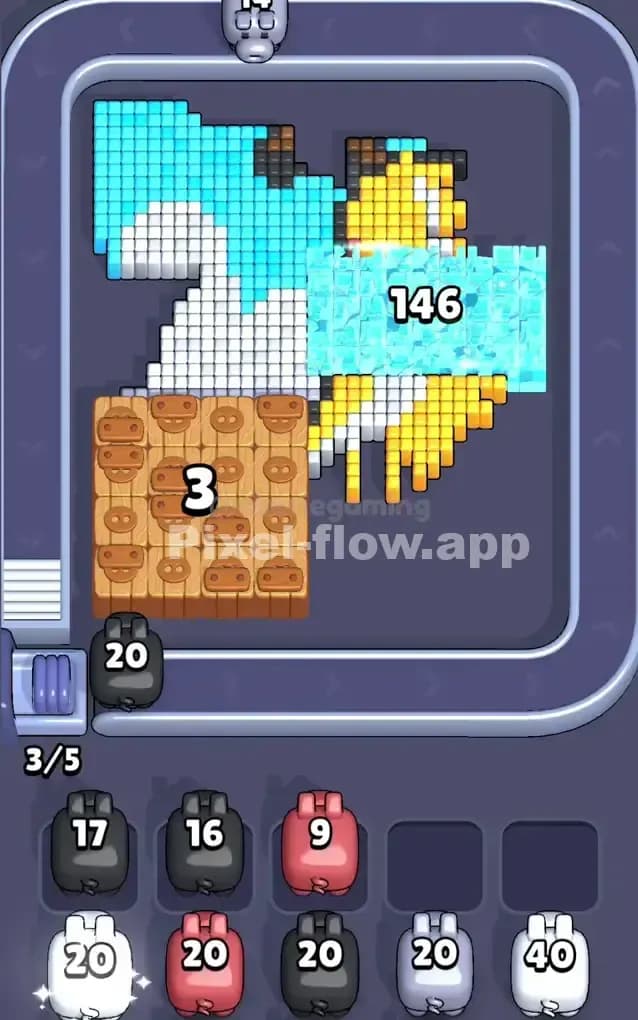
I start by sending every Cyan pig to the top-left corner. This area is free of ice and wood. By stripping away the blue sky here, you do two things:
- You keep your waiting slots empty.
- You start exposing the edges of the banana stem and the top of the clouds.
Once the top-left Cyan is thinning, mix in the White pigs. Aim them strictly at the bottom right. Do not panic if they don't hit the left side yet; the wooden crate "6" is still protecting that area. Just clear what you can see.
How to pass Pixel Flow Level 257 without power ups or boosters
The mid-game of Pixel Flow Level 257 is where most players lose. You will reach a point where the Cyan sky is mostly gone, but the "600" Ice block is still freezing the yellow banana, and the "6" Wood crate is still annoying you.
At this stage, your queue will start offering Yellow and Red pigs. Be extremely careful.
If the Ice is still solid, Yellow pigs are dangerous. They have very few targets (only the very tip or bottom of the banana might be peeking out). If you flood your slots with Yellow pigs before the Ice cracks, you die.
Focus on the Brown pigs next. The banana stem (top center) usually gets exposed once the Cyan sky is gone. Clearing the dark brown stem often triggers the destruction or lowering of the Ice block layer. Watch the wooden crate counter. As you clear adjacent White pixels on the right, that "6" will tick down. Once the wood breaks, you can finally send White pigs to clean up the bottom left corner.
Stick to this priority:
- Exposed Sky (Cyan).
- Exposed Clouds (White) on the right.
- Banana Stem (Brown).
- Only then, touch the Banana Skin (Yellow).
Last Details You Clean Up in Pixel Flow Level 257
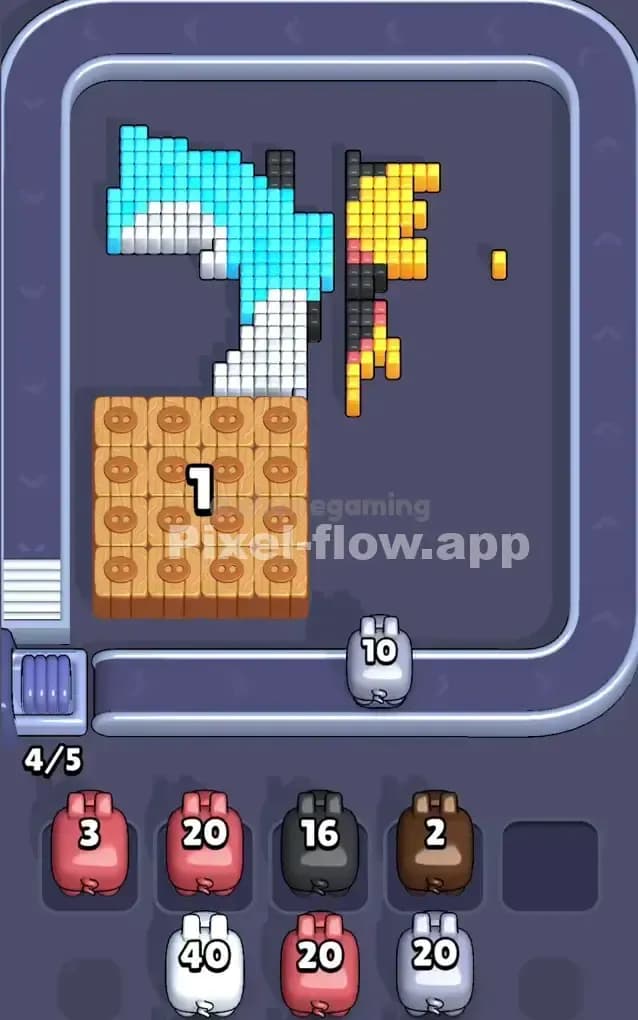
Once the obstacles shatter, the level becomes a simple cleanup job. The "600" Ice block usually vanishes once you have cleared the surrounding layers, revealing the huge patch of Yellow underneath.
Now you can spam your Yellow pigs. They will eat through the main body of the fruit rapidly. The final tricky spots are usually the Red/Pink shadow pixels along the bottom curve of the banana, and the last few White cloud pixels that were hiding under the wooden crate in the extreme bottom-left corner.
Save a couple of White pigs for the very end. The bottom-left corner is often the last place pixels hide because that wooden crate stayed active for so long. Clear that corner, and Pixel Flow 257 is done.