Pixel Flow Level 268 Solution Walkthrough | Pixel Flow 268

How to solve Pixel Flow level 268? Get instant solution for Pixel Flow 268 with our step by step solution & video walkthrough.

Share Pixel Flow Level 268 Guide:
Pixel Flow Level 268 Gameplay
Pixel Flow Level 268 Solution 1
Pixel Flow Level 268 Solution 2
Pixel Flow Level 268 Solution 3

Pixel Flow Level 268 Overview

The Board: A Cheerful Character in Layers

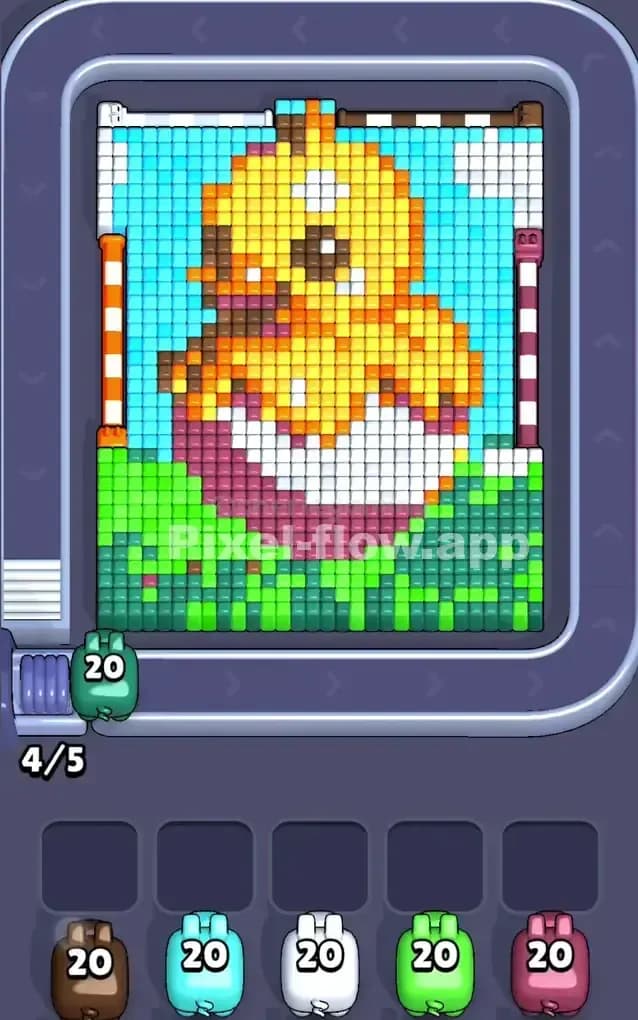
Pixel Flow Level 268 presents you with a charming pixel art portrait—a cute animal character with a bright yellow face, orange cheeks, and a warm personality that belies the strategic complexity hiding beneath. The board is dominated by cyan (light blue) in the background, with yellow and orange forming the character's head and body. Below that sits a magenta or purple section, and the bottom third is packed with lime green and darker green cubes that form the base and ground. White cubes scatter throughout as accent details and fill material.

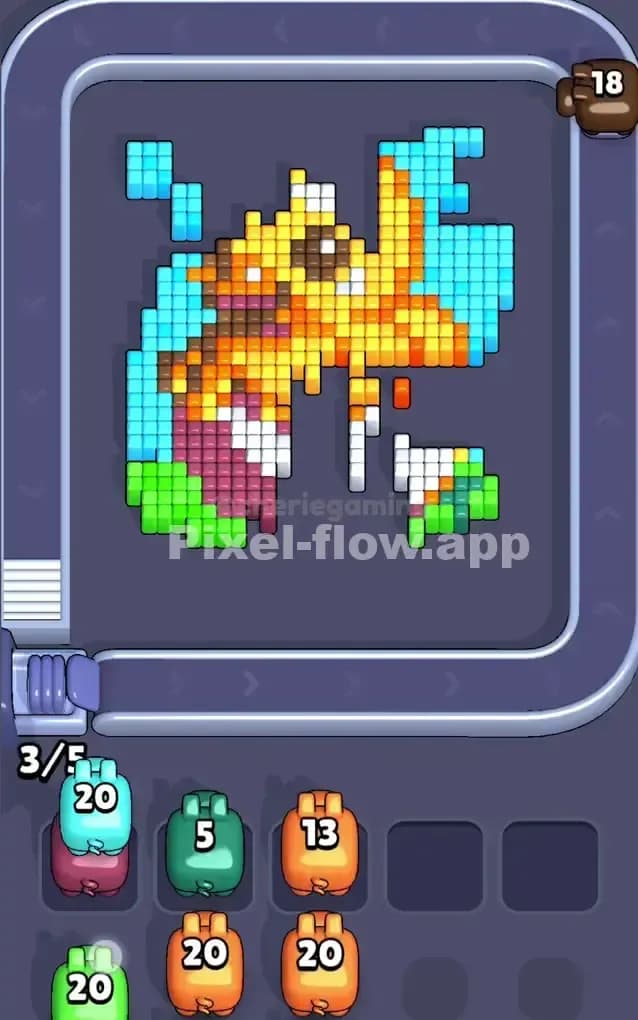
What makes Pixel Flow 268 interesting is that it's not just a flat image—it's a true layered voxel picture. The outer colors (cyan, yellow, orange) sit on top of magenta and green layers underneath. You can't simply blast away everything you see; you need to peel back the top layers methodically to expose and eventually clear the colors hiding deeper inside. This layering is exactly what makes planning ahead so critical.

Win Condition and Determinism

Your goal in Pixel Flow Level 268 is straightforward: clear every single cube from the board. You've got five pigs coming down the conveyor belt, each with exactly 20 ammo. That's 100 total shots available if you use them wisely. The order of pigs is fixed, their ammo counts are fixed, and the board layout is fixed—nothing is random. That means there's one correct or near-optimal sequence, and your job is to figure it out before your waiting slots overflow with stuck pigs.


Why Pixel Flow Level 268 Feels So Tricky

The Green Avalanche Problem

The biggest bottleneck in Pixel Flow Level 268 is the sheer volume of green cubes at the bottom. There are easily 40–50 green voxels scattered across both the bright lime green and darker teal-green shades. You've only got one green pig with 20 ammo, which means you can knock out at most 20 green cubes. That leaves roughly 20–30 green cubes still sitting there with no way to remove them unless a second pass somehow clears a path. Here's where it stings: if you burn through your other pigs' ammo before exposing all the green cubes beneath the upper layers, you'll be left with a stuck green pig in your waiting slots, its ammo useless and your board incomplete. Pixel Flow Level 268 punishes you hard for mismanaging the green problem.

Cyan and Yellow Density

The cyan background and yellow face sections are huge. You've got cyan pigs coming down, and they need to clear roughly 35–40 cyan cubes scattered across the top and sides. One cyan pig with 20 ammo will only handle half the job. If you don't sequence your pigs carefully, you might burn other colors' ammo trying to expose the second layer, only to find you've created a jam where cyan cubes are still visible but your cyan pig is already gone, stuck in a waiting slot with nowhere to shoot. The same pressure applies to yellow—the face is almost entirely yellow and orange, and you need both yellow and orange pigs working in harmony, not tripping over each other.

Magenta's Hidden Surprise

Magenta sits as a transition layer between the colorful face above and the green base below. It's not immediately obvious how many magenta cubes exist because many are buried under yellow, orange, and white. You'll have a magenta pig with 20 ammo, but if you don't clear the overlying colors in the right order, you might expose magenta too late, leaving your magenta pig stranded with ammo but no targets. This is a sneaky trap in Pixel Flow Level 268 that catches players off guard.

The Moment It Clicked

Honestly, the first time I tackled Pixel Flow Level 268, I ran my cyan and yellow pigs early, burned through half the waiting slots, and suddenly watched my green pig land in slot five with 15 ammo still loaded while green cubes still covered the entire bottom. I thought I'd failed outright. But when I restarted and held back, letting my first pig (the brown one, I think) take a smaller role, and instead sent cyan strategically to expose just enough of the magenta layer underneath, the whole puzzle suddenly made sense. You're not trying to obliterate everything at once; you're choreographing a dance where each pig does its part and steps aside so the next dancer can move through the space.


Step-by-Step Strategy to Clear Pixel Flow Level 268

Opening: Start Lean and Protect Your Slots

When Pixel Flow Level 268 begins, resist the urge to send your first pig straight into full attack mode. Instead, start with a light touch. Depending on your first pig's color (check the queue at the bottom), target one small, isolated cluster of that color—maybe 3 to 5 cubes—and then let that pig drop into a waiting slot. This keeps your slots 2, 3, and 4 open for the pigs you really need to manage pressure.

Why? Because Pixel Flow Level 268 often has a pig coming that's the wrong color for what's currently visible. By parking an early pig with leftover ammo, you're buying time for the right pig to arrive and clear a path. Don't feel obligated to empty a pig's ammo in a single turn. Light taps are your friend.

Mid-Game: Sequence for Layer Exposure

This is where Pixel Flow Level 268 gets tactical. Once your first pig is parked, your second pig usually arrives. If it's cyan or yellow, you now need to make a choice: do you blast aggressively to expose the next layer, or do you chip away carefully?

Here's the principle: expose, don't dominate. Send your cyan pig to clear enough cyan cubes that the magenta layer starts showing through, but don't feel compelled to erase all 40 cyan blocks in one go. Fire 8–12 well-placed shots, clear a meaningful section, and watch what gets revealed beneath. Often, you'll uncover magenta or white cubes that were hidden. That's your signal that you've done your job.

Then, if your third pig is a different color—say, white—use it to clean up the scattered white accent cubes while they're exposed. This is the moment to be surgical. Pixel Flow Level 268 rewards precision: each shot should either remove a visible cube or expose a new layer underneath.

By mid-game, you should have 2–3 pigs parked in waiting slots, all with some ammo left, and you should be able to see magenta and darker green starting to appear. Your board should look less like a completed picture and more like a topographic map with layers peeling away.

End-Game: The Green Finish and Buffer Clear

Here's where Pixel Flow Level 268 separates confident players from panicked ones. Eventually, all the cyan, yellow, orange, and white stuff will be mostly gone. You'll be left with a board that's heavily green (both bright and dark shades) and perhaps some remaining magenta or white fills.

Now it's critical: send your green pig with intention. You've got 20 ammo, and roughly 20–30 green cubes remain (depending on how many you cleared along the way). If the number is close, that's good; you'll run out of ammo right as the board clears. If you still have significantly more green cubes than ammo remaining, you have a problem—you've mismanaged earlier turns and wasted ammo on non-essential colors.

Assuming you've followed the mid-game strategy, your green pig should be able to finish most or all of the green. Fire methodically, don't rush, and watch for any remaining isolated clusters of cyan, yellow, or magenta that might still be lurking. Pixel Flow Level 268 loves hiding a few stragglers, and if you don't account for them, you'll end up with a pig in slot five and no way to clear the last three cubes.

Finally, if any pigs are still sitting in waiting slots with ammo, make sure there are visible cubes of their color. If not, you've locked yourself out and lost. But with good mid-game planning, you'll have sequenced everything so cleanly that your last pig lands in slot five just as the board clears, and the level ends in victory.


The Logic Behind This Pixel Flow Level 268 Plan

Why This Strategy Exploits the Game's Determinism

Pixel Flow Level 268 is entirely deterministic—pigs arrive in a fixed order with fixed ammo. The strategy above works because it respects the game's constraints. You're not reacting to randomness; you're pre-planning around the certainty of what's coming.

By parking early pigs and clearing selectively, you're essentially reserving your later pigs' ammo for the colors and layers you know will be problematic (like green at the bottom). You're using the waiting slots as a buffer, not a failure condition. This turns what looks like a puzzle with 100 ammo to spend into a spatial choreography: which layers need clearing first, which pigs can multitask, and which pigs are best saved for the crunch layers.

The Ammo Counting Discipline

Throughout Pixel Flow Level 268, keep a running count. How many cyan cubes remain visible? Roughly 25? And you've got one cyan pig with 20 ammo left, plus another pig with a different color that might accidentally hit a few cyan blocks? Good—you're on track. How many green cubes are still buried under the magenta? Estimate, count your remaining green ammo, and adjust. This mental discipline prevents the surprise moment where you realize you've locked yourself out.

Stay calm and patient. Pixel Flow Level 268 isn't a race; it's a puzzle where each decision sets up the next three moves. Watch the queue, count ammo, and plan two or three pigs ahead. When you hit that final green cluster and watch the board clear with your very last shot, you'll feel the satisfaction of a plan executed perfectly. That's what Pixel Flow Level 268 is really about.