Pixel Flow Level 267 Solution Walkthrough | Pixel Flow 267
How to solve Pixel Flow level 267? Get instant solution for Pixel Flow 267 with our step by step solution & video walkthrough.


Pixel Flow Level 267 Overview
The Board Layout and Your Pixel Art Target
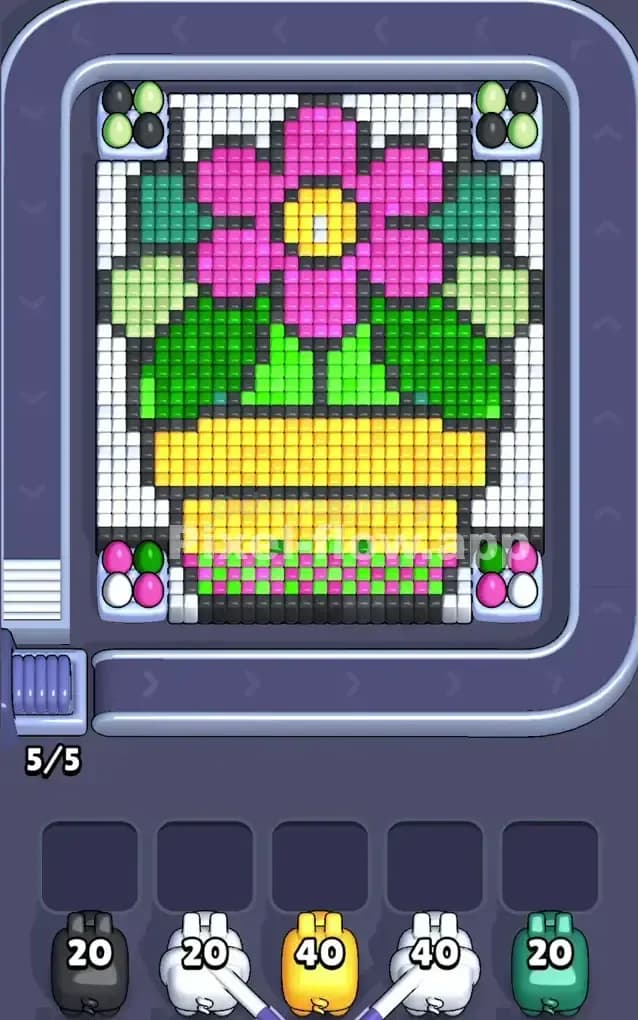
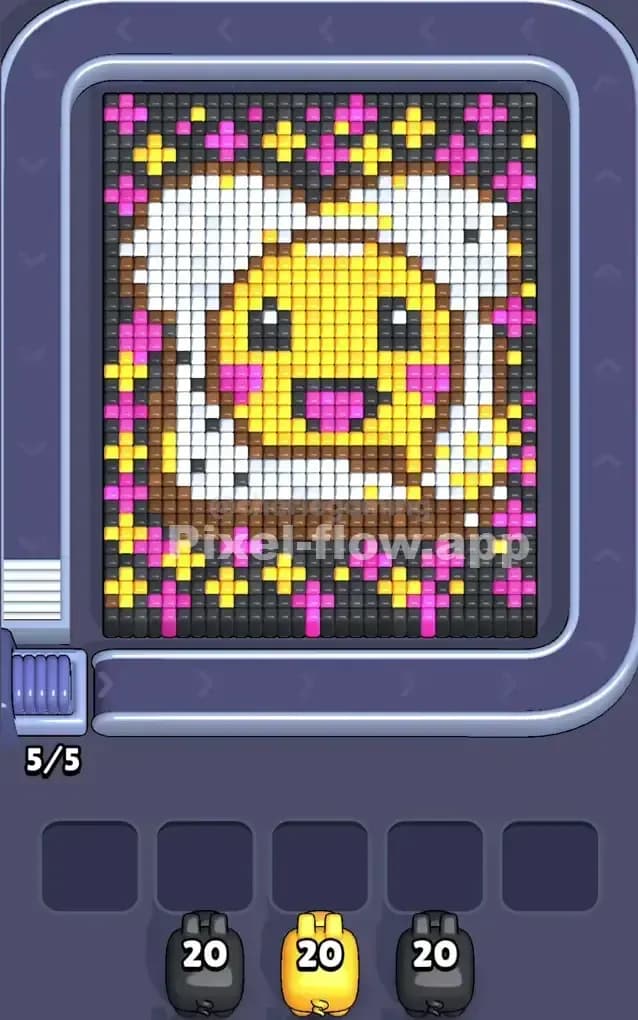
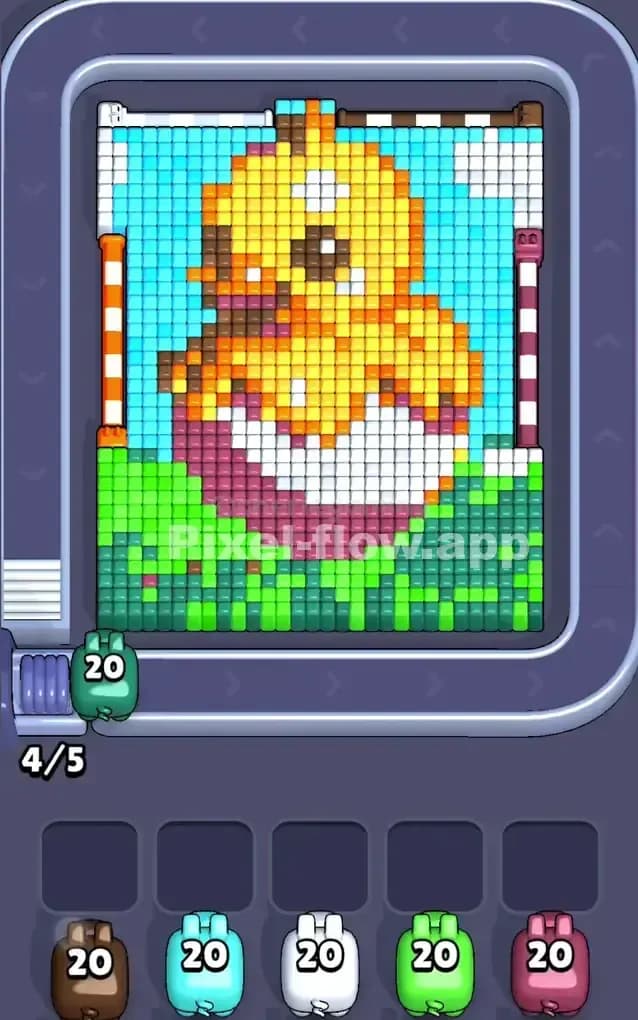
Pixel Flow Level 267 presents you with a cheerful flower pixel art as your main subject—a blooming daisy with a bright yellow center, magenta petals, and green leaves arranged symmetrically on the canvas. The board is packed with color-coded voxel cubes stacked in layers, and your job is to dismantle this entire structure methodically. The dominant colors you'll encounter are magenta (forming the flower petals), bright green and lime green (the leaves and stem), yellow (the center and some lower layers), white (background filler), and dark gray or black (outlines and shadows). What makes Pixel Flow 267 particularly interesting is how these colors aren't just scattered randomly—they're layered strategically, meaning you can't expose or remove certain cubes until you've cleared overlying colors first.
The Win Condition and Why Determinism Matters
To beat Pixel Flow Level 267, you need to clear every single voxel cube on the board. Your five waiting slots will fill up with pigs as they run out of matching targets, and if all five slots are occupied by pigs with remaining ammo, you'll fail instantly. The good news? Every pig's ammo count and the conveyor order are completely deterministic—meaning if you know what color pig appears next and how much ammo it has, you can plan your moves with mathematical precision. This isn't about luck; it's about sequencing. You're working with a gray pig (20 ammo), a white pig (20 ammo), a yellow pig (40 ammo), another white pig (40 ammo), and a green pig (20 ammo). That's 140 total shots to remove every cube on the board.
Why Pixel Flow Level 267 Feels So Tricky
The Magenta Bottleneck
The biggest threat in Pixel Flow Level 267 comes from the magenta petals dominating the visual center of the flower. There are far more magenta cubes visible than any single pig can handle, yet you don't see a dedicated magenta pig in your queue—which means magenta cubes will only disappear when you clear overlying layers and expose hidden magenta deeper in the structure. If you carelessly burn through your white or gray ammo early without a clear plan for exposing magenta targets, you'll end up with pigs stuck in your waiting slots, unable to find their color matches. This creates a cascading failure where even pigs that come later can't access the board because there's nowhere for them to go. I'd be lying if I said this didn't catch me off guard the first time—realizing halfway through that I'd locked myself into an unwinnable state because I ignored the magenta layer.
The Yellow and Green Layer Confusion
Pixel Flow Level 267 has a tricky dual-layer yellow problem. You can see bright yellow cubes in the upper flower center, but there's also a massive yellow section at the bottom of the board that serves as a foundation or background layer. Your two white pigs need to eat through a lot of white background cubes, but the timing matters enormously. If you use your first white pig (20 ammo) too early on the upper white outlines, you won't have enough ammo left to clear the white cubes that are hiding yellow targets in the lower section. Meanwhile, your green pig arrives at the end with only 20 ammo, and the leaves plus the lower green layer are substantial. Miscalculating this balance is a quick way to end up with an unusable green pig locked in a waiting slot.
When the Level Finally Clicked for Me
Honestly, Pixel Flow Level 267 made me pause and sketch out the expected pig order on paper. I realized I was playing reactively, watching pigs drop and hoping something would work, rather than planning proactively. Once I accepted that I needed to count how many matching cubes were visible for each color before I even started, and mentally map out which pigs should clear which zones, the level became solvable. The "aha" moment came when I understood that parking a half-spent white pig in a waiting slot early (so it wasn't wasting ammo) actually freed up space for subsequent pigs to keep the sequence moving. That's when Pixel Flow Level 267 stopped feeling like chaos and started feeling like a puzzle.
Step-by-Step Strategy to Clear Pixel Flow Level 267
Opening: Start with Gray and Smart White Sequencing
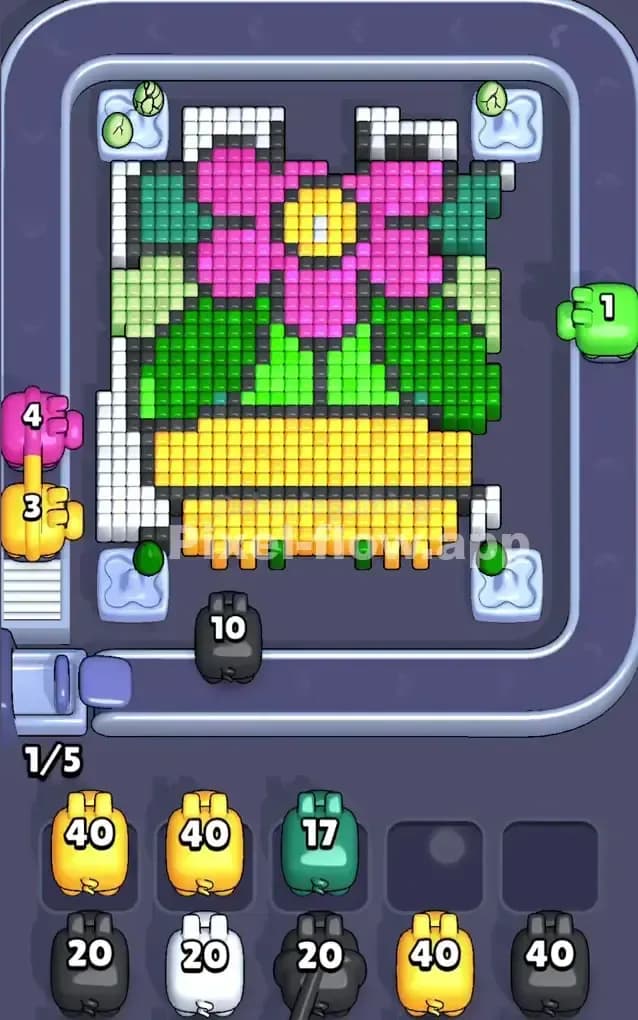
Your first pig is gray with 20 ammo. Don't dive straight into the white background; instead, use your gray pig to clear the dark gray and black outline cubes that frame the flower. These are typically the easiest targets to spot and don't expose hidden layers prematurely. Clearing 15–18 of your gray ammo on outline work lets you park your gray pig safely in a waiting slot with 2–5 ammo remaining. This keeps your waiting buffer open.
Now your white pig with 20 ammo arrives. Here's the critical decision: focus this white pig exclusively on white background cubes in the upper regions and the corners. Don't try to clear the entire white layer—that's impossible with just 20 ammo. Target the white cubes that are blocking access to magenta or yellow. Use roughly 15–18 ammo and leave your white pig sitting in a waiting slot as well. You should still have 3 empty slots at this point, giving you breathing room for the next pigs.
Mid-Game: Yellow Pig and Exposing Layered Colors
Your yellow pig arrives with 40 ammo—the most firepower you'll have. This is your workhorse. Target every visible yellow cube in the upper flower center and the large yellow foundation at the bottom. Use about 30–35 of your 40 ammo here. The key is that clearing yellow will expose magenta and green cubes underneath, which is exactly what you want. Let this yellow pig drop into a waiting slot with 5–10 ammo left; those last few shots might come in handy later if a stray yellow cube emerges.
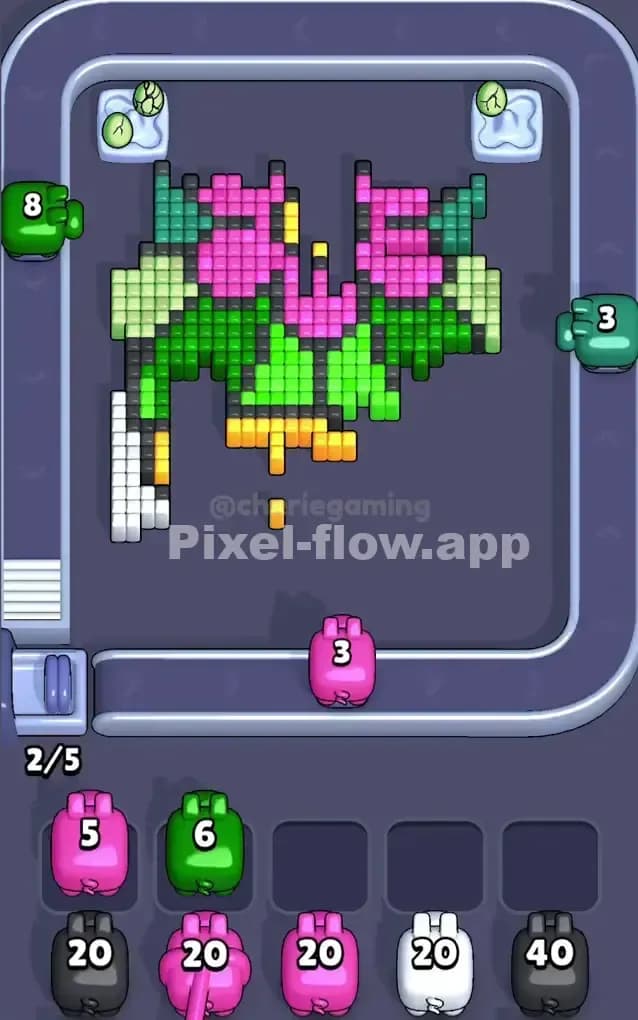
At this stage, your waiting slots should hold gray, white, and yellow pigs—three occupied, two free. Pause here and visually scan the board. What colors are now visible that weren't before? You should see a significant amount of fresh magenta, green, and lime green. More white cubes may also be exposed. This is good; it means your strategy is working.
The Second White Pig and Clearing Lower Layers
Your fourth pig is another white with 40 ammo. Now you've got serious white firepower. Use this pig to demolish the remaining white cubes, especially those in the lower portion of the board. This white pig should be able to clear 35–38 of its ammo, exposing a large amount of green, lime green, and potentially some hidden gray or black. Park it in a waiting slot with minimal ammo left.
At this point, four waiting slots should be full. You have exactly one free slot remaining, and your final pig—a green pig with 20 ammo—is about to arrive. This is where the tension peaks. You cannot afford to waste the green pig's ammo on invisible targets or duplicate colors.
End-Game: Green Pig Finisher and Emptying the Buffer
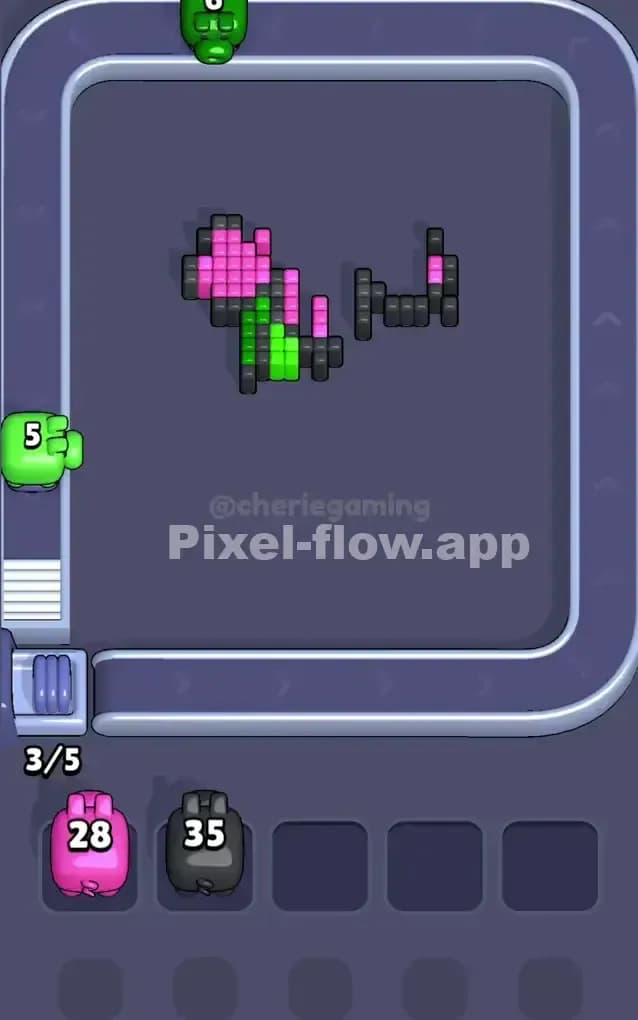
Your green pig with 20 ammo is your final piece. It needs to clear every remaining green and lime green cube on the board. Because you've systematically removed white, gray, yellow, and magenta, the green cubes should now be fully visible and accessible. Spend all 20 ammo on green targets. The moment your green pig fires its last shot, all five pigs in the waiting slots will automatically clear from the buffer, and you'll see the victory screen on Pixel Flow Level 267.
The trick here is trusting that your earlier sequencing was correct. Don't second-guess yourself when the green pig appears—just lock in and shoot green until the ammo is gone.
The Logic Behind This Pixel Flow Level 267 Plan
Exploiting Deterministic Pig Order and Ammo Counts
Pixel Flow Level 267 isn't random, and that's your advantage. Because you know the exact sequence—gray (20), white (20), yellow (40), white (40), green (20)—you can work backwards from the board state. Ask yourself: how many of each color need to be removed? The answer is built into the ammo counts. If you trust that the designers balanced the level correctly, then the 140 total ammo shots you have will exactly equal the total cubes on the board (or close to it). This means every pig should spend nearly all its ammo; very little should be wasted.
The key insight is that you're not trying to clear one color completely before moving to the next. Instead, you're clearing colors in a sequence that exposes the right targets for the next pig in line. Yellow pig comes before the final white pig because yellow cubes are often on top, blocking white cubes below. By the time your second white pig arrives, it has fresh targets waiting. Pixel Flow Level 267 is engineered so that each pig's ammo total matches the number of valid targets available when that pig's turn arrives—but only if you've prepared the board correctly with previous pigs.
Staying Calm and Planning Two or Three Pigs Ahead
The hardest part of Pixel Flow Level 267 isn't the mechanical execution—it's the discipline to plan ahead and resist panic. When your first gray pig arrives, don't just mash the fire button at whatever looks easy. Instead, mentally note: "This gray pig will clear outlines and shadows. That will free up space for white to work next. After white clears, magenta and green will become visible, and yellow can feast on those." Counting ammo and cross-checking it against visible targets takes 10 seconds but saves you from catastrophic failures.
Keep your eyes on your waiting slots at all times. If you're dropping pigs and you've already got three slots filled, you're in a danger zone. Move conservatively—park pigs early if they're close to running out. Never try to squeeze the last 2–3 ammo out of a pig if it means holding up the next pig in the queue. Pixel Flow Level 267 demands patience and forward-thinking, but once you internalize that rhythm, you'll clear it decisively.