Pixel Flow Level 266 Solution | Pixel Flow 266 Walkthrough
How to beat Pixel Flow Level 266: Video solution & walkthrough. The fastest way to pass Pixel Flow 266.
Is this the wrong level layout?🤔
Pixel Flow randomizes levels for different players. Don't worry, just upload a screenshot of your board, and our AI will find the correct video instantly.
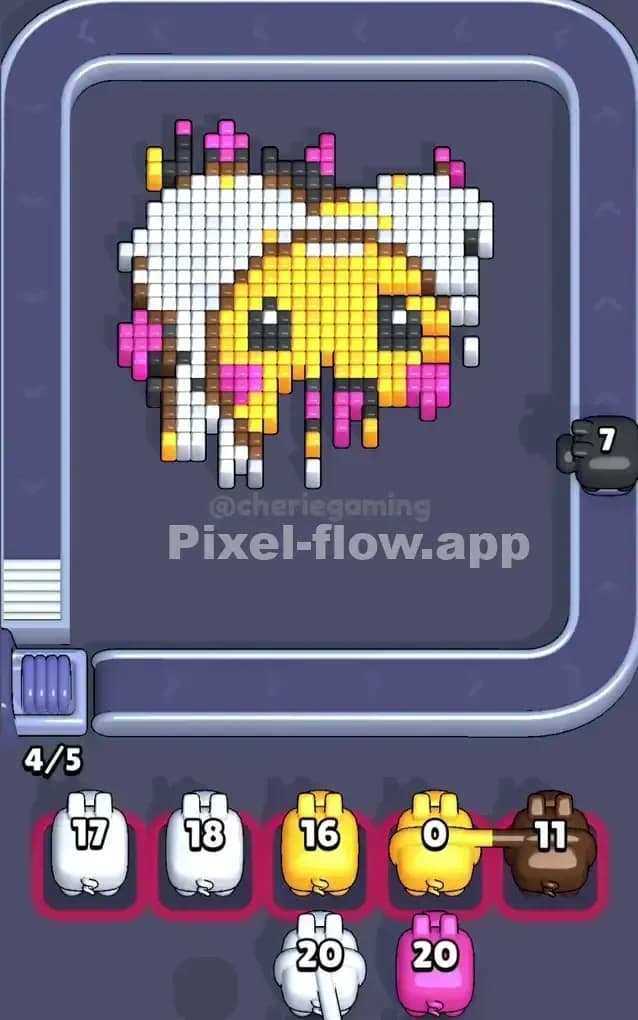

Pixel Flow Level 266 Walkthrough
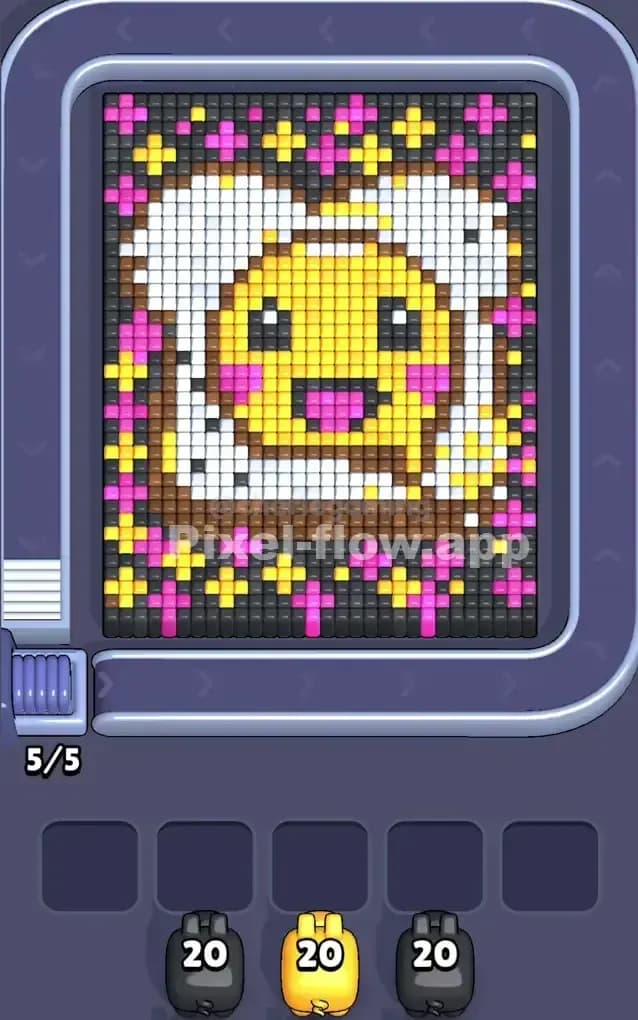
This stage features a cheerful, pixelated food character—it looks like a happy piece of toast topped with a sunny-side-up egg, or perhaps just a very excited egg character. The main figure is dominated by a large White outer ring and a dense Yellow center, framed by a Brown crust. The entire scene floats on a dark Grey/Black background grid that is littered with confetti-like Pink and Yellow plus signs.
To beat Pixel Flow Level 266, you have to strip away that messy background first to reach the dense "food" layers underneath. The trick here isn't speed; it's ammo management. The background confetti (those small plus signs) is dangerous because it tempts you to use high-ammo pigs on low-count targets, which clogs your waiting slots.
Is this a difficult stage? It is not a very hard level, but it is a "clog hazard" level. If you aren't careful with the scattered background pixels, you will run out of slot space quickly.
Pixel Flow Level 266 Overview
Imagine a breakfast plate exploding with joy. That’s the vibe here. The central character is a massive, symmetrical block of colors. You have a thick rim of Brown pixels acting as the toast crust. Inside that, a huge, irregular circle of White acts as the egg white. Dead center is a bright Yellow yolk with a face on it—two Black eyes, pink blush stickers for cheeks, and a smiling mouth.
The background is the chaotic part. Unlike many levels where the background is a solid, single-color void, Pixel Flow 266 scatters debris everywhere. You will see little cross shapes made of Yellow and Pink floating in the dark void.
This asymmetry in the background is your enemy. The toast is centered and heavy, but the floating pixels are light and random. This creates a disconnect. You might grab a Yellow pig thinking you’ll hit the big yolk, but the pig locks onto three tiny yellow crosses in the top left corner instead. Suddenly, you have a Yellow pig with 17 ammo stuck in your tray, blocking your moves.
Step by step solution walkthrough for Pixel Flow Level 266
First Color Zone to Erase in Pixel Flow Level 266
Ignore the toast face for a second. Look at that dark background. Your first priority should be the Grey/Black grid.
Why? Look at your starting pigs (often Black or Dark Grey in this rotation). The background is the only "safe" massive block to clear early on. It wraps around the entire toast character. By clearing the dark pixels, you isolate the main subject.
However, be extremely careful with the Yellow and Pink pigs early on. You will see them pop up on the conveyor belt. Do not use them just to clear the "confetti" crosses in the background unless you can also hit the main body of the toast. For example, if a Yellow pig comes up, only fire it if the rotation allows it to hit the big Yellow yolk in the center. If the yolk is blocked by the White egg layer, skip the Yellow pig. If you fire it now, it will hit two tiny background crosses and then sit in your tray forever.
Clear the Brown crust as your secondary priority. It’s the outermost layer of the actual character. Removing the brown border exposes the white edges, making the target larger for your next moves.
How to pass Pixel Flow Level 266 without power ups or boosters
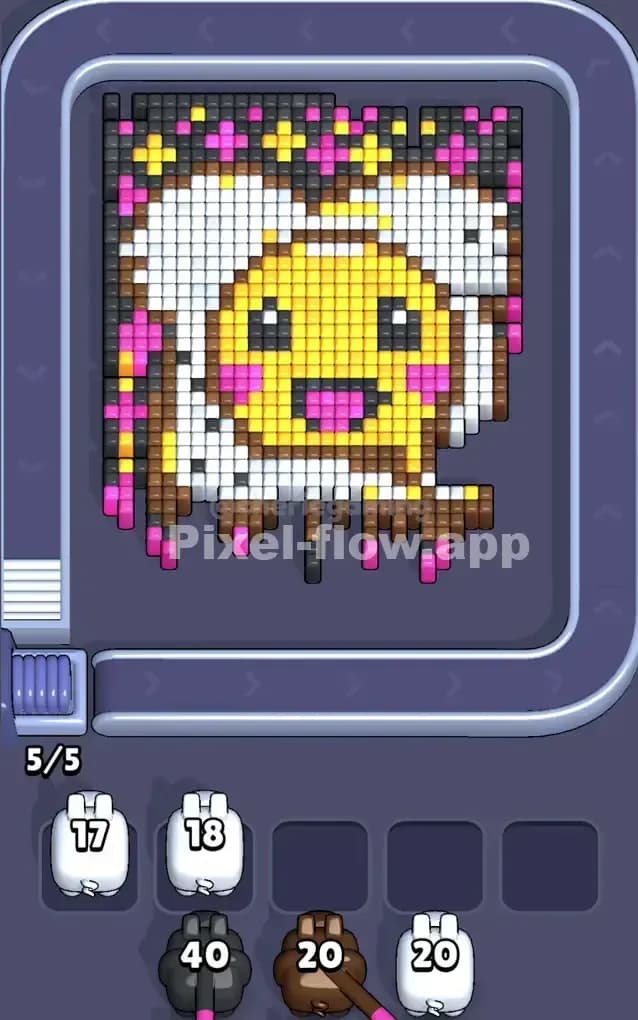
We are now in the mid-game. The dark background is gone. The brown crust is patchy or missing. You are staring at a big, white blob with a yellow center.
This is where the "layering" trap kicks in. The White pixels often cover the Yellow yolk from certain angles. You must prioritize White pigs now. The egg white is the largest, most ammo-hungry part of the board. A single White pig can unload almost all its ammo here, which keeps your slots empty.
If you refuse to use power-ups, you have to play conservatively with your tray slots. You have 5 slots. Ideally, keep 2 or 3 open at all times.
- The Pink Trap: You will see Pink pigs. The only pink items are the tiny background crosses and the cheeks. This is a low-pixel-count color. Wait until the board rotates so the pig can line up with multiple pink spots at once. Do not grab a Pink pig just to hit one pixel. Let it cycle past.
- The Yellow Shift: Once you shave off enough White, the Yellow yolk becomes fully exposed. Now is the time to unleash those Yellow pigs you skipped earlier. They will shred the center of the image rapidly.
Last Details You Clean Up in Pixel Flow Level 266
The final phase of Pixel Flow 266 is usually a "face cleanup."
At this point, the egg white and the yolk are mostly eaten away. You are left with the deep-layer details: the Black pixels of the eyes and the Pink/Red pixels of the mouth tongue.
This is the only time the level gets fiddly. The eyes are small—only a few blocks each. If you grab a fresh Black pig (which usually has 20+ ammo), and you only have 4 black pixels left on the board (the eyes), that pig will drop into your slot with 16 ammo remaining.
This is fine if it’s your last move. But if you still have other colors to clear, this pig becomes a permanent blocker. Try to clear the eyes while you are clearing the background earlier in the level if possible. If not, save these small details for the absolute very end when clogging your slots doesn't matter anymore because the level is about to finish.
Watch out for stray Brown pixels at the very bottom of the toast. They often hide behind the main bulk of the image and are easy to miss until the board rotates fully. Clear those stragglers, and the victory screen is yours.