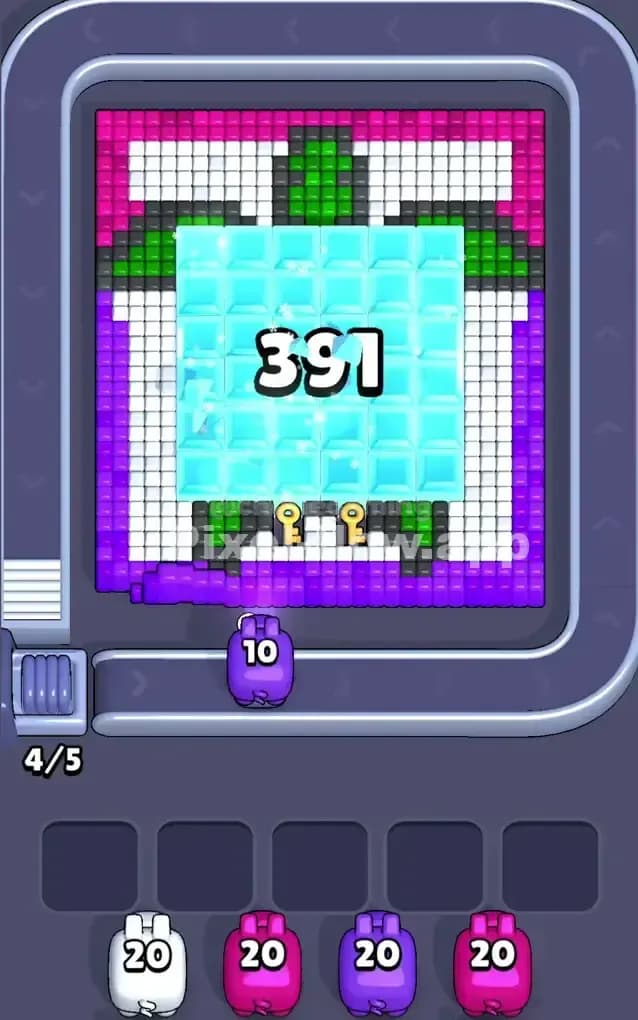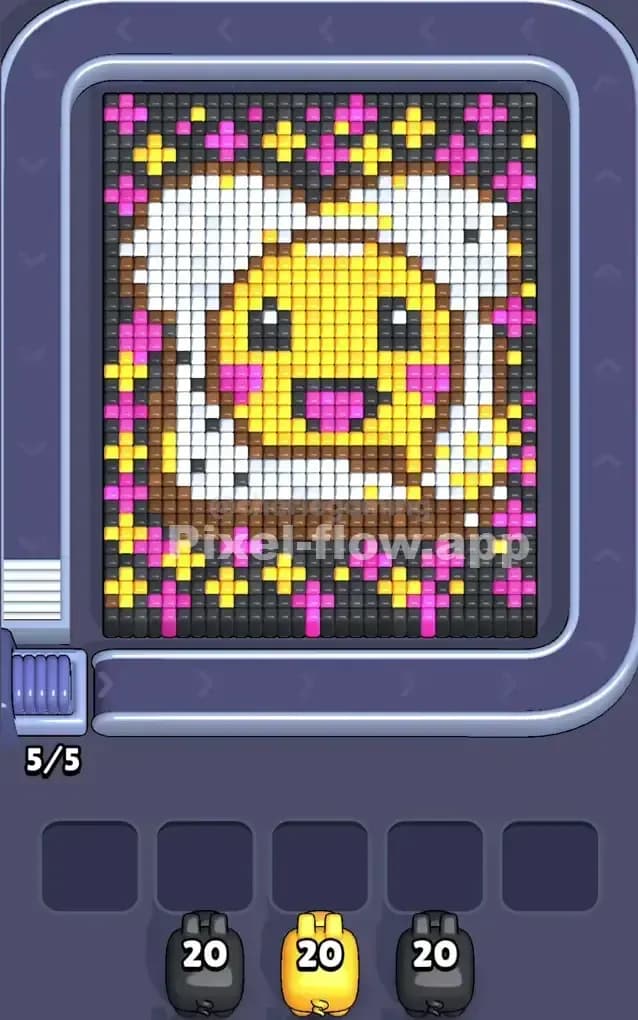
Pixel Flow Level 265 Solution | Pixel Flow 265 Walkthrough
How to beat Pixel Flow Level 265: Video solution & walkthrough. The fastest way to pass Pixel Flow 265.
Is this the wrong level layout?🤔
Pixel Flow randomizes levels for different players. Don't worry, just upload a screenshot of your board, and our AI will find the correct video instantly.
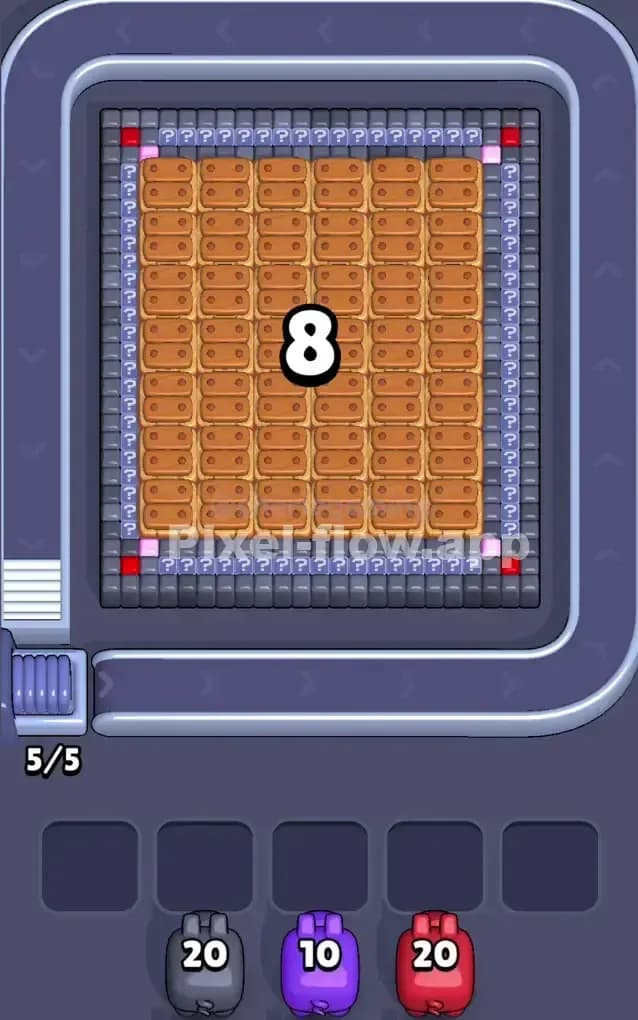
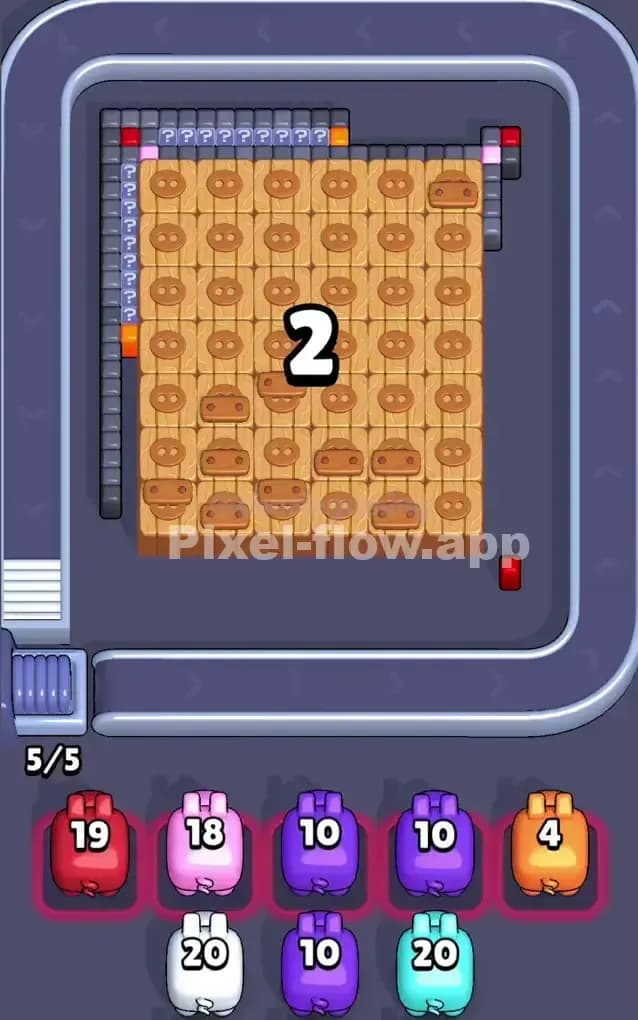
Pixel Flow Level 265 Walkthrough
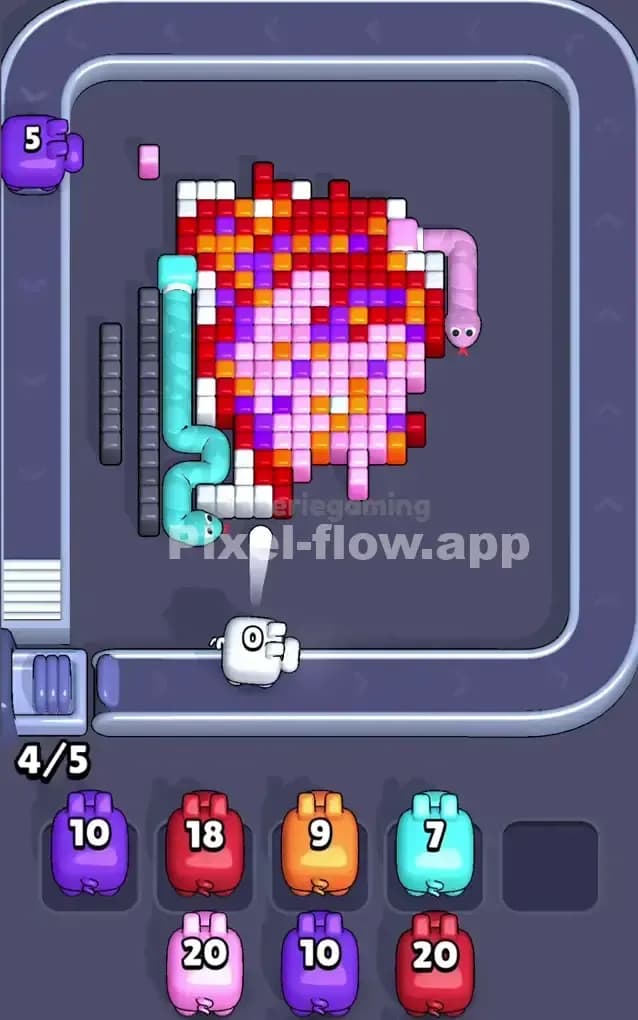
This level features a large, pixelated heart made of red, pink, white, orange, and purple blocks. The main challenge here isn't just the color matching; it's the physical obstruction caused by two long snakes coiled around the sides of the heart.
To beat Pixel Flow Level 265, you need to clear the blocks beneath these snakes to make them fall away, exposing the core of the heart. Because the snakes block the conveyor belt's line of sight to many cubes, your angles are limited. Is this a very hard level? Yes. It is very hard because if you don't prioritize the colors touching the snakes, you will run out of waiting slots quickly.
Pixel Flow Level 265 Overview
The artwork is a vibrant, multi-colored heart, almost like a candy or a gemstone, but it is being squeezed by two reptiles.
- The Left Flank: A long, cyan/light blue snake winds its way up the left side of the heart. It physically blocks shots coming from the left side of the conveyor belt.
- The Right Flank: A pink snake does the same on the right side.
- The Center: The heart itself is dense. It has a mix of red and orange on the outer edges, with white and pink concentrated in the middle. Purple blocks are scattered throughout like sprinkles.
The asymmetry here is subtle but important. The cyan snake on the left seems to cover more vertical space near the bottom, while the pink snake on the right hooks over the top edge slightly. This means your top-down shots are safer on the left, but your side shots are blocked on both flanks.
Step by step solution walkthrough for Pixel Flow Level 265
First Color Zone to Erase in Pixel Flow Level 265
Start with White or Red if possible, specifically targeting the blocks directly adjacent to the snakes.
Here is the logic: The snakes are resting on specific colored blocks. Until you destroy the blocks they are "standing" on (or leaning against), they won't move. Narratively, you are cutting the ground out from under them.
- Look for the white blocks tucking under the cyan snake's tail on the left.
- Look for the red blocks that the pink snake is hugging on the right.
If you focus on the center purple or orange blocks first, you are wasting moves. Those blocks are already exposed. You need to free up the sides so your pigs can shoot from the left and right conveyor belts without hitting a snake invulnerability wall.
How to pass Pixel Flow Level 265 without power ups or boosters
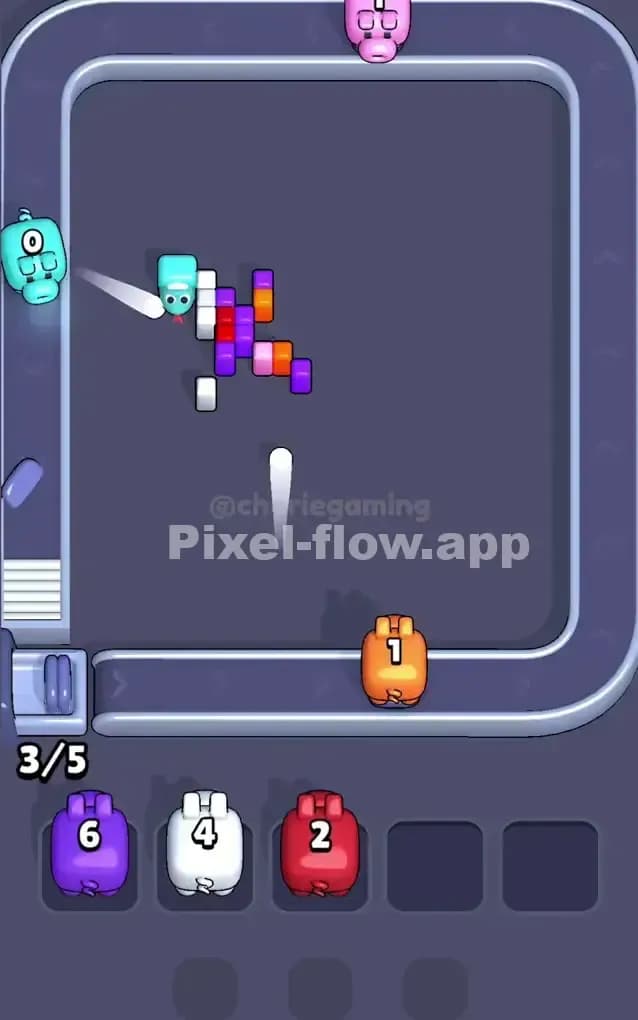
Around the mid-point of the level, the heart will look jagged and messy. Hopefully, you've dislodged at least one snake.
- If the Cyan Snake is gone: The left side is now open season. Prioritize using any Teal/Cyan pigs you get immediately to clear any remaining debris on that side, then focus heavily on the Orange and Red layers that were hidden behind the snake.
- If the Pink Snake is gone: The right side is clear. This usually exposes a lot of Pink and White inner layers.
The danger zone in Pixel Flow 265 is having your 5 slots fill up with colors that only exist deep in the center (like purple), while the outer shell (Red/Orange) is still intact.
To survive without boosters:
- Hoard High-Ammo Pigs: If you get a Red pig with 20 ammo, do not let it sit in a slot if there are only 2 red blocks visible. Wait until you peel back a layer and reveal a juicy cluster of 10+ red blocks.
- Sacrifice Low-Ammo Pigs: If you have a Purple pig with only 5 ammo and you see 5 purple blocks, use it immediately to clear a slot. Speed is key to keeping your bench empty.
- Ignore the Center: Do not shoot the middle of the heart unless you have to. Always shoot the edges to whittle the shape down.
Last Details You Clean Up in Pixel Flow Level 265
In the final moves, you are usually left with a thin, vertical strip of the heart's core.
- This is often a mix of Purple and Pink blocks.
- The last cubes tend to hide at the very top or very bottom of this strip. Because the heart narrows at the bottom point, sometimes a single block gets shielded by the rows above it.
- Watch your angles. If a pig is riding the top of the belt, make sure it clears the top-most blocks so the ones below become accessible for the next pass. Don't waste a shot hitting a block that was about to be exposed anyway. Finish the purple clusters, watch the final confetti pop, and move on.