Pixel Flow Level 288 Solution | Pixel Flow 288 Walkthrough
How to beat Pixel Flow Level 288: Video solution & walkthrough. The fastest way to pass Pixel Flow 288.
Is this the wrong level layout?🤔
Pixel Flow randomizes levels for different players. Don't worry, just upload a screenshot of your board, and our AI will find the correct video instantly.
Pixel Flow Level 288 Walkthrough
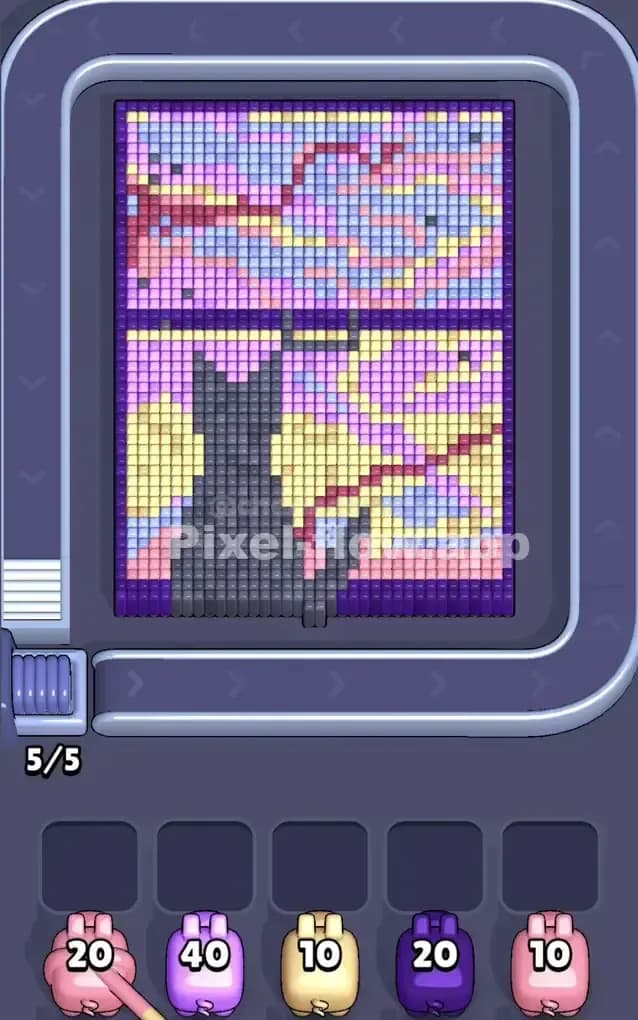
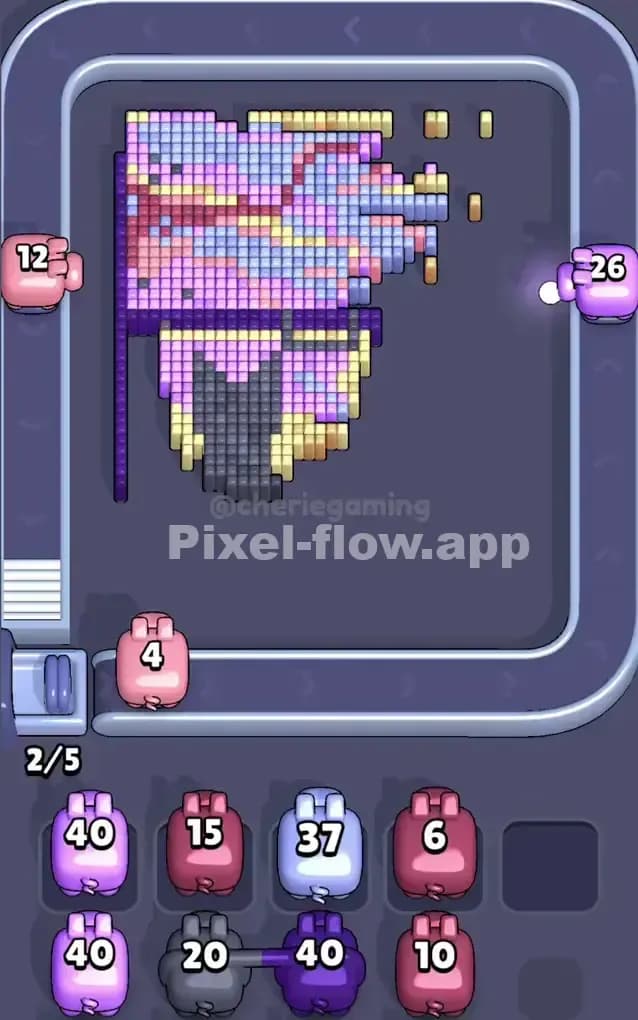
Level 288 features a moody, atmospheric scene: a black cat silhouette sitting at a window, gazing out at a swirling, colorful sky. The board is divided horizontally. The top half is dominated by pinks, purples, and blues representing the sky. The bottom half contains the dark cat figure flanked by yellow and purple window panes.
Your goal is straightforward: match your color-coded pigs to the pixel blocks to clear the image layer by layer. The challenge here isn't speed, but ammo management. The dark cat figure is a massive block of a single color that requires specific pigs, while the chaotic sky is a mix of scattered pixels. This is a very hard level because the sky's messy color distribution can easily clog your waiting slots if you aren't careful.
Pixel Flow Level 288 Overview
Think of this picture as a view from inside a dark room. The main character is the cat, represented by a tall, solid column of dark grey/black pixels in the bottom left-center. It anchors the image.
Surrounding the cat is the window view. The sky is a Van Gogh-style swirl of colors:
- Top Half: A chaotic mix of light blue, pink, and purple. These colors are not in solid blocks; they are dithered and scattered. This is dangerous.
- Bottom Half: To the left and right of the cat, you see larger chunks of yellow and light purple, likely representing light reflecting on the window pane or buildings outside.
- The Frame: A thin border of dark purple outlines the entire window.
The asymmetry is key. The left side is "heavy" with the cat. The right side is "lighter" with just the sky and window pane. This means you will need way more black/dark grey ammo on the left side of the conveyor belt than on the right.
Step by step solution walkthrough for Pixel Flow Level 288
First Color Zone to Erase in Pixel Flow Level 288
Ignore the cat for a moment. Start with the Sky Pink or Sky Blue on the right side of the board.
Here is the logic: The cat (black pixels) is a huge, easy target. You will almost never waste a black pig because there are so many targets for it. However, the sky is messy. The pinks and blues are scattered in single-pixel lines. If you grab a high-ammo Pink pig early but only have 5 pink pixels exposed on the outer layer, that pig will sit in your waiting slot, clogging it up.
By focusing on the right side of the sky first, you clear out the "noise." Look for the large bands of pink and blue near the top right. Clearing these exposes the deeper layers of the window frame and makes it safer to bring in other colors later.
How to pass Pixel Flow Level 288 without power ups or boosters
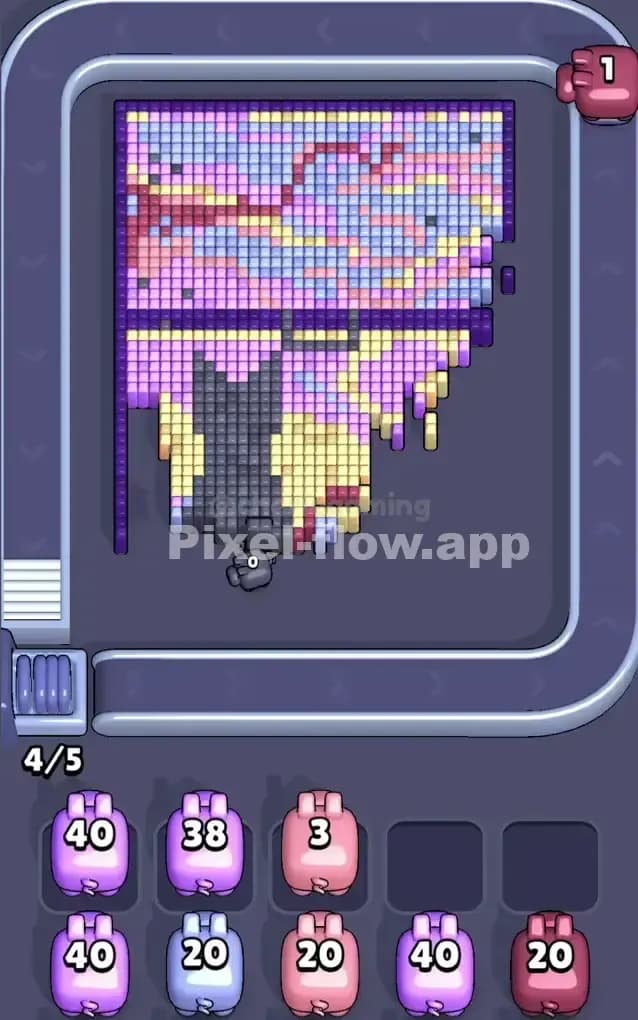
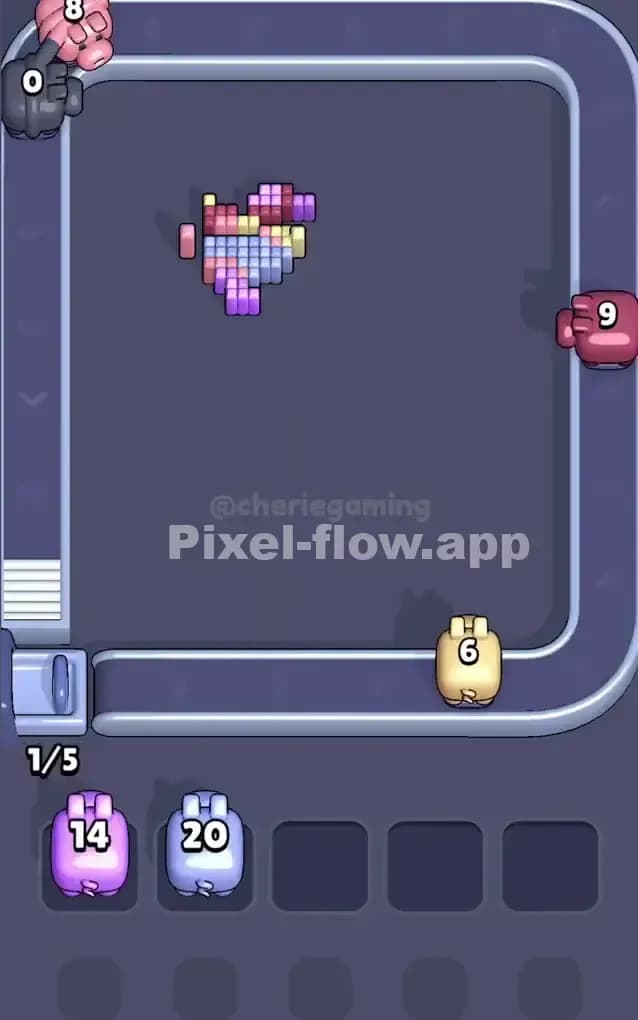
Once you are halfway through, the board usually looks like a "C" shape or a jagged cliff. You likely have cleared most of the right side, but the heavy black cat on the left remains.
At this stage, you face a specific danger: The Yellow Trap. The yellow pixels are clustered around the bottom right and middle left. They are often buried under the purple/pink sky layers. You might see a Yellow pig on the belt, but only see two or three yellow pixels exposed. Do not take that pig yet.
Wait. Let the belt cycle. You must clear the purple/pink pixels covering the yellow blocks first. If you fill your slots with Yellow pigs too early, you will lose because you can't reach the yellow layer.
Prioritize the Dark Purple border next. This color usually forms the window frame and the bottom sill. Clearing the bottom sill (the dark purple row at the very bottom) is crucial because it often blocks shots from hitting the bottom of the cat or the lower yellow sections.
Last Details You Clean Up in Pixel Flow Level 288
In the final phase, you are usually left with the Cat itself (Dark Grey/Black) and a few stray pixels of Light Blue.
The cat is huge and takes a lot of ammo. You will likely need 3 or 4 full black pigs to finish it. Since the cat is a solid vertical block, the shots will land easily. The real annoyance is usually 2 or 3 tiny light blue pixels hiding behind the cat's ears or near the top frame.
Scan the top corners carefully. Often, a single blue pixel is left in the top left corner, blocked by the cat's head. Make sure you have a blue pig ready in your reserve slot for that specific cleanup job, or you'll be cycling through pigs endlessly trying to hit that one last spot.