Pixel Flow Level 287 Solution | Pixel Flow 287 Walkthrough
How to beat Pixel Flow Level 287: Video solution & walkthrough. The fastest way to pass Pixel Flow 287.
Is this the wrong level layout?🤔
Pixel Flow randomizes levels for different players. Don't worry, just upload a screenshot of your board, and our AI will find the correct video instantly.

Pixel Flow Level 287 Walkthrough
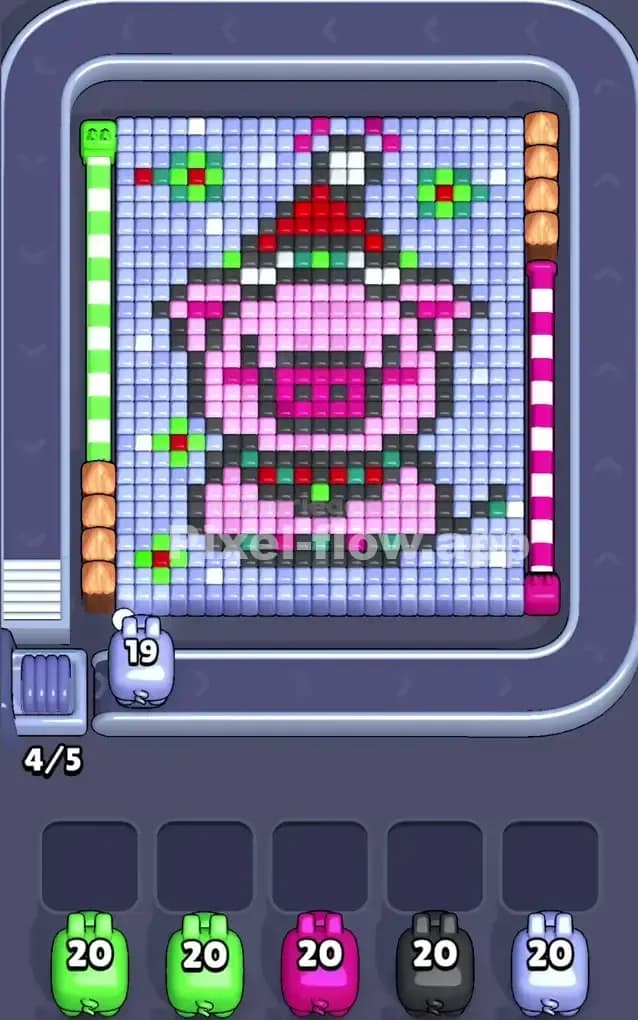
This level is all about unboxing a festive friend. You are looking at a pink pig wearing a Santa hat and a scarf, but initially, it is buried under a massive layer of light blue snow. The board is framed by annoying blockers: candy cane poles and wooden crates on the far left and right edges.
The rule to beat Pixel Flow Level 287 is patience with the background. You cannot rush to the main character (the pig) until you strip away the massive field of light blue pixels covering the screen. Because of the side blockers that limit your firing angles, I would judge this as a very hard level. One bad placement of a high-ammo pig can jam your slots instantly.
Pixel Flow Level 287 Overview
Imagine a Christmas card made of blocks. The center subject is a cute pink pig dressed for winter, sporting a red Santa hat with a white pom-pom and a green-and-red striped scarf. Surrounding the pig are floating bits of holly—small clusters of green and red pixels.
However, the dominant feature isn't the pig itself; it's the light blue "sky" or "snow" that acts as the top layer. This blue field covers about 80% of the board initially.
The layout is asymmetric and dangerous.
- Left Flank: A green-striped pole sits at the top left, and a stack of four wooden crates sits at the bottom left.
- Right Flank: The inverse happens. Wooden crates block the top right, while a pink-striped pole guards the bottom right.
These hard obstacles mean you can't just spam shots from the sides. Pixels hiding directly behind those wooden crates are safe from horizontal fire. You have to hit them from the top or bottom.
Step by step solution walkthrough for Pixel Flow Level 287
First Color Zone to Erase in Pixel Flow Level 287
Light Blue (Lavender). Do not touch anything else if you can help it.
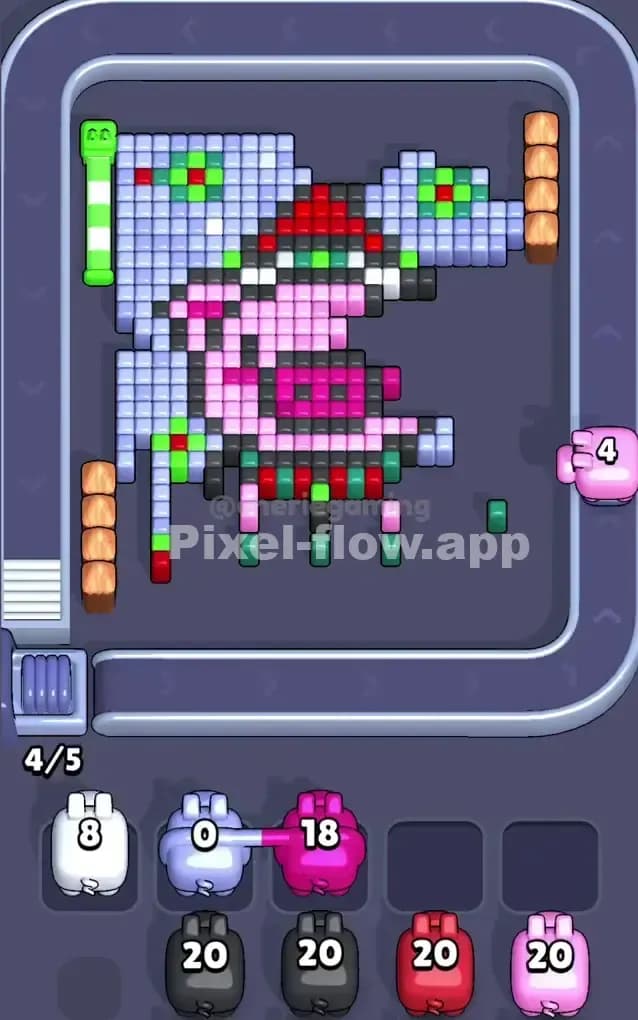
I start by shaving off the light blue background because it is the "wrapping paper" of the level. Looking at your ammo queue, you likely have a Light Blue pig with roughly 19 or 20 ammo early on. Use it immediately. This color fills the entire outer perimeter and covers the pig's face. If you try to place a Pink or Red pig into a slot now, they will sit there uselessly because the pink and red pixels are buried underneath the blue ice. Clear the sky. Clear the snow. Only then can you actually play the game.
How to pass Pixel Flow Level 287 without power ups or boosters
Once the blue background is mostly gone, the board looks chaotic. You'll see the pink body of the pig and the red hat, but you'll also notice "floating" islands of green and red holly that were previously stuck in the blue sky.
Here is the trap: The Black and Dark Green outlines.
At this mid-stage, you will get pigs with high ammo counts for Black (outlines) or Dark Pink (details). Do not slot them yet. The black pixels are often on the lowest layer, acting as the border for the pig. If you slot a Black pig now, it might shoot 2 pixels and then get stuck because the rest of the black cubes are hidden under the Red hat or Green scarf.
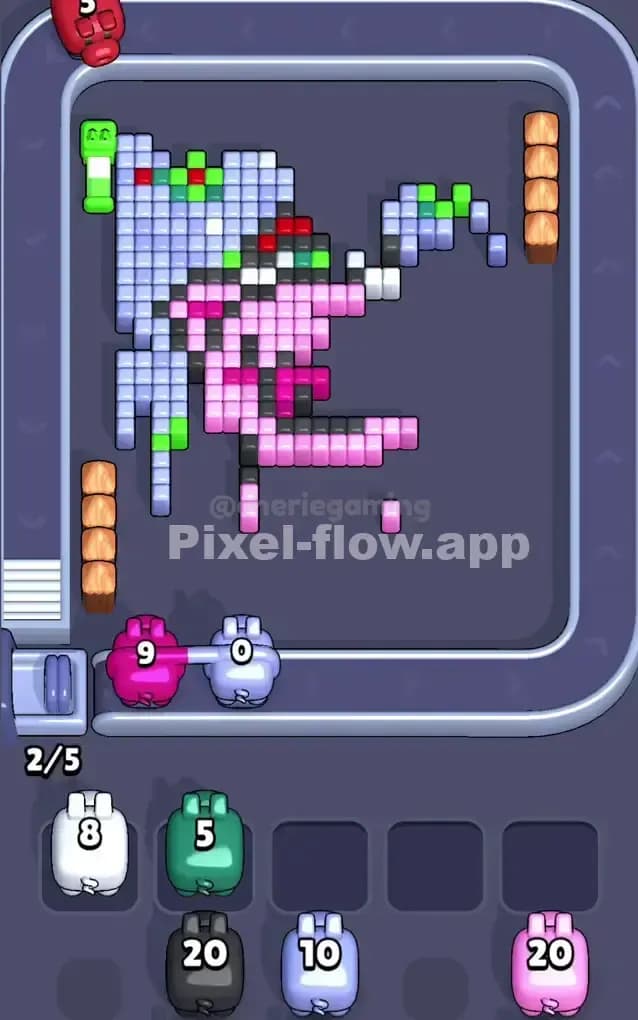
Focus on the Bright Pink (pig skin) and Red (hat) next. These are usually large, exposed chunks. By clearing the big blocks of pink, you create "holes" in the structure that allow your shots to penetrate deeper to the bottom layers.
Watch out for the wooden crates on the sides. If you have a few blue or white pixels stuck behind the crates on the right, you cannot wait for a pig to ride the belt to the right side to shoot them—the crates block the shot. You must wait for the pig to loop around to the top or bottom of the belt to snipe those protected pixels vertically.
Last Details You Clean Up in Pixel Flow Level 287
The end game is usually messy. You will likely be left with the White elements (the trim on the Santa hat) and the Black outlines.
The black pixels are the skeleton of the image. They run deep. In the final few moves of Pixel Flow Level 287, you will often find one or two single black pixels hiding near the pig's feet or ears that you missed because of the striped poles blocking your view. Keep your slots open for these cleanup pigs. Don't let a stray Green pig clog your final slot if there are only black pixels left on the board.