Pixel Flow Level 297 Solution Walkthrough | Pixel Flow 297

How to solve Pixel Flow level 297? Get instant solution for Pixel Flow 297 with our step by step solution & video walkthrough.

Share Pixel Flow Level 297 Guide:
Pixel Flow Level 297 Gameplay
Pixel Flow Level 297 Solution 1
Pixel Flow Level 297 Solution 2
Pixel Flow Level 297 Solution 3

Pixel Flow Level 297 Overview

The Board Layout and Starting Colors

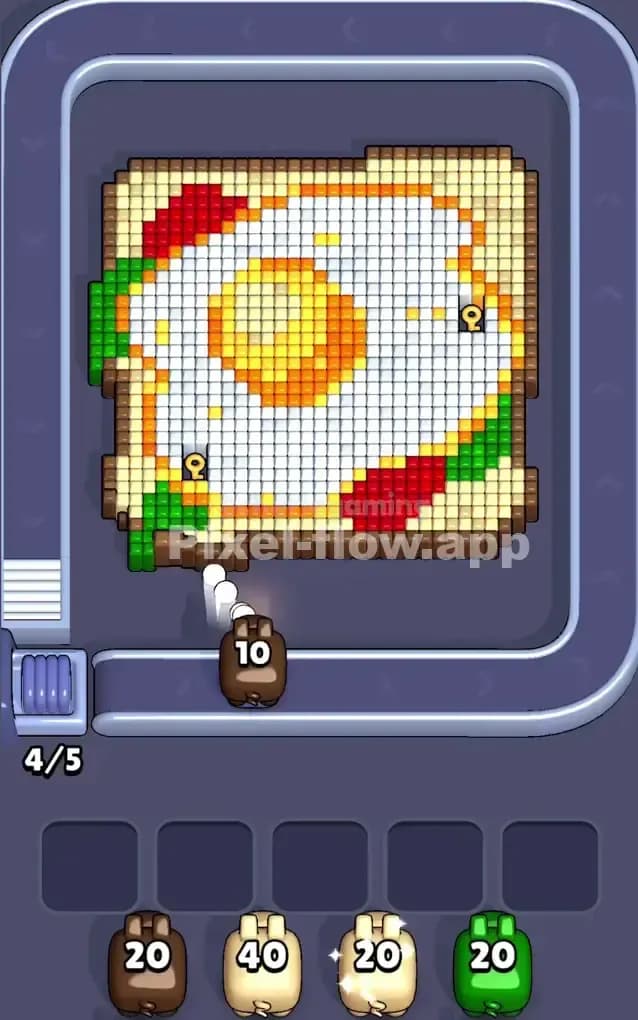
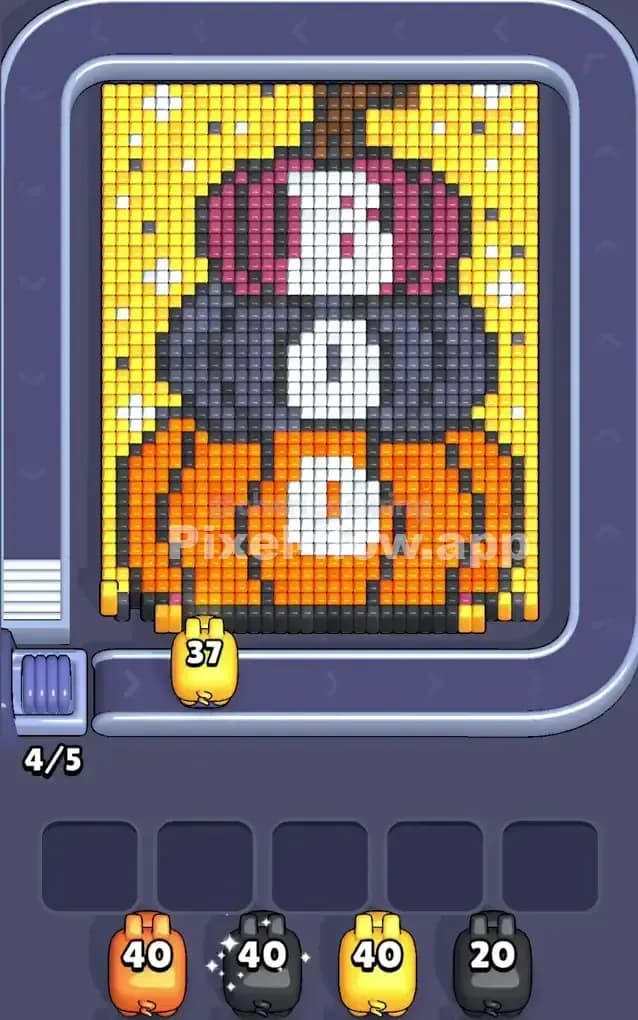
Pixel Flow Level 297 presents you with a striking voxel portrait of an eye—a classic pixel art subject that demands precision and careful color sequencing. The board is dominated by white cubes forming the sclera (the white of the eye), with bold orange and yellow rings creating the iris and pupil. Surrounding this central eye are accent colors: red patches in the top-left and bottom-right corners, green segments along the left and bottom edges, brown trim forming the border, and pale yellow filling gaps throughout. The layered structure is immediately apparent—the white foundation sits atop deeper colors, and you'll need to peel back the outer shell strategically to expose and clear everything beneath. The waiting slots below the board currently show four pigs: a brown pig with 20 ammo, two cream-colored pigs with 40 ammo each, and a green pig with 20 ammo. You're starting with 4 out of 5 slots filled, which means you have only one buffer slot before the board locks up.

The Win Condition and Deterministic Nature

Your goal in Pixel Flow Level 297 is straightforward: clear every single voxel cube from the board without jamming the waiting slots. Each pig automatically shoots cubes matching its own color, spending one ammo per cube destroyed. Once a pig has no valid targets left, it drops into a waiting slot and stays there. If all five waiting slots fill up and you still have pigs with unspent ammo and no matching cubes visible, you lose immediately. The beauty and challenge of Pixel Flow Level 297 lies in the fact that pig order and ammo counts are completely deterministic—there's no randomness. Every solution relies on you understanding the exact sequence of incoming pigs and planning which colors you expose and when.


Why Pixel Flow Level 297 Feels So Tricky

The Waiting Slot Crisis

The biggest threat in Pixel Flow Level 297 is that you're already sitting at 4/5 waiting slots filled before you even make your first move. This severely limits your margin for error. If you accidentally trigger a pig with no valid targets early on, you'll burn your last free slot and face immediate panic. The brown pig with 20 ammo sits at the front of the queue, and if you don't have enough brown cubes visible on the board to spend all 20 ammo, that pig will drop into your lone free slot, locking you out completely. This forces you to think several moves ahead from the very start—something many players underestimate on Pixel Flow Level 297.

Awkward Color Distribution and Hidden Layers

The white cubes dominate Pixel Flow Level 297's visual real estate, but you don't have a white pig incoming. This means white becomes a "blocker" color that must be cleared by other pigs or sit passively as you work around it. The orange and yellow cubes are tangled together in the iris region, and it's genuinely hard to count how many of each color exist without staring at the board for a minute. If you miscalculate how many orange cubes the incoming cream-colored (likely yellow-shooting) pigs can consume, you'll expose gaps that reveal nothing, wasting ammo. Additionally, the red patches in opposite corners create a subtle split—red appears in two disconnected regions, which means a red pig might clear one area, drop into a waiting slot before all red is gone, and then you're stuck with red cubes you can't reach.

The Personal "Aha" Moment

Honestly, my first three attempts at Pixel Flow Level 297 felt claustrophobic and hopeless. I kept triggering pigs too early and watching the waiting slots fill up like a countdown to failure. The level "clicked" for me when I realized I wasn't actually forced to shoot immediately—I could let the first brown pig sit on the conveyor, observe which colors it would expose, and only then commit to a sequence. That tiny mental shift—from "react to what's visible now" to "plan for what will be visible after this pig fires"—transformed Pixel Flow Level 297 from frustrating to manageable.


Step-by-Step Strategy to Clear Pixel Flow Level 297

Opening: Establish Your Foundation

Start by letting the brown pig (20 ammo) fire. Brown cubes form the border trim, and there should be roughly 20 brown cubes scattered around the edges of Pixel Flow Level 297. Firing the brown pig first clears the frame and exposes the inner colors without immediately jamming your waiting slots. Watch carefully as brown cubes disappear—you're looking for whether green and red cubes become fully visible and countable. After brown fires, you should have freed at least one or two cubes of new color, and critically, you've kept three waiting slots open. Never, ever let multiple pigs drop into the waiting area before you've at least exposed the next color layer. That's the cardinal rule of Pixel Flow Level 297.

Mid-Game: Layer Peeling and Ammo Precision

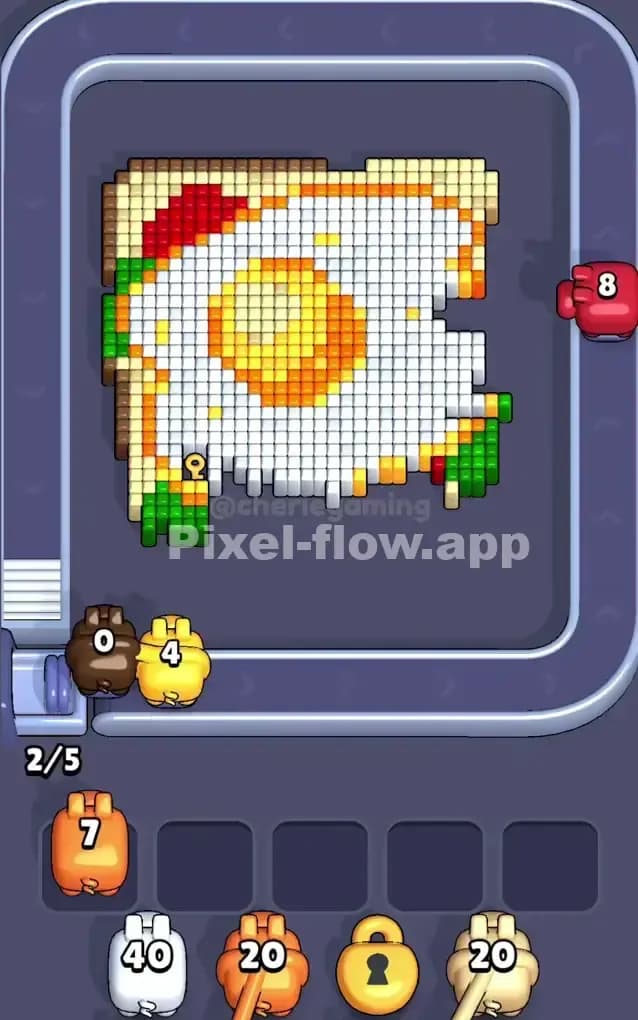
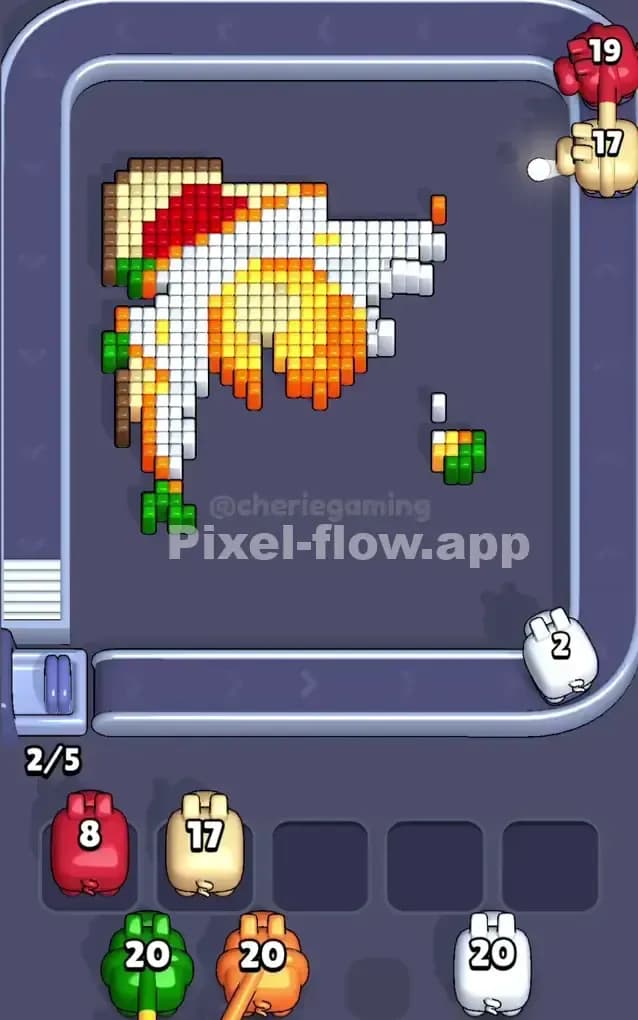
Once brown is depleted, shift focus to green. The green cubes cluster along the left and bottom edges, and the green pig in the queue has exactly 20 ammo. Fire the green pig next, watching it clear the left and bottom borders. This reveals more of the white and orange/yellow interior. Now you're at a critical juncture: the two cream-colored pigs with 40 ammo each are queued next, and they're likely yellow-shooting. Before you fire either, carefully count every yellow cube you can see in the iris region. If you see fewer than 40 yellow cubes, you know the first cream pig will over-shoot and drop into a waiting slot—which is fine, as long as you plan for it. Fire the first cream pig and let it consume as much yellow as it can. If it depletes all visible yellow and still has ammo remaining, it will drop into a waiting slot. That's expected behavior for Pixel Flow Level 297, and it's not a failure as long as you have a free slot. Once the first cream pig is resting, the second cream pig will fire and might finish off remaining yellow or uncover red cubes beneath. The key during the mid-game of Pixel Flow Level 297 is patience: watch each pig's trajectory, count remaining ammo after each shot, and don't panic when a pig parks itself in the waiting area—that's often the correct play.

End-Game: The Red and White Finish

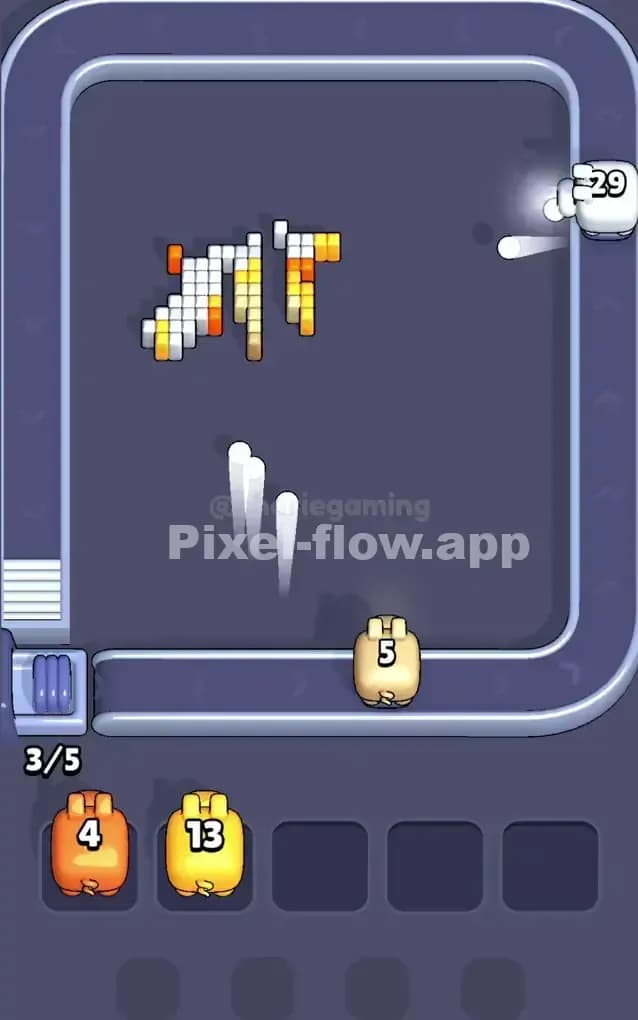
By the end-game phase of Pixel Flow Level 297, you're usually left with white and red cubes, and possibly some orange that wasn't fully exposed. Red cubes are dangerous because they're split across two corners—one cluster in the top-left and another in the bottom-right. This split means if you had a red pig, it might fire until one cluster is gone, then sit idle with ammo remaining. Since you don't have a red pig in your queue, red cubes must either be cleared as a side effect (if another color pig over-shoots) or they'll remain on the board, which is a loss. Plan for this by ensuring one of your cream pigs (if they shoot a color other than yellow, or if yellow overlaps with red visually) or another pig can consume the red cubes. White is the easiest to ignore—white cubes don't shoot anything and don't clog waiting slots, so if a handful of white remains at the very end, it's not immediately catastrophic, though ideally you'll clear everything. To finish Pixel Flow Level 297 cleanly, you want to fire pigs in an order that exposes red cubes early enough for another pig to finish them, and ensure your last pig to fire has enough ammo to polish off any stragglers.


The Logic Behind This Pixel Flow Level 297 Plan

Exploiting Queue Knowledge and Ammo Matching

The strategy for Pixel Flow Level 297 works because you know exactly which pigs are coming and in what order. You have: brown (20), cream (40), cream (40), and green (20) already visible. That's 120 ammo total. Pixel Flow Level 297's board contains roughly 100–110 cubes across all colors, which means you have a small buffer of ammo—but only if you don't waste shots. By firing brown first, you're spending 20 ammo on a color (the border trim) that's easy to count and least likely to block other colors. By following with green and then the cream pigs, you're frontloading the high-ammo pigs after you've already exposed interior colors, maximizing the chances their ammo lands on valid targets. This isn't random luck; it's deliberate sequencing based on the fixed queue.

Staying Calm and Counting Ahead

The secret to mastering Pixel Flow Level 297 is resisting the urge to fire pigs reactively. Instead, before you fire each pig, spend five seconds scanning the board and estimating how many matching cubes exist. If the number seems less than the pig's ammo, mentally accept that the pig will drop into a waiting slot—and only fire if you have a free slot available. Watch the waiting slots like a hawk. The moment you see 4/5 filled, you know your next pig choice is critical: fire a pig whose color is guaranteed to have enough visible cubes, or you're locked out of Pixel Flow Level 297. This forward-thinking stance transforms the level from a stressful race against the clock into a methodical puzzle you can solve by planning two or three pigs ahead.