Pixel Flow Level 299 Solution Walkthrough | Pixel Flow 299
How to solve Pixel Flow level 299? Get instant solution for Pixel Flow 299 with our step by step solution & video walkthrough.


Pixel Flow Level 299 Walkthrough
The Board Layout and Starting Colors
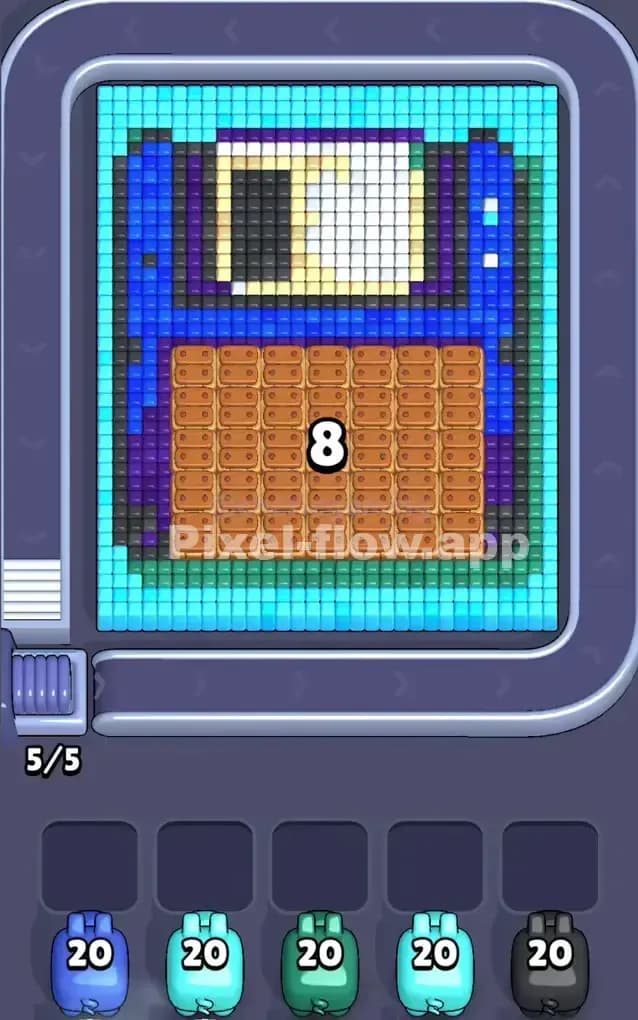
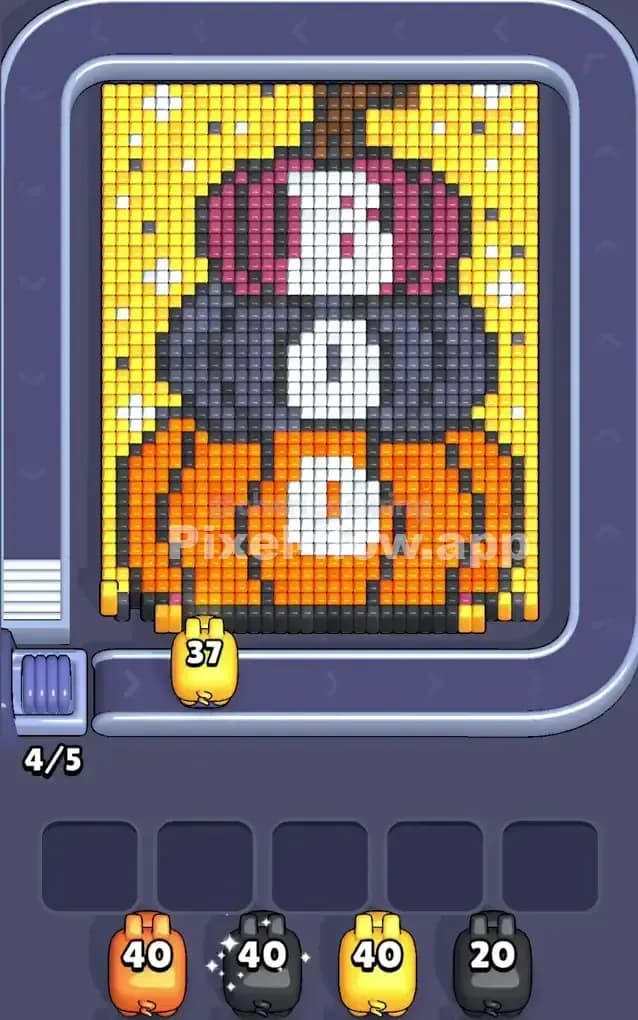
Pixel Flow Level 299 presents a charming retro monitor or screen pixel art as its central subject, surrounded by a vibrant border of cyan, blue, purple, and green cubes. The monitor itself features a white or cream-colored frame with a dark interior, and below it sits a massive tan or brown section that dominates the lower half of the board. You're looking at a level where color diversity meets spatial complexity—there's a lot of real estate to cover, and the pig queue shows you've got five different colored pigs, each with exactly twenty ammo. That's your working ammunition pool, and you'll need to spend all of it strategically.
The dominant colors you'll encounter are cyan (the outer frame), blue (layered heavily on the sides and behind the monitor), purple (middle-tier depth), tan or brown (the massive lower section), and green (accent color on the edges). What makes Pixel Flow Level 299 interesting is how these colors aren't evenly distributed—the tan section alone likely accounts for a third of all cubes on the board, and that concentration is both your opportunity and your trap.
The Win Condition and Deterministic Nature
To beat Pixel Flow Level 299, you must clear every single cube from the board. The pig order is fixed and unchangeable; each pig arrives in sequence and shoots its color automatically when you tap it. Every cube destroyed costs exactly one ammo from that pig's reserve. The waiting slots at the bottom will fill if a pig runs out of valid targets before its ammo is depleted—and once all five slots are full with stranded pigs, you'll fail instantly if you can't spend their remaining ammo. This is why Pixel Flow Level 299 demands planning ahead rather than reactive tapping.
Why Pixel Flow Level 299 Feels So Tricky
The Tan/Brown Bottleneck
The lower section of Pixel Flow Level 299 is an absolute monster. It's a dense rectangular block of tan-colored cubes that stretches nearly the full width of the board, and your tan pig has only twenty ammo to chip away at it. The problem is obvious: that tan pig will arrive at some point in the sequence, and if you haven't exposed enough tan cubes by layering through the upper colors first, the pig will fire into that massive block, use up its ammo quickly, and then you'll have a half-empty tan pig sitting in your waiting buffer with nowhere to go. The tan section is essentially the level's gatekeeper, and rushing it without setting up the other colors first is a recipe for disaster.
Awkward Color Pockets and Layer Mismatches
Pixel Flow Level 299 hides some sneaky color distribution problems. The cyan border looks extensive, but cyan cubes are scattered in a pattern that might not align perfectly with when your cyan pig arrives. Similarly, the blue cubes form layers behind and beside the monitor frame—they're not all exposed at once. You might find yourself with a blue pig that has ammunition remaining but no visible blue targets, forcing it into a waiting slot while you frantically work to expose deeper blue cubes. The purple layer adds another wrinkle; it's thin and positioned in awkward spots, so your purple pig might seem like it should have targets everywhere, but visibility and access tell a different story.
The Personal Friction Point
I'll be honest: Pixel Flow Level 299 frustrated me for a solid ten attempts because I kept trying to clear the tan section early, thinking I'd "get it out of the way." Instead, I'd jam up the buffer with stuck pigs and watch the level collapse around move five. The click came when I stopped fighting the board's structure and started respecting the layer order. Once I accepted that cyan and cyan-adjacent outer colors needed to fall first—even though they seemed less urgent—the puzzle suddenly felt solvable. The level teaches you patience in a way that's almost philosophical.
Step-by-Step Strategy to Clear Pixel Flow Level 299
Opening: Establishing a Clean First Five Moves
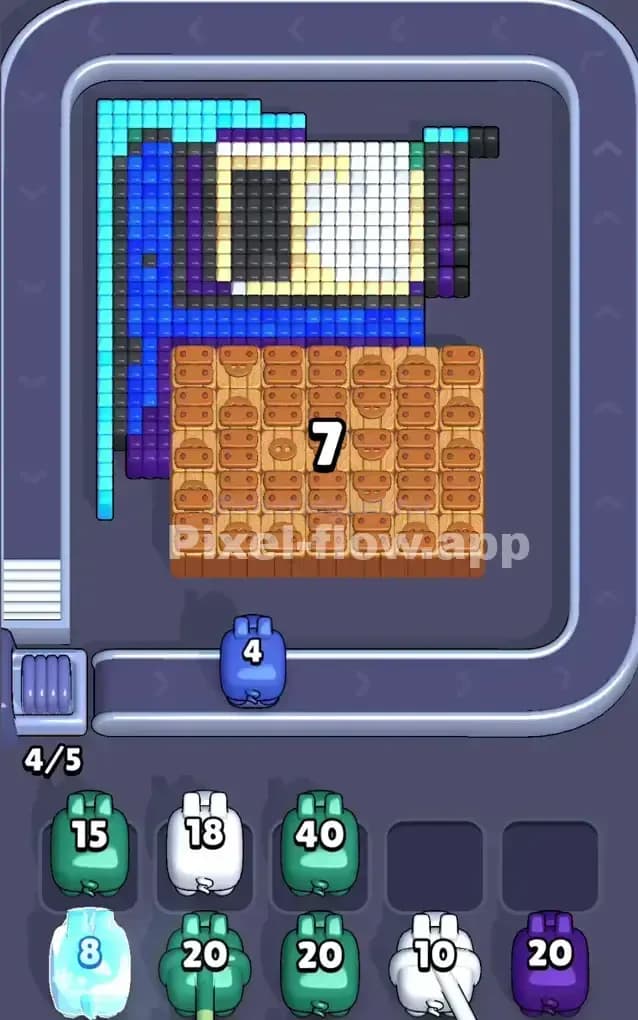
Your opening moves in Pixel Flow Level 299 should focus on the cyan and light-colored outer rings. Cyan forms the outermost frame, and clearing it serves two purposes: it exposes the inner blue and purple layers, and it burns through a pig's ammo in a sustainable way. When your first cyan pig arrives, tap it and let it spray the outer ring. You should see a clean line of cubes disappear, and crucially, you'll still have at least three or four waiting slots free afterward.
Next, assess which secondary color appears most exposed. If your queue shows a blue pig coming second, that's often ideal because blue is layered heavily and will give you solid ammo-to-target conversion. Tap blue and watch the sides light up as the monitor frame becomes more defined. Keep a mental note: after every pig, you should have no more than two pigs in the waiting buffer. If you're hitting three stuck pigs after the first three moves, you've gone too fast and you're not exposing layers quickly enough. The golden rule for Pixel Flow Level 299 is that exposure is everything—each pig should create new targets for the next pig.
Mid-Game: Sequencing and Layer Peeling
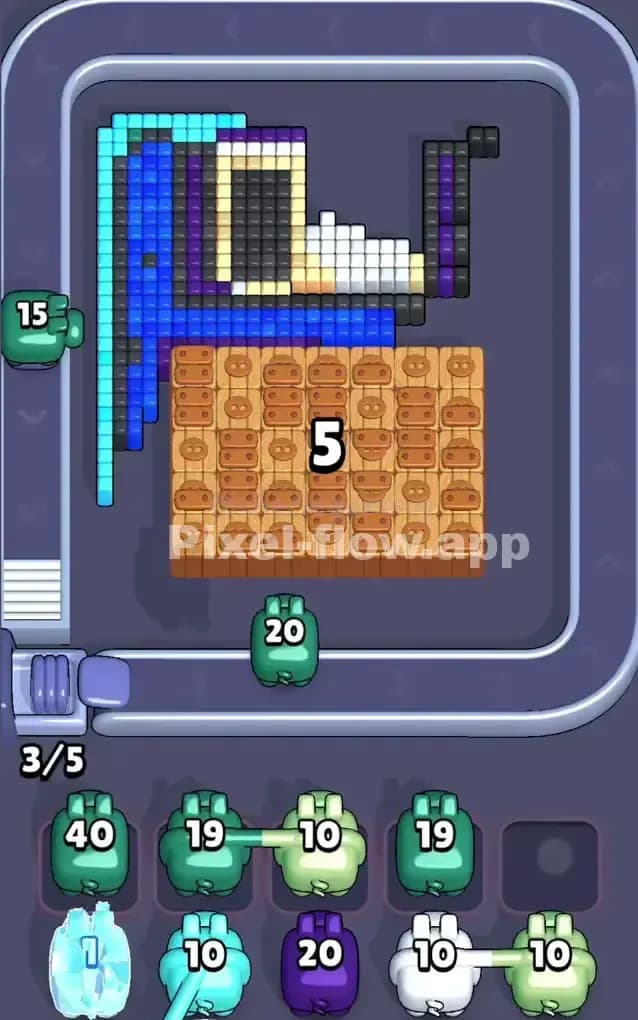
By the time you've burned through your first ten combined ammo (roughly two pigs), the board should start looking noticeably different. The outer shell is cracking, and the deeper colors are bleeding through. This is where Pixel Flow Level 299 becomes a dance of timing and prediction.
Your mid-game strategy hinges on careful pig ordering. If you've got the purple pig coming up and you can already see purple cubes underneath the upper layers, absolutely tap it next. Don't wait for the "perfect" moment—purple's ammo should map cleanly onto visible purple cubes because you've just exposed them. Every shot should feel purposeful, not wasteful. If instead you see that your purple pig would land on a huge stretch of unexposed board, park it in the waiting buffer for one or two turns while you use other colors to peel back more layers.
The tan section during mid-game is still a no-touch zone. Even though the tan pig is sitting in your queue, don't rush it. Let it wait in the buffer if necessary—yes, you're using a slot, but one slot is infinitely better than jamming your buffer by deploying a tan pig prematurely. By the time you're at fifty percent board clear, you should have a clear line of sight to at least half of the tan cubes below. That's your green light to deploy the tan pig.
End-Game: Closing the Loop Cleanly
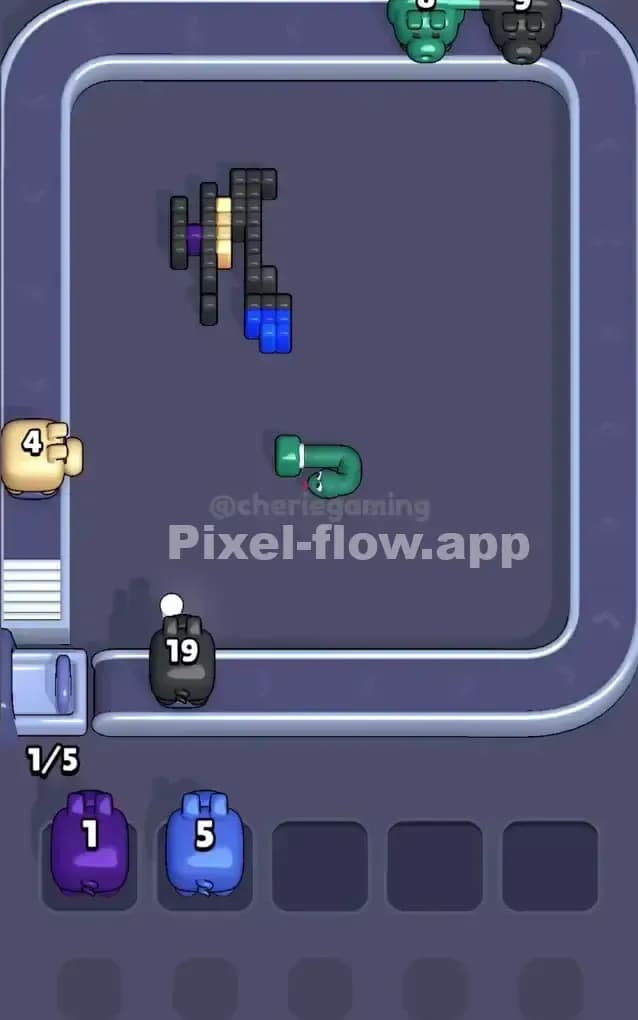
The final stretch of Pixel Flow Level 299 is almost meditative if you've managed your buffer well. Your last two or three pigs should have very clear target zones because the board is mostly empty except for residual color patches and the tail end of the tan section. Tap your remaining colored pigs in quick succession, watching the board collapse into empty space.
The ideal end-game scenario is that your last pig uses its final ammo on the last cube—a perfect zero-waste finish. In practice, Pixel Flow Level 299 often lets you empty the board with a pig or two still showing a little ammo, and that's perfectly fine as long as they have valid targets to shoot. The moment of victory is when the board goes completely dark and the level announces your clear. Avoid the trap of leaving a pig with ammo but no targets at the end; if that happens, you've miscalculated somewhere, but it's usually recoverable if you've kept your buffer free.
The Logic Behind This Pixel Flow Level 299 Plan
Why This Sequence Works
The strategy for Pixel Flow Level 299 hinges on understanding that the pig queue is deterministic but your deployment timing is flexible. You can't change the order the pigs arrive in, but you absolutely control when you tap each pig. By prioritizing outer-layer colors first, you're not being conservative—you're being smart. Each pig you deploy becomes a bulldozer that exposes new cubes for the next pig, creating a cascade of valid targets that minimizes waiting-buffer bloat.
The tan section is the level's centerpiece, but it's not the level's bottleneck if you approach it correctly. By the time the tan pig arrives, you should have already stripped away enough overlying colors that the tan pig sees a satisfying number of targets, burns its ammo efficiently, and moves on. The level rewards you for patience and punishes you for greed—rushing the tan pig because it's visually prominent will trap you every time.
Staying Calm Under Pressure and Counting Ahead
Here's the mindset shift that makes Pixel Flow Level 299 click: treat it like you're playing three moves ahead, not reacting to what's in front of you now. Before you tap any pig, glance at the next two pigs in the queue and ask yourself, "Will that pig have targets if I deploy this one?" If the answer is no, park the current pig in the waiting buffer instead. It sounds rigid, but this habit is exactly what separates messy clears from clean ones.
Count your ammo visually. If you see forty tan cubes and your tan pig has twenty ammo, you know you need another tan pig or you need to accept that some tan will remain. Similarly, watch your buffer—the moment three pigs are waiting, slow down and focus on exposure. Flip your mindset from "what can I do now?" to "what setup am I creating for future pigs?" This is what makes Pixel Flow Level 299 a satisfying puzzle rather than a frustrating random shuffle. You have real control, and using it well feels incredible.