Pixel Flow Level 300 Solution | Pixel Flow 300 Walkthrough
How to beat Pixel Flow Level 300: Video solution & walkthrough. The fastest way to pass Pixel Flow 300.
Is this the wrong level layout?🤔
Pixel Flow randomizes levels for different players. Don't worry, just upload a screenshot of your board, and our AI will find the correct video instantly.
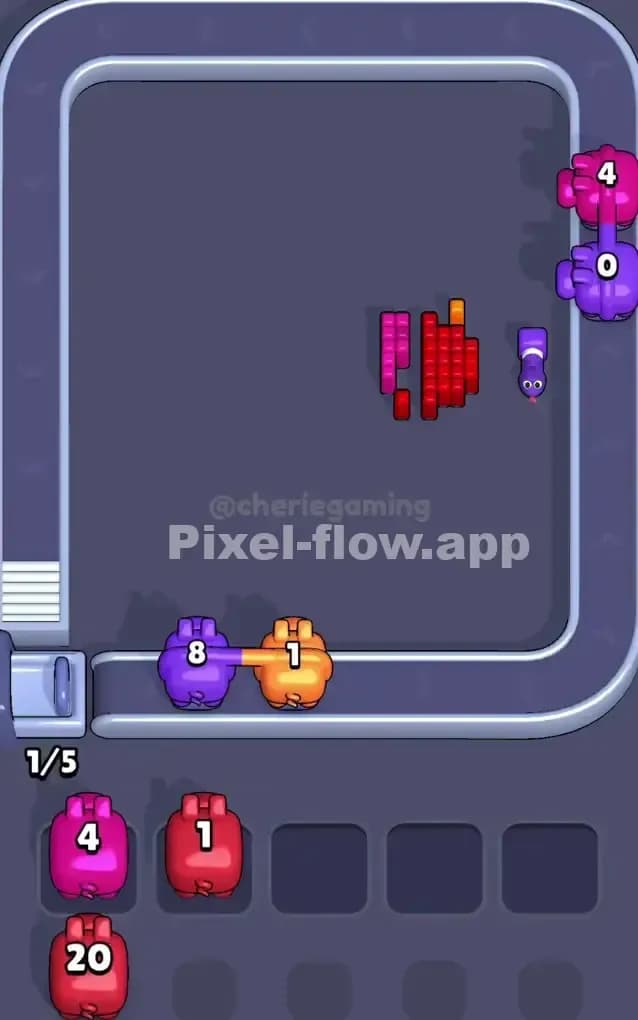
Pixel Flow Level 300 Overview
The Board and Color Composition
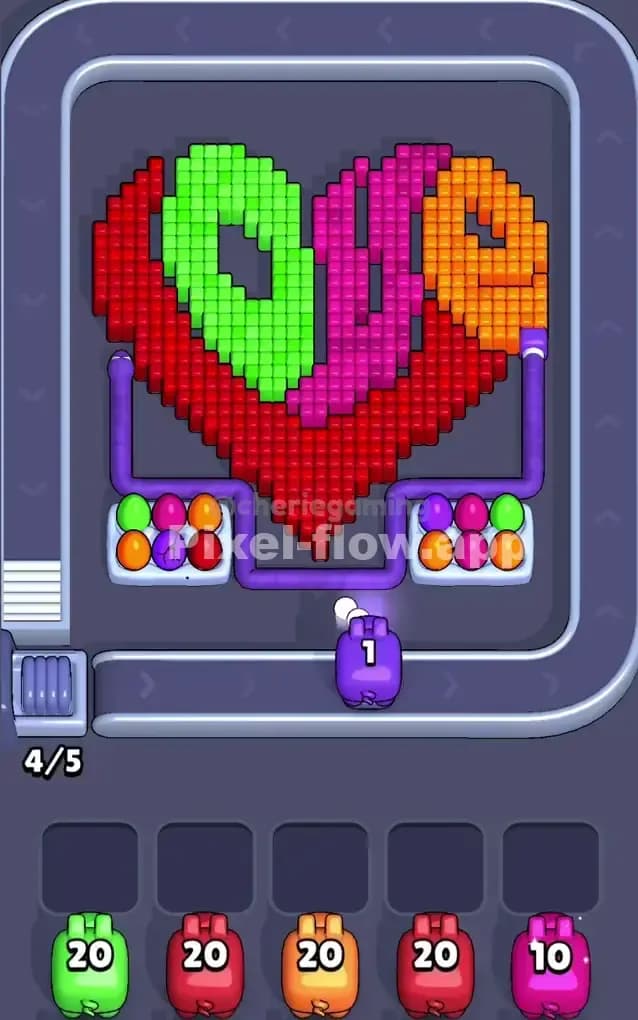
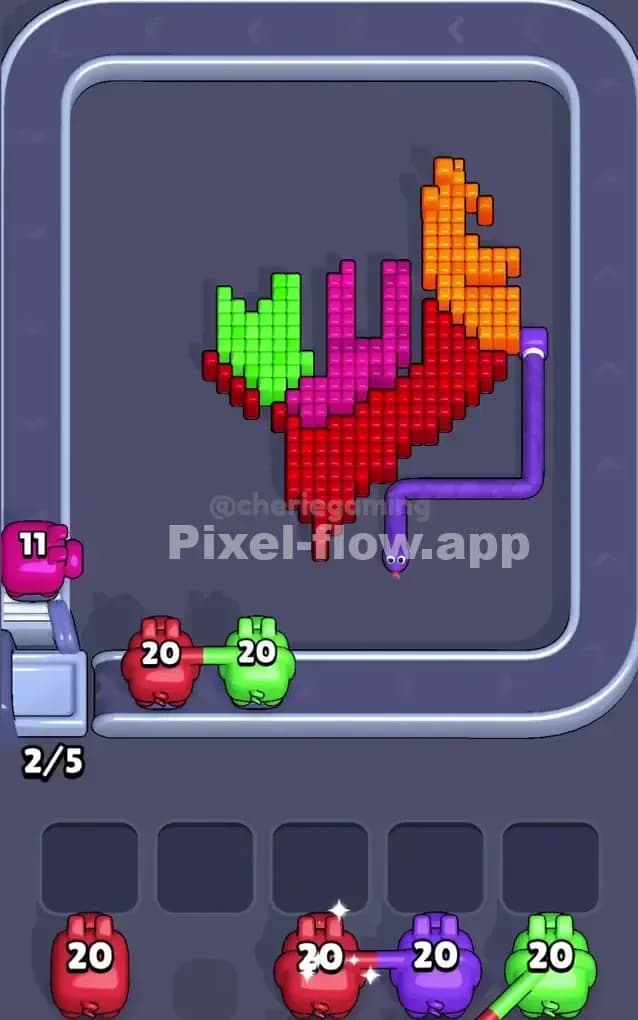
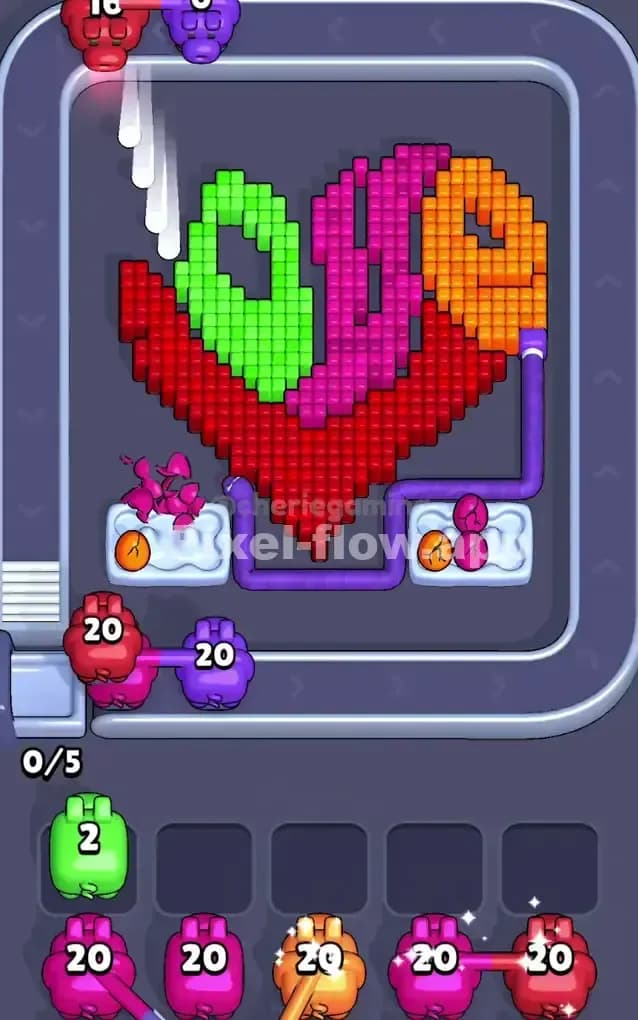
Pixel Flow Level 300 presents you with a striking heart-shaped voxel picture built from multiple color layers. The dominant colors are red (forming the base and large structural areas), green (creating an organic blob shape in the upper left), magenta/pink (filling the middle-right section), and orange (scattered across the upper right). Purple accents frame the waiting slots on either side, and you'll notice the red cubes form the backbone of the entire design—they're everywhere, creating both support and obstruction. The pixel art has depth; those inner colors aren't just surface decoration. You're looking at a puzzle where peeling away the outer red layer will expose pockets of green, magenta, and orange that are currently hidden or partially blocked.
The Win Condition and Deterministic Nature
Your goal in Pixel Flow Level 300 is straightforward: clear every single voxel cube from the board. You'll do this by sequencing five incoming pigs—each one carrying a fixed ammo count—to shoot matching-colored cubes until the board is completely empty. The game gives you a green pig with 20 ammo, two red pigs with 20 ammo each, an orange pig with 20 ammo, and a magenta pig with only 10 ammo. Every action is deterministic; the pigs arrive in a fixed order, their ammo counts never change, and the waiting slots can hold exactly five stuck pigs before you fail. Your job is to choreograph these pigs so their shots land on valid targets and no pig ever gets stranded without a matching cube to shoot.
Why Pixel Flow Level 300 Feels So Tricky
The Red Bottleneck
The biggest trap in Pixel Flow Level 300 is the sheer volume of red cubes. You have two red pigs with 20 ammo each—that's 40 red shots total—and red is layered throughout the board, blocking access to inner colors. The problem? If you fire both red pigs too early or without careful planning, you'll burn through their ammo on surface red cubes, expose the inner layers too quickly, and end up with magenta or orange pigs unable to find valid targets. Then they drop into your waiting slots, and if you can't keep feeding them matching cubes, you're stuck. I found myself frustrated the first few attempts because I'd greedily clear red early, only to watch three different-colored pigs queue up with nowhere to shoot.
The Magenta Constraint
Here's where Pixel Flow Level 300 becomes genuinely tricky: the magenta pig only has 10 ammo, but magenta cubes are interspersed throughout the design, some buried under red. If you expose magenta too early or don't coordinate your other pigs to clear adjacent cubes first, you'll have the magenta pig sitting in a waiting slot with 3–5 ammo remaining and no valid targets left—a dead weight that clogs your buffer. The magenta section isn't a single clean block; it's scattered across the heart, which means you need to time that pink pig's entry very carefully.
The Hidden Green and Orange Pockets
The green blob in the upper left and the orange patches on the upper right aren't obviously connected to the outer layer. Red cubes and other colors partially bury them, creating situations where a color becomes temporarily invisible. You might think you've exposed all green, but actually there's one small pocket of green hidden behind an orange column that you haven't cleared yet. Orange has a similar problem; chunks of it are wrapped inside the heart structure. In Pixel Flow Level 300, rushing to shoot green or orange without fully exposing them first wastes precious ammo and leaves you scrambling at the end.
When It Clicked for Me
Honestly, Pixel Flow Level 300 stumped me for several attempts. I kept treating it like a simple priority list—clear red, then green, then orange, then magenta—but the board doesn't work that way. The moment it clicked was when I realized I needed to shoot red pigs in a staggered way, using their ammo to expose just enough of the inner layers to feed the other colors, then parking half-empty pigs in the waiting slots temporarily. Once I accepted that "partial clears" and strategic waiting were the name of the game, Pixel Flow Level 300 became manageable and even satisfying to solve.
Step-by-Step Strategy to Clear Pixel Flow Level 300
Opening: Targeting Red and Preserving Buffer Space
Start Pixel Flow Level 300 by sending your first green pig. Green has 20 ammo and the green blob is relatively isolated in the upper left, making it a clean, confidence-building opening move. You should be able to spend most or all of green's ammo immediately, clearing the upper-left pocket without creating dangerous exposed gaps. This keeps your waiting slots empty and gives you breathing room.
Next, fire your first red pig—the one with 20 ammo—but do it strategically. Target the outer red border and the red cubes that are directly blocking access to magenta and orange. Don't try to clear all red at once; instead, think of this first red pig as a "key turner." Use maybe 12–15 of its 20 ammo to remove red obstacles and expose at least two pockets of inner color. If it drops into a waiting slot with 5–8 ammo left, that's fine; you're keeping slots free for incoming pigs. The goal is to have at least 3 empty waiting slots after your first two pigs.
Mid-Game: Exposing Layers and Parking Pigs
Now send your orange pig. With orange exposed (courtesy of your first red pig's partial work), you should have clean targets. Orange has 20 ammo, so spray it on the orange clusters in the upper right and anywhere else orange is visible. Orange is less intricate than red, so you'll likely finish it completely or nearly so. If orange has leftover ammo and no target, it parks in a waiting slot—that's okay, as long as you still have 2+ free slots.
Before firing the second red pig, send your first red pig back through if it's sitting in the waiting buffer. Wait, no—let me clarify: you can't manually control the waiting slots, but you can time your pig releases so that incoming pigs activate waiting pigs. Actually, in Pixel Flow Level 300, you have more control than that. If your first red pig is parked with 5 ammo left and there are red cubes visible deeper in the board, you'd release it again when you see those targets appear. The trick is cycling your pigs so that no pig ever dies jobless.
Once you've tackled green and orange, and your first red pig is either fully spent or parked with a clear reason, fire your second red pig. This red pig should finish clearing the red layer that's blocking magenta. You're now in mid-game territory, and your waiting slots are probably filling up. Keep watching: if you have 4 or 5 stuck pigs, you're in danger, so make sure your next pig release addresses one of them.
End-Game: The Magenta Finish
The magenta pig is the last to arrive, and in Pixel Flow Level 300, you must ensure that when it lands, there are actual magenta cubes visible and no other pigs are stuck in the buffer with nowhere to shoot. Ideally, you'd have cleared enough red and orange in mid-game so that magenta is fully exposed before the magenta pig even arrives.
Fire the magenta pig and watch its ammo count carefully. With only 10 ammo, there's no room for waste. If magenta runs out before clearing all remaining magenta cubes, you've failed—the game ends. So, make absolutely certain that your earlier red pigs have exposed the entire magenta cluster, and that no magenta cubes are hiding under other colors when the magenta pig fires.
If you've played Pixel Flow Level 300 correctly, the magenta pig will spend all 10 ammo and leave the board empty. If there are a few stray cubes of any color left, you've made a sequencing error earlier, and you'll have to restart and adjust your timing.
The Logic Behind This Pixel Flow Level 300 Plan
Exploiting Order, Ammo, and Slots
The strategy above works because it respects the hard constraints of Pixel Flow Level 300. You have exactly five pigs arriving in a fixed order, each with a predetermined ammo count. The waiting slots can hold a maximum of five pigs, and the moment you try to add a sixth stuck pig, you lose. By starting with green (a clean, isolated color), you empty a slot and build confidence. By using the first red pig as a "key turner" rather than a full clear, you expose inner layers without jamming the buffer. By timing orange and the second red pig to address exposed colors, you keep pigs productive and slots available. Finally, by ensuring magenta is completely visible before the magenta pig lands, you guarantee a clean finish with no stranded pigs.
The genius of this approach is that it treats Pixel Flow Level 300 not as a race but as a puzzle of resource timing. You're not trying to clear colors as fast as possible; you're trying to clear them in an order that keeps your pig buffer balanced.
Staying Calm and Counting Ahead
When you're playing Pixel Flow Level 300, it's tempting to panic when you see three or four pigs stacked in the waiting slots. Resist that urge. Instead, develop a simple habit: before you release the next pig, glance at the queue and count how many waiting slots are full. If it's three or more, pause and think about whether your next pig will have a valid target. Look ahead in the pig queue—you can see which color is coming next—and predict whether that color will be exposed by the time the pig arrives. If it won't be, release a different pig first (if possible) or accept that you need to adjust your earlier strategy.
In Pixel Flow Level 300, two or three pigs in the waiting buffer at once is normal and healthy. Four or five is a red flag. Zero or one is a sign you're moving too fast and might miss an exposed color layer. The sweet spot is 2–3 occupied slots, which gives you cushion while keeping the majority of slots free for incoming pigs.
Pixel Flow Level 300 is challenging but entirely solvable once you respect the deterministic order of pigs and the finite space of your waiting buffer. Master the sequencing, watch your ammo counts, and remember that every color has a reason for arriving when it does. Clear it strategically, and you'll beat Pixel Flow Level 300 with satisfaction.