Pixel Flow Level 3 Solution | Pixel Flow 3 Walkthrough
How to beat Pixel Flow Level 3: Video solution & walkthrough. The fastest way to pass Pixel Flow 3.
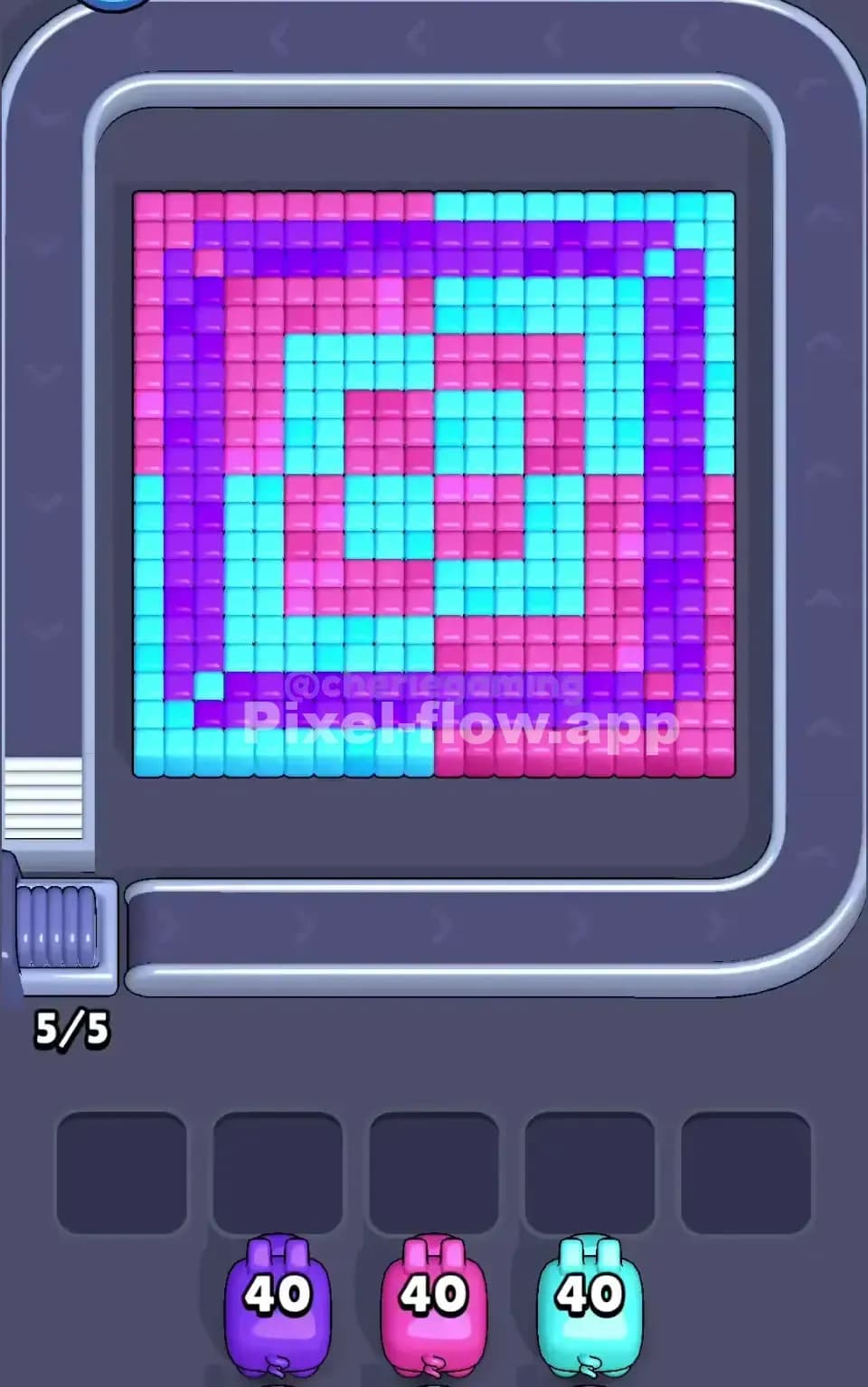
Is this the wrong level layout?🤔
Pixel Flow randomizes levels for different players. Don't worry, just upload a screenshot of your board, and our AI will find the correct video instantly.

Pixel Flow Level 3 Walkthrough
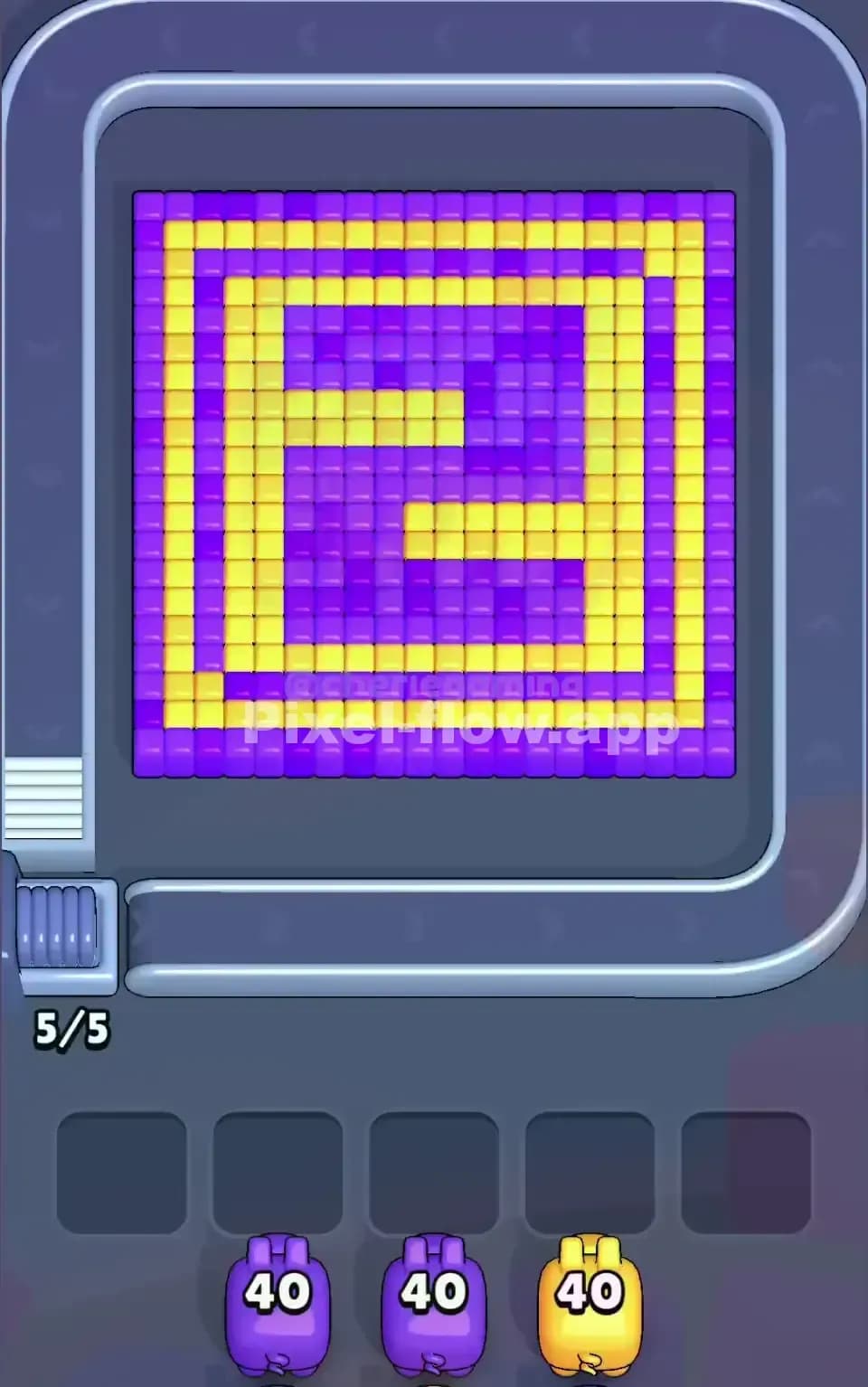
This level is a symmetrical, geometric beast. It looks less like a character and more like a computer chip or a strange abstract flag. You have a solid core of yellow, flanked by purple walls, and capped on the top and bottom by green bars. The rule set here is standard: match the pig color to the block color.
You need to clear the screen layer by layer. The main threat in Pixel Flow Level 3 isn't hidden blocks, but the sheer volume of pixels in the yellow and purple sections. You have to manage your five slots carefully because the pigs here come with high ammo counts (often 10 shots per pig). If you pull a pig down and it only has 3 targets, you are stuck with a pig clogging your lane for a long time.
Is this a very hard level? No. It is methodical. It tests your ability to count big blocks rather than finding hidden needles in a haystack.
Pixel Flow Level 3 Overview
The artwork in Pixel Flow Level 3 feels industrial. Think of it as a retro motherboard.
In the dead center, you have two massive squares of Yellow. These are the "CPU" of the image. They are dense, 5x5 blocks stacked on top of each other with a small gap in between. They take up the most real estate in the middle column.
Flanking the yellow core on the left and right are tall columns of Purple. These aren't solid bars, though. They are split into top and bottom sections, almost mirroring the yellow blocks. They act as the heavy walls of the level.
Finally, you have the Green. This color frames the entire picture. There is a long, horizontal bar of green spanning the very top, and an identical bar across the very bottom. But there is a twist: look closely at the purple sections. Halfway down the left and right edges, a small green arrow shape cuts into the purple. These tiny green "insets" are the asymmetric trap of the level. They break up the large purple blocks and force you to pay attention to the edges, not just the top and bottom bars. The symmetry is pleasing, but those little side bits are where you will mess up if you aren't paying attention.
Step by step solution walkthrough for Pixel Flow Level 3
First Color Zone to Erase in Pixel Flow Level 3
I start by targeting the Yellow center immediately.
Narratively, this feels like coring an apple. You want to remove the middle so you can clearly see the sides. Logically, this is the smartest move because the yellow blocks are the most condensed. The two yellow squares are huge targets. When you grab a Yellow Pig (like the ones with 10 ammo shown at the start), you know for a fact it will empty its entire clip.
There is zero risk of wasted ammo here. A pig with 10 ammo will eat two rows of a yellow square and vanish instantly. By clearing the yellow first, you split the board into two distinct halves (left and right), which makes visually processing the remaining Purple and Green much easier. You stop seeing one big blob and start seeing isolated columns.
How to pass Pixel Flow Level 3 without power ups or boosters
Once the yellow core is gone, the board looks like a hollow shell. You are left with the purple side walls and the green frame.
At this mid-point, the danger is the Purple blocks. The purple sections are chunky, but they are interrupted by those little green arrows I mentioned earlier. If you aren't careful, you might pull a Purple Pig hoping to clear a side, but it gets blocked or runs out of valid targets because the column isn't continuous.
To pass Pixel Flow 3 without boosters, stick to the "Top-Down" rule for the Green bars. Clear the top Green bar first if you get a Green Pig. This removes the "lid" of the puzzle.
However, prioritize Purple over Green if you have a choice. The purple blocks are clustered in groups that fit the high-ammo pigs perfectly. If you leave the purple for last, you risk getting a stream of Green pigs when you have no green blocks left, filling your slots and ending the run.
If you see a Green pig and only have the bottom bar left, count the pixels. The bottom bar is long, but it’s thin. Make sure your pig won't get stuck with 1 ammo left.
Last Details You Clean Up in Pixel Flow Level 3
The end game of Pixel Flow Level 3 is almost always those pesky Green side arrows.
You will likely clear the big top and bottom green bars early on because they are obvious targets. You will smash the yellow center and the purple sides because they are huge clusters. What remains are typically the two small green triangular shapes pointing inward from the left and right frame.
These are dangerous. They consist of only a few pixels each. If you grab a fresh Green Pig with 10 ammo to clear these final scraps, that pig is going to sit in your slot with 4 or 5 ammo remaining, refusing to leave.
Ideally, try to clear these side arrows during the mid-game while you are working on the top/bottom bars. Use the tail end of a Green Pig’s ammo to nip these sides. If they are the absolute last thing on the board, make sure you have an empty slot to sacrifice, because that final pig isn't going anywhere.