Pixel Flow Level 2 Solution Walkthrough | Pixel Flow 2

How to solve Pixel Flow level 2? Get instant solution for Pixel Flow 2 with our step by step solution & video walkthrough.

Share Pixel Flow Level 2 Guide:
Pixel Flow Level 2 Gameplay

Pixel Flow Level 2 Overview

The Starting Board and What You're Up Against

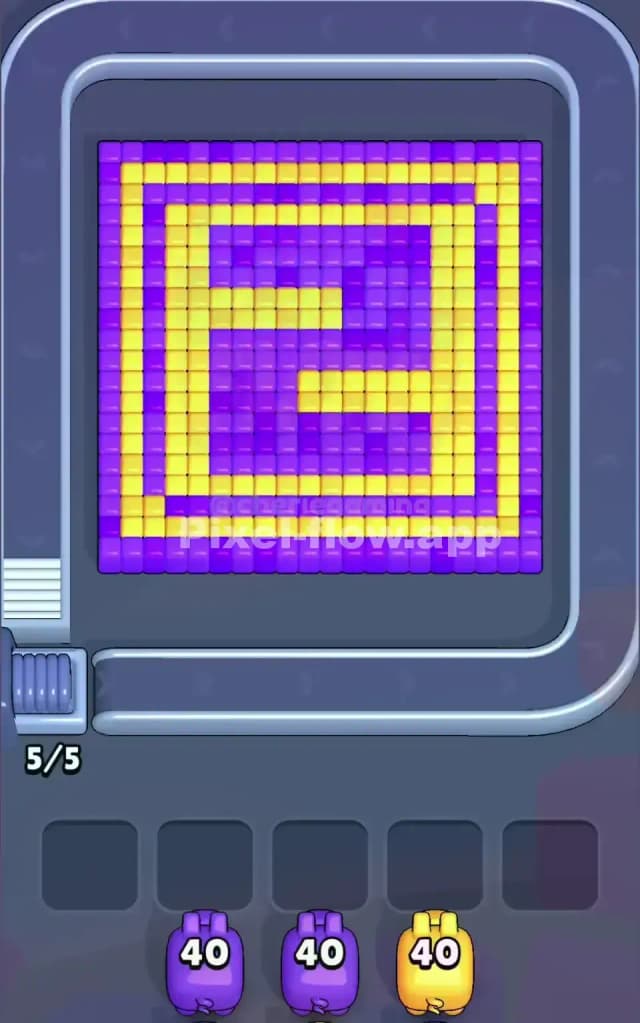
Pixel Flow Level 2 presents a deceptively simple-looking puzzle wrapped in a bold, geometric pixel art design dominated by vibrant yellow and deep purple voxels. The board shows a striking concentric pattern—a yellow border and internal shapes layered over a purple foundation that stretches across the entire play area. You're looking at roughly three color zones that'll demand your attention: the outer yellow frame, the inner yellow geometry, and the thick purple base that holds everything together. What makes Pixel Flow 2 interesting is that these colors aren't just scattered randomly; they're arranged in a way that forces you to think about depth and sequencing. You'll start with two purple pigs carrying 40 ammo each and one yellow pig also carrying 40 ammo, which means you've got 120 total shots to work with. That sounds like plenty until you realize how many cubes you're actually staring down.

Understanding the Win Condition and Deterministic Nature

Your goal in Pixel Flow Level 2 is straightforward: clear every single voxel cube from the board. The catch? Pig order is fully deterministic—the pigs come down the conveyor in a fixed sequence, and each pig's ammo count never changes. What this means is that there's no luck involved and no randomness to blame; if you fail Pixel Flow 2, it's because your sequencing strategy didn't account for the board state properly. Every cube cleared costs exactly one unit of ammo from the active pig. If a pig runs out of valid targets but still has ammo remaining, it'll drop into one of your five waiting slots at the bottom. Jam all five slots with stuck pigs and you'll lose, because there'll be no room for incoming pigs and no way to spend their ammo on remaining cubes. This is the tension that makes Pixel Flow Level 2 so engaging—you're essentially solving a spatial puzzle where order and timing are everything.


Why Pixel Flow Level 2 Feels So Tricky

The Bottleneck That Threatens Your Run

The biggest threat in Pixel Flow Level 2 is the sheer volume of purple cubes relative to purple pig ammo. You've got 80 total purple ammo (40 from each purple pig), but the purple foundation seems to stretch across the entire board. That's your primary bottleneck. If you're not careful with when you use your purple pigs, you'll find them getting stuck in the waiting slots with ammo still loaded, unable to hit anything because all visible purple is blocked by yellow. The moment your buffer fills up with useless pigs, you've essentially lost—new pigs can't enter the system, and whatever cubes remain are unreachable. This is why Pixel Flow 2 demands respect; it's not about firing randomly and hoping for the best. It's about understanding that purple has to be exposed and chipped away at the right moments.

The Color Exposure Problem and Awkward Patches

Here's where Pixel Flow Level 2 gets subtle. You can't destroy purple unless it's visible on the surface, which means you need to clear yellow first in certain regions to unlock purple shots later. But the yellow isn't distributed evenly—there are thick patches where yellow dominates, and thin channels where purple peeks through. If you send a purple pig too early, it'll expend half its ammo on whatever purple is currently exposed, then sit in the waiting area with nothing left to shoot at until more yellow gets cleared. Similarly, you've got one yellow pig with 40 ammo, and while that might sound sufficient, the yellow pattern creates visual isolation. The inner yellow shapes don't necessarily connect to the outer yellow border, so your yellow pig might clear one island of yellow cubes and then run dry with no path to the remaining yellow sections. You're essentially playing 3D Tetris where you have to mentally rotate the board and think about what'll be visible after each pig's shots land.

When the Level "Clicks" and Personal Reflection

I'll be honest—my first three attempts at Pixel Flow 2 felt frustrating. I was firing pigs in the order they arrived, assuming that would work, and I kept getting jammed on move four or five with half the board still standing. It wasn't until I stopped and actually counted the cubes that things shifted. Once I realized I needed to plan for purple exposure and stagger my pig releases to match the actual board topology, Pixel Flow 2 transformed from a frustration into a puzzle I could solve with confidence. That moment—when you realize this isn't chaotic but deeply logical—is when Pixel Flow Level 2 becomes genuinely satisfying. It's a level that rewards patience and planning, not reflexes.


Step-by-Step Strategy to Clear Pixel Flow Level 2

Opening: Get Your Waiting Slots Under Control

Your first move in Pixel Flow Level 2 should be to send your first purple pig down the conveyor. Yes, purple first—I know that's counterintuitive, but here's the logic: you want to spend some purple ammo on the currently visible purple cubes (those deep purple sections around the board's edges) while maintaining waiting slot space. This purple pig will carve into the exterior and expose some of the internal geometry. Don't worry about it getting stuck yet; one pig in the buffer is perfectly fine. Now send your yellow pig next. Your yellow pig has 40 ammo and should focus on the outer yellow frame and any accessible yellow clusters. The goal here isn't to clear all yellow—it's to create openings that'll expose more purple in the next phase. Keep at least two waiting slots free during this opening phase so you're not panicking about buffer space. Watch your pig queue at the bottom of the screen; knowing what's coming next helps you decide when to hold and when to push forward with Pixel Flow 2.

Mid-Game: Sequencing for Exposure and Ammo Efficiency

Now comes the strategic heart of Pixel Flow Level 2. After your first purple and yellow pigs have created initial openings, your second purple pig should descend. At this point, the board has shifted—some yellow has been removed, and more purple is visible. This second purple pig should carve deeper into the exposed purple regions and continue chipping away at the foundation. You're still trying to maintain buffer space, so if this purple pig expends all its ammo cleanly (hitting 40 targets), great; if it has ammo left over, it'll sit in a waiting slot, and that's acceptable as long as you're not completely jammed. The key in Pixel Flow 2 mid-game is exposing internal layers without overcommitting to one color. After your second purple pig, consider whether to release your second yellow pig. If the board still has substantial yellow patches that can be targeted, send it down. If not, hold off and let the pigs back up—this creates just enough pressure to force you to think rather than auto-pilot. The magic of Pixel Flow Level 2 happens when you're two moves ahead, mentally tracking which cubes will become visible after the next pig fires.

End-Game: Finishing Cleanly and Avoiding Last-Minute Jams

As you approach the end of Pixel Flow 2, you should ideally have cleared most of the outer geometry and be chipping away at whatever remains. Your last pig or two will determine whether you win or get stuck. The endgame strategy is simple in principle but requires precision: make sure your final pigs have valid targets waiting and that their ammo counts align with remaining cube counts. If you've got three cubes left and one pig with 5 ammo, you'll need another pig or that pig will jam. In the final moments of Pixel Flow Level 2, watch your waiting slots like a hawk. If you have two or more pigs parked in the buffer, you need to be very deliberate about releasing new pigs—each one that arrives must have a clear shot. The very last action should be your final pig completely emptying the board with no ammo left over and no cubes remaining. That's a perfect clear of Pixel Flow 2.


The Logic Behind This Pixel Flow Level 2 Plan

Exploiting Order, Ammo, and the Waiting Slot System

The strategy I've outlined for Pixel Flow 2 isn't based on hope; it's based on systems. Each pig arrives with a fixed ammo count, and you can't change that. What you can control is when you release each pig, which determines which cubes they'll see and target. By staggering your pigs and thinking about exposure, you're essentially saying: "This pig will clear these cubes, which will expose these new cubes for the next pig." Pixel Flow Level 2 becomes solvable the moment you stop reacting and start planning. The waiting slots are your safety valve—they let you hold pigs without losing the level, but they're also your warning system. If you're filling slots consistently, you're not managing exposure properly, and you need to shift your approach. The system works because it's deterministic; there's no randomness to excuse bad planning in Pixel Flow 2.

Staying Calm Under Pressure: Counting and Lookahead

The final piece of success in Pixel Flow Level 2 is psychological. It's easy to panic when you see cubes remaining and pigs with limited ammo, but panic leads to rushing, and rushing leads to misjudgments. Instead, slow down. Count the visible cubes of each color. Look at your pig queue and add up the ammo. Do the math: do you have enough ammo to clear everything visible, accounting for the fact that destroying surface cubes will expose deeper layers? Planning two or three pigs ahead in Pixel Flow Level 2 transforms the level from chaotic to manageable. You're not hoping your pig has the right ammo; you're knowing it does because you did the math beforehand. That confidence, paired with the deterministic nature of Pixel Flow 2, makes beating this level feel like solving a puzzle rather than relying on luck. Take your time, trust the system, and Pixel Flow Level 2 will reward your patience.