Pixel Flow Level 327 Solution | Pixel Flow 327 Walkthrough
How to beat Pixel Flow Level 327: Video solution & walkthrough. The fastest way to pass Pixel Flow 327.
Is this the wrong level layout?🤔
Pixel Flow randomizes levels for different players. Don't worry, just upload a screenshot of your board, and our AI will find the correct video instantly.
Pixel Flow Level 327 Walkthrough
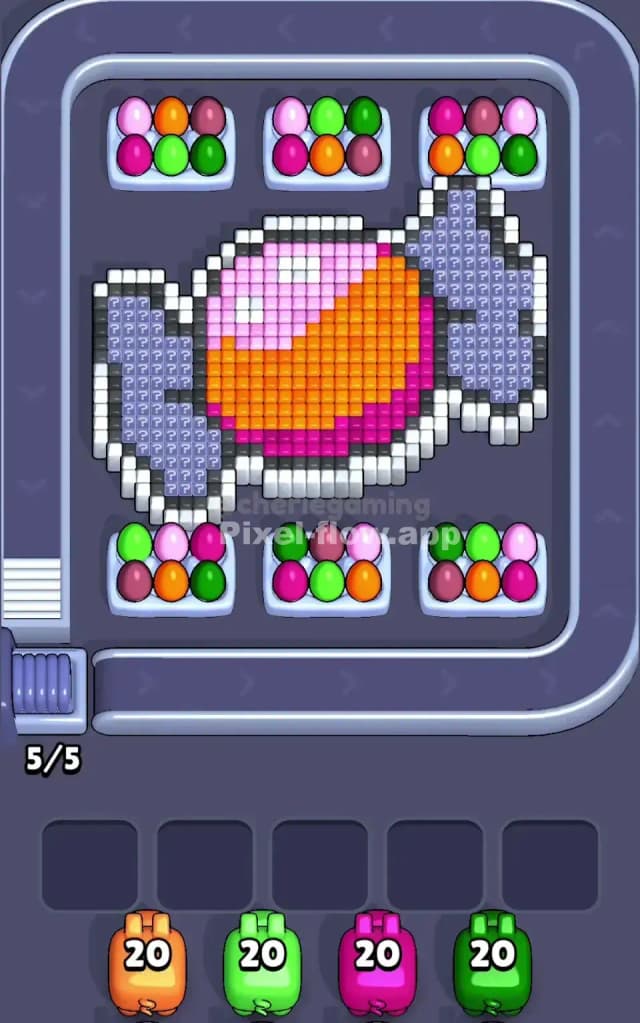
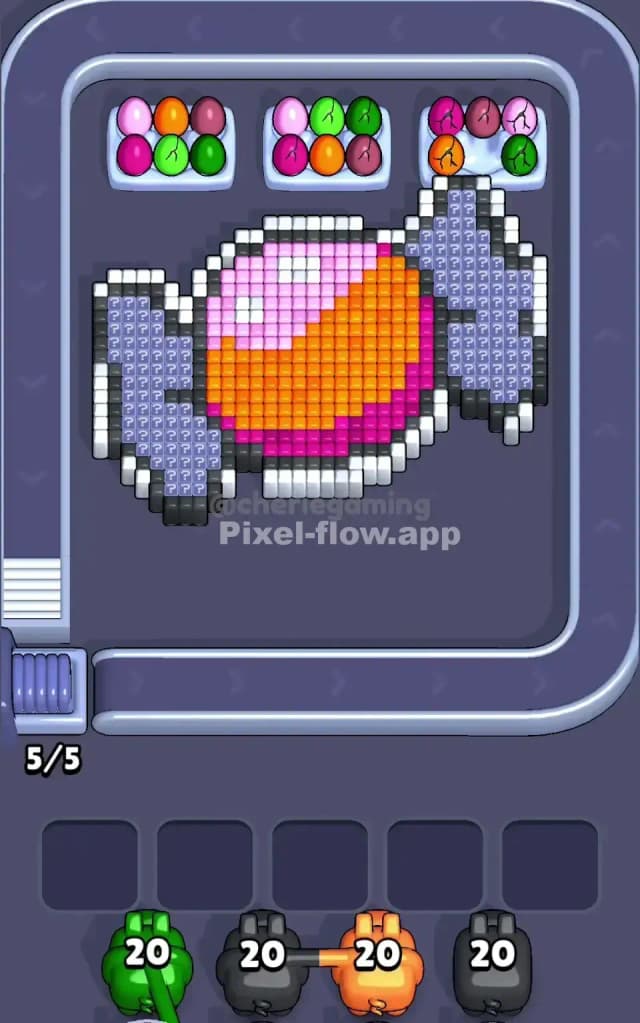
This level is a massive, sugar-coated headache. You are staring at a giant wrapped hard candy in the center, flanked by six annoying "egg baskets" (three on top, three on bottom). The main candy features a huge Orange belly, a Pink highlight on the top left, and a Dark Pink (Magenta) shadow on the bottom right. The wrapper ends are twisted White/Gray blocks stamped with question marks.
The rule is simple: clear the outer layers to reach the inner ones without clogging your five waiting slots. However, the separated "egg baskets" make this tricky. They are small, isolated targets. If a pig clears a basket and still has ammo but no other targets of that color, it gets stuck in your slots. Because of these scattered, tiny targets and the thick layering of the central candy, I judge Pixel Flow Level 327 to be a very hard level.
Pixel Flow Level 327 Overview
The artwork is a vibrant, retro-style sweet shop scene. The centerpiece is that colossal hard candy, swollen with Orange voxels. It feels heavy. The lighting is distinct, with a bright Pink shine reflecting off the upper curve, suggesting a glossy texture. The wrapper twists on the left and right are bulky and act as armor for the sides.
The real nasty part of Pixel Flow Level 327 isn't the candy; it's the debris around it. The six baskets containing Green, Pink, Orange, and Dark Red eggs are distinct islands. They don't touch the main body. This asymmetry in target size is dangerous. You have one giant target (the candy) and six tiny targets (the baskets). The game loves to give you high-ammo pigs that obliterate a tiny basket and then have nowhere else to shoot, forcing a game over.
Step by step solution walkthrough for Pixel Flow Level 327
First Color Zone to Erase in Pixel Flow Level 327
I start by attacking the big Orange section in the middle immediately.
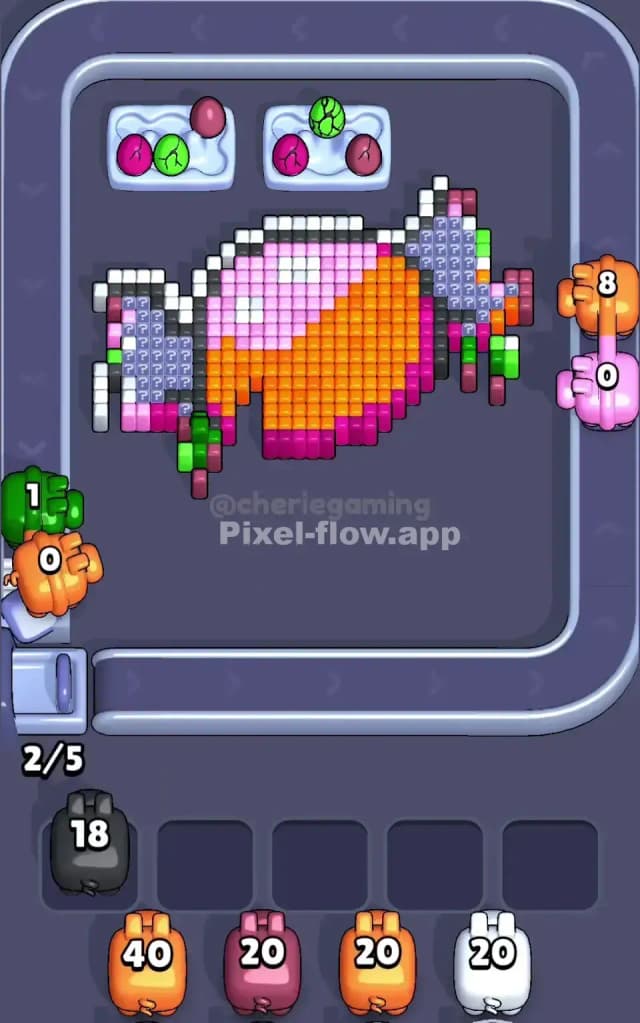
Here is the logic: The Orange zone is the largest contiguous block of color on the board. When you see an Orange pig, you know it can unload its entire 20-40 ammo clip into that fat candy belly without thinking twice. By prioritizing Orange, you hollow out the center of the board quickly. This does two things. First, it prevents Orange pigs from clogging your slots. Second, it physically separates the top half of the wrapper from the bottom half, exposing the inner layers of the White wrapper ends and the Pink highlights. Don't get cute trying to snipe the small baskets first. Clear the bulk. Create space.
How to pass Pixel Flow Level 327 without power ups or boosters
Once the giant Orange belly is half-gone, the level gets dangerous. You are now left with a jagged, half-eaten candy core and those irritating peripheral baskets. The queue will start throwing Green and Dark Pink pigs at you.
This is the critical pivot point. You must shift your focus from the center to the edges. Stop looking at the candy. Look at the baskets.
If a Green pig appears, check the baskets first. Are the green eggs exposed? If you play the Green pig to hit the main candy but the Green eggs in the baskets are blocked by other colors, you will fail. You need to strip the White wrapper ends aggressively to ensure the colors underneath (often Green or Dark Red) match the colors in the baskets. This synchronizes your targets. If you don't peel the wrapper, you might kill the green eggs in the baskets and then have a Green pig with 15 ammo and zero targets because the remaining green blocks are buried under the white wrapper.
Peel the White wrapper ends early to expose the hidden layers. This ensures that when you fire at the peripheral baskets, you have "backup targets" inside the main candy to absorb the extra ammo.
Last Details You Clean Up in Pixel Flow Level 327
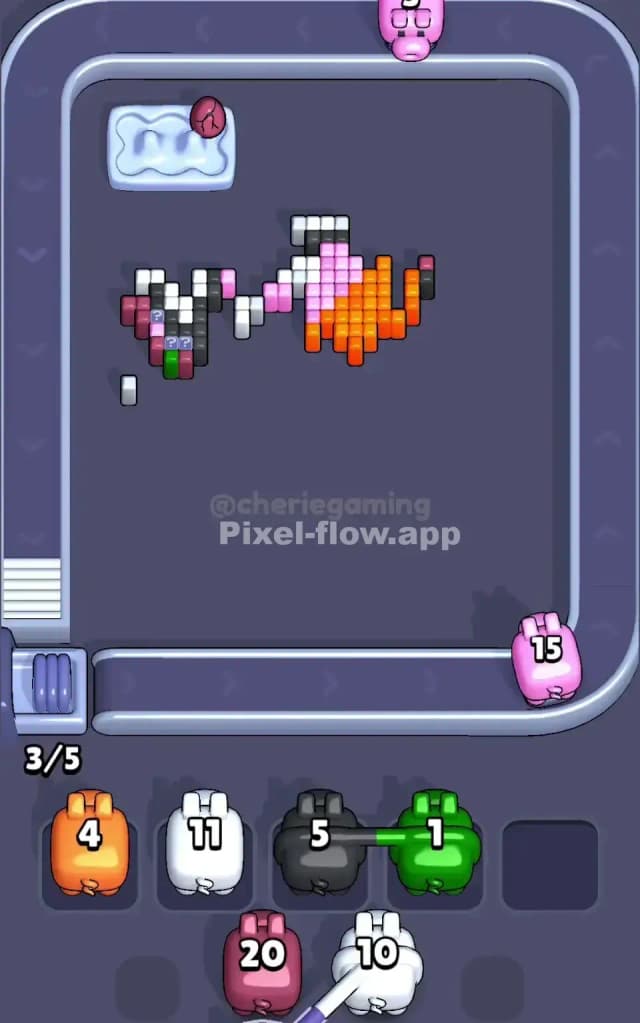
The end game of Pixel Flow Level 327 is usually a scramble to clear the Dark Red and Green remnants hiding in the wrapper twists. The big Orange and Pink sections will be long gone.
You will likely be left with one or two stray pixels in the top-right or bottom-left egg baskets. These are easy to miss because they blend into the background. Double-check the corners before you commit your final pigs. A single hidden pixel in a basket can cause a backlog that ruins a perfect run. The final move is often a White pig cleaning up the last jagged edges of the wrapper, revealing victory.