Pixel Flow Level 328 Solution | Pixel Flow 328 Walkthrough
How to beat Pixel Flow Level 328: Video solution & walkthrough. The fastest way to pass Pixel Flow 328.
Is this the wrong level layout?🤔
Pixel Flow randomizes levels for different players. Don't worry, just upload a screenshot of your board, and our AI will find the correct video instantly.

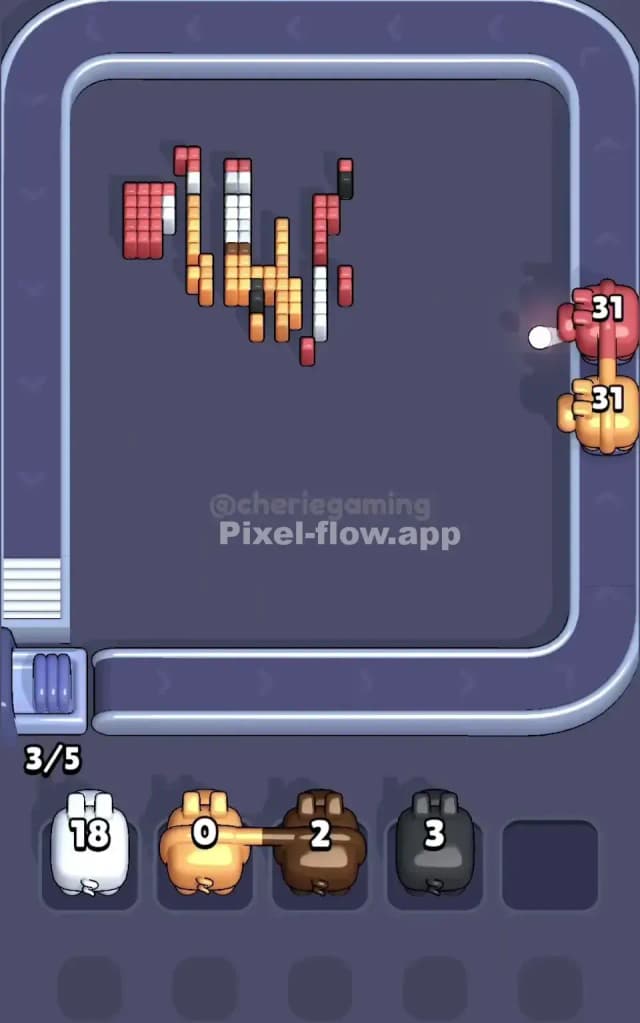
Pixel Flow Level 328 Walkthrough
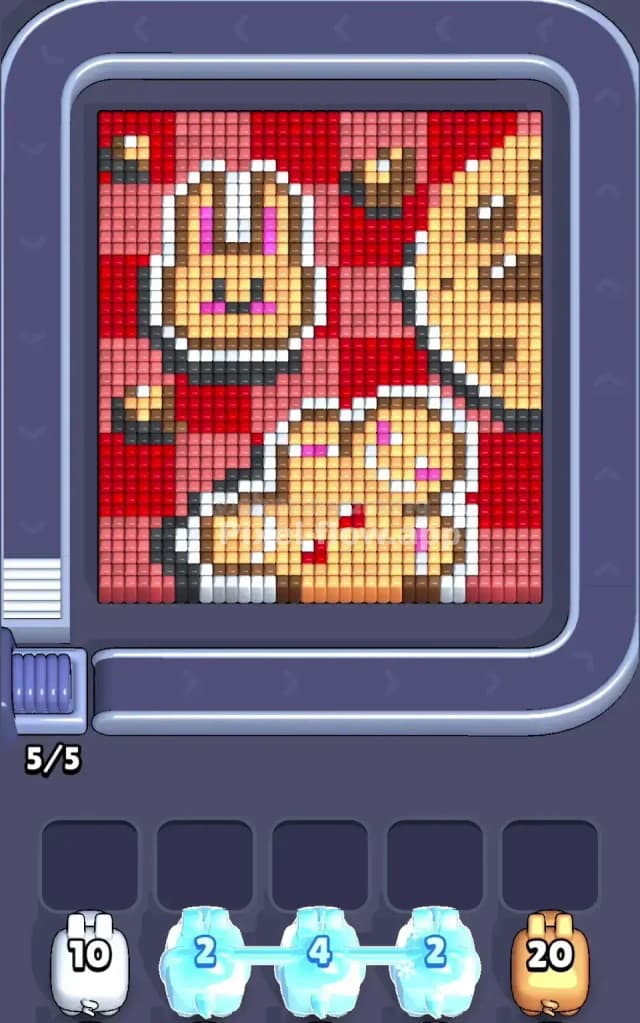
This level is a voxel art "picnic" scene featuring three distinct cookie characters: a bunny, a chocolate chip cookie, and a heart-shaped gingerbread man. They sit on a massive checkerboard background of Red and Light Red (Pinkish) tiles.
The rules are standard but strict here: you must match the colored pig to the voxel block. A Red pig clears Red blocks. A White pig clears White blocks. The challenge is the "depth." You cannot clear blocks that are buried under other layers. You have 5 slots to park pigs that don't have a valid target yet. If those slots fill up with useless pigs, game over.
Is this level hard? Yes. It is very hard. The sheer volume of background tiles compared to the intricate cookie details creates a massive queue management problem.
Pixel Flow Level 328 Overview
Think of this board as a dessert table. You have three main islands of "food" floating in a sea of Red and Pink checks.
- Top Left: A square-ish Bunny Cookie with white icing, pink ears, and a tan face.
- Top Right: A giant quarter-circle Chocolate Chip Cookie (Tan with Brown spots).
- Bottom Center: A Heart-shaped Cookie character with white icing and a happy face.
The visuals are deceptive. The Red/Pink background looks flat, but it often sits flush with the top layer of the cookies. The most dangerous visual element is the White Icing Outline surrounding the Bunny and the Heart. These white rims act as "walls" for the tan dough inside. You often cannot reach the Tan layer until you peel off the White rim or the Black shadow layers on the sides.
The layout is asymmetric. The background is a uniform pattern, but the cookies are irregular shapes. This means your Red/Pink pigs will always have targets, but your Tan, Brown, and Black pigs will be useless for long stretches of time.
Step by step solution walkthrough for Pixel Flow Level 328
First Color Zone to Erase in Pixel Flow Level 328
Ignore the background initially. Attack the White Icing Outlines first.
Here is the logic: The game queue often dumps White and Tan pigs on you early, even though the board is 70% Red/Pink background. If you stubbornly wait for Red pigs to clear the checkerboard, your waiting slots will fill up with White and Tan pigs, and you will lose before you begin.
Look at the Bunny and the Heart. They have thick White borders. Use your initial White pigs to strip these borders immediately. This serves two purposes:
- It burns "clogger" ammo so you don't fill your slots.
- It exposes the "sides" of the cookies (often Black or Dark Grey voxels) which are necessary to progress deeper.
Once the White outlines are thinned out, feel free to use Red and Pink pigs to shred the checkerboard background. This is the easy part. Just make sure you don't miss stray red tiles trapped between the cookie shapes.
How to pass Pixel Flow Level 328 without power ups or boosters
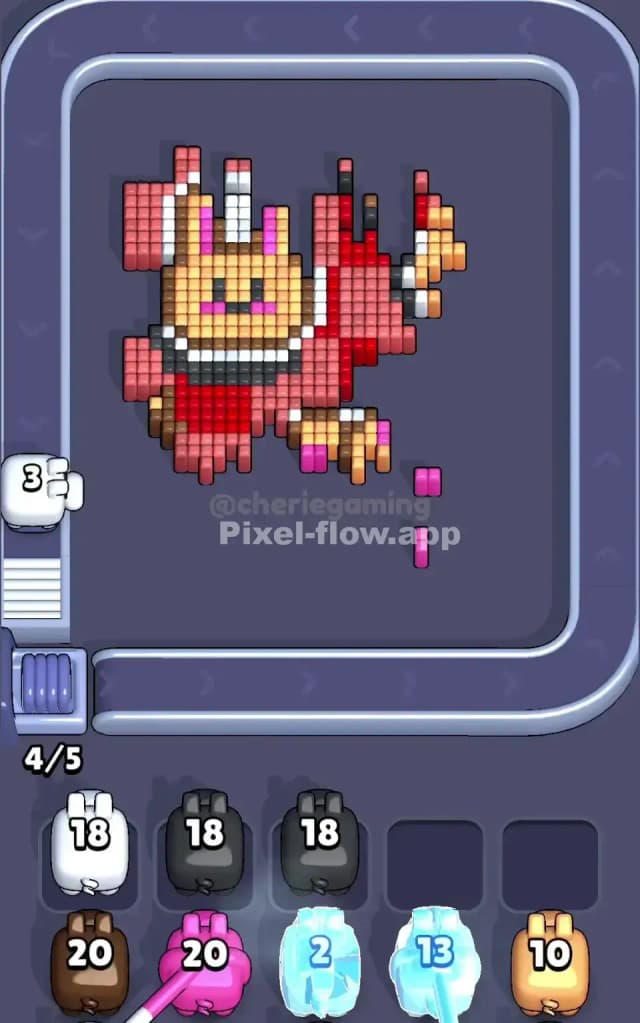
The mid-game crisis in Pixel Flow 328 happens when the Red/Pink background is gone, and you are left with three floating cookie islands.
At this stage, you will likely start seeing Black pigs and Tan pigs.
- The Black Layer Trap: As you strip the top layer of the cookies, you will reveal the vertical sides of the voxels. In this level, the sides/shadows are often Black. You must clear these Black voxels to get access to the lower layers of Tan dough.
- Slot Management: This is where you die if you aren't careful. You might get a string of Brown pigs (for chocolate chips) before you have uncovered the chips. Do not panic. Park the Brown pigs. Focus entirely on clearing the Tan surfaces and Black edges.
- The "Ice" Pig Confusion: Sometimes you will see pigs that look light blue or "icy." In this specific art style, these often target the very specific "highlight" white pixels or a slightly different shade of icing. If a White pig isn't firing at a white block, check if you have an Ice/Blue pig in the queue. They are distinct. Don't let an Ice pig clog your slot thinking it's a White pig.
Last Details You Clean Up in Pixel Flow Level 328
The final phase is cleaning up the "flavor" details. Once the main Tan dough blocks are eaten away, you will be left with floating artifacts:
- Brown Cubes: These are the chocolate chips on the top right cookie and the eyes of the characters. They are usually on the bottom-most layer.
- Pink Accents: The bunny's ears and the cheeks on the heart cookie often have deep-set Pink blocks. Save a little Pink ammo for the end; don't waste it all on the background earlier if you can help it.
The very last move is usually clearing the bottom-most layer of the Chocolate Chip cookie. It’s thick. Ensure you don't leave a single stray Tan pixel hiding behind a Brown chocolate chip, or you'll be stuck waiting for a pig that never comes.