Pixel Flow Level 33 Solution Walkthrough | Pixel Flow 33
How to solve Pixel Flow level 33? Get instant solution for Pixel Flow 33 with our step by step solution & video walkthrough.


Pixel Flow Level 33 Overview
The Starting Board and Its Visual Structure
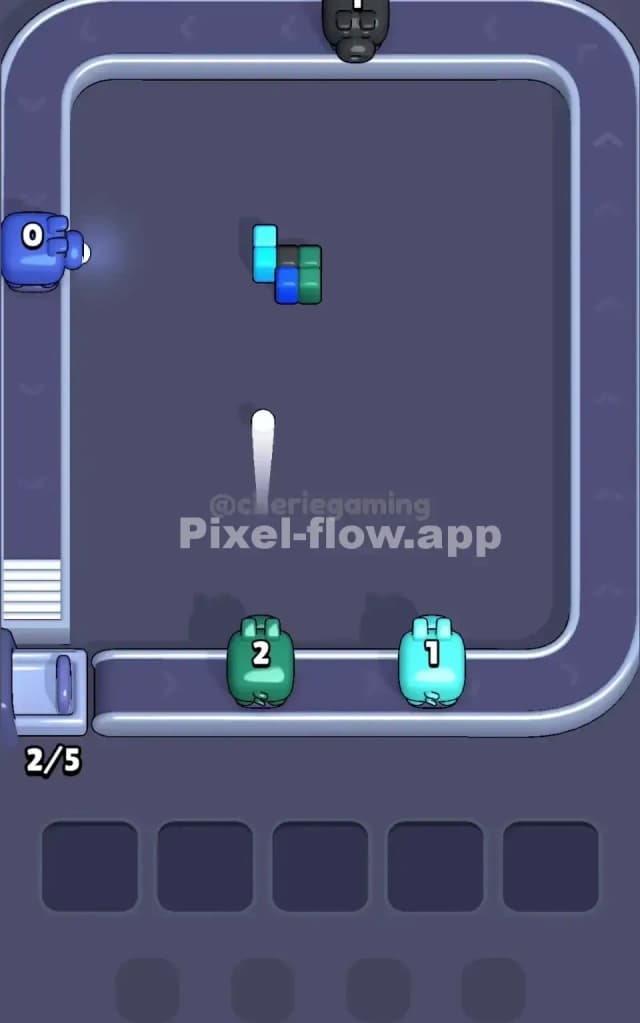
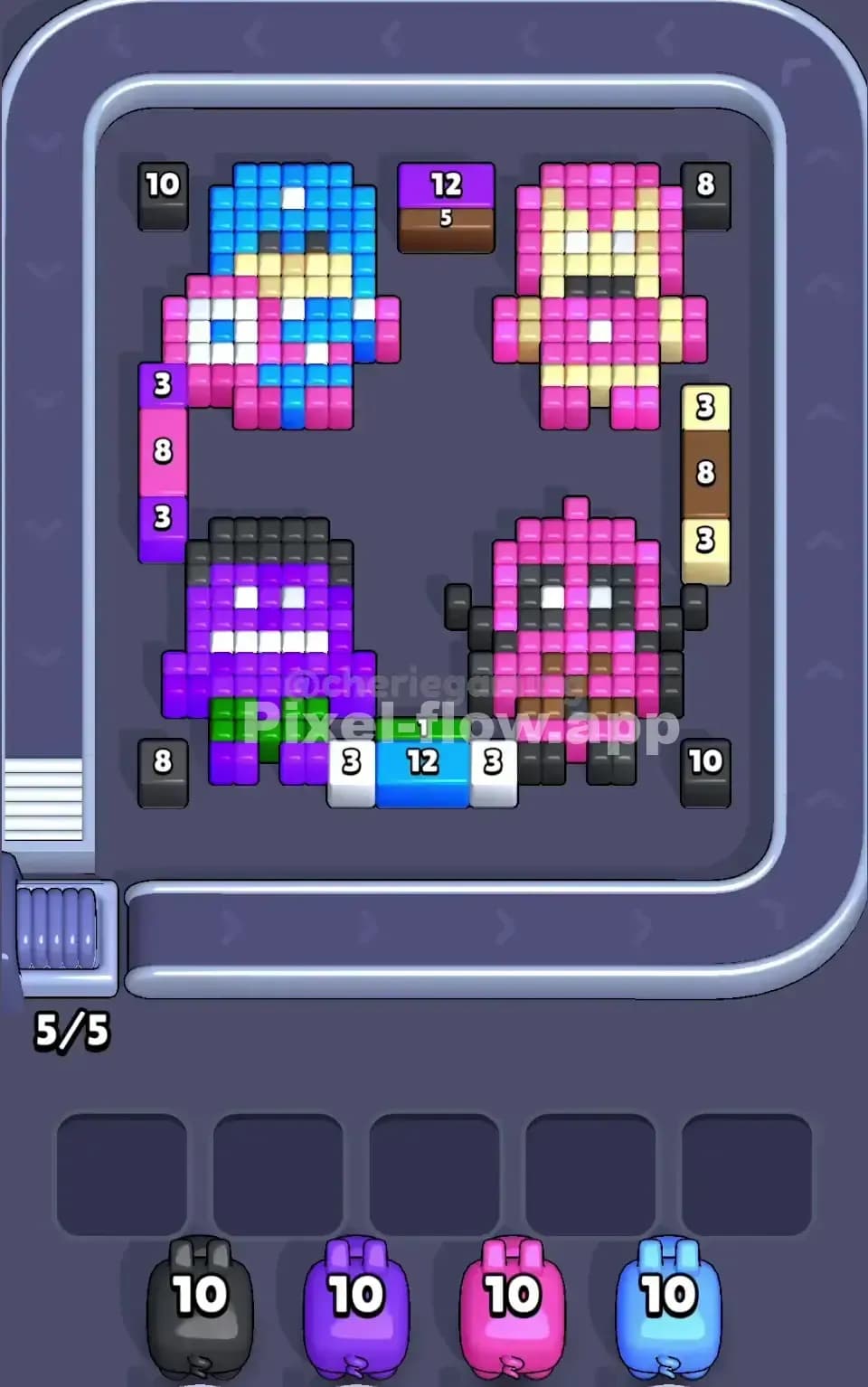
Pixel Flow Level 33 presents a complex, multi-layered voxel composition that'll test your planning skills from the moment you load it. The board features a striking cyan-dominated center flanked by white regions, with darker layers (charcoal gray and black) acting as structural dividers and barriers. Deep within the center, you'll spot pockets of vibrant color—red, green, blue, and yellow cubes—that form the inner architecture of the puzzle. The outer frame is anchored by blue cubes at the bottom and a top row displaying your pig queue and their ammunition counts. What makes Pixel Flow Level 33 so visually interesting is how these colors aren't scattered randomly; they're organized in tight clusters that demand careful sequencing to uncover and eliminate.
Win Condition and Deterministic Pig Order
Your goal in Pixel Flow Level 33 is straightforward: clear every single voxel cube from the board. You'll do this by releasing pigs from the queue in order—you can't rearrange them—and each pig automatically shoots cubes matching its color. The moment a pig runs out of ammo or has no valid targets remaining, it slides into one of your five waiting slots at the bottom. Here's the critical part: Pixel Flow Level 33 succeeds or fails based on whether you can empty those slots before they're completely jammed with pigs that have leftover ammo they can't spend. The pig order and ammo values are 100 percent deterministic, meaning success comes down to your strategy, not luck.
Why Pixel Flow Level 33 Feels So Tricky
The Cyan Bottleneck and Slot Pressure
The biggest threat in Pixel Flow Level 33 is the sheer volume of cyan cubes dominating the upper and middle sections. You're looking at dozens of cyan blocks that form walls, pockets, and layers. While you'll have multiple cyan pigs in your queue, their ammo counts must align perfectly with the exposed cyan cubes at the moment you release them. If you activate a cyan pig too early, it'll spend all its ammo on surface-level cyan, then drop into a waiting slot with nothing left to do. Later, when you've excavated deeper cyan layers, you won't have the ammo to clear them. This forces you into a frustrating standoff where your waiting slots fill up with "stuck" pigs, and boom—Pixel Flow Level 33 ends in failure.
The Hidden Color Pockets and Premature Exposure
Buried within the cyan are clusters of red, green, blue, and yellow cubes. These inner colors are your real target, but they're shielded by layers of cyan and charcoal gray. Here's where Pixel Flow Level 33 gets sneaky: if you expose a red or green pocket before you have a red or green pig available, that color just sits there, invisible and untouchable, while your queue cycles through other colors. Conversely, releasing a pig too late means you've wasted moves and filled your waiting slots unnecessarily. The white cubes scattered throughout the edges also act as dead weight—they don't match any pig color, so they just clog the board and obscure the real targets.
The Frustration Point and the "Click" Moment
I'll be honest—Pixel Flow Level 33 made me want to scream the first couple of tries. I'd release a pig, watch it nervously clear cyan, see it run out of ammo, and then panic as it slumped into slot two of five. Three moves later, I'd realize I'd locked myself out of victory because the waiting slots were packed and the remaining pigs had nowhere to go. The breakthrough came when I stopped thinking "which pig should I release now?" and started thinking "what's the minimum viable sequence to keep slots open while clearing layers?" Once I accepted that Pixel Flow Level 33 required planning three or four pigs ahead instead of reacting move-by-move, the solution crystallized.
Step-by-Step Strategy to Clear Pixel Flow Level 33
Opening: Establish a Clean Foundation
Start Pixel Flow Level 33 by releasing your first yellow pig. Why yellow first? Because the yellow cubes are sparse and concentrated, so this pig will cleanly eliminate its targets without overspending ammo or getting stuck. Watch it fire, clear the small yellow pocket you can see, and drop into a waiting slot. You should now have three empty slots remaining—critical breathing room.
Next, fire your first white pig. Yes, the white cubes are obstacles, but they're also mostly on the perimeter and don't block deep colors. This pig will make a surgical cut through the outer white layer, further exposing the cyan below. After this pig settles into a waiting slot, you'll have two empty slots: enough cushion to make a mistake and recover.
Now deploy your first blue pig. The blue cubes visible at this stage form edges and dividers that, once removed, will let you access the layered structure beneath. The blue pig won't have an enormous target pool at this point, so it'll finish relatively quickly and join the waiting line. You've now used three of five slots, but you've also fundamentally altered the board topology.
Mid-Game: Sequence for Ammo Efficiency and Exposure
Here's where Pixel Flow Level 33 demands your full tactical attention. Look at your queue and identify which pigs are coming next. Before you release the next pig, count the visible cubes matching its color. If there are significantly fewer cubes than the pig's ammo count, do not release it yet—let it wait in queue. Instead, skip to the pig behind it and see if that one has a better match. Many players fail Pixel Flow Level 33 because they follow queue order mechanically instead of reading the board.
Once you've cleared the first layer of white, cyan, and blue, the interior starts revealing itself. You'll begin seeing pockets of red, green, and yellow. This is when you activate your second yellow pig and your first green pig in sequence. The yellow pig will eliminate any remaining yellow cubes from the newly exposed layers, and the green pig will do the same for green. Watch their ammo counts carefully: if either pig still has ammo after clearing all visible cubes of that color, immediately note it. That pig will become a waiting-slot occupant, and you'll need to plan for its eventual removal.
The cyan situation demands special handling in Pixel Flow Level 33. Release your first cyan pig only after you've stripped away enough white and gray layers to expose the majority of the cyan you'll need to clear. Time it so that the pig's ammo roughly matches the total exposed cyan. If the board still has hidden cyan layers beneath charcoal or other colors, hold off on your second cyan pig until those barriers are removed. This timing is the heart of Pixel Flow Level 33's puzzle.
End-Game: Emptying the Buffer Cleanly
As you near the final moves in Pixel Flow Level 33, you'll have a mix of waiting pigs and one or two pigs left in the queue. Your last pigs should be the "cleanup crew"—ideally, they'll have ammo counts that precisely match whatever scattered cubes remain. If you've planned well, you'll reach a moment where your final pig fires, clears the last block, and the board goes silent. That's victory in Pixel Flow Level 33.
If you've miscalculated and reached this point with a waiting slot full of a pig that has leftover ammo, Pixel Flow Level 33 will not let you pass. To avoid this, ensure your last three or four moves are conservative and well-counted. Release pigs only when you're certain their ammo will be fully spent. If doubt creeps in, double-check the board one more time before committing.
The Logic Behind This Pixel Flow Level 33 Plan
Exploiting Ammo Alignment and Waiting Slot Management
The strategy for Pixel Flow Level 33 hinges on a single principle: every pig released must either fully spend its ammo or enter a waiting slot knowing it will eventually empty that ammo. Unlike easier levels, Pixel Flow Level 33 punishes hoarding. Your five waiting slots are not a safety net; they're a finite resource. By planning which pigs to release and in what order, you ensure that stuck pigs are temporary tenants, not permanent residents.
The ammo alignment trick works like this: if a pig has five ammo and you can count exactly five cubes of that color on the board, release it without hesitation. The certainty is satisfying, and it keeps the pipeline moving. Conversely, if a pig has five ammo but only three visible cubes, calculate whether your next pig might expose two more cubes of that color. If yes, release them in sequence. If no, delay the five-ammo pig until the board evolves. This forward-thinking is what separates casual Pixel Flow Level 33 players from those who consistently clear it.
Staying Calm and Counting Two Pigs Ahead
The mental discipline required for Pixel Flow Level 33 is underrated. When you're staring at a waiting slot with three occupied spaces and you're not sure whether to release your next pig, take a breath and analyze. Look at your queue. Identify the next two or three pigs and their ammo counts. Scan the board for clusters of those colors. Ask yourself: "If I release Pig A now, will Pig B have targets?" If the answer is yes with high confidence, commit to Pig A. If it's murky, wait a turn and see if another pig's release might alter the board favorably.
Pixel Flow Level 33 rewards players who narrate their own moves internally. Say it out loud if you need to: "Blue pig has four ammo. I see three blue cubes exposed, and one more hidden behind cyan. I'll release cyan first to expose that fourth blue, then bring out blue." This deliberate approach transforms Pixel Flow Level 33 from a frustrating gauntlet into a solvable logic puzzle where your decisions matter and your foresight pays off.