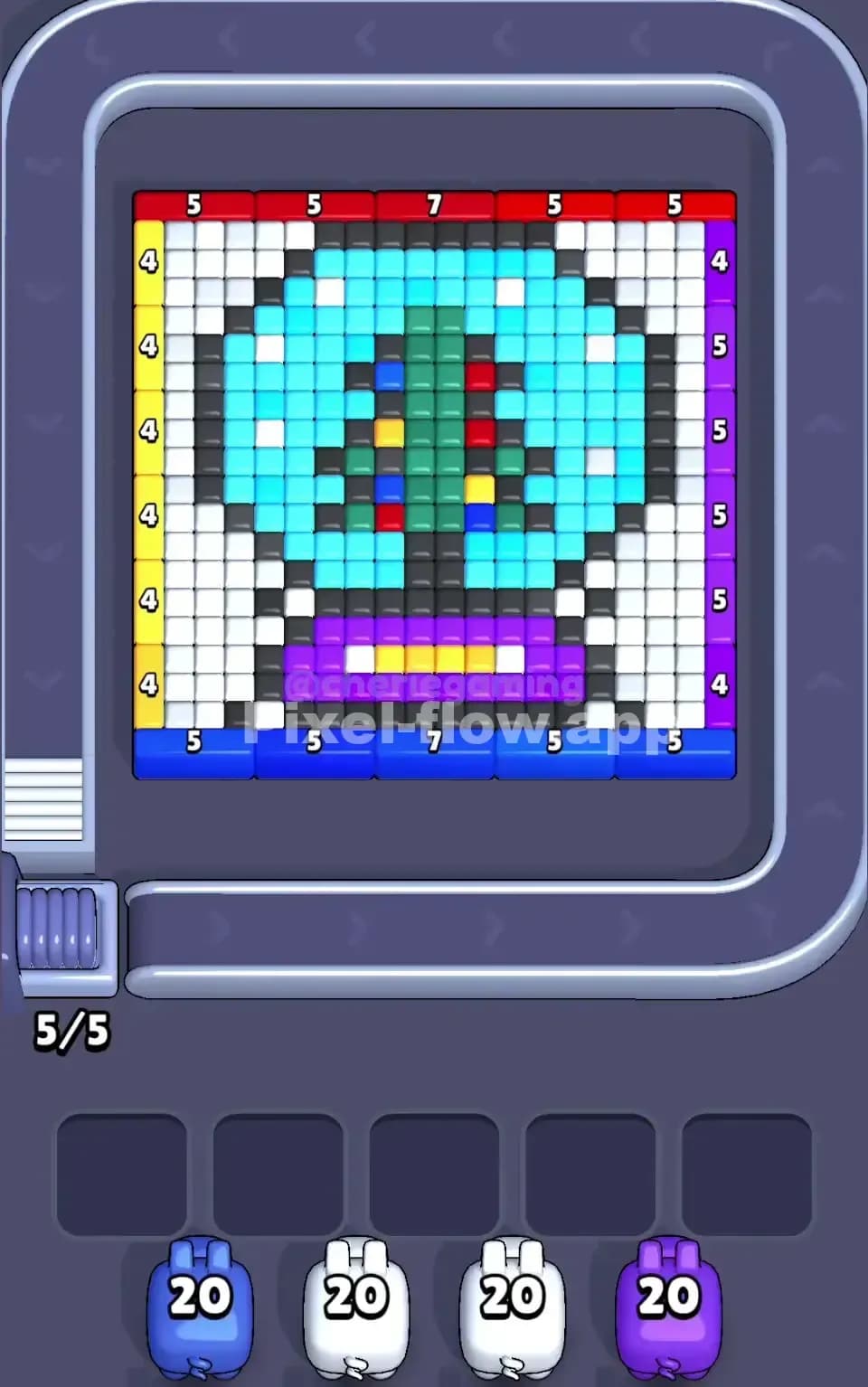
Pixel Flow Level 32 Solution | Pixel Flow 32 Walkthrough
How to beat Pixel Flow Level 32: Video solution & walkthrough. The fastest way to pass Pixel Flow 32.
Is this the wrong level layout?🤔
Pixel Flow randomizes levels for different players. Don't worry, just upload a screenshot of your board, and our AI will find the correct video instantly.
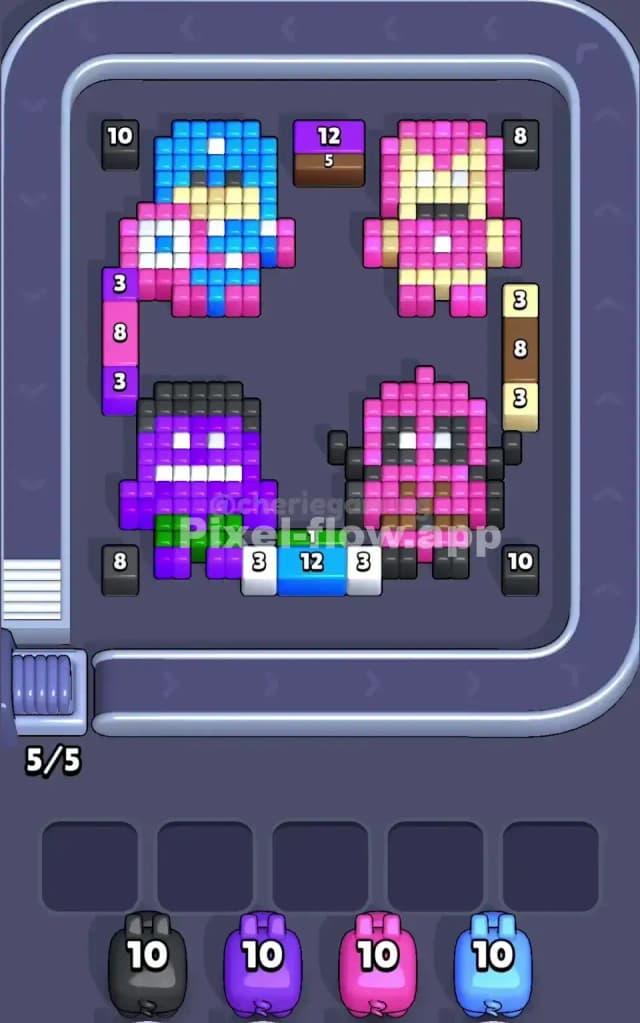
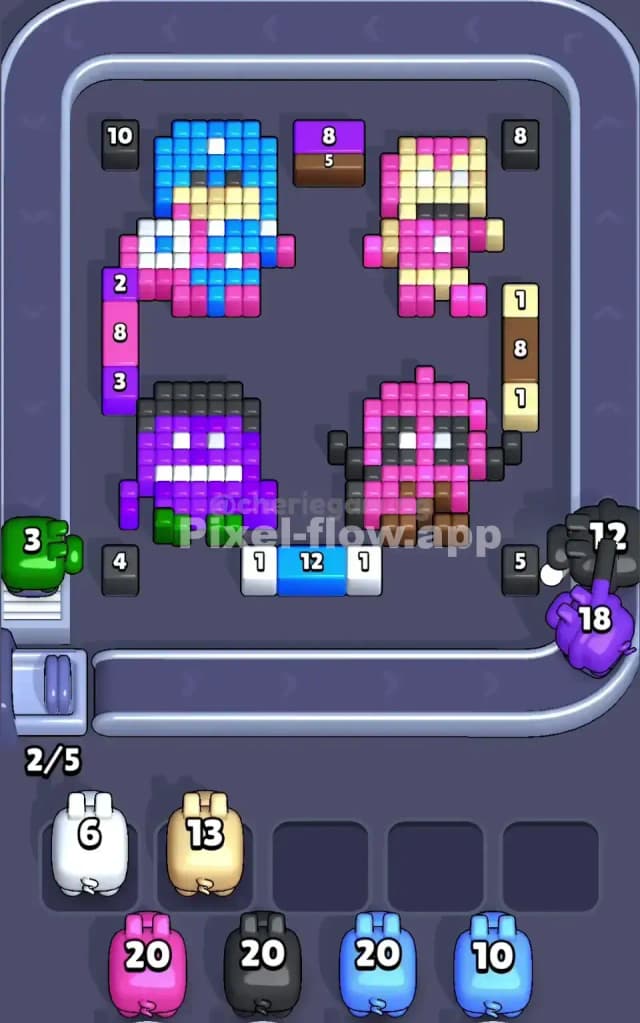
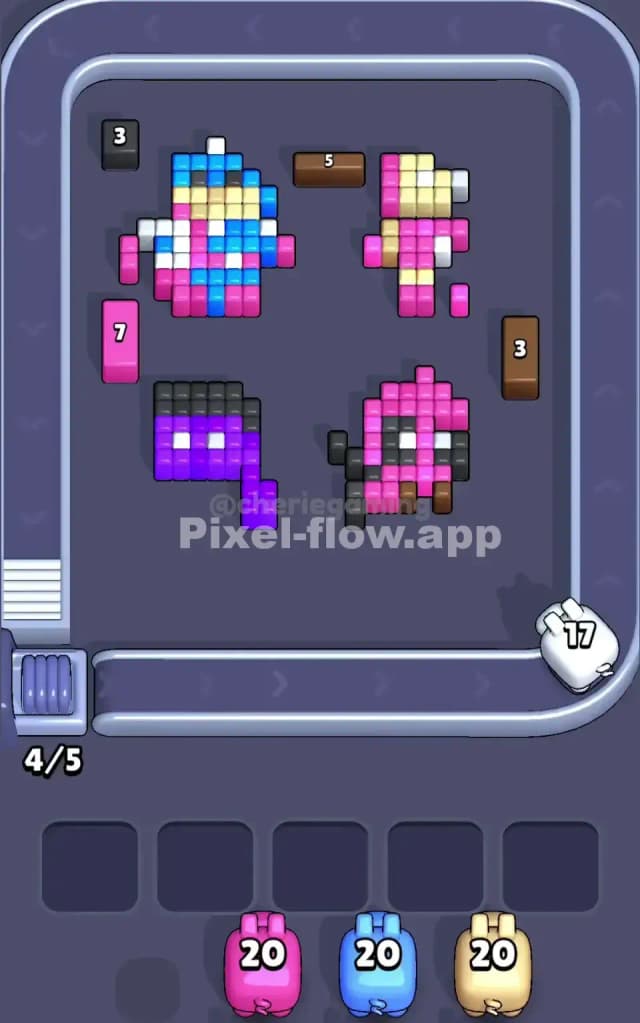
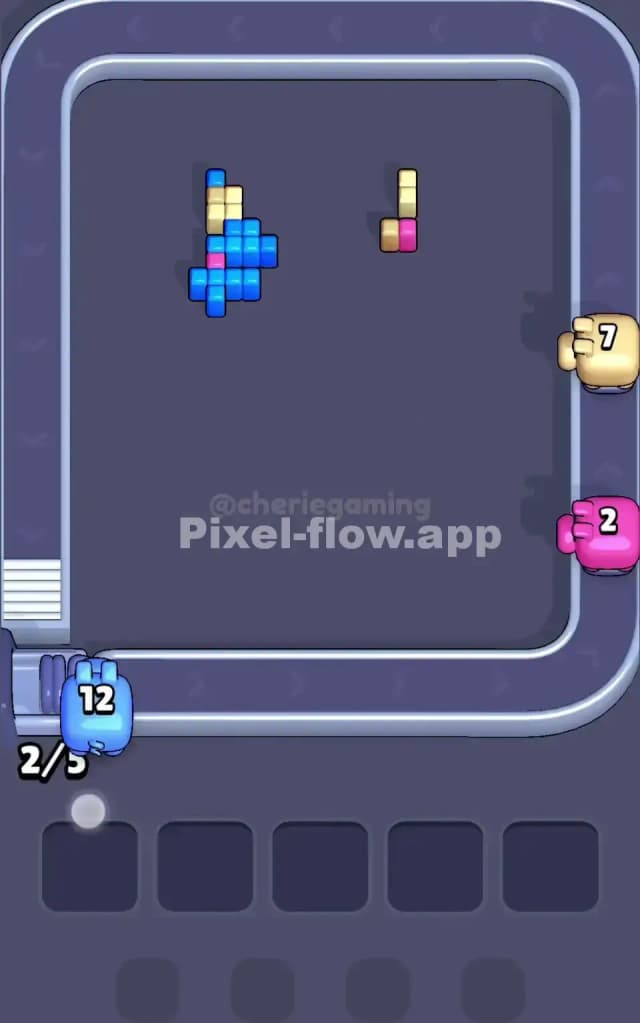
Pixel Flow Level 32 Overview
The Board Layout and Starting Colors
Pixel Flow Level 32 is a complex, multi-layered puzzle that demands serious planning from the moment you hit start. The board features a dense arrangement of voxel cubes dominated by magenta, blue, purple, and brown tones, with strategic pockets of yellow and white scattered throughout. You're looking at an intricate pixel art composition with distinct upper and lower regions—the top half leans heavily toward blue and magenta clusters, while the bottom half introduces purple pillars and brown structural elements that act as depth layers. The key detail that makes Pixel Flow 32 stand out is how those brown and gray cubes sit like barriers, forcing you to plan your pig execution order very carefully to expose the colors hiding beneath.
The Win Condition and Deterministic Nature
Your objective in Pixel Flow Level 32 is straightforward on the surface: clear every single cube from the board. However, the twist is that every pig's ammo count and position in the queue is completely fixed. You can't change the order pigs arrive, and you can't change how many cubes each one shoots. This deterministic design means Pixel Flow Level 32 rewards players who think ahead, count ammo carefully, and sequence their pig launches to minimize waste and avoid jamming the waiting slots.
Why Pixel Flow Level 32 Feels So Tricky
The Waiting Slot Bottleneck
Here's where Pixel Flow 32 gets genuinely punishing: you've got five waiting slots at the bottom of the screen, and if you fill all of them with pigs that have ammo but no valid targets, you're stuck. The moment a pig lands in a waiting slot with unspent ammo and there's no cube of its color to shoot, it stays there—and if all five slots fill up this way, game over. In Pixel Flow Level 32, the biggest trap is the early purple rush. You've got pigs arriving with 10 ammo each, but the visible purple cubes don't always add up to that total, especially once you factor in the layering. If you're not careful and you trigger multiple purple pigs without clearing enough of the board first, you'll find yourself with three or four purple pigs sitting idle in those slots, their ammo wasted and your path to victory blocked.
Awkward Color Pockets and Hidden Layers
Pixel Flow Level 32 loves to hide threats. The brown and gray cubes look like they're structural, but they're actually your key to exposing deeper colors. If you shoot blue pigs too early, you might clear the visible blue layer and suddenly expose a mess of brown cubes with no brown pig in the queue for another five moves. That's a recipe for disaster. Similarly, the magenta cubes form this weird archipelago across the board—some clusters sit on top of the board, some interlock with blue, and some are embedded in the lower purple region. You can't just fire magenta willy-nilly; you've got to coordinate magenta pig triggers with the board state, or you'll waste precious ammo on cubes that are already gone or create orphaned sections that no following pig can reach.
The Frustration Point and When It Clicks
I'll be honest: Pixel Flow Level 32 beat me twice before I understood the rhythm. The first attempt, I watched helplessly as my third purple pig dropped into a waiting slot with 6 ammo still loaded, and I realized I'd triggered him too early. The second attempt, I got greedy with a blue pig and cleared too much at once, leaving no path for the brown cubes to fall and expose what was underneath. The moment it clicked was when I stopped thinking "shoot the color I see" and started thinking "how many of this color will exist after the next three pigs fire?" Suddenly, Pixel Flow 32 stopped feeling random and started feeling like a puzzle I could actually plan my way through.
Step-by-Step Strategy to Clear Pixel Flow Level 32
Opening: Clearing the Top and Preserving Buffer Space
Start by launching the black pig (10 ammo) from the queue. Yes, you read that right—black. Those gray and dark cubes in the bottom-right and center sections need to go, and the sooner you get them off the board, the sooner you'll be able to see what's hiding underneath and plan for it. This first move clears structural clutter and keeps your waiting slots empty. After the black pig lands, you should have at least 3–4 free slots, which gives you breathing room.
Next, fire the cyan/light blue pig (10 ammo). Cyan cubes are concentrated in the upper-left and upper-center areas, and they sit on top of deeper layers. Clearing cyan early exposes the magenta and purple underneath without creating orphaned sections. The cyan pig will empty its ammo completely because there's plenty of cyan on the board, and it won't jam your buffer.
Now comes the critical decision: launch the magenta pig (10 ammo). Hold on—don't panic if this seems early. The reason you want magenta now is that magenta cubes are everywhere, and you need to clear some of them to open sightlines for future pigs. However, you're only going to trigger one magenta pig at this stage, not multiple in a row. After this magenta pig's first launch, you'll have 2–3 free slots remaining, which is your safety net for the mid-game chaos ahead.
Mid-Game: Sequencing and Exposing Layers
By now, you've cleared roughly 40% of the board, and you're staring down a purple-heavy field with some magenta and brown cubes still visible. Here's where you execute the "stagger strategy." Send the purple pig (10 ammo) now. Purple is concentrated in the lower half, and once you clear the first wave, you'll expose yellow and white cubes that were hidden, and you'll also create space for remaining magenta and brown to fall into new positions.
After purple fires, you'll probably have 1–2 free waiting slots. Don't panic. This is intentional. Next, you'll launch the second magenta pig (10 ammo) from the queue if it arrives. If magenta isn't next in the queue, let the current pig land in a waiting slot for a moment—you're sacrificing one slot to understand what color arrives next. The game shows you the next pig coming, so use that information to decide whether to send it or park it temporarily.
Once you're mid-game and you've fired maybe 6–7 pigs, start doing a mental ammo count for the remaining cube clusters. How many blue cubes do you still see? Can your remaining blue pig (or pigs) finish them? If a pig will have leftover ammo and there's nowhere for it to go, you've found a problem spot. These are the moments where you might choose to park a pig in a waiting slot intentionally, absorbing one slot to buy time for the board to shift into a configuration where that pig's remaining ammo can be spent.
The brown cubes (which you see stacked on the right side and scattered in the center) are usually paired with brown pigs that have 8 ammo each. Don't fire brown until you've cleared enough of the overlying cubes—otherwise, brown will waste ammo on cubes that are already disappearing. Timing brown correctly is one of the biggest confidence-builders in Pixel Flow 32.
End-Game: Finishing Clean Without a Jam
By the time you reach the final 15–20% of the board, you should have only 2–3 distinct colors left, and you should have at least 2 free waiting slots. This is your endgame buffer, and it's sacred. If you've planned correctly, every pig from this point forward will have exactly enough ammo to clear all remaining cubes of its color. No overflow, no orphaned cubes, no stuck pigs.
Fire your remaining colored pigs in an order that ensures each one has a clear target. Yellow and white cubes, if they're still visible, go last because they're usually decorative and easy to miss if you're not paying attention. Once you've cleared the last colored cube, you're done—Pixel Flow Level 32 is yours.
The Logic Behind This Pixel Flow Level 32 Plan
Why This Strategy Works
The foundation of this strategy is respecting the deterministic nature of Pixel Flow 32. Every pig arrives in a fixed order with a fixed ammo count. The strategy doesn't fight that; it works with it by front-loading high-impact clutter removal (black, cyan) so that the mid-game pigs (magenta, purple) have maximum visibility into what they're shooting. By the time you reach the tail end, you're not scrambling to react to surprises—you've already set up the board so that the final pigs land perfect shots.
The waiting slot management is equally crucial. You're not trying to keep all five slots empty at all times; that's impossible. Instead, you're managing a "rolling buffer" where you intentionally park pigs that have partial ammo, accepting a 1-slot cost now to set up a 0-slot cost later. This mindset prevents panic and keeps you in control even when the board looks chaotic.
Staying Calm and Planning Ahead
The psychological trick to nailing Pixel Flow Level 32 is counting—always counting. Before you fire a pig, ask yourself: "How many cubes of this color will be gone after this pig shoots?" If the answer is "all of them," fire without hesitation. If the answer is "some, with more coming," check whether you have the waiting slot space to handle a partial pig landing soon. Watch the queue. Anthropic's Pixel Flow 32 shows you the next three pigs coming, so glance at that list every move. If the next pig is a color you've got plenty of on the board, you can be aggressive with the current pig. If the next pig is a color that barely appears, you need to be conservative and make sure the current pig won't block future progress.
Remember: Pixel Flow Level 32 rewards patience and planning over speed and aggression. Take your time, count your ammo, and trust that the strategy will carry you through.