Pixel Flow Level 31 Solution Walkthrough | Pixel Flow 31
How to solve Pixel Flow level 31? Get instant solution for Pixel Flow 31 with our step by step solution & video walkthrough.


Pixel Flow Level 31 Overview
The Board Layout and Visual Challenge
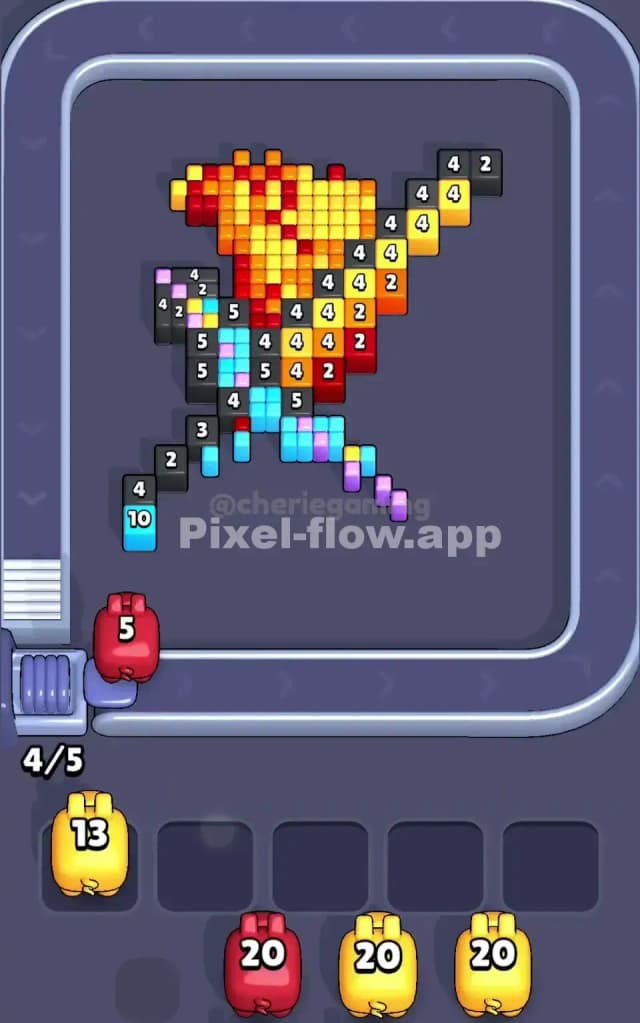
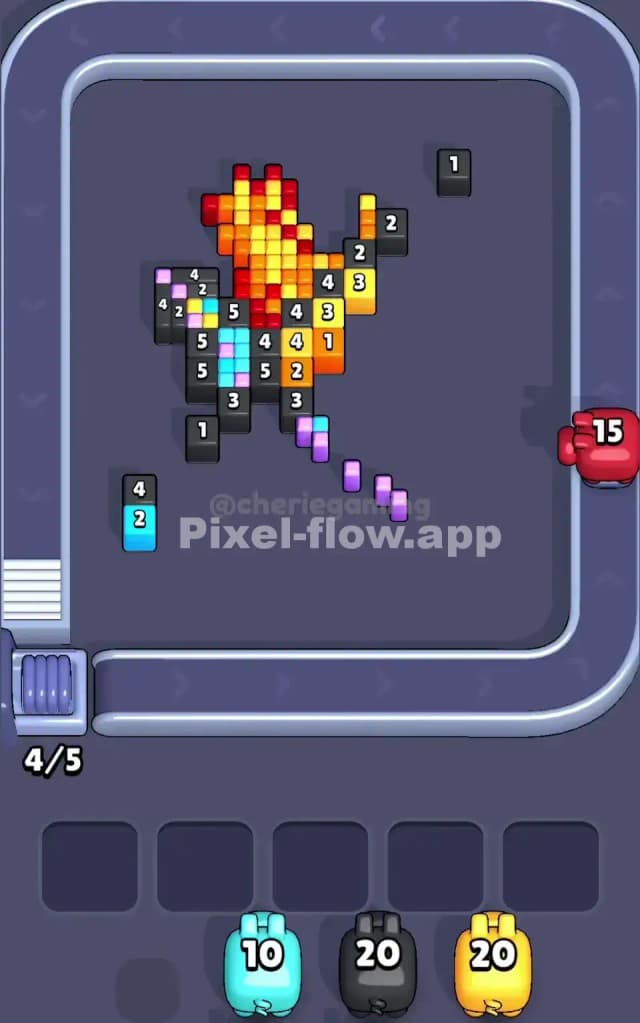
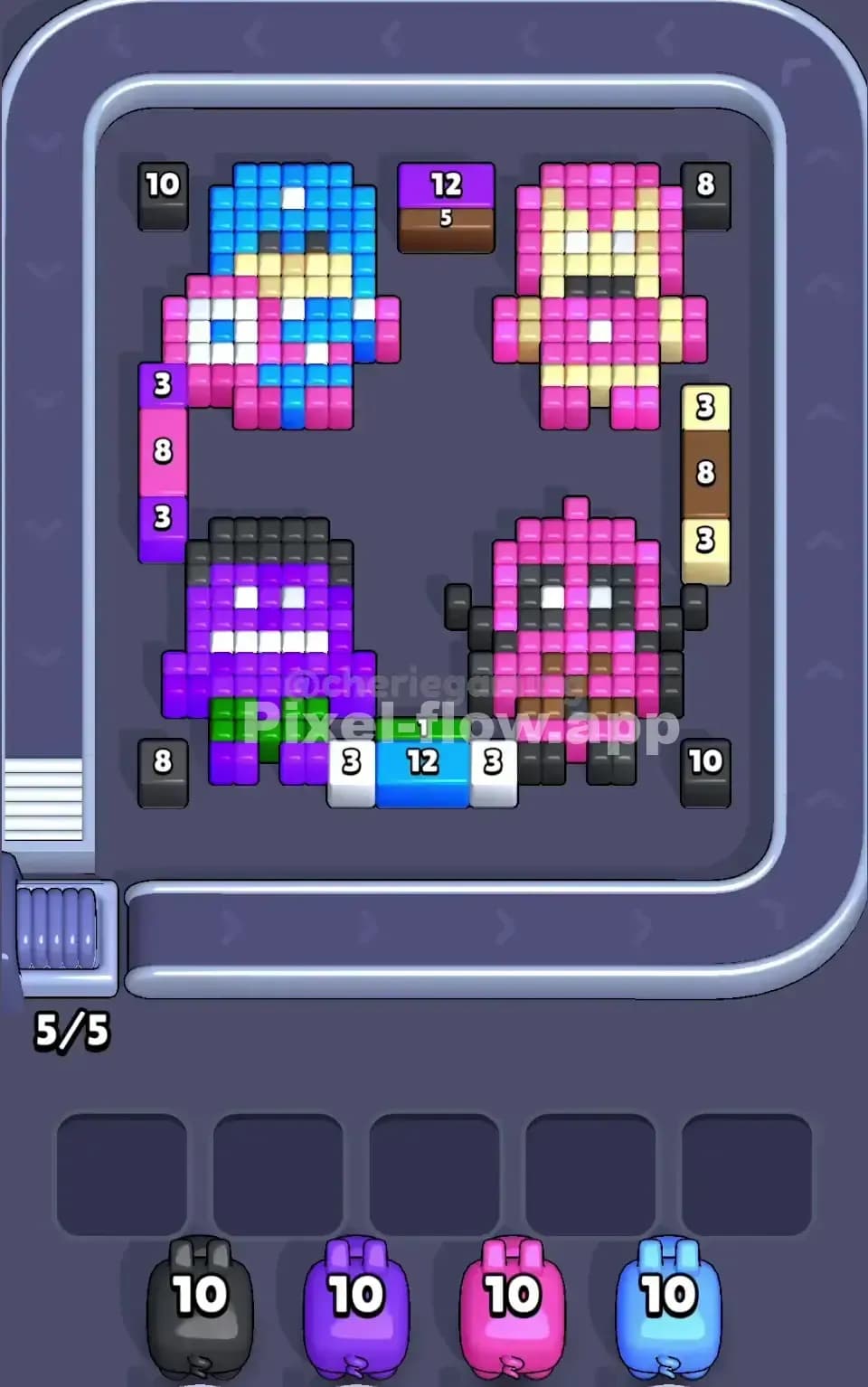
Pixel Flow Level 31 presents a sprawling, colorful voxel composition that spans multiple layers and demands careful sequencing. The board features a dominant flame-like shape in the upper half, built predominantly from red, yellow, and orange cubes that form the visual anchor of the puzzle. Below this central mass, you'll find scattered clusters of smaller color groups—cyan, pink, purple, and various numbered zones that indicate pig ammo values. The sheer size of the red and yellow populations makes them immediately intimidating; these colors occupy so much real estate that clearing them feels like the entire puzzle's backbone.
What makes Pixel Flow Level 31 genuinely strategic is that it's not just about firepower—it's about exposure. The red and yellow layers sit on top, blocking access to the cyan and pink regions beneath. You can't simply bulldoze your way through; you've got to peel back the outer shell methodically so that each subsequent pig has targets to hit. The board's asymmetrical layout, with thick clusters on the left and sparser sections on the right, creates natural choke points that'll punish sloppy ordering.
The Win Condition and Deterministic Nature
Your goal in Pixel Flow Level 31 is straightforward: clear every single voxel cube from the board. The game shows you four pigs waiting in the queue at the bottom (with ammo counts of 20, 20, 20, and 20 from the visible queue), plus a fifth slot that remains hidden until a pig enters it. Every time a pig shoots a matching cube, it spends one unit of ammo. Once a pig runs out of ammo or has no valid targets, it drops into one of your five waiting slots. The order in which pigs arrive and the exact ammo each one carries is completely predetermined—you can't change it, but you can control when to deploy each pig. Your success depends on understanding this deterministic sequence and orchestrating deployments so that no color gets trapped with unskilled or out-of-ammo pigs still holding ammo.
Why Pixel Flow Level 31 Feels So Tricky
The Red and Yellow Gridlock
The biggest threat to your success in Pixel Flow Level 31 is the sheer volume of red and yellow cubes stacked in the upper half of the board. These two colors together probably represent 40–50% of the total cube count, and they're densely packed. If you deploy a red pig too early and it runs out of ammo while red cubes are still scattered across the board—especially on different depths—you'll trap a pig with no targets in your waiting slots. That pig then becomes dead weight, consuming one of your five precious buffer spaces. The same danger lurks with yellow. What's maddening is that red and yellow are intermixed; you can't simply clear all reds and then all yellows. You have to be surgical about which pig you send and when, because if either color gets fragmented across too many layers, you risk filling your waiting slots with stranded pigs that still have ammo but nowhere to shoot.
The Hidden Layers and Color Isolation
Pixel Flow Level 31 hides a secondary nightmare: the cyan and pink clusters are completely buried. You can see them on the board, but no pig can target them until the red and yellow overburden gets cleared. If your opening sequence doesn't expose these colors strategically, you might find yourself in an awkward position where a cyan pig arrives with full ammo but can only see two or three targets before it's forced into the waiting buffer. This is especially treacherous because lower-ammo pigs (like the cyan pig with 10 ammo shown at the bottom left) can't afford to waste their firepower; they need every single shot to land on a target or you're done for. The spatial arrangement means you've got to chip away at red and yellow in a specific order to create clean sightlines for the deeper colors.
My Own Moment of Breakthrough
Honestly, Pixel Flow Level 31 stumped me for a while. I kept deploying red pigs aggressively, thinking raw ammo would carry me through, but I'd end up with three pigs in the waiting slots—all stranded, all with leftover ammo—by move four. The frustration peaked when I realized I'd created an unsolvable state: my waiting buffer was full, my next pig had nowhere to go, and I still had dozens of cubes on the board. The turning point came when I stopped thinking of Pixel Flow Level 31 as a "blast everything" puzzle and started treating it as a precise orchestration problem. Once I mapped out which colors had which ammo values and counted cubes deliberately, the level snapped into focus. That shift from impatience to deliberate planning is what separates a failed attempt from a clean sweep.
Step-by-Step Strategy to Clear Pixel Flow Level 31
Opening: Establish Breathing Room
Your first move in Pixel Flow Level 31 should be to deploy a red pig to begin fragmenting the upper mass. However—and this is crucial—don't just tap the first pig automatically. Watch the queue to confirm you're starting with a high-ammo red pig (you should be), and aim for clusters on the upper flanks or edges rather than the dense center. By chipping at the periphery first, you expose the cyan and pink zones slightly without creating isolated red pockets that'll trap later pigs.
Your opening should consume about 4–6 cubes, leaving your waiting slots untouched. After this opening volley, immediately deploy a yellow pig to work on the flame shape's interior. Yellow cubes are plentiful, so a yellow pig should have no trouble finding targets; you want to burn through yellow ammo somewhat aggressively here because yellow density means it's unlikely to get stranded. As you clear yellow, you'll expose more cyan and the bottom regions. Keep watching your waiting slots—they should still be empty after your first two deployments.
Mid-Game: Layer Peeling and Controlled Exposure
Once you're three or four pigs deep in Pixel Flow Level 31, the true puzzle emerges. By now, red and yellow should be significantly thinned, and you're starting to see cyan and pink targets more clearly. This is when you deploy your cyan pig—but here's the trap to avoid: don't deploy it if it's going to see only three or four targets. Instead, if a cyan pig arrives and the board still isn't ready, let it drop into a waiting slot immediately. A pig sitting in the buffer isn't a failure; it's a strategic hold. You're banking that pig's ammo for later, when more targets appear.
The mid-game is where you must count fastidiously. Pixel Flow Level 31 will punish carelessness with a jammed buffer. Before each deployment, ask yourself: "Does this pig have at least 70% of its ammo in visible targets?" If the answer is no, hold the pig. This patience is difficult but essential. You might deploy a red pig, watch it clear 3–4 cubes, drop into the waiting buffer, and feel like you've "wasted" a move. You haven't. You've preserved your ability to continue without jamming. Meanwhile, the cubes you cleared opened new sightlines, so when your next pig arrives, it's more likely to find targets.
During this phase, focus on clearing the upper-left and upper-right flanks of the flame shape first. This exposes the cyan pocket underneath without overwhelming you with simultaneously scattered targets. Yellow should be nearly gone by the end of the mid-game; its high count means pigs can finish it off in one or two deployments if the board is clear enough.
End-Game: Surgical Cleanup and Buffer Management
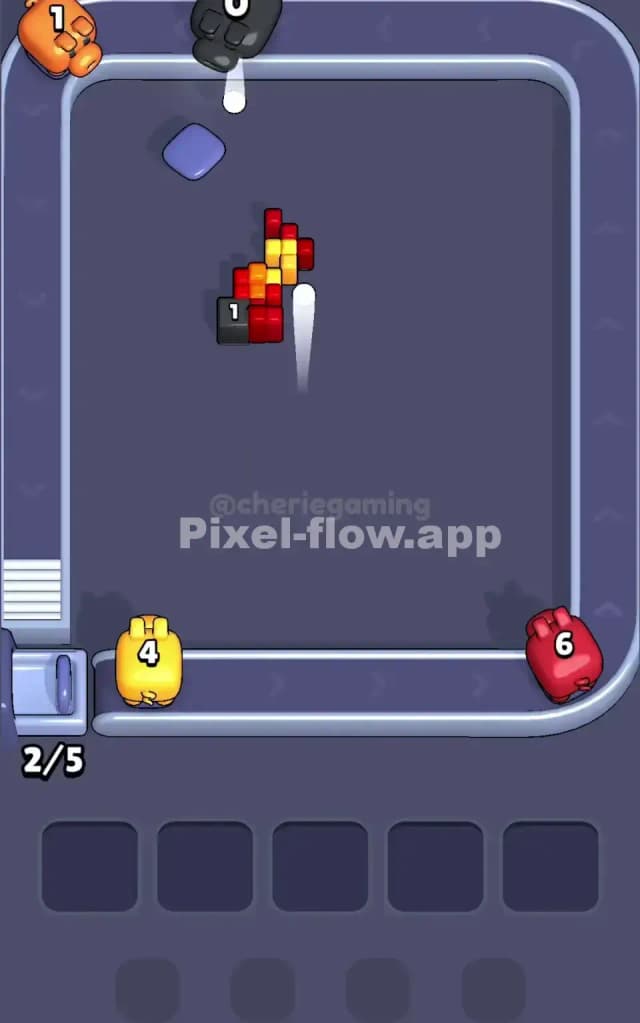
As you enter the final stages of Pixel Flow Level 31, your board should look drastically simpler. Red should be minimal, yellow should be gone or nearly gone, and cyan and pink should form a small, clean cluster at the bottom. This is when you deploy your remaining specialized pigs (cyan, pink, purple if it exists) and watch them rack up clean kills.
The absolute final step is crucial: make sure your last pig of each color uses all its ammo. For Pixel Flow Level 31, this means your last red pig should finish every red cube, your last cyan pig should eliminate all cyan, and so on. To execute this flawlessly, let earlier pigs drop into the buffer if they can't spend all ammo; that way, you preserve your buffer space for the truly final deployments, when you know exactly what's left. If you're careful and you've counted correctly, your last four or five pigs should empty the board completely, with minimal waste.
The Logic Behind This Pixel Flow Level 31 Plan
Exploiting Determinism and Queue Order
Pixel Flow Level 31's difficulty stems from its determinism—you don't control what pigs arrive or what ammo they carry, but you do control deployment timing. The strategy above leans heavily into this asymmetry. By recognizing that pig order is fixed, you can pre-plan your ideal sequence: deploy high-ammo generalists early to rough out the board, then park specialized pigs in the buffer until their targets are exposed. This isn't reactive play; it's reading the puzzle like a blueprint and executing a predetermined solution. Once you've run Pixel Flow Level 31 even once, you know roughly which pigs are coming, so you can anticipate exactly when to deploy them for maximum efficiency.
The waiting buffer is your pressure release valve. Filling it isn't failure; it's a resource you're deliberately using. By allowing pigs to wait, you're essentially "pausing" their ammo expenditure until the board state improves, which is a form of control that less experienced players overlook. In Pixel Flow Level 31, patience is often the winning move.
Staying Calm and Thinking Ahead
The final secret to Pixel Flow Level 31 is mental discipline. When you're staring at a board packed with reds and yellows, the temptation to deploy aggressively is overwhelming. Resist it. Instead, count cubes by color, estimate how many pigs you'll need, and then mentally map out the first five deployments before you even tap a pig. This lookahead prevents panic and jamming. If you can see that your cyan pig arrives when there are only three cyan cubes visible, you know ahead of time to let it wait. You're not guessing; you're calculating.
Clearing Pixel Flow Level 31 is absolutely possible when you treat it as a logic puzzle rather than an action game. Plan ahead, manage your buffer like a precious resource, and watch the queue religiously. Execute with confidence, and you'll sweep the board clean.