Pixel Flow Level 30 Solution Walkthrough | Pixel Flow 30

How to solve Pixel Flow level 30? Get instant solution for Pixel Flow 30 with our step by step solution & video walkthrough.

Share Pixel Flow Level 30 Guide:
Pixel Flow Level 30 Gameplay
Pixel Flow Level 30 Solution 1
Pixel Flow Level 30 Solution 2
Pixel Flow Level 30 Solution 3

Pixel Flow Level 30 Overview

The Board Layout and Pixel Art Subject

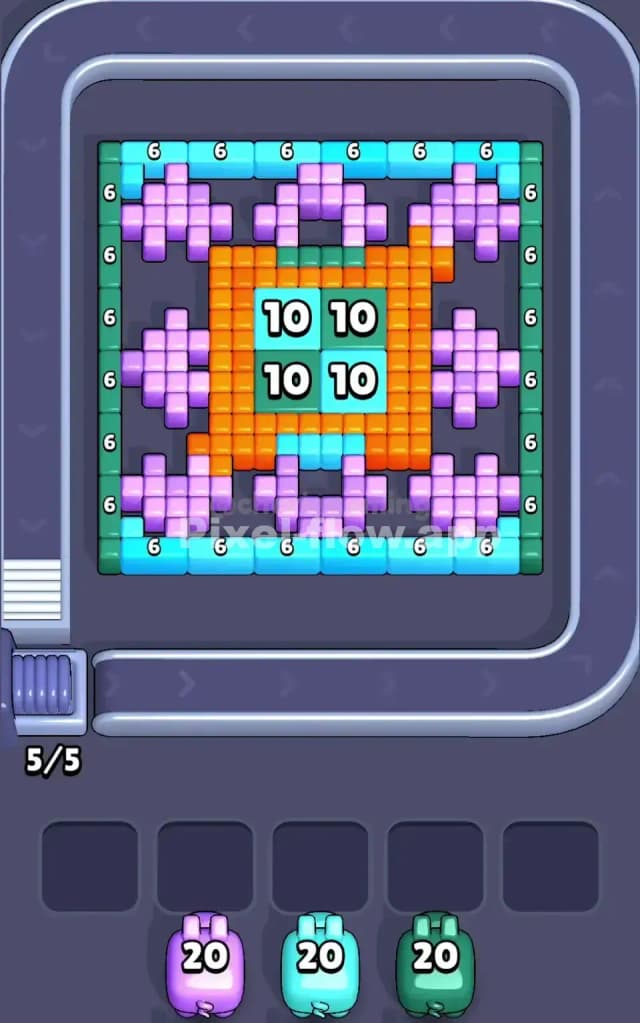
Pixel Flow Level 30 presents a symmetrical, layered voxel puzzle that's immediately striking. The board features a gorgeous pixel-art face or mask design as its central subject, framed by vibrant color zones that create both visual interest and mechanical complexity. The dominant colors you'll encounter are cyan (light blue), purple, orange, and green, arranged in distinct bands and clusters across the playfield. At the heart of the board sits a cyan-green window showing the numbers "10 10 / 10 10," which serves as both a visual anchor and a critical target zone you'll need to address. The outer edges are reinforced with green blocks, while purple and cyan blocks form the bulk of the upper and lower sections. Orange cubes occupy the central region, creating a thick horizontal band that sits between the face's features. This layered construction means you're not just destroying random blocks—you're peeling away an illustration methodically, exposing deeper colors and hidden patterns as you progress.

Understanding the Win Condition and Deterministic Nature

Your goal in Pixel Flow Level 30 is straightforward: clear every single cube on the board by deploying the three incoming pigs in your queue. You'll notice at the bottom of the screen that you have a purple pig (20 ammo), a cyan pig (20 ammo), and a green pig (20 ammo)—exactly 60 total shots to work with. Every voxel cube you destroy costs 1 ammo from the matching pig, making this a perfectly deterministic puzzle. There's no luck involved; every move flows from the sequence you choose and the logic of the conveyor belt. If you plan correctly, you'll empty the board cleanly. If you mismanage your pig order or let pigs jam in the waiting slots, you'll fail. That's what makes Pixel Flow Level 30 both challenging and deeply satisfying once you crack it.

Why Pixel Flow Level 30 Feels So Tricky

The Orange Bottleneck and Waiting Slot Crisis

The single biggest threat in Pixel Flow Level 30 is the massive band of orange cubes that sprawls across the middle of the board. These orange blocks are so numerous and so densely packed that if your orange pig (assuming one exists in your queue) doesn't have enough ammo to clear them all, you'll quickly find yourself in a jam. Here's the brutal reality: if your orange pig runs out of ammo while orange cubes still exist on the board, that pig will drop into one of your five waiting slots, permanently occupying real estate. If multiple pigs get stuck this way, your buffer fills up, and you're locked into failure with no way to continue. The orange band in Pixel Flow Level 30 isn't just a visual element—it's a mechanical gatekeeper that controls whether you succeed or spiral into a deadlock situation.

Awkward Color Patches and Hidden Layers

Beyond the orange threat, Pixel Flow Level 30 hides several nasty surprises. Purple and cyan blocks are scattered throughout the design, sometimes appearing in small, isolated clusters that are easy to miss when you're scanning the board. If your cyan or purple pig runs out of ammo before clearing all visible targets, those orphaned blocks become "unreachable" in a sense—your pig becomes useless and clogs the waiting queue. The cyan window in the center is particularly sneaky because it's visually prominent, yet the cyan blocks surrounding and beneath it might be spread across multiple depths. You can't see the deeper layers until you've cleared the overlying colors, which means you're flying partially blind when deciding pig sequence. This information asymmetry is what makes Pixel Flow Level 30 punishing the first few attempts.

Personal Reaction and the "Click" Moment

Honestly, I found Pixel Flow Level 30 infuriating at first. I'd clear the obvious purple clusters, move on to orange, and then watch my cyan pig get stuck because I'd missed a few cyan cubes hiding behind the face's features. The feeling of filling all five waiting slots with useless, partially-spent pigs is uniquely frustrating in Pixel Flow. But here's where it clicked for me: I stopped reacting to what I could see and started planning for what I couldn't. I began treating the board as a strategic map where every pig deployment needed to account for future reveals. Once I accepted that Pixel Flow Level 30 required this kind of forward-thinking discipline, the level went from "impossible" to "challenging but doable." That mental shift—from panic mode to planner mode—is essential to beating this stage.

Step-by-Step Strategy to Clear Pixel Flow Level 30

Opening: Establishing Control and Freeing Space

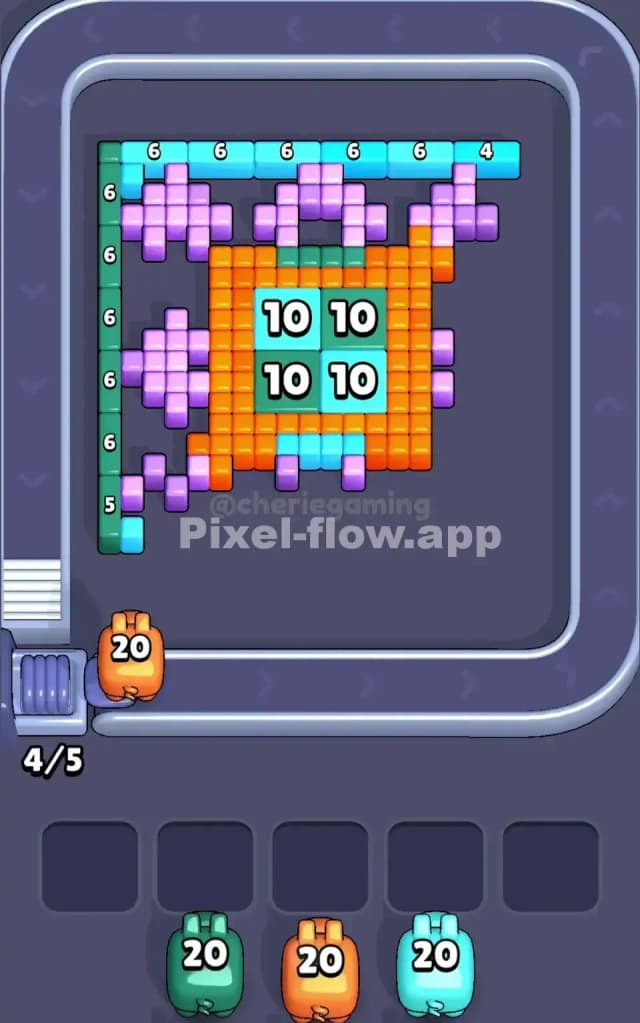
Your first move in Pixel Flow Level 30 should be to deploy the cyan pig early, but strategically. Cyan cubes appear throughout the board, from the top border blocks to the window area and scattered side elements. By releasing your cyan pig first, you'll burn through many of those distributed cyan targets before they become a bottleneck. However, don't just fire blindly—watch which cyan blocks disappear and which remain. Your goal in this opening phase is to keep at least three waiting slots completely empty. Never fill more than two slots in the first three pig deployments. The purple pig is your second candidate because purple also appears in widespread clusters (the sides, upper sections, and lower sections). By tackling cyan and purple early, you're clearing the "noise" that surrounds the critical orange core. This approach keeps your queue flowing and prevents early lockup. The key is restraint: resist the urge to send every pig immediately. Patience in Pixel Flow Level 30 literally means having space for future pigs to land.

Mid-Game: Sequencing and Layer Exposure

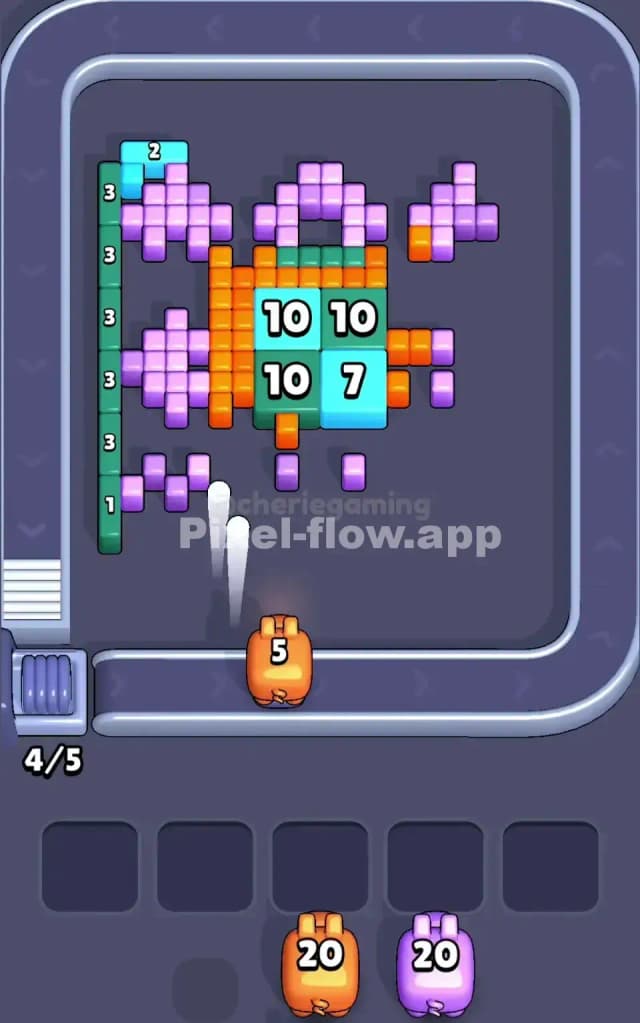
Once you've cleared the first wave of cyan and purple, the orange band becomes your primary target. This is where Pixel Flow Level 30 gets intense because orange represents the largest single color cluster. You'll deploy an orange pig (if available in your sequence) or continue with remaining pigs to expose what lies beneath. As you clear orange blocks, you'll reveal the cyan window and deeper structural elements behind it. Watch for any pigs that still have ammo remaining—these need to be deployed strategically when fresh targets appear. The middle game is about rhythm: clear a layer, observe what's revealed, then decide if the next pig can finish that color or should pivot to another. In Pixel Flow Level 30, sometimes a pig with 4 ammo remaining is actually perfect for a hidden cluster you've just exposed, while a fresh pig would be wasted. Count your remaining ammo on each pig in the queue and mentally map where those shots need to land. This requires active attention, but it's the difference between victory and a jammed board. Never send a pig to finish a color if you haven't visually confirmed all cubes of that color are accessible—that's how you lock yourself in Pixel Flow Level 30.

End-Game: The Final Sequence and Clean Buffer

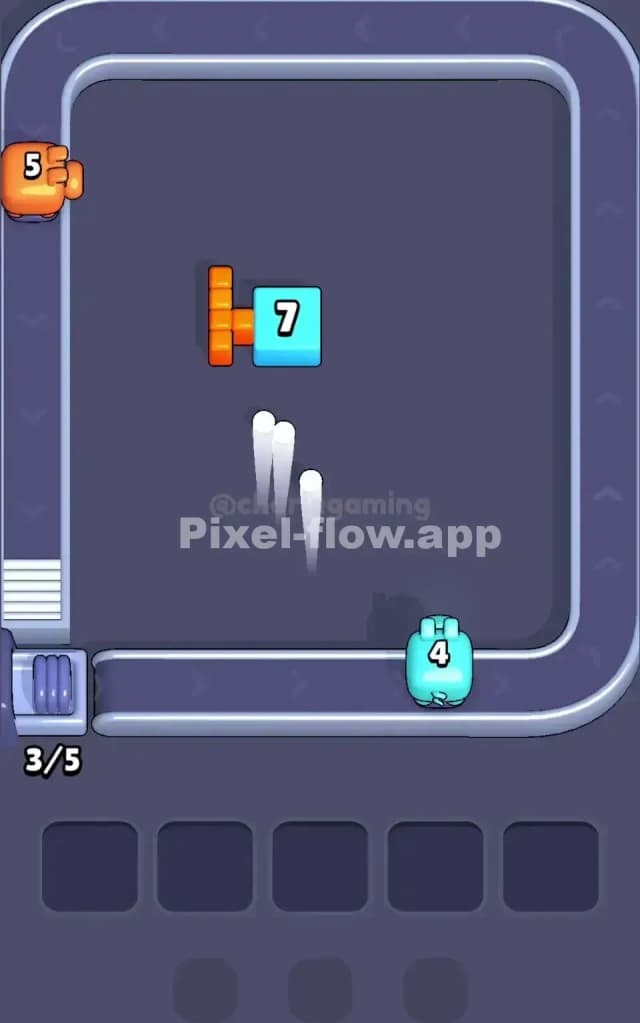
As you reach the final phase of Pixel Flow Level 30, your waiting slots will likely contain one or two pigs with small ammo reserves. This is normal and expected. Your job now is to surgically use their remaining shots on any stragglers. The board should look almost empty, with only isolated cubes of one or two colors remaining. Deploy your final pig(s) and watch them eliminate the last targets without leaving gaps. The beautiful moment in Pixel Flow Level 30 comes when the final cube shatters and your buffer empties completely—no stuck pigs, no wasted ammo, just a clean board. To achieve this, you must resist the urge to overshoot earlier. If you've managed the mid-game correctly, the end-game almost pilots itself. The last few pigs become the cleanup crew, not the solution. They exist to mop up what previous pigs couldn't access due to layer depth, and that's exactly how it should work in Pixel Flow Level 30.

The Logic Behind This Pixel Flow Level 30 Plan

Exploiting Determinism and Pig Order

Pixel Flow Level 30 rewards planning because the puzzle is entirely deterministic. Every pig has a fixed ammo count, and every cube costs exactly 1 ammo. There's no randomness, no hidden elements that change between attempts (beyond your choices). This means that success in Pixel Flow Level 30 boils down to understanding your sequence and executing it with precision. The orange pig needs enough ammo to clear orange; the cyan pig needs enough for cyan. If you run the numbers and find that you have 60 total ammo but roughly 65 cubes, you're already in trouble—you'd need to clear some cubes with mismatched pigs, which wastes ammo and creates inefficiency. But if the ammo budget exactly matches the cube count (which well-designed Pixel Flow levels should), then your job is purely about sequence optimization. The strategy above—starting with distributed colors, moving to the dense core, then finishing with stragglers—works because it respects this deterministic nature. You're not gambling; you're executing a calculated plan.

Staying Calm Under Pressure and Planning Ahead

The hardest part of Pixel Flow Level 30 isn't the mechanics; it's the mental discipline. You need to watch your waiting queue, count remaining ammo on each pig, and plan two or three moves ahead. That sounds exhausting, but it becomes second nature once you accept that Pixel Flow Level 30 demands active engagement. When a pig drops into a waiting slot, don't panic—instead, immediately assess whether it still has ammo and what targets remain for it. Ask yourself: "Does this pig have a shot at something I haven't cleared yet?" If yes, you're fine. If no, you've made a mistake earlier and need to learn from it for the next attempt. The calm, methodical mindset is what separates frustrated players from ones who beat Pixel Flow Level 30. Take your time. Watch the board. Count your shots. Trust the math. That combination is your real path to victory.