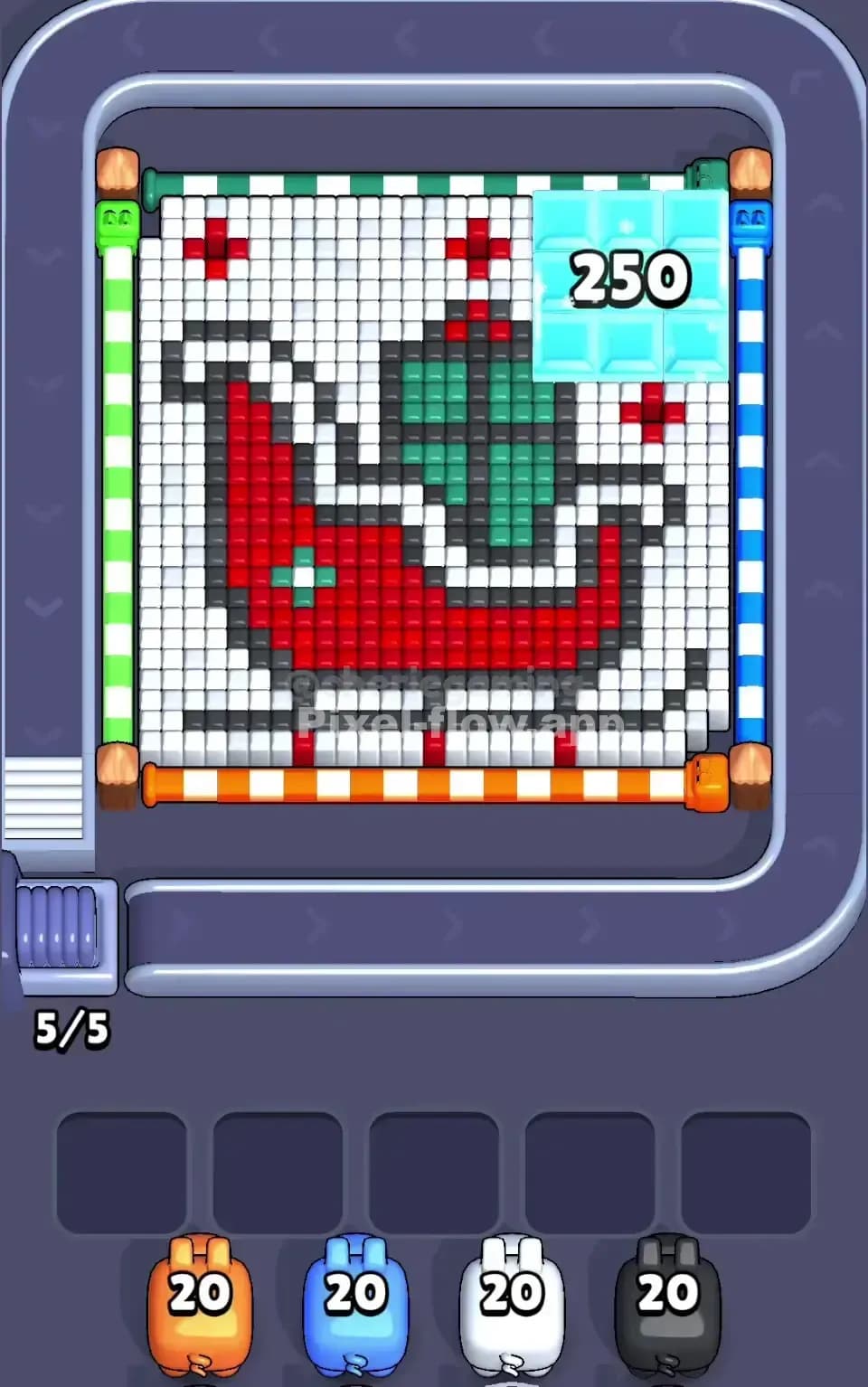
Pixel Flow Level 340 Solution | Pixel Flow 340 Walkthrough
How to beat Pixel Flow Level 340: Video solution & walkthrough. The fastest way to pass Pixel Flow 340.
Is this the wrong level layout?🤔
Pixel Flow randomizes levels for different players. Don't worry, just upload a screenshot of your board, and our AI will find the correct video instantly.

Pixel Flow Level 340 Walkthrough
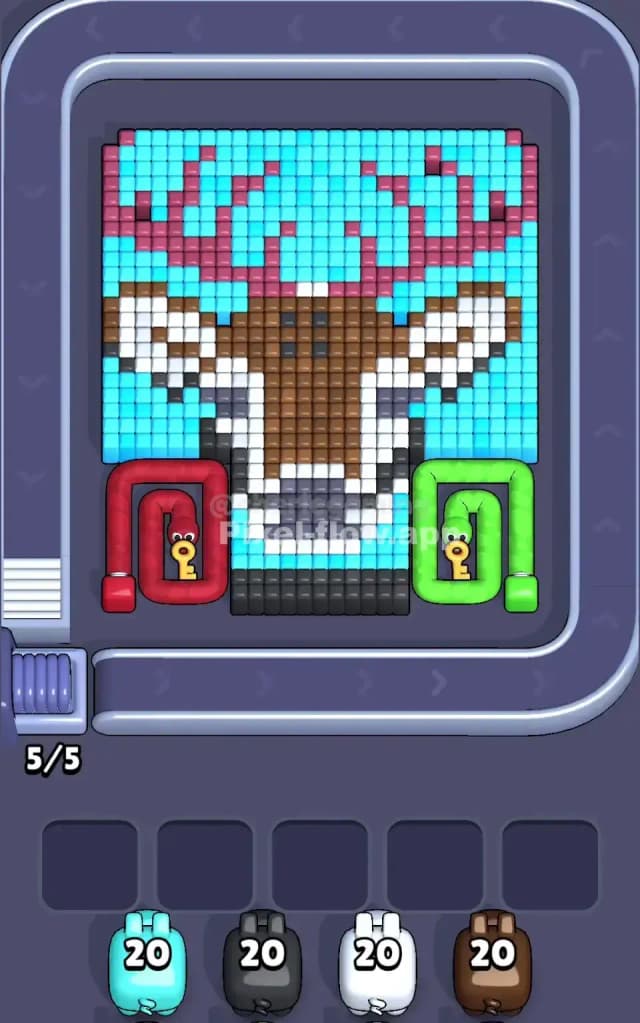
You are staring down a massive, pixelated reindeer or stag head. It’s festive, it’s symmetrical, and it is annoying. This level features a heavy Cyan background, a complex set of Pink antlers, and two massive "Snake Locks" guarding the bottom corners.
The rule to beat Pixel Flow Level 340 is patience with your layers. You cannot rush the face. You have to peel the background like an onion. Because of the locked zones at the bottom that restrict your board space, this counts as a very hard level.
Pixel Flow Level 340 Overview
The artwork here is a distinct animal portrait. A brown-furred deer with a white muzzle and white inner ears. Resting on top of its head is a sprawling rack of dark pink antlers. Behind everything is a wall of bright Cyan, representing the sky or maybe winter ice. At the very bottom, beneath the chin, sits a dense block of Black pixels representing the neck or shadow.
The critical visual feature you need to respect is the Lock System.
- Red Lock (Left): A red pipe-snake curled around a keyhole.
- Green Lock (Right): A green pipe-snake mirrored on the other side.
These locks block the bottom left and right corners of the grid. Until you clear the pixels directly interacting with their triggers (usually adjacent blocks or specific colored keys hidden in the layers), these pipes stay shut. This artificially narrows your play area, meaning if you drop too many useless pigs into your waiting slots, you will choke out and lose fast.
Step by step solution walkthrough for Pixel Flow Level 340
First Color Zone to Erase in Pixel Flow Level 340
Start with Cyan. Always Cyan.
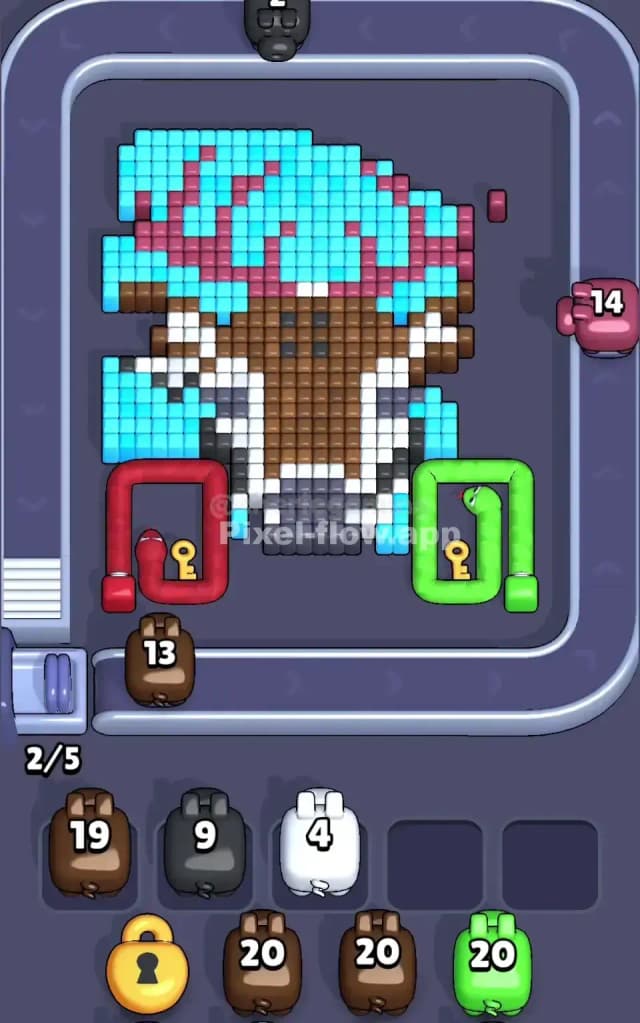
Look at the top half of the board. The Cyan pixels aren't just a background; they are the mortar holding the Pink antlers together. If you look closely, the Cyan fills every gap between the antler prongs.
Narratively, you are clearing the sky to expose the animal. Logically, this is the only play that makes sense for ammo conservation. The Cyan blocks are huge, connected chunks. A Cyan pig with 20 ammo will likely clear its entire clip here without wasting a drop. If you try to start with Brown or White, your pigs will hit the surface layer, break three blocks, and then clog up your waiting slots because the rest of the Brown/White pixels are buried deeper. Clear the sky. Open up the board.
How to pass Pixel Flow Level 340 without power ups or boosters
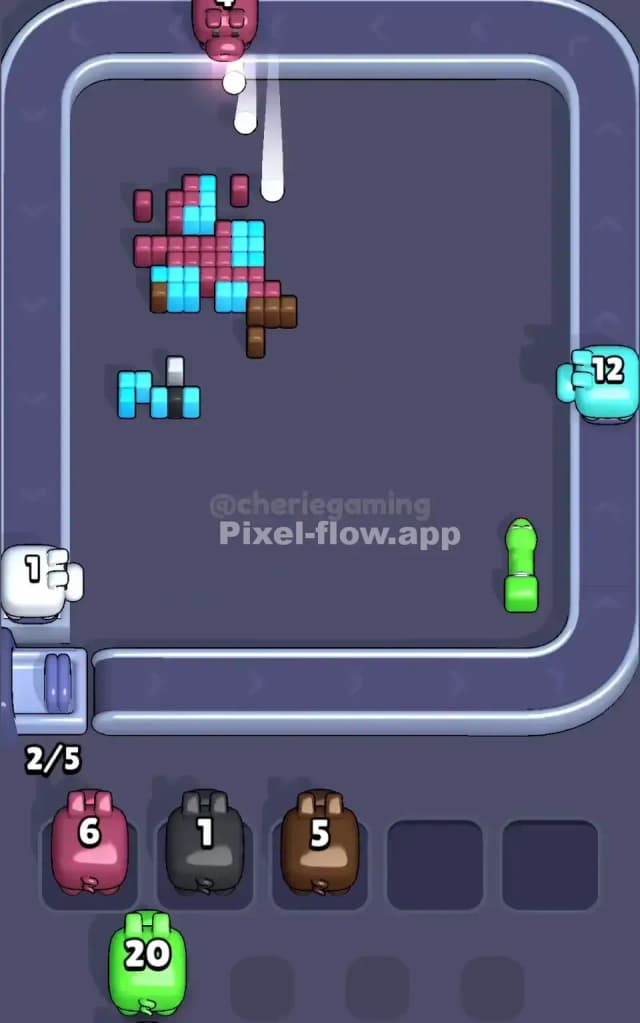
Once the Cyan is gone, the picture looks half-destroyed. You are left with a floating rack of Pink antlers and a headless Brown face. This is the danger zone.
Here is how you survive the mid-game without boosters:
- Attack the Antlers (Pink): With the Cyan gone, the Pink antlers are exposed. They are spindly and weirdly shaped. Use your Pink pigs now. Do not wait. Clearing the antlers is vital because they often overlay the top of the Brown forehead. You can't fix the face until the hat is gone.
- The Ear Trap (White vs. Brown): The ears are a mix of Brown and White. Be careful here. The White pixels on the ears are separated from the White pixels on the nose. A White pig might clear the left ear and then have no path to the nose, sitting in your slot with 12 ammo left. Try to play Brown pigs first to connect these zones.
- The Black Neck: You will see a block of Black at the bottom center. It looks juicy. It looks like an easy target. Ignore it. The Black pixels are usually the deepest layer. If you send Black pigs too early, they will just pile up in your waiting slots because the White muzzle is covering their target. Only send Black pigs when you see bare black pixels exposed.
Last Details You Clean Up in Pixel Flow Level 340
As you enter the final phase of Pixel Flow 340, the Red and Green locks should pop open. This usually happens automatically as you clear the layers adjacent to them or clear the specific "Key" blocks that were hiding under the Cyan/Brown layers.
The cleanup is usually messy. You will likely be left with:
- The Muzzle: A few stubborn White blocks right in the center.
- The Shadow: The final layer of Black pixels at the very bottom, previously guarded by the chin.
- Corner Residue: Watch the spots where the Red and Green locks used to be. Sometimes a single stray pixel hides behind the pipe animation.
Save a low-ammo pig for these last stragglers. Don't burn a full 20-stack pig on the last single block if you can help it. Clean the neck, pop the nose, and the level is yours.