
Pixel Flow Level 35 Solution | Pixel Flow 35 Walkthrough
How to beat Pixel Flow Level 35: Video solution & walkthrough. The fastest way to pass Pixel Flow 35.
Is this the wrong level layout?🤔
Pixel Flow randomizes levels for different players. Don't worry, just upload a screenshot of your board, and our AI will find the correct video instantly.

Pixel Flow Level 35 Walkthrough
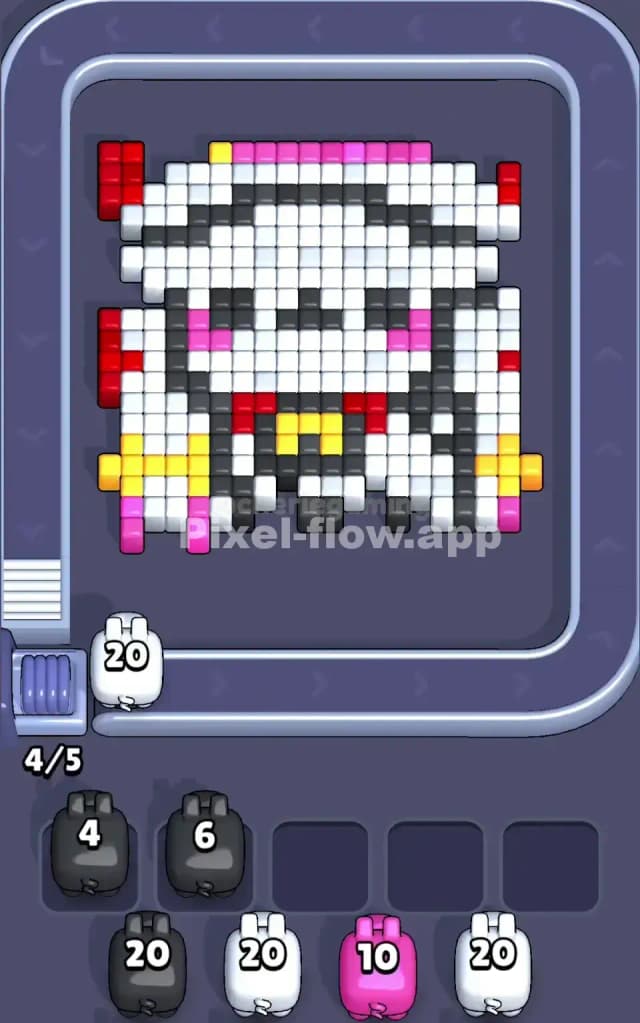
This level features a classic Maneki-neko (Lucky Cat) face. It's built primarily of white blocks for the fur, framed by a thick black outline. You'll see splashes of red on the ears and collar, pink cheeks, and yellow accents for the bell and coins.
The rule to beat Pixel Flow Level 35 is simple but strict: prioritize the outer layers first. Because the black outline acts as a "cage" for the inner white face, you often cannot reach the white blocks until you chip away the black or colored edges. You need to manage your five slots carefully. If you pull a white pig too early when the white face is blocked by black cubes, that pig sits in your slot doing nothing. Clog all five slots, and you lose.
Is it difficult? Yes. This is a very hard level because the white area is huge but trapped behind other colors.
Pixel Flow Level 35 Overview
Think of this picture as a heavy fortress. The main character is a white lucky cat, smiling with pink cheeks. But functionally, it's a bunker. The black outline is the wall. The red ears and yellow coins are the towers.
The background is non-existent; the image fills the grid almost entirely.
- Top: Red tips on the ears, a strip of pink/white/yellow at the very top edge.
- Middle: The massive white face, black eyes, and pink blush.
- Bottom: A red collar with a yellow bell, surrounded by the black body outline.
- Sides: Yellow and pink "plus" shapes (likely coins or decorations) flank the cat on the left and right.
The asymmetry here is subtle but annoying. The yellow shapes on the left and right are not identical in depth. The left side has a bit more white/pink clutter near the bottom corner. This uneven distribution means a yellow pig might clear the right side instantly but get stuck on the left side because a single white block is in the way.
Step by step solution walkthrough for Pixel Flow Level 35
First Color Zone to Erase in Pixel Flow Level 35
I start by attacking the Black Outlines.
Here is why: looking at the board, the black voxels form a continuous loop around the cat's head and body. This loop physically blocks shots from hitting the white interior. If you try to send White pigs first, they will waste ammo hitting the few exposed white pixels at the very top or bottom, but they won't be able to penetrate the middle. They will finish with 10-15 ammo left and clog your waiting slots.
By prioritizing Black pigs, you break the cage. Focus specifically on the bottom black curve of the cat's body and the side whiskers/outline. Once these black walls crumble, the massive white center is exposed to fire from all angles.
How to pass Pixel Flow Level 35 without power ups or boosters
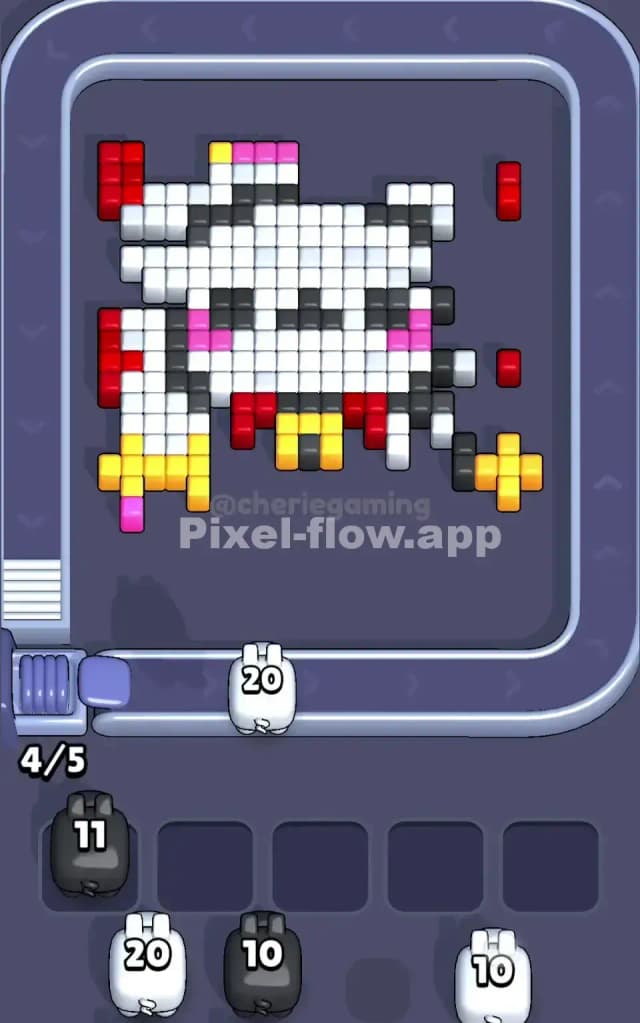
At the mid-level point, the cat looks like a floating mask. You have likely cleared the bottom corners (the pink and yellow debris) and large chunks of the black outline.
The danger zone is now the Red Collar and the Yellow Bell. These bright colors often sit on top of white blocks. If you ignore them, they act as shields. You might see a White pig available on the belt, but if a Red block is hovering over the white fur, your shot is blocked.
My no-booster strategy changes here:
- Stop clearing Black: Once the main outline is broken, stop prioritizing black. The remaining black blocks (like the eyes) are deep inside and safe to leave for later.
- Hunt Red and Yellow: Aggressively grab Red and Yellow pigs. You need to shave off the collar and the bell. This is crucial because clearing the collar opens up the entire "neck" area for your White pigs to finally unload their massive ammo clips.
- The Pink Trap: Be careful with Pink pigs. The pink cheeks are high up. The pink blocks at the bottom corners are low. A single Pink pig might clear the bottom easily but fail to reach the cheeks if the black eye-line is still blocking shots. Only grab a Pink pig if you see a clear line of sight to both cheeks or the bottom corners.
Last Details You Clean Up in Pixel Flow Level 35
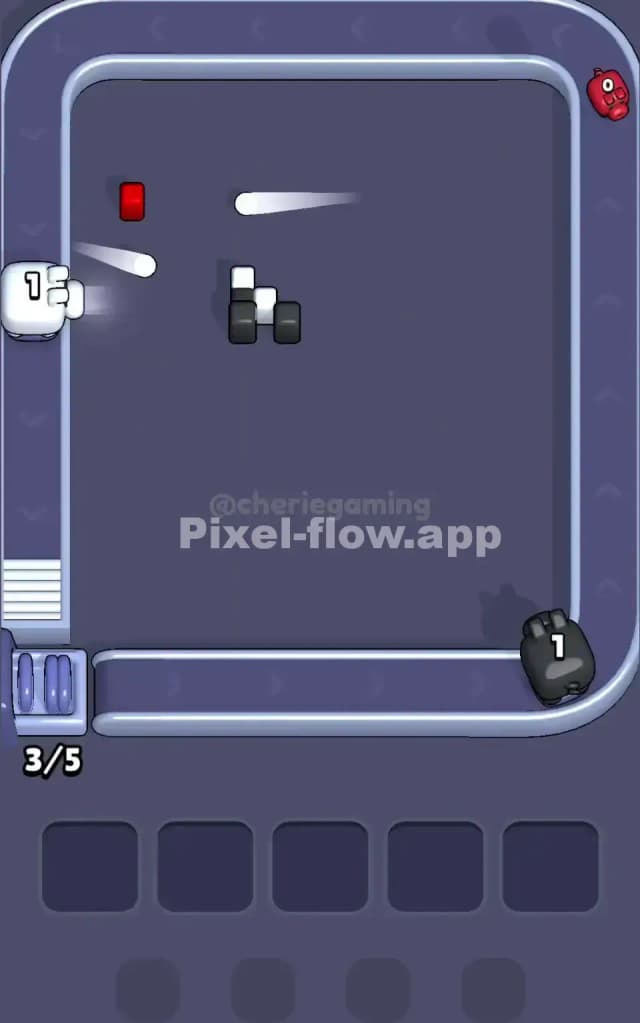
In the final few moves, you are usually left with the White Face and the Black Eyes/Nose.
This is the cleanup phase. You will see a lot of White pigs with high ammo counts (40+). Now is the time to unleash them. Since you cleared the red collar and black outline earlier, these White pigs can shred the remaining face in seconds.
The very last cubes to hide are often:
- Single Black cubes that were behind the red ears.
- A stray White cube trapped behind the yellow bell.
Watch your slots. Don't grab a Black pig if you only have 2 black pixels left on the board. Wait for a White pig to clear the surrounding area first, exposing the final targets so you don't waste a slot on a pig that shoots twice and then sits there forever.