Pixel Flow Level 355 Solution | Pixel Flow 355 Walkthrough
How to beat Pixel Flow Level 355: Video solution & walkthrough. The fastest way to pass Pixel Flow 355.
Is this the wrong level layout?🤔
Pixel Flow randomizes levels for different players. Don't worry, just upload a screenshot of your board, and our AI will find the correct video instantly.
Pixel Flow Level 355 Walkthrough
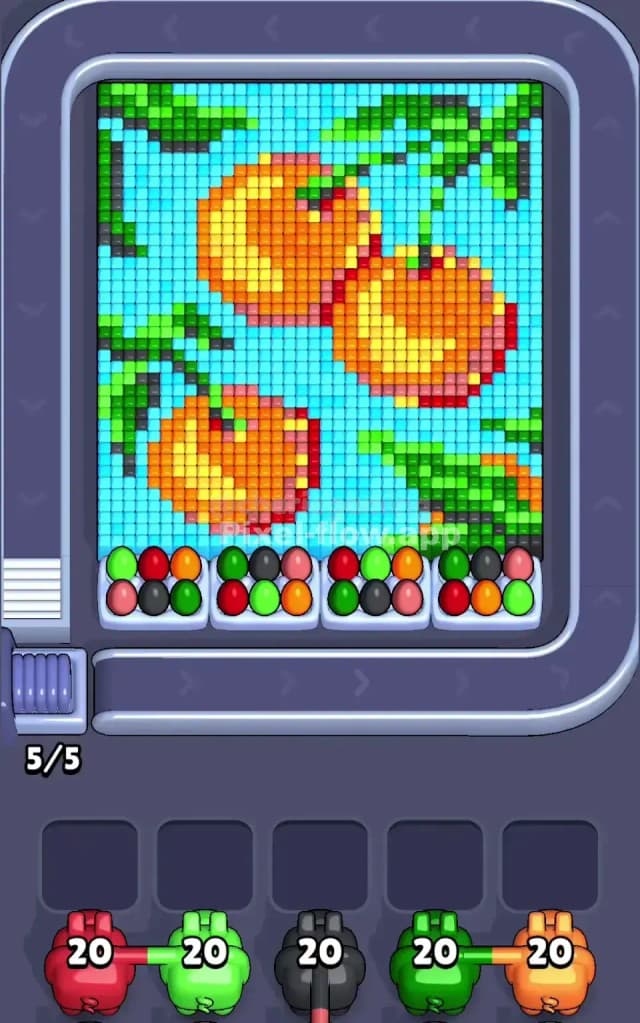
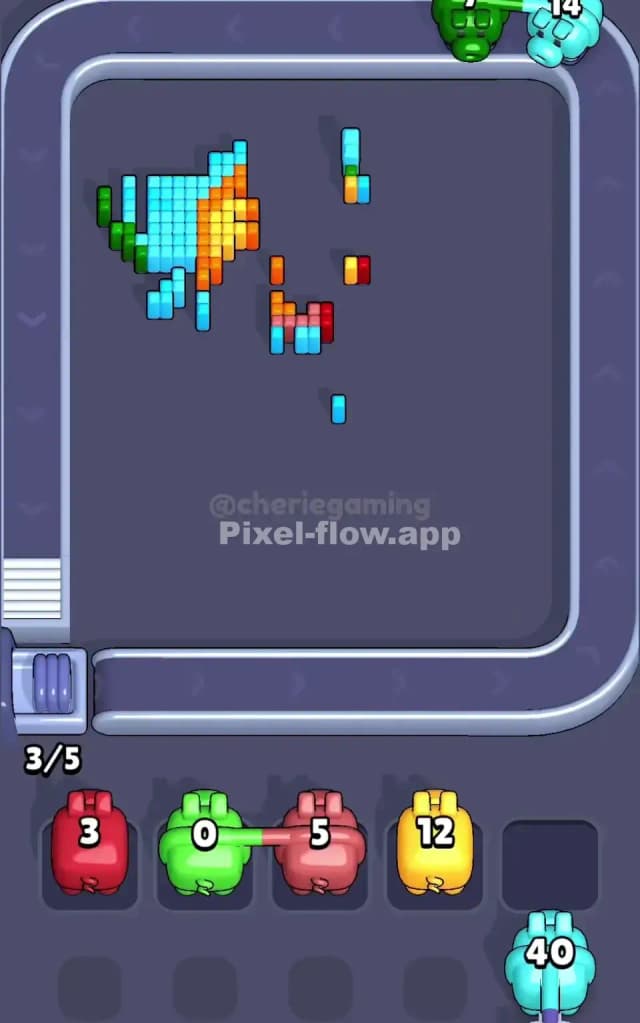
This level features a bright, summery image of three ripe peaches hanging among green leaves against a solid light blue sky. The main challenge here is the sheer volume of that blue background layer. It covers everything. You have three large fruit clusters: one top-left, one center-right, and one bottom-left. The rules are standard: clear the top layer pixels to reveal the deeper colors. If your pigs get stuck in the waiting slots with unspent ammo, you fail. Is this a hard level? No. It’s not "very hard," but it is tedious because the blue layer is massive and easy to misjudge.
Pixel Flow Level 355 Overview
Imagine looking up into a fruit tree on a sunny day. The board is dominated by a flat, light blue sky that acts as the "cover" for the entire puzzle. Floating in this blue void are three distinct peaches, rendered in shades of orange, yellow, and deep red. Surrounding them are jagged patches of dark and light green leaves.
The asymmetry here is subtle but important. The fruit clusters are heavy on the left and center. The right edge is mostly just blue sky and a few leaf tips. This means your "Blue" pigs will do heavy lifting on the right side, while your "Orange" and "Yellow" pigs will need to focus on the dense clusters on the left. The danger zones are the dark green leaves. They are thin, scattered, and often hide underneath the blue, making it easy to accidentally clog your slots with Green pigs before the leaves are actually exposed.
Step by step solution walkthrough for Pixel Flow Level 355
First Color Zone to Erase in Pixel Flow Level 355
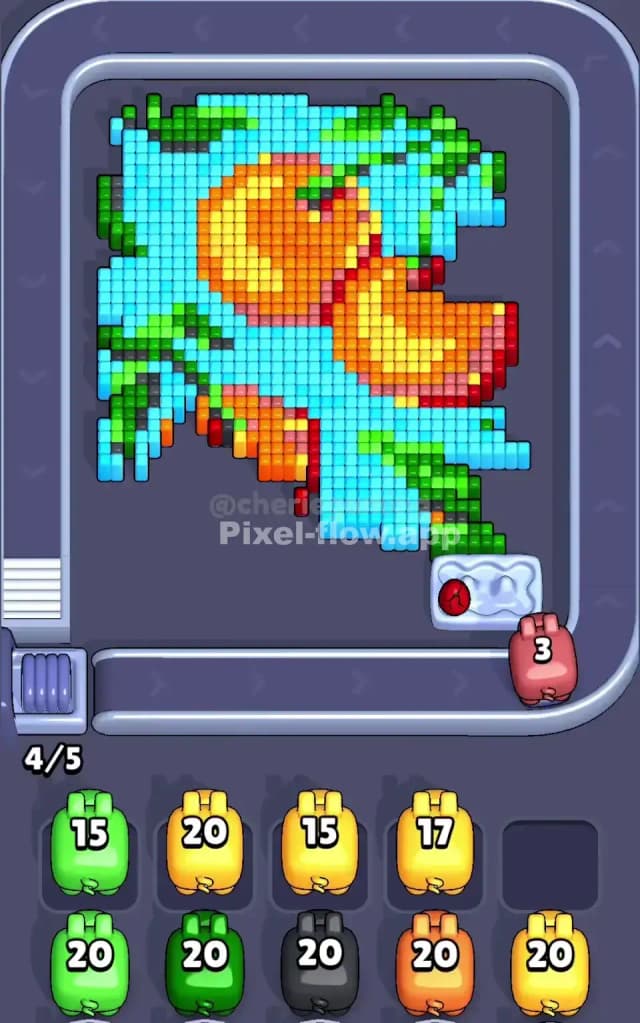
Start with the Light Blue. You almost have no choice. The blue sky is the top layer for 70% of the board. It connects all the fruit clusters.
I specifically target the blue space between the top-left peach and the center-right peach first. Why? Because this central blue channel is the "glue" holding the picture together. Clearing it separates the board into smaller, manageable islands of fruit. Also, the blue layer is thickest here. If you ignore it, you’ll end up with three Blue pigs clogging your slots later when you only have tiny patches of sky left. Burn the big blue blocks early while the targets are massive and easy to hit.
How to pass Pixel Flow Level 355 without power ups or boosters
Once the blue sky is mostly gone, the board looks like a floating archipelago of fruit. This is the mid-level danger zone. You will see the orange and yellow skins of the peaches exposed, but stubborn bits of green leaves will still be buried.
Here is the plan to survive without boosters:
- Prioritize the Leaves (Green): Once the blue is cleared from the corners, you will see jagged green leaf shapes. If you have a Green pig, use it immediately. The leaves are the "connector" layer between the background and the fruit. If you don't clear the leaves, you can't access the edges of the peaches.
- Hold the Red Pigs: You will see bright red pixels on the peaches (the "blush" of the fruit). Do not rush to use Red pigs yet. The red pixels are often the very bottom layer, underneath the orange and yellow. If you pull a Red pig now, it will sit in your slot doing nothing.
- The Orange/Yellow Shuffle: The meat of the level is alternating between Orange and Yellow. These colors are heavily mixed. Watch the conveyors. If a column has both orange and yellow pixels exposed, check which one is on top. Usually, the yellow highlights are sitting on the orange body. Clear the Yellow first to expose the massive Orange blocks underneath.
Last Details You Clean Up in Pixel Flow Level 355
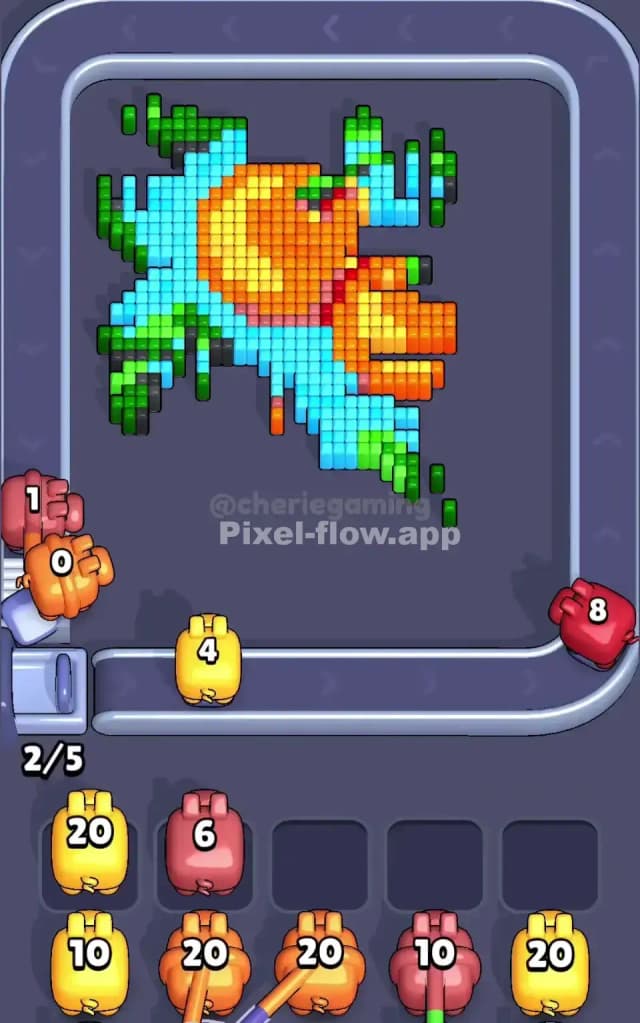
The final phase is satisfying but requires discipline. You should be left with the core "shadows" of the image.
- Dark Grey/Black Stems: These are tiny, single-pixel lines connecting the leaves to the fruit. They are easy to miss. If you have a Black/Dark Grey pig, do not deploy it until you clearly see those stem lines fully exposed.
- The Deep Red Blush: Now is the time for those Red pigs you saved. The final layer of the peaches is usually that deep red/pink shading on the bottom right of each fruit.
- The Stray Blue Pixel: Check the very corners of the board (top right, bottom left). Often, a single light blue pixel hides there, forgotten. Don't let a full Blue pig jam your last slot because of one pixel.
Clean up the dark stems last. They are the deepest layer and usually the final barrier to 100% completion.