Pixel Flow Level 357 Solution | Pixel Flow 357 Walkthrough
How to beat Pixel Flow Level 357: Video solution & walkthrough. The fastest way to pass Pixel Flow 357.
Is this the wrong level layout?🤔
Pixel Flow randomizes levels for different players. Don't worry, just upload a screenshot of your board, and our AI will find the correct video instantly.
Pixel Flow Level 357 Walkthrough
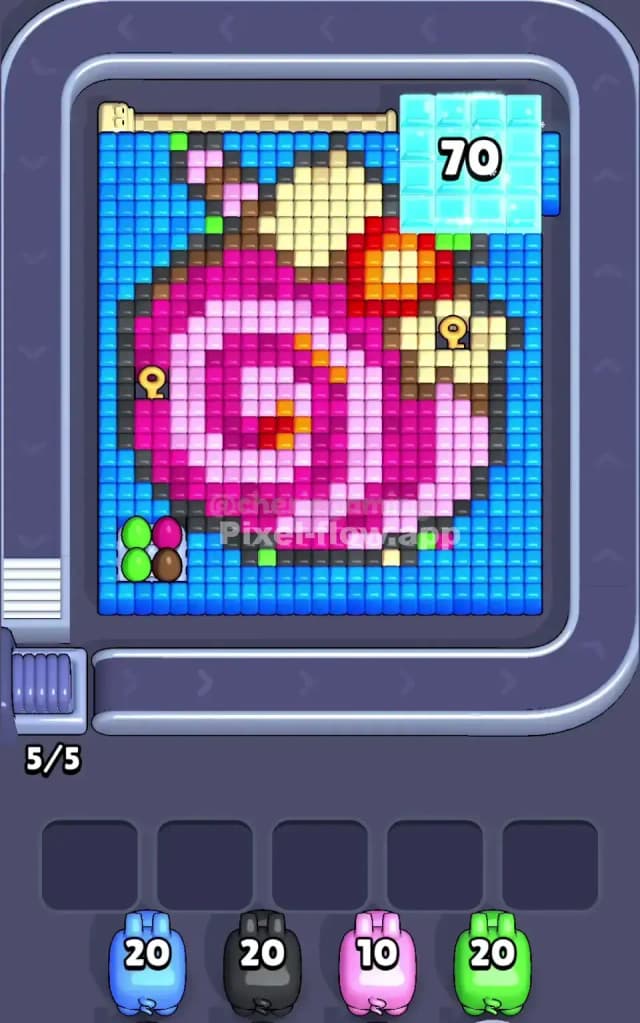
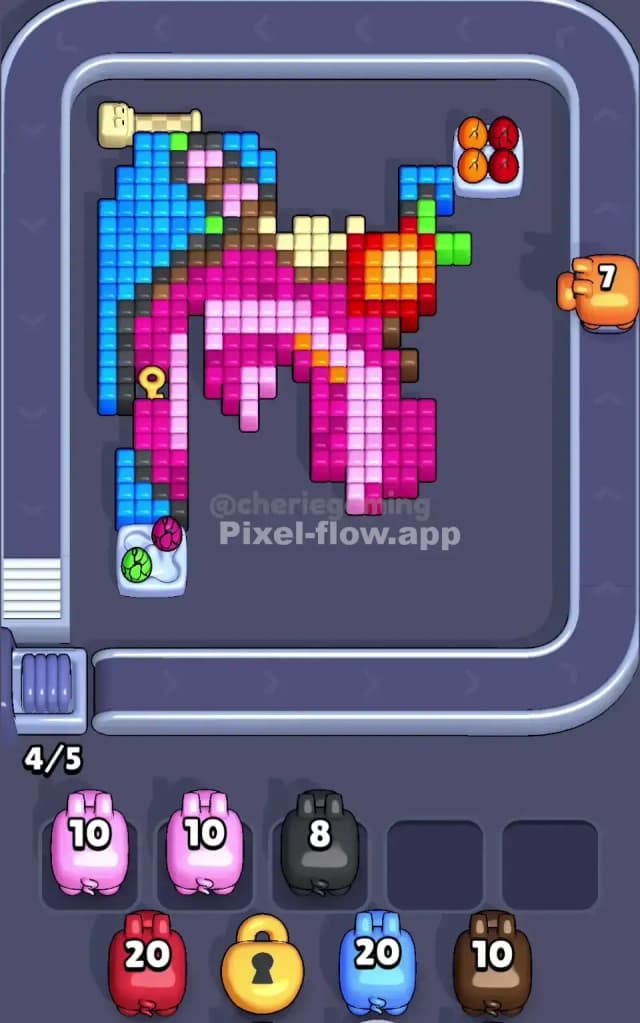
This level features a large, vibrant pink snail shell adorned with a tropical flower, all floating in a massive pool of blue water. The sheer volume of the background color makes this a stamina test, and the specific locking mechanics placed on the shell itself can ruin your run if you aren't paying attention. Because of the high-health ice block in the corner and the key-lock mechanic embedded in the main figure, Pixel Flow Level 357 is considered a very hard level. You cannot just spam colors here; you have to surgically remove the locks while managing a flood of blue pixels.
Pixel Flow Level 357 Overview
The artwork in Pixel Flow Level 357 depicts a stylized, spiral sea snail. The shell is the main character here, dominated by a hot pink and magenta swirl that twists into a lighter pink center. It’s not just a shell, though. Pinned to the right side of the shell is a yellow and orange tropical flower with green leaves, giving the whole scene a "summer vacation" vibe.
Surrounding this entire centerpiece is a deep, solid wall of blue water pixels. This blue layer isn't just background noise; it is a physical barrier. It wraps around the shell completely, filling the corners and acting as a shield for the inner colors.
The layout is heavily asymmetric. The left side is mostly the smooth curve of the pink shell and the blue water. The right side is jagged and complex because of the flower petals and the massive "70" HP ice block sitting in the top right corner. This ice block is a major nuisance. It doesn't match any specific color logic; it’s just a damage sponge that demands 70 hits to shatter. Additionally, you will notice small key icons stamped directly onto specific blocks—one on the pink shell and one on the yellow flower. These are your priority targets. Until you hit those specific pixel blocks, other parts of the level will remain locked and indestructible.
Step by step solution walkthrough for Pixel Flow Level 357
First Color Zone to Erase in Pixel Flow Level 357
You must start with Blue. There is no other valid opening move. The blue pixels form a thick crust around the entire snail shell. If you look at the board state, almost every accessible "surface" pixel is blue.
Using any other color pig early is a mistake. If you deploy a Green or Pink pig right at the start, they will likely have zero valid targets because the blue wall is blocking the line of sight to the shell and flower. Those pigs will drop into your waiting slots and clog up your board.
Focus entirely on clearing the perimeter. Prioritize the blue blocks on the right side near the ice block and the flower. Why? Because the flower contains one of the keys you need. The sooner you strip away the blue water on the right, the sooner you can start targeting the yellow petals to unlock the rest of the board. Don't worry about the 70 HP ice block yet; just let your blue pigs chip away at the water underneath and around it naturally.
How to pass Pixel Flow Level 357 without power ups or boosters
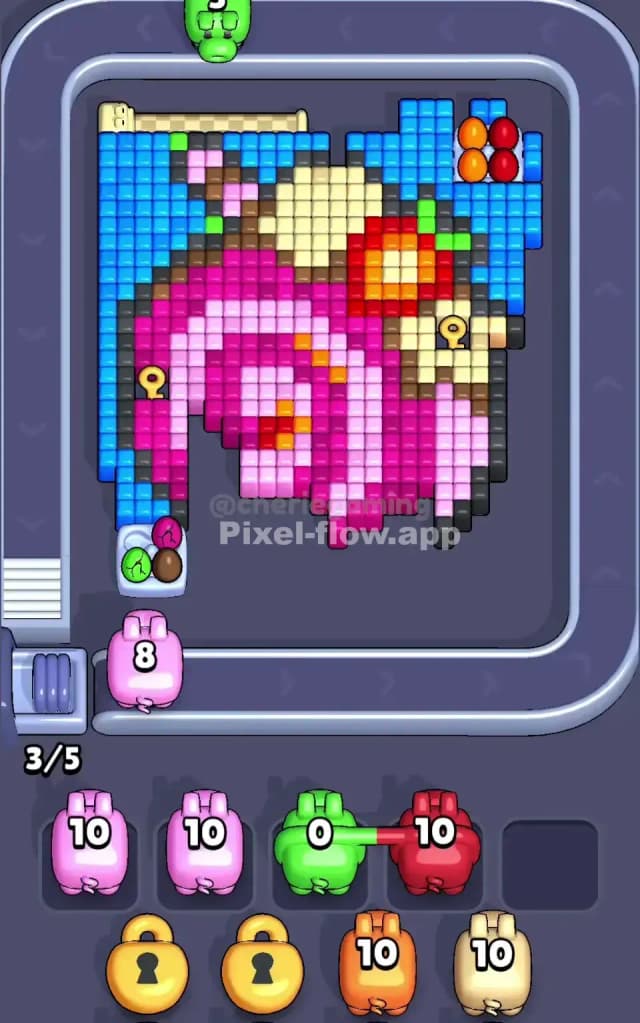
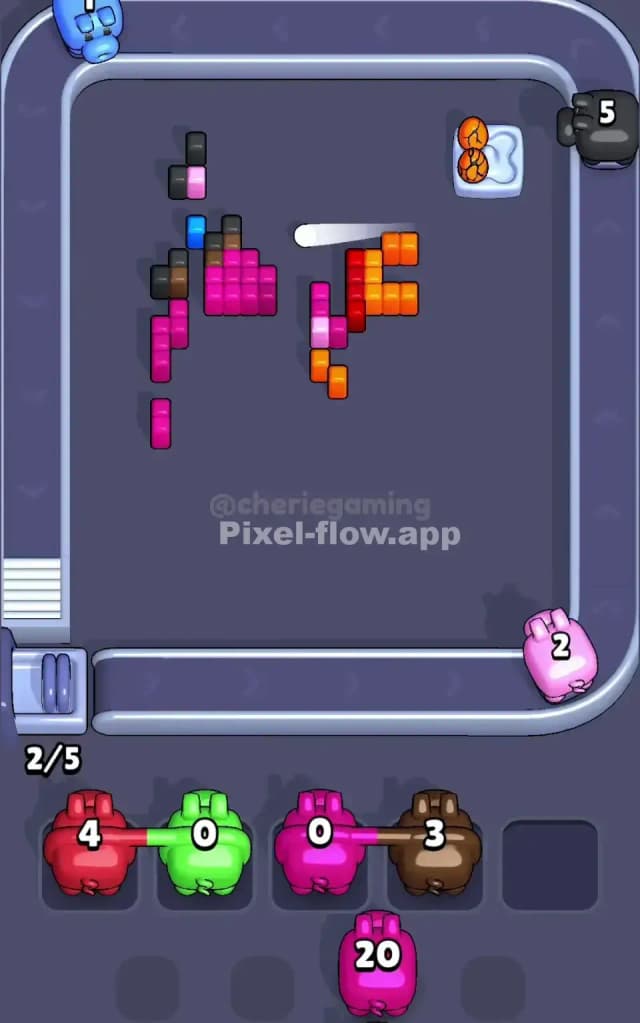
Once the blue water has receded, the level enters a dangerous mid-game phase. The board will look half-destroyed, with the pink snail shell now fully exposed but potentially "locked" in places. You are now staring at a large Pink mass and a Yellow/Orange flower cluster.
Here is the logic path to survive without items:
- Hunt the Keys: You will see a key icon on a specific Yellow block in the flower and a Pink block on the left side of the shell. You must prioritize pigs that match these colors immediately. Do not clear random black outline blocks yet. If you have a Yellow pig, send it down instantly to hit the flower key. Hitting that key removes the padlocks from other yellow/orange sections, allowing you to clear the flower.
- The Pink Spiral: The pink shell is huge. It has multiple shades (Magenta and Light Pink). The key is usually on the outer magenta layer. Focus your fire there. If you ignore the pink key, you will end up with a board full of pink blocks that refuse to break, and your slots will fill up with useless pink pigs.
- The Ice Block Grind: By now, that "70" block in the top right should be partially damaged. Do not waste high-value pigs (like the rare Black or Red ones) trying to break it unless they have no other targets. Let the abundant colors (like excess Blue or Pink) do the heavy lifting on this block. It’s just a wall of HP. It doesn't require strategy, just ammo.
- The Basket: In the bottom left corner, there is a small basket of eggs. This acts like a mini-bomb. When you clear the blocks adjacent to it (usually the blue water or the bottom of the shell), it triggers and helps clear nearby pixels. Don't obsess over it, but if you can trigger it early, it saves you ammo.
Last Details You Clean Up in Pixel Flow Level 357
As you approach the end, the board usually leaves you with the "bones" of the drawing. You will likely be left with the Black/Dark Brown outline of the shell and the deep Red/Orange center of the flower.
These colors are tricky because they are scattered. The black outline isn't a solid block; it's a thin, winding snake that wraps around the pink spiral. This means a Black pig might only find 2 or 3 targets at a time before having to wait for the conveyor belt to move the shell into a better position. Be patient. Do not deploy a Black pig unless you clearly see 5+ black blocks exposed.
Finally, the center of the shell often hides a few stray pixels of Light Pink or White that were buried under the spiral. Double-check the very center of the swirl. It’s easy to miss a single voxel hiding behind the darker outer layers. Once the black outline and the flower heart are gone, the level is yours.