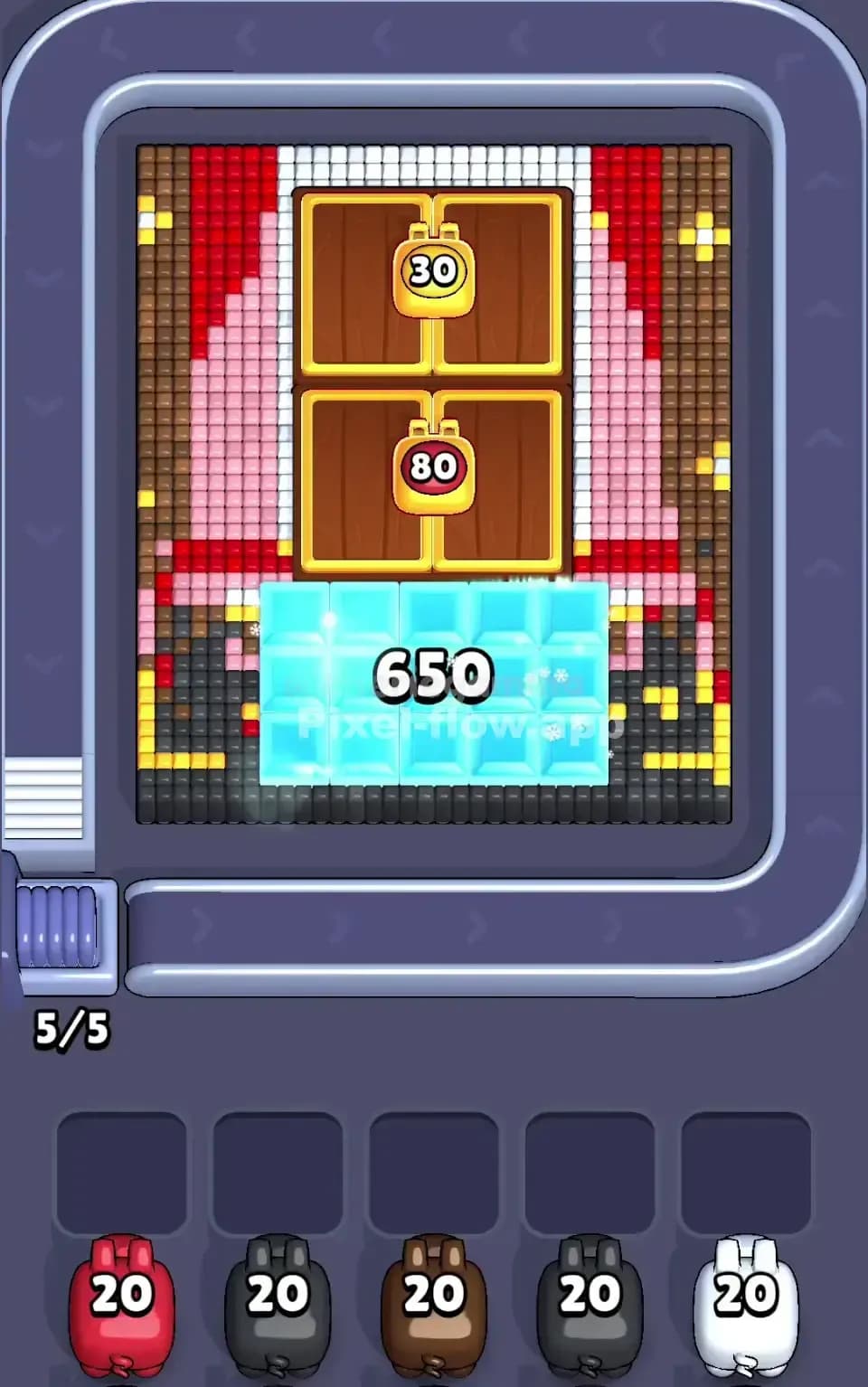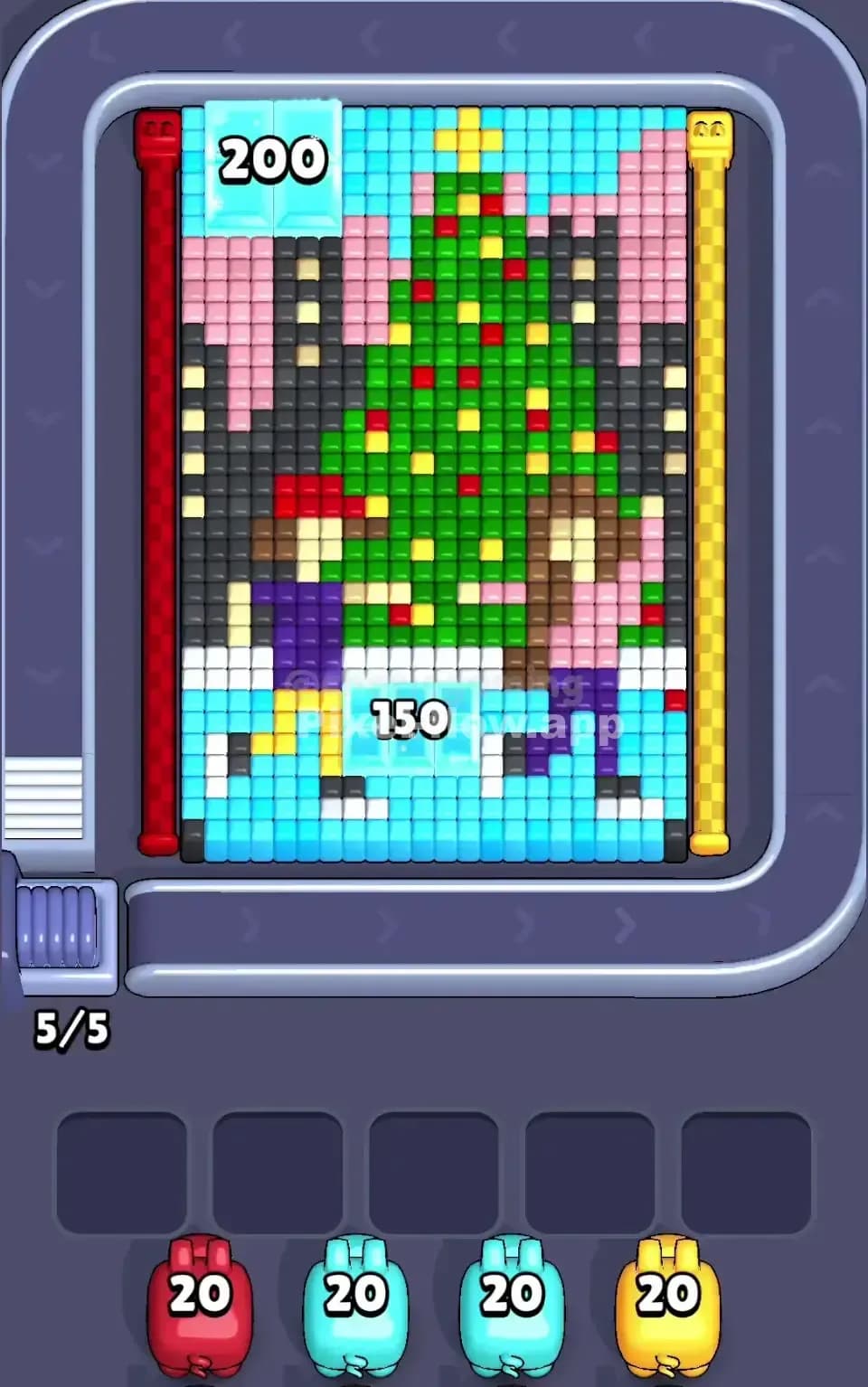
Pixel Flow Level 364 Solution | Pixel Flow 364 Walkthrough
How to beat Pixel Flow Level 364: Video solution & walkthrough. The fastest way to pass Pixel Flow 364.
Is this the wrong level layout?🤔
Pixel Flow randomizes levels for different players. Don't worry, just upload a screenshot of your board, and our AI will find the correct video instantly.

Pixel Flow Level 364 Walkthrough
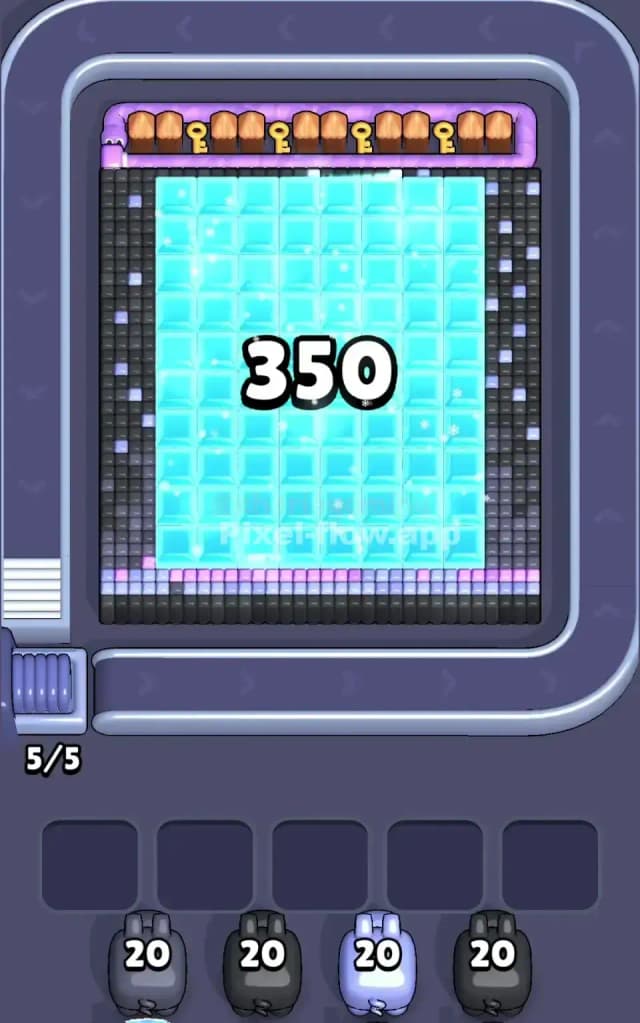
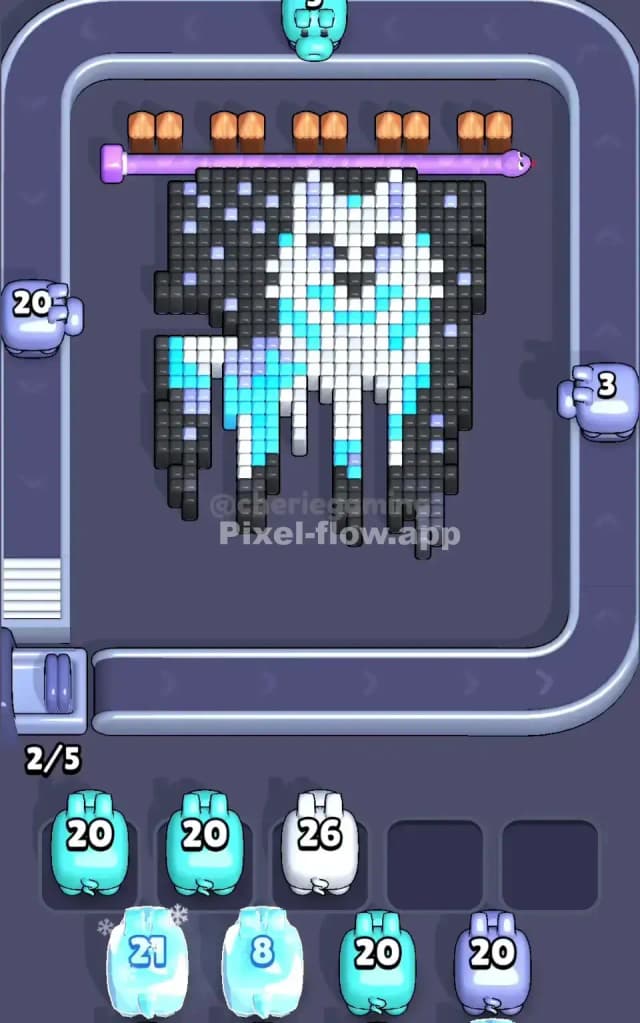
This level is a massive endurance test disguised as a simple block of ice. At first glance, Pixel Flow Level 364 looks like a giant, solid rectangle of light blue "ice" cubes, but beneath that frozen surface lies a complex pixel art of a white wolf or husky.
The rules are standard but tight: you have five waiting slots at the bottom. Color-coded pigs arrive on the conveyor belt. You must tap a pig to send it to the board where it shoots cubes of its matching color. If a pig has ammo left but nothing to shoot, it jams one of your slots. If all slots jam, game over.
Because you start with a sheer wall of blue that covers almost everything else, mistake tolerance is low. You have to chip away the ice without clogging your inventory with black or white pigs you can't use yet. Is it hard? Yes. This is a very hard level because the pacing forces you to memorize the hidden layers before you can see them.
Pixel Flow Level 364 Overview
The artwork here is fantastic but completely obscured at the start. You are essentially sculpting a White Wolf out of a glacier.
- The Ice Block: The top layer is a massive, nearly uniform sheet of light cyan/blue cubes. It covers the center 80% of the board.
- The Hidden Wolf: As you peel back the cyan, you reveal a white wolf with bright blue eyes and accents, standing against a dark night sky background.
- The Background: The wolf is flanked by vertical strips of black and dark grey pixels, representing a starry night or a dark forest. These are visible on the far left and right edges immediately, but the bulk of them are hidden behind the ice.
The asymmetry here is subtle. The wolf's tail and body create a slightly heavier mass of white/blue on the left side, while the right side is more vertical. The top row is protected by a locked gate mechanism (the wooden keyholes), meaning you cannot clear the very top until you trigger specific conditions, usually clearing the rows directly below or hitting a specific trigger block.
Step by step solution walkthrough for Pixel Flow Level 364
First Color Zone to Erase in Pixel Flow Level 364
Target the Cyan (Light Blue) Ice Sheet immediately.
Narratively, you are melting the glacier to free the wolf. Logically, this is the only move that makes sense. The board is flooded with cyan blocks.
- Ignore the edges: Do not try to be clever and sneak a black pig onto the dark side columns yet. Those columns are thin and won't consume a full ammo clip (20+ shots). If you use a black pig now, it will likely have 10 shots left and get stuck in your slot.
- Focus Fire: Grab every light blue/cyan pig that comes down the belt. Since the center block is huge and solid, a single cyan pig can unload its entire ammo reserve in seconds. This keeps your slots empty and the conveyor belt moving.
How to pass Pixel Flow Level 364 without power ups or boosters
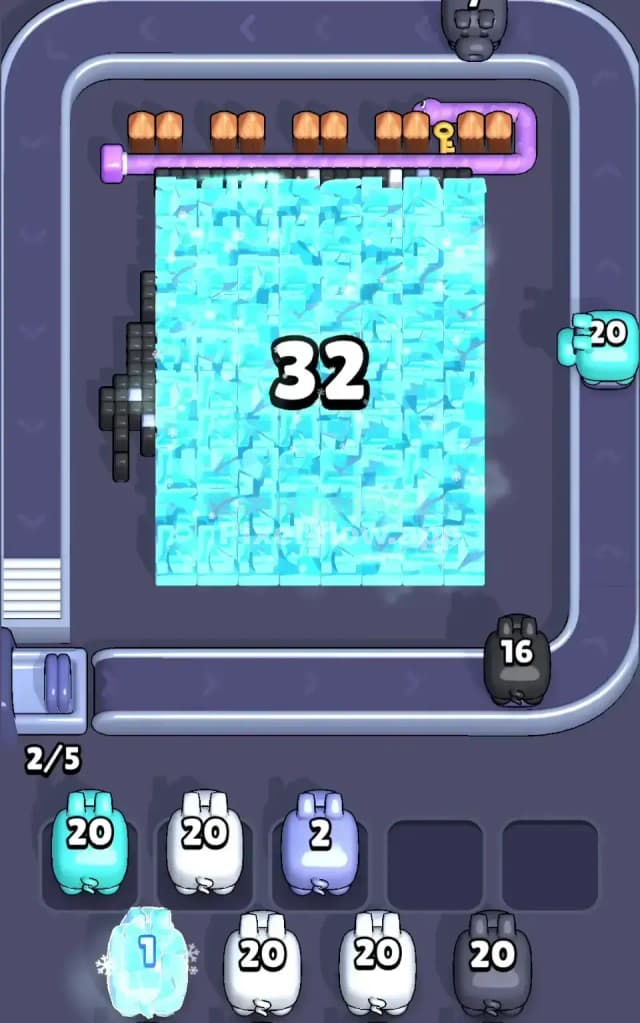
Once the "ice" layer is about 50% gone, the danger spikes. You will see a messy mix of the wolf's white fur, some remaining ice chunks, and the dark background.
- The "Stuck Pig" Trap: At this mid-stage, you will get White and Black pigs. Be extremely careful. The White zones (the wolf's face and legs) are vertical and narrow. A White pig with 26 ammo might clear one leg and then have nowhere to go because the other leg is still blocked by a piece of cyan ice.
- Priority Shift: Stop clearing Cyan blindly. Look for the bottom of the wolf's paws. You need to clear the Cyan blocks that are "capping" the white columns.
- The Black Background: The black pixels on the sides are your safety valve. If your slots are filling up with useless white pigs, look for a black pig. The side columns of the night sky are usually tall enough to drain a black pig's ammo. Use them to clear space in your inventory, not necessarily to progress the main picture.
- The Lock Mechanism: Keep an eye on the top row with the keyholes. These often clear automatically once the blocks touching them are removed. Don't waste pigs trying to shoot at the locks; shoot the blocks supporting or covering the mechanism.
Last Details You Clean Up in Pixel Flow Level 364
The end game is usually the Wolf's face and the scattered "stars" in the background.
- The Eyes: The wolf has distinct blue eyes (or markings) that are often a different shade than the main ice. Don't confuse the two blues. You might have a specific "darker blue" pig left over—save it for the eyes.
- The Dregs: You will likely end up with single voxel columns of black or dark grey on the far edges. This is annoying because pigs often have 20 ammo, but you only have 4 blocks left.
- Wait it out: At this point, do not pull a pig off the belt unless you see an exact match. Let them cycle. It’s better to wait 10 seconds for the perfect small-ammo pig than to jam your last slot with a heavy hitter you can't finish. The final move is usually clearing the last white pixels of the wolf's ears at the very top.