Pixel Flow Level 363 Solution Walkthrough | Pixel Flow 363
How to solve Pixel Flow level 363? Get instant solution for Pixel Flow 363 with our step by step solution & video walkthrough.


Pixel Flow Level 363 Overview
The Starting Board and Color Palette
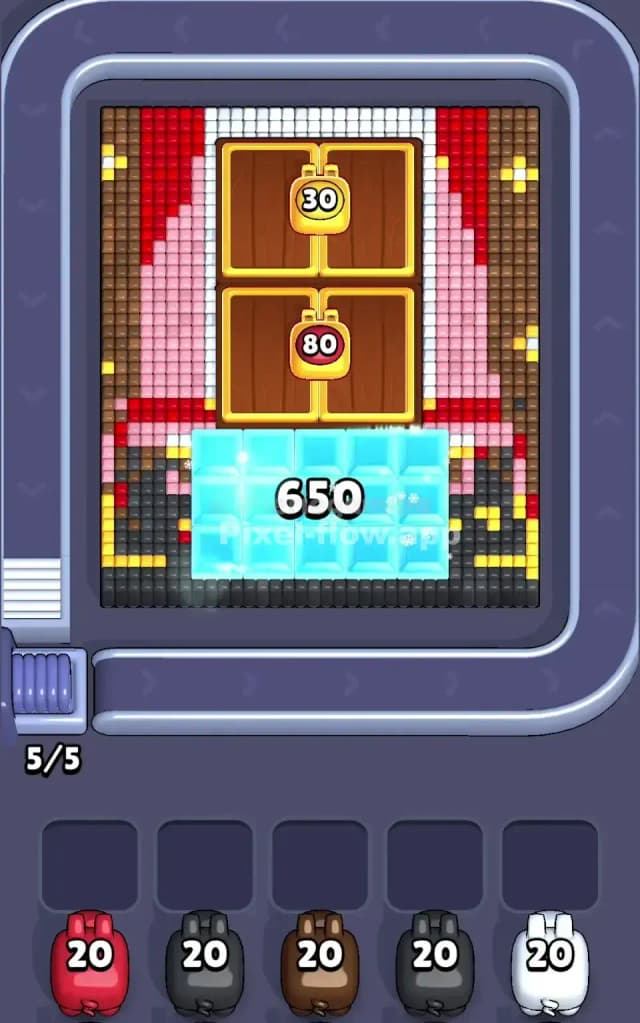
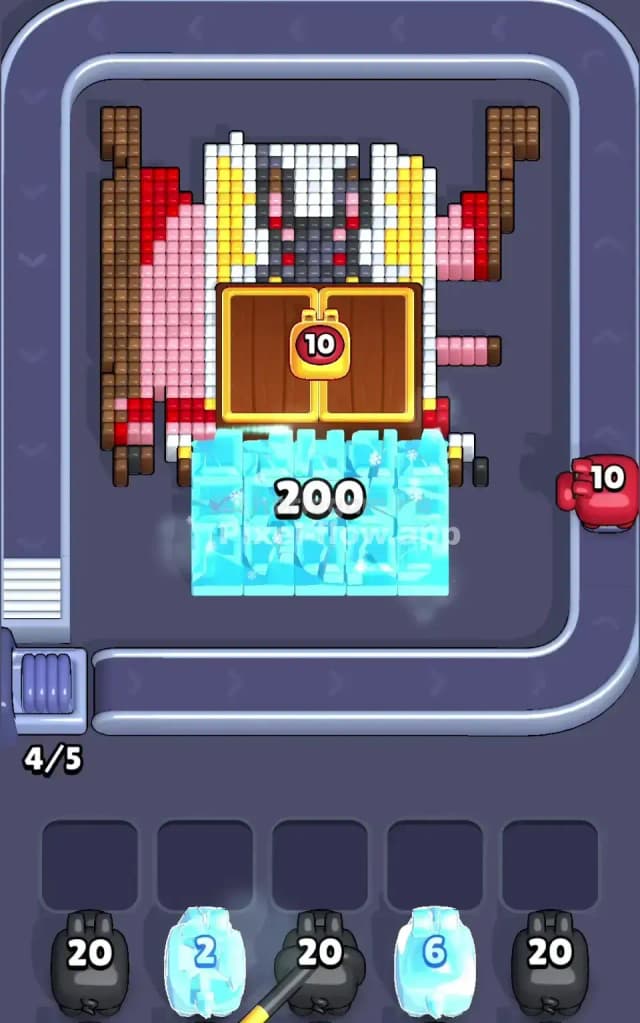
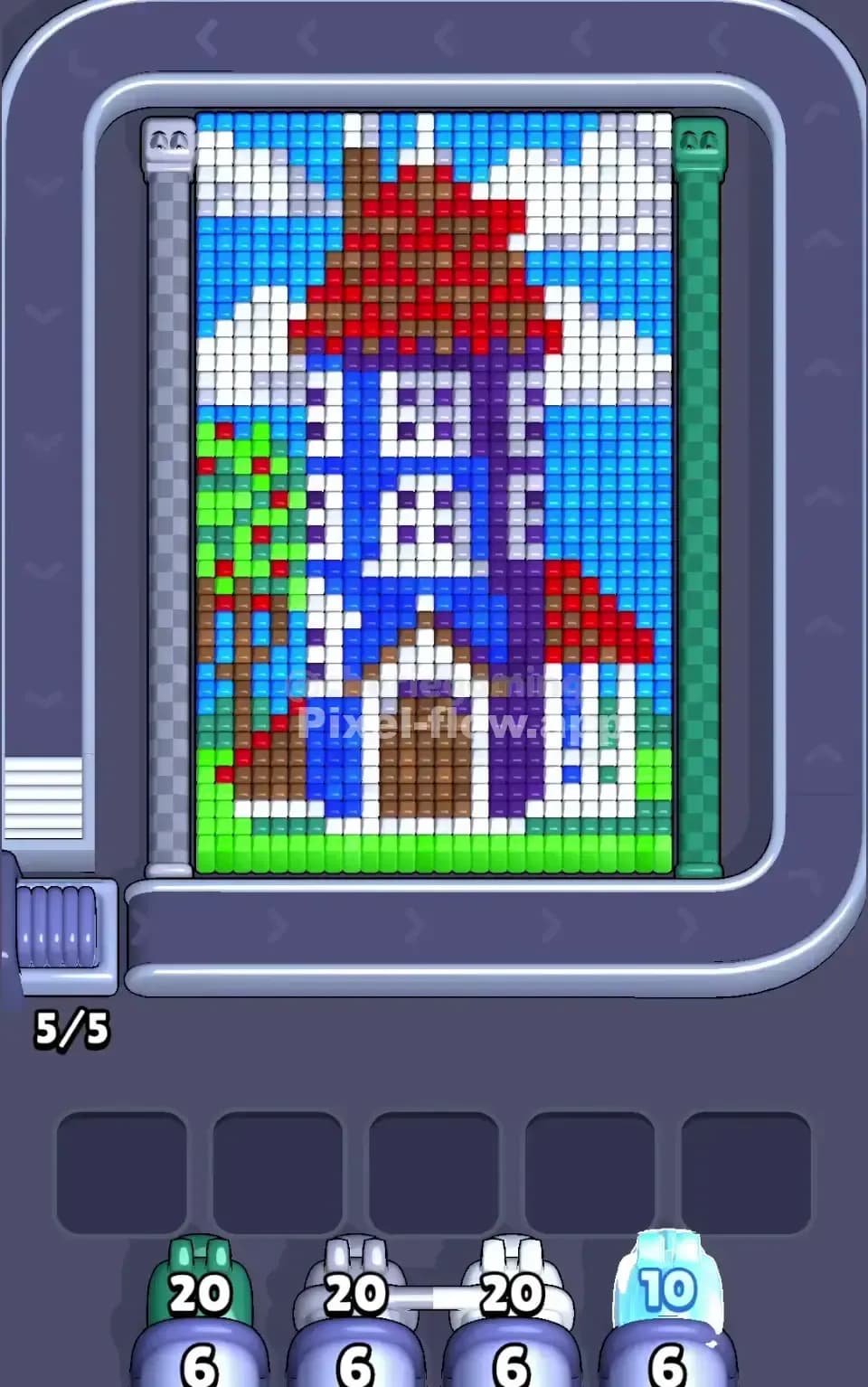
Pixel Flow Level 363 presents a charming pixel-art house nestled against a landscape backdrop. You're looking at a complex, multi-layered composition dominated by cyan, blue, white, red, green, and brown voxel cubes. The house itself—with its peaked red roof, blue walls, brown door, and white window details—sits in the center and middle layers of the puzzle. Behind and around it, you'll find expansive cyan sky cubes filling much of the upper and outer regions, with bright green grass blocks forming a foundation at the bottom. The white cubes create both structural detail around the building and scattered accent patches throughout. What makes Pixel Flow Level 363 particularly demanding is that these colors are densely packed across multiple depth layers, meaning you can't simply blast through one color and call it a day.
Understanding the Win Condition
To clear Pixel Flow Level 363, you must eliminate every single voxel cube on the board by matching them with the correctly colored pigs. The catch? Your incoming pigs have fixed ammo counts—you can see green (20), white (20), white (20), and cyan (10) waiting in the queue, each with a base pool of 6 ammo-spending moves. Every cube you destroy consumes exactly one ammo from the shooting pig. The level is entirely deterministic: pig order never changes, ammo values are set in stone, and your only strategic choice is when to activate each pig. Win by exposing and clearing every layer until the board is empty; lose if you jam all five waiting slots with stuck pigs that can't spend their remaining ammo.
Why Pixel Flow Level 363 Feels So Tricky
The Cyan Ceiling Problem
Here's where Pixel Flow Level 363 punches you in the gut: cyan dominates the upper third of the board, and the cyan pig arrives with only 10 ammo. That's nowhere near enough to clear all the sky cubes in one go. If you fire cyan too early, you'll partially expose the red roof, white details, and blue walls beneath—but you won't finish the job. You'll have a cyan pig with 0 ammo stuck in your waiting buffer, taking up a precious slot while blue, white, and other colors are still needed. The real danger is that cyan cubes are scattered across different depths, so you can't even predict which ones will fall into range when you shoot. This bottleneck is the primary reason Pixel Flow Level 363 demands careful sequencing rather than a "shoot everything at once" approach.
Awkward Color Patches and Hidden Depths
The white cubes are deceptively tricky in Pixel Flow Level 363. Some white blocks form the window frames and door trim of the house—they're deep within the structure. Others fill gaps between the house and the surrounding sky or grass. If you activate white pigs too early, you'll demolish the surface-level white accents but leave interior white blocks untouched. When those white pigs run dry, you're stuck with a pig occupying a waiting slot and white cubes still on the board. The green grass at the bottom seems straightforward—it's a contiguous band of color—but you'll find that blue and brown blocks are layered on top of it in places, particularly around the door and window areas. Firing green before clearing those overlying colors is wasteful and risky. Finally, the brown door is a tiny target surrounded by other colors; if your brown pig arrives when other pigs are still active, you might overshoot or struggle to line up all the brown cubes efficiently.
The Emotional Gut-Check Moment
I'll be honest: my first few attempts at Pixel Flow Level 363 felt like I was throwing spaghetti at the wall. I'd fire green, watch it clear some grass, then immediately panic as a white pig landed with no targets and I'd use up two waiting slots in rapid succession. The real frustration hit when I realized that cyan and red are so visually dominant that they obscure what you actually need to clear first. The level "clicked" for me when I started counting ammo and working backward from the end state—instead of thinking "I'll shoot cyan next," I asked myself, "What color do I absolutely need to remove before cyan becomes useful?" That mindset shift transformed Pixel Flow Level 363 from a chaos puzzle into a solvable sequencing challenge.
Step-by-Step Strategy to Clear Pixel Flow Level 363
Opening: The First Three Pigs
Start by firing the green pig (20 ammo). This might seem backward—shouldn't you tackle the massive cyan wall first?—but green is your safety valve. The grass band at the bottom is relatively cohesive, and clearing it removes a foundational layer without risk of jamming. Green will eliminate the bottom-most cubes and expose any brown or blue blocks that were hiding beneath. You'll typically spend 8–12 of the 20 green ammo, leaving some cubes untouched for now. Crucially, this keeps your waiting slots open and gives you breathing room.
Next, activate the first white pig (20 ammo). At this stage, white cubes are more exposed: the window frames and door trim are now visible because green has cleared the surrounding grass noise. Prioritize the white blocks that are clustered around the house structure. You should expect to spend roughly 10–14 white ammo here. The goal isn't to eliminate every white cube—it's to remove enough white that the house's internal geometry becomes clearer for later stages.
Fire the second white pig (20 ammo) immediately after. With the first white pig's work done, the second white pig will tackle the scattered white cubes in the sky region and any remaining architectural details. By the time both white pigs are exhausted, you'll have a much clearer view of the red roof, blue walls, and brown door. You'll have used roughly 20–28 ammo total across both white pigs, which should map nicely to the bulk of the white cube population.
Mid-Game: Balancing Red, Blue, and Strategic Placement
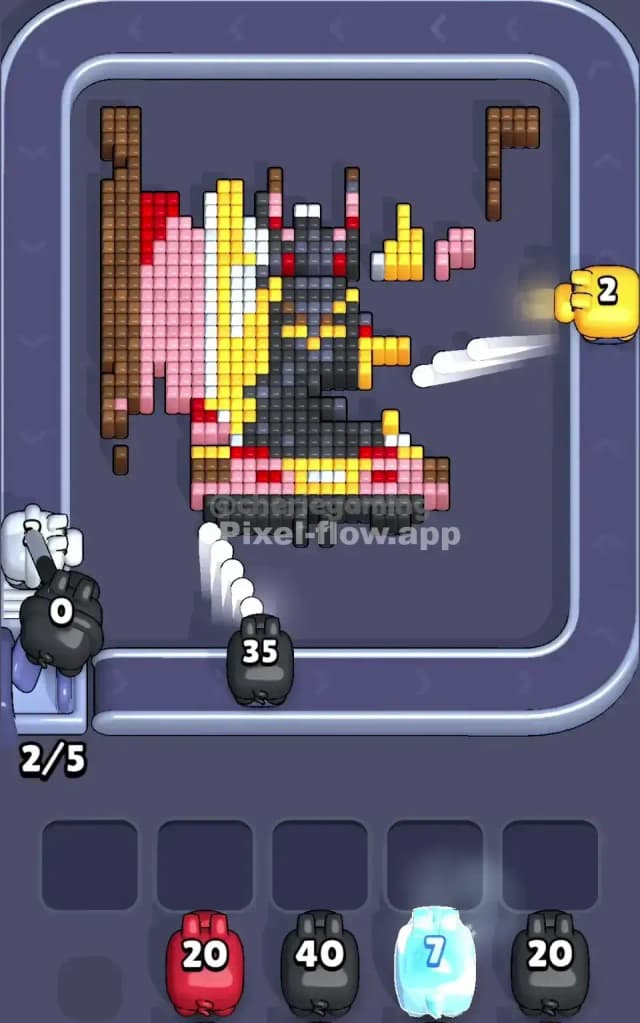
Now the board is starting to look like a genuine puzzle. You should have 2–3 waiting slots still free at this stage. Fire the cyan pig (10 ammo) next. It's not going to clear all cyan cubes—not even close—but it will make a significant dent in the sky region and begin exposing the upper portions of the red roof and the blue walls. The 10 ammo will carve out roughly a third of the cyan population, leaving many cyan blocks still standing. This is intentional: you're using cyan to reveal the overlying colors without fully committing.
Here's where you pause and assess. Count the red cubes visible on the board—they form the roof, and they're now more exposed thanks to the partial cyan clearance. You should have a red pig incoming in the queue, but it might not have arrived yet in some configurations. If red is queued, prepare to fire it next to demolish the roof structure. Red should require roughly 8–12 ammo; the roof is visually large but not impossibly deep.
The blue wall is the tricky middle child of Pixel Flow Level 363. Blue cubes form the house's main body and are interspersed with white details. By the time you've cleared cyan and red, the blue structure is exposed and actionable. However, you might not have a blue pig queued in the early rounds. If that's the case, park your next incoming pig (likely another cyan variant or a white pig) in a waiting slot rather than firing it into a target-less void. Never let a pig shoot when there are no matching cubes—that's the direct path to a jammed buffer and a failed level.
End-Game: The Final Colors and Buffer Management
In the closing stages of Pixel Flow Level 363, you're typically left with blue, brown, and any remaining cyan and green cubes. Fire your incoming pigs strategically:
- Blue pig: Target the main house walls and any blue cubes still lingering in the sky. Blue should have sufficient ammo to finish almost all remaining blue cubes in one activation.
- Brown pig: The door is small but significant. One brown pig should obliterate the entire door and any brown trim in the puzzle.
- Remaining colors: If you still have green, white, or cyan ammo left in the queue, activate them only when their target colors are visible and plentiful. Do not waste a pig by letting it shoot empty space.
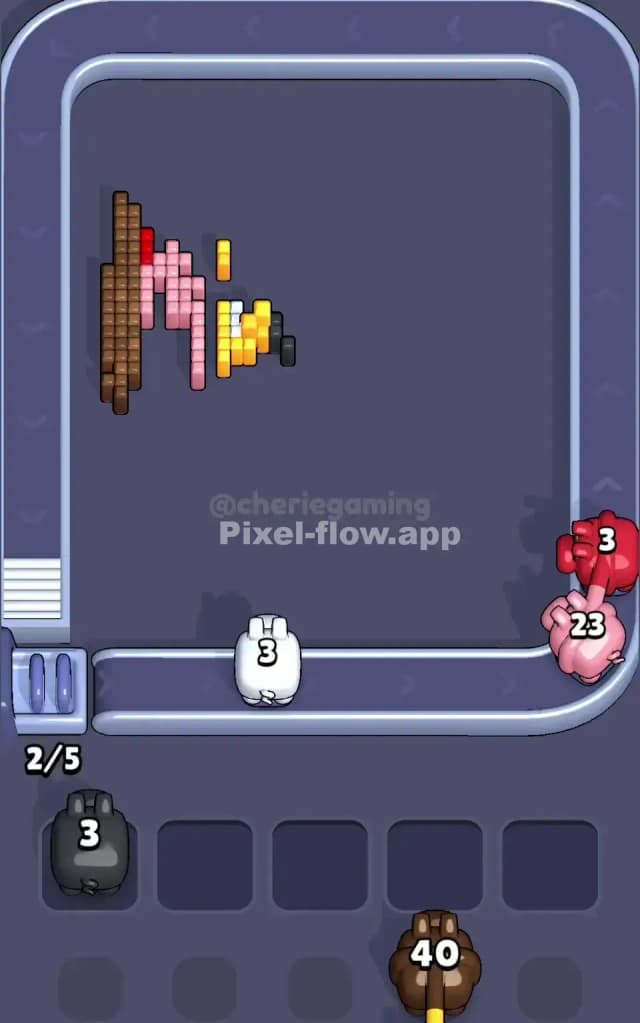
By the final stretch of Pixel Flow Level 363, your waiting slots should be nearly empty or filling with pigs that have just arrived and will be fired in the next move. The key is to finish with zero pigs stuck in the buffer—every pig should either be actively shooting or be fired in the immediate next turn. Never allow a pig to sit idle with ammo remaining and no matching cubes on the board.
The Logic Behind This Pixel Flow Level 363 Plan
Why Sequencing Beats Randomness
This strategy for Pixel Flow Level 363 works because it respects the immutable structure of the game: pig order is fixed, ammo is finite, and the waiting buffer holds only five slots. By firing green first, you're deliberately removing a foundational layer that would otherwise clutter your decision-making later. By chaining both white pigs consecutively, you're exploiting the fact that white cubes become increasingly exposed as other colors fall away. By holding cyan until mid-game, you're ensuring that cyan's limited 10 ammo does real work revealing the colors beneath rather than blindly bombing an opaque sky.
This approach transforms Pixel Flow Level 363 from a reaction-based puzzle into a proactive plan. You're not responding to which pigs arrive; you're controlling when you deploy them to maximize their impact relative to the board state. It's the difference between hoping and knowing—and in a level like Pixel Flow Level 363, knowing wins.
Staying Calm and Counting Ahead
The emotional core of mastering Pixel Flow Level 363 is learning to pause and count. Before you fire each pig, glance at the waiting slots and the queue. How many empty slots do you have? If three are free, you can afford to fire a pig that leaves a few cubes uncleaned. If only one slot is free, you must fire something that fully exhausts its target, or you risk jamming. Similarly, count visible cubes of each color as you progress through Pixel Flow Level 363. If you see 15 cyan cubes and your cyan pig has 10 ammo, you know some cyan will remain—plan accordingly by sequencing a color that does have enough ammo to finish its targets.
This patient, methodical mindset transforms Pixel Flow Level 363 from a frustrating gauntlet into a satisfying sequence of correct decisions. You'll win not by reflexes but by foresight.