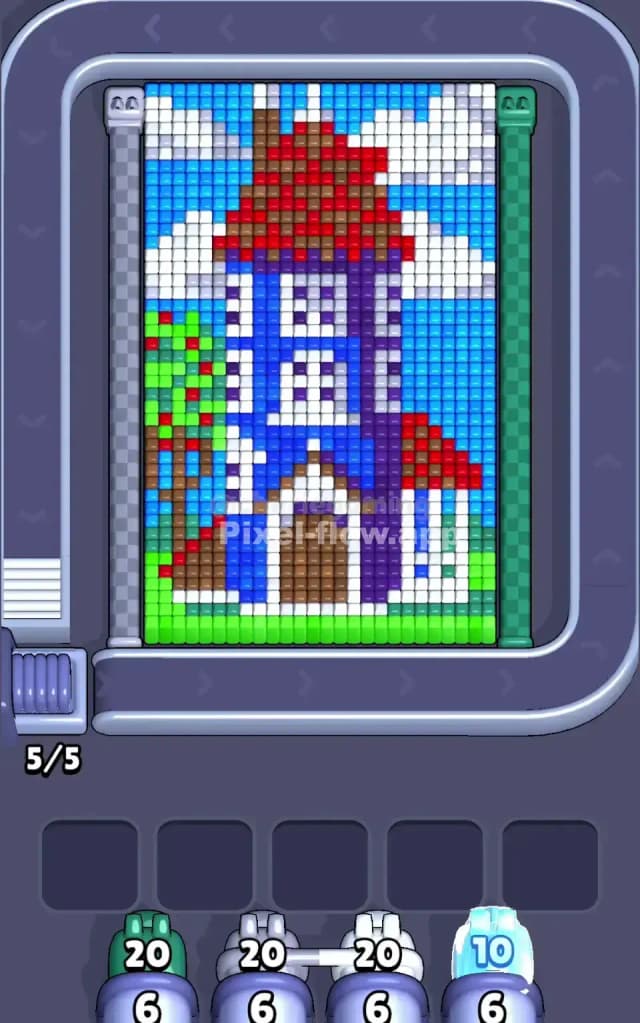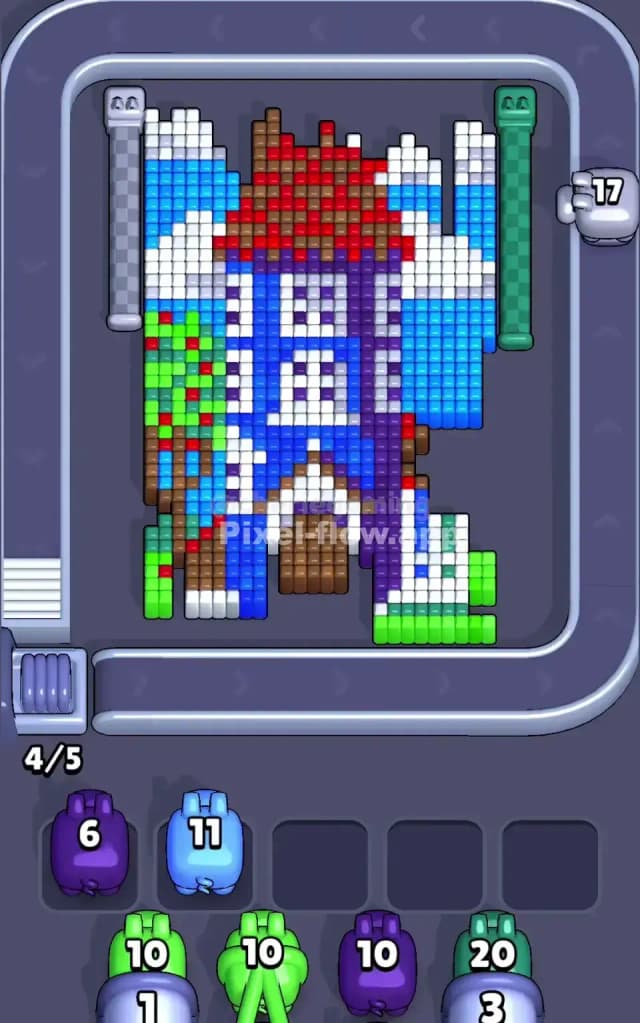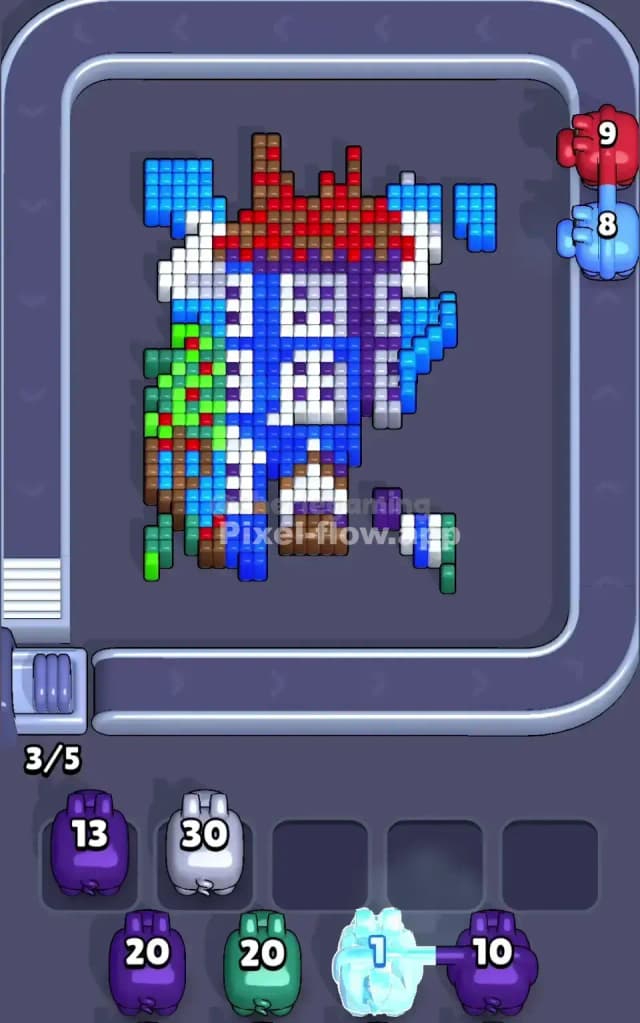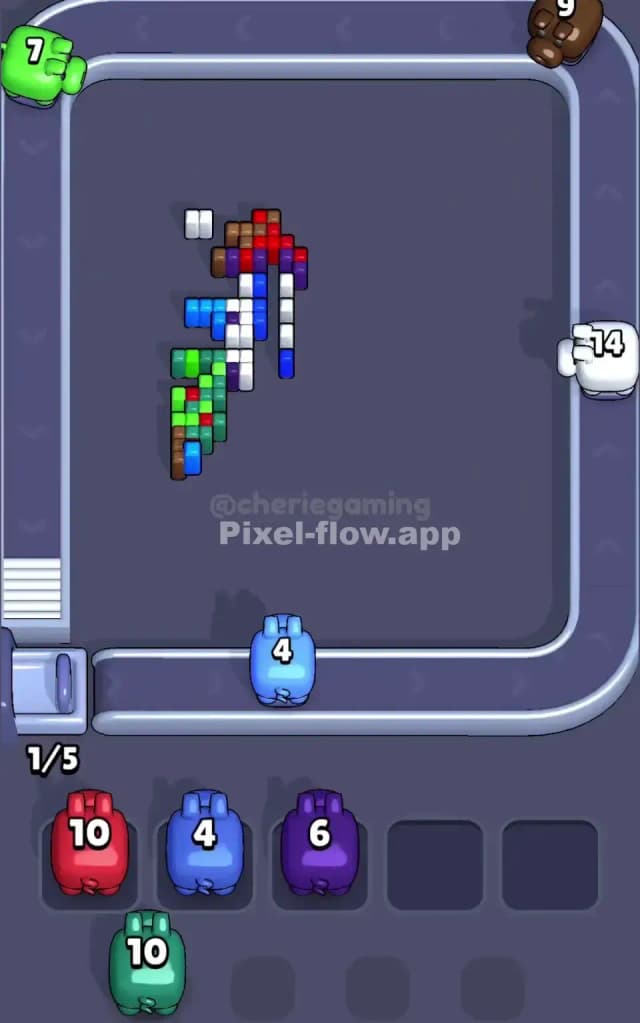
Pixel Flow Level 362 Solution Walkthrough | Pixel Flow 362

How to solve Pixel Flow level 362? Get instant solution for Pixel Flow 362 with our step by step solution & video walkthrough.

Share Pixel Flow Level 362 Guide:
Pixel Flow Level 362 Gameplay
Pixel Flow Level 362 Solution 1
Pixel Flow Level 362 Solution 2
Pixel Flow Level 362 Solution 3

Pixel Flow Level 362 Overview

The Board Setup and Visual Challenge

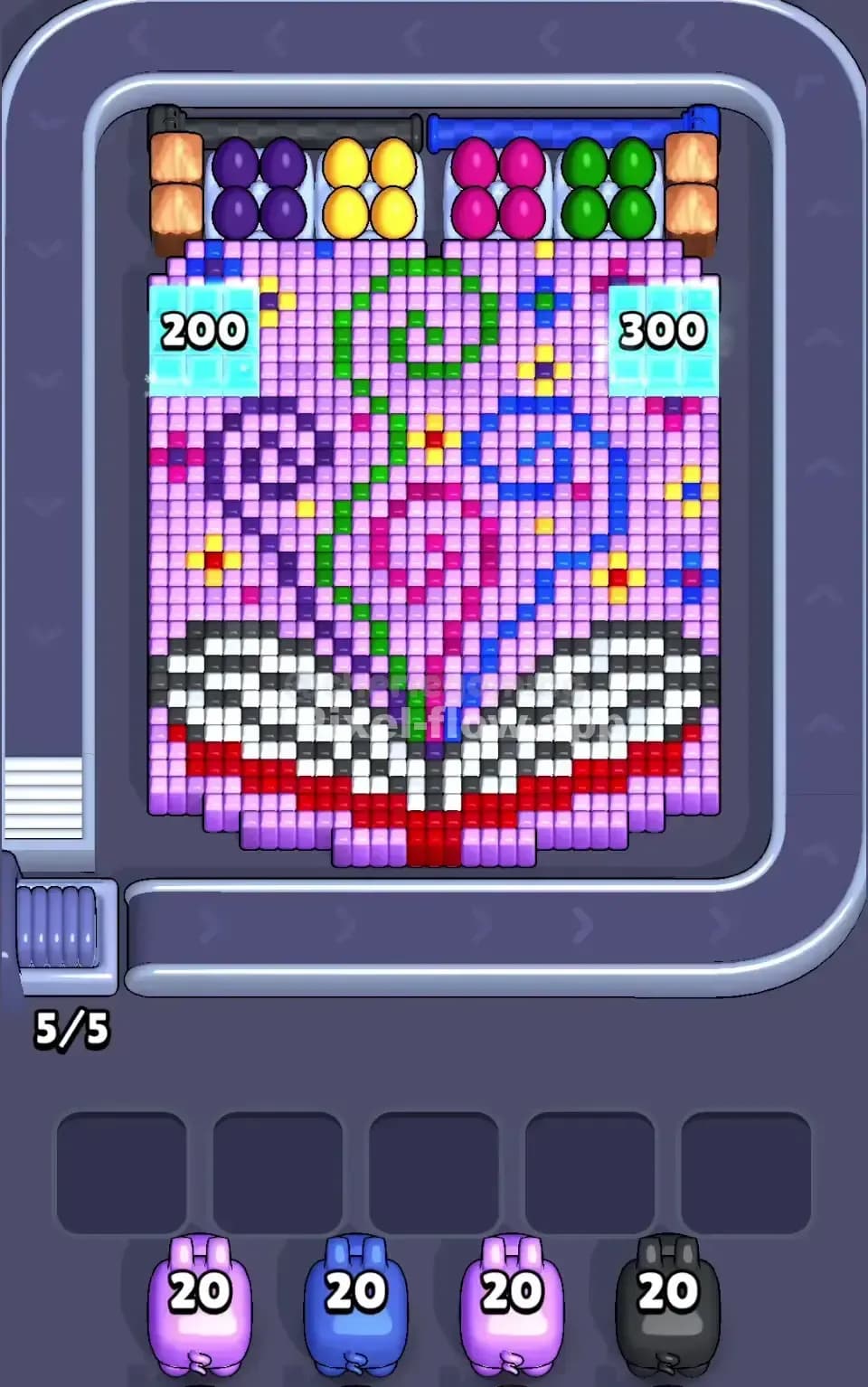
Pixel Flow Level 362 presents a striking pixel art design featuring a stylized face or character surrounded by intricate color patterns. The board is dominated by pink and light cyan cubes forming the main background layer, with a rich mosaic of purple, blue, magenta, green, yellow, and white voxels creating depth and detail. At the bottom, you'll notice a red section that represents the deepest layer, partially hidden beneath the white and black outline cubes that form facial features. The top of the board displays a conveyor system with six color-coded pigs: purple, blue, magenta, green, and additional reserve pigs, each carrying a fixed ammo count of 20 shots. This layered structure means you can't simply blast away randomly—you need to expose each color in the right sequence to reach the foundation and clear the entire board.

Understanding the Win Condition

Your goal in Pixel Flow Level 362 is straightforward: eliminate every single voxel cube on the board by strategically ordering the pigs and spending their ammo precisely. Since each pig shoots only its matching color and consumes one ammo per cube destroyed, you're working with a fixed resource pool. The moment all waiting slots fill with stuck pigs (those without valid targets), the level fails—so slot management is absolutely critical. Every action you take in Pixel Flow 362 must account for future pig sequences and available targets, making this a puzzle of planning and foresight rather than reflexive button mashing.

Why Pixel Flow Level 362 Feels So Tricky

The Ammo-to-Target Mismatch

The biggest threat in Pixel Flow Level 362 is that your pigs arrive with 20 ammo each, but not every color has exactly 20 visible cubes on the board at any given moment. Early on, you might call up a pig only to find that five or six of its shots have nowhere to land because those cubes aren't exposed yet—or worse, they're buried under layers you haven't cleared. When a pig fires all its valid targets and still has ammo remaining, it drops into a waiting slot, occupying valuable real estate. If you're careless with your pig order, you can fill three or four slots with partially spent pigs before you've even made meaningful progress, and suddenly you're one or two pigs away from a game-over state.

The Hidden Layer Problem

Pixel Flow Level 362 hides a red section at the very bottom, and reaching it requires clearing the white, black, and overlying color cubes first. This creates a sequence dependency: you can't simply call your pigs in any order and expect them to work. For instance, if you deploy your magenta pig too early, it'll spend ammo on the surface-level magenta patches, but you might need that magenta pig later to finish off a deeper magenta cluster once white and black cubes are gone. The green outline running vertically through the board acts as a visual divider, separating left and right sections with different color densities. Misjudging which side needs which pig can strand you with pigs that have no targets and no way to contribute meaningfully.

Personal Insight: Where the Level "Clicked"

Honestly, Pixel Flow Level 362 frustrated me the first few attempts because I was too eager to burn through pigs without thinking ahead. I'd call up a blue pig, watch it clear a handful of cubes, and let it drop into a waiting slot before realizing I'd wasted half its ammo. The breakthrough came when I forced myself to count: 20 ammo per pig means I need to account for every single voxel each color will encounter across the entire board. Once I stopped reacting and started planning two or three pigs ahead, the level's logic snapped into focus, and what felt chaotic became a satisfying puzzle of sequencing and restraint.

Step-by-Step Strategy to Clear Pixel Flow Level 362

The Opening: Build Your Foundation Safely

Start Pixel Flow Level 362 by targeting the colors that form the outer shell and don't risk blocking future moves. Call up your black pig first. Black cubes are concentrated in the facial outline and the wing-like structures at the bottom. By clearing black early, you expose the pink and lighter cyan background, which opens up opportunities for secondary colors to reach their targets. Black's 20 ammo should be nearly enough to clear all visible black cubes, and this move keeps at least three waiting slots completely free for incoming pigs. As the black pig finishes, you'll notice the board suddenly looks less cluttered—this psychological win matters because it confirms your strategy is working.

Next, deploy your white pig. White cubes form the inner outline and separation layers throughout Pixel Flow Level 362. Clearing white now exposes the colored details beneath without forcing you to juggle multiple half-spent pigs. White should drop cleanly after spending most or all of its ammo. At this point, you've cleared two structural colors, opened up the board visually, and still maintain three or four free waiting slots.

The Mid-Game: Sequence for Maximum Efficiency

Once the outline is clear, focus on the purple pig. In Pixel Flow Level 362, purple dominates the left side and bottom sections. Purple has dense clusters, so its 20 ammo will find plenty of targets. However—and this is crucial—don't deploy purple until after black and white are gone, because purple cubes are partially obscured by those outline layers. Letting purple fire now means every shot counts.

Follow purple with your blue pig. Blue forms a cohesive pattern on the right side and scattered patches throughout. Blue's sequence matters because, like purple, it's semi-buried early on. Once purple and black have cleared the left boundary, blue can access its full target set. Watch the board as blue fires: you'll notice it's clearing roughly 18–20 blue cubes across multiple layers, which is exactly what you want—full ammo consumption with zero waste.

Now comes the magenta pig, which cleans up the numerous magenta cubes distributed across the board. Magenta is tricky in Pixel Flow Level 362 because it appears in both foreground and deeper layers. By this point, you've cleared enough structural colors that magenta's 20 shots will hit both surface patches and newly exposed interior cubes. If magenta still has ammo left, it's okay to let it occupy a waiting slot temporarily—you've kept enough slots free that one mid-game parked pig isn't catastrophic.

Deploy green last among the main colors. Green forms a vertical accent line and scattered highlights throughout Pixel Flow Level 362. Since most other colors are already cleared, green's targets are fully visible and accessible. Green should spend 18–20 ammo cleanly.

The End-Game: Finish Without Jamming

By now, you're looking at the remaining cubes: primarily pink, cyan, yellow, and the hidden red base. Pink and cyan pigs (if you have them in your queue) will finish most of the background. Call pink first to strip away the large pink blocks, then cyan to clean the cyan borders and background fills. Finally, yellow handles the scattered accent cubes throughout Pixel Flow Level 362. Yellow typically has fewer targets, so it might not spend all 20 ammo, but that's acceptable if it's the last pig—there's no penalty for holding ammo at the finish line.

The red section at the bottom of Pixel Flow Level 362 only becomes visible after pink, cyan, and lighter layers are gone. If you've managed your pig sequence correctly, you'll have one or two pigs remaining with fresh ammo to handle red's reveal. If a red pig appears in your queue naturally at this stage, deploy it immediately—it's your final sweep.

The Logic Behind This Pixel Flow Level 362 Plan

Why This Sequence Works

The strategy for Pixel Flow Level 362 respects the game's core mechanic: pigs arrive in a fixed order, but you choose when to deploy them. By tackling structural colors (black, white) first, you reduce visual clutter and expose deeper layers without wasting ammo. By sequencing main colors (purple, blue, magenta, green) while their targets are maximum-visible, you ensure near-perfect ammo consumption. This approach treats Pixel Flow Level 362 as a layering puzzle, not a color-matching game. You're not trying to match pigs to colors randomly; you're choreographing a sequence that strips the board down systematically, layer by layer, until only the final colors remain.

Staying Calm and Counting Ahead

The hardest skill in Pixel Flow Level 362 is resisting the urge to tap pigs instantly. Instead, develop a habit: before deploying a pig, mentally count how many cubes of that color are currently exposed on the board. If a pig has 20 ammo and you see only eight exposed cubes, that pig will definitely get stuck in a waiting slot—and sometimes that's the right move (if you expect deeper colors to be exposed next), but often it's a waste. Look two or three pigs ahead in the queue. Ask yourself: "Will the next pig I deploy clear a full or near-full ammo count?" If the answer is no, pause and wait for the board state to change.

In Pixel Flow Level 362, pressure comes not from time limits but from slot saturation. Every waiting slot occupied is one less buffer against disaster. By counting cubes, predicting pig behavior, and planning ahead, you transform Pixel Flow Level 362 from a frantic guessing game into a chess-like puzzle where every move has purpose. Stay patient, trust the sequence, and you'll clear Pixel Flow Level 362 with waiting slots to spare.