Pixel Flow Level 366 Solution Walkthrough | Pixel Flow 366
How to solve Pixel Flow level 366? Get instant solution for Pixel Flow 366 with our step by step solution & video walkthrough.


Pixel Flow Level 366 Overview
The Board Layout and Color Composition
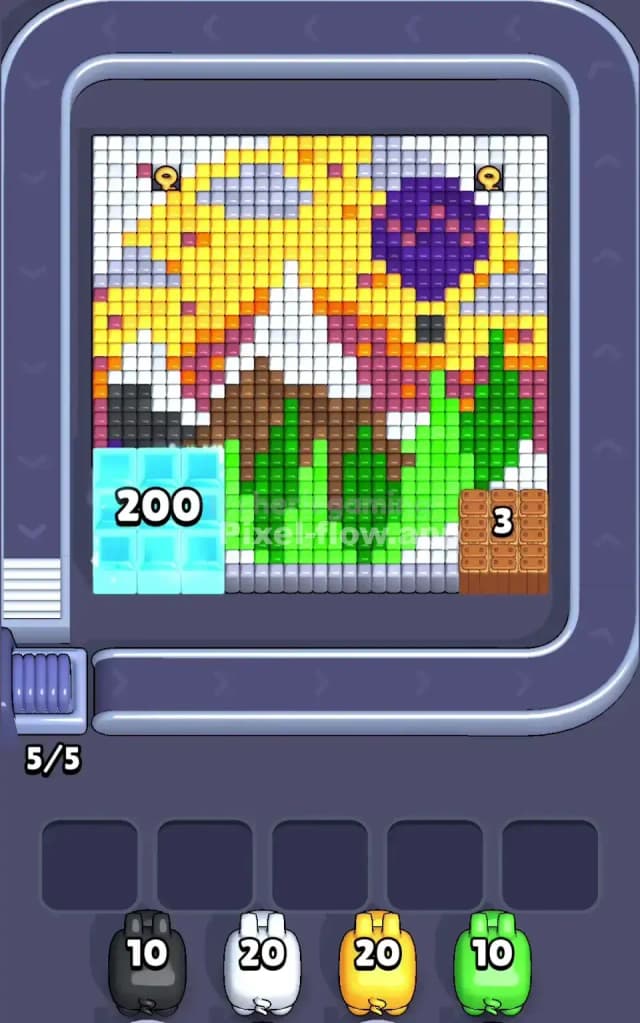
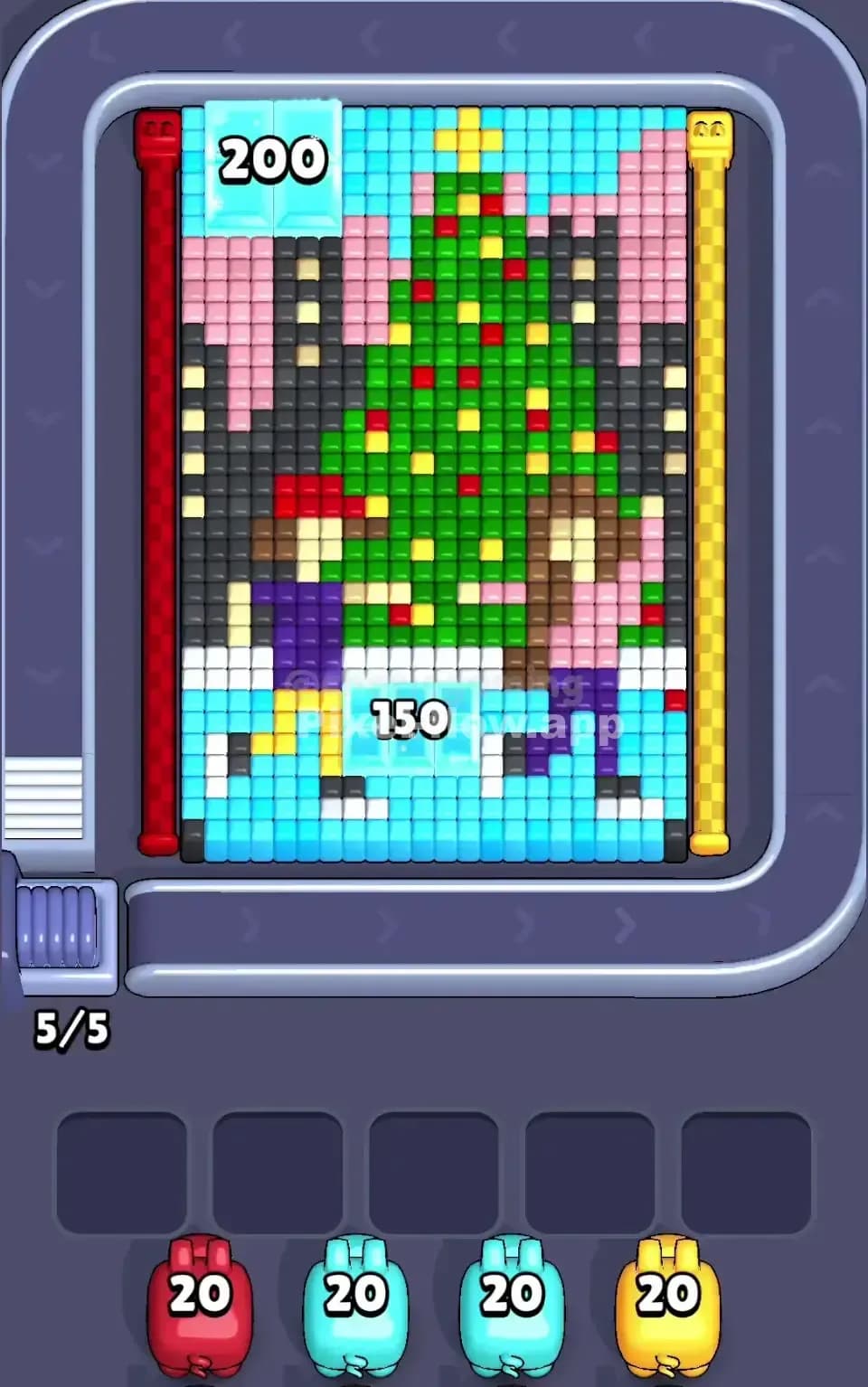
Pixel Flow Level 366 presents a charming pixel-art scene dominated by a landscape with multiple distinct color layers. You're looking at a composition that features a prominent green central mass—think lush vegetation or foliage—flanked by pink regions on either side that suggest sky or background elements. The bottom third of the board shifts to cyan and cooler tones, representing water or foreground details, while darker grays and blacks form structural elements like trees or buildings throughout the mid-section. What makes Pixel Flow Level 366 visually striking is how these colors blend together; there's no single "easy" region you can isolate and clear without affecting the others.
The board stretches across two primary layers, with the cyan water section at the bottom sitting visibly separate from the upper landscape. This layering means you'll need to be strategic about which colors you prioritize—clearing the top layer haphazardly will leave you staring at orphaned cubes that belong to different pigs in your queue.
The Win Condition and Deterministic Nature
Your mission in Pixel Flow Level 366 is straightforward: eliminate every single voxel cube on the board. You've got four pigs in the conveyor queue, each with exactly 20 ammo shots. The red pig carries 20 shots, the two cyan pigs each hold 20 shots, and the yellow pig rounds out your arsenal with 20 shots. That's 80 total ammo available across the entire level—and you'll need to use nearly every bit of it. The pigs will fire automatically in the order they exit the conveyor, so there's no randomness here; it's all about sequencing and planning. Every cube destroyed consumes exactly 1 ammo, and if you miscalculate, you'll jam your waiting slots with pigs that have nowhere to shoot.
Why Pixel Flow Level 366 Feels So Tricky
The Central Bottleneck: Green Dominance
Here's what trips up most players tackling Pixel Flow Level 366: the sheer volume of green cubes in the center of the board. Green forms the bulk of the visual landscape, yet you don't have a dedicated green pig in your queue. That means you're relying on secondary colors—red, cyan, and yellow shots—to carve through and expose what's underneath or around the green mass. The problem? Those other colors are scattered sparsely across the board, mixed in among the green itself. You might find a cluster of red cubes here, a yellow accent there, but they're not neatly separated. If you fire your red pig too early without a clear sense of where all red targets lie, you'll burn through ammo on obvious targets and then get stuck watching your pig drop into a waiting slot because the remaining red cubes are hidden or inaccessible.
Color Pockets and Hidden Targets
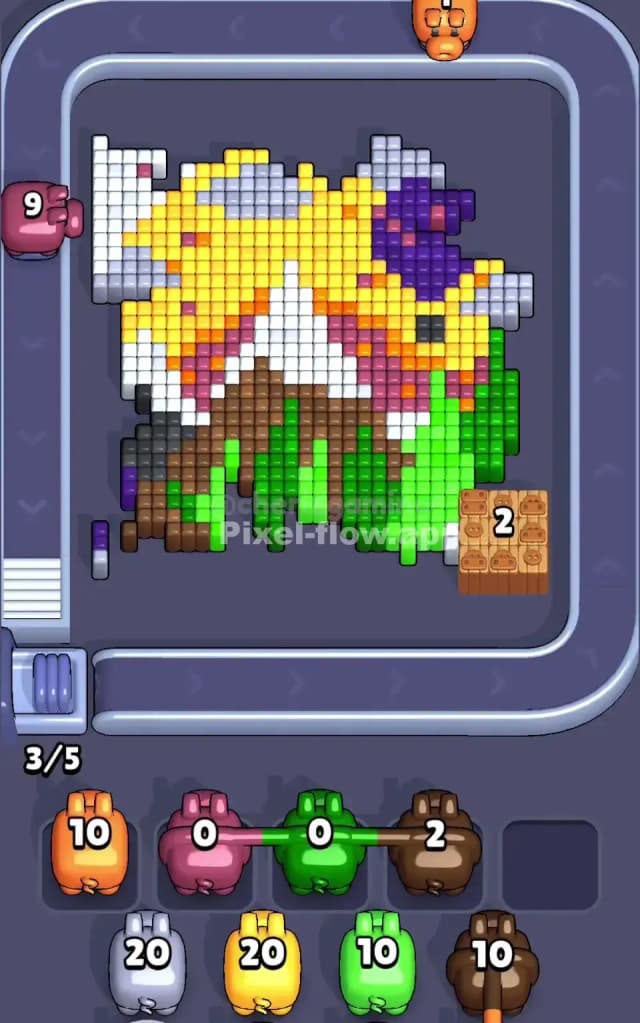
Pixel Flow Level 366 hides several problem spots that aren't immediately obvious. The pink regions on the left and right sides of the board contain their own internal complexity—there are cream or tan-colored cubes nestled within the pink, and dark gray or black structural elements that don't match your pig colors. When you begin clearing, you might think pink is mostly one solid color, but it's not. Similarly, the cyan water section at the bottom looks cohesive at first glance, but there are purple, brown, and white cubes mixed into it. This means your cyan pigs will only clear a fraction of what you see, leaving you hunting for the remaining cyan targets in unexpected places. It's incredibly frustrating to spend your cyan pig's ammo, assume you're done with that color, and then discover five more cyan cubes tucked inside the landscape that now block your path to other targets.
Personal Reaction and the Breakthrough Moment
I'll be honest—Pixel Flow Level 366 nearly drove me up the wall the first time. I fired my pigs in a logical left-to-right order, cleared what seemed like "complete" color zones, and then found myself with a red pig in a waiting slot and no valid red targets on the board. My other pigs were similarly jammed, and I had no choice but to restart. The breakthrough came when I realized I needed to think in reverse: I mapped out every single cube of each color first, mentally traced the order I'd need to clear them in to avoid blocking paths, and then executed that plan. It's a puzzle within the puzzle, and once that clicked, Pixel Flow Level 366 became manageable—even satisfying.
Step-by-Step Strategy to Clear Pixel Flow Level 366
Opening: Establish a Safe Buffer
Begin Pixel Flow Level 366 by not touching anything for a moment. Instead, scan the entire board and identify every red, cyan, and yellow cube. You'll notice that red cubes form small clusters in the mid-section, cyan is spread across the water and within the landscape, and yellow appears primarily in the top-right corner and scattered yellow accents. Your opening move should be to fire your first red pig immediately. Why? Red cubes are fewer in number, and clearing them early exposes portions of the board that might otherwise remain hidden. Firing red first also keeps your waiting slots free—you've only used one pig, leaving four empty slots to work with. Count your remaining red targets carefully; with 20 ammo and maybe 12–14 red cubes on the board, your first red pig will drop into a waiting slot with ammo still remaining, which is fine—you're not jammed yet.
Never let your waiting slots fill beyond two pigs. If you're about to fire a third pig and both the first and second pigs have already dropped with unused ammo, pause and reconsider. That's your warning sign that you've created a jam.
Mid-Game: Expose Layers and Sequence Carefully
Once your first red pig is seated in a waiting slot, fire your first cyan pig. Cyan is your most abundant color, so you're going to spend a lot of ammo here. This cyan pig should chip away at the visible water section and any cyan cubes embedded within the landscape's middle layers. It won't clear all cyan—that's okay and expected. Your cyan pig will drop with ammo remaining, probably occupying the second waiting slot. Now here's where patience matters in Pixel Flow Level 366: before you fire your second red pig or yellow pig, assess what new cubes have been exposed. Clearing cyan should have revealed pink, brown, or dark gray cubes that were previously obscured. These newly exposed colors don't have pigs, so they're dead weight—but they're also clues. If cyan uncovered a large brown section, that's a hint that brown was a deeper layer, and you'll need to clear more surrounding colors to eventually expose any pig targets that were beneath it.
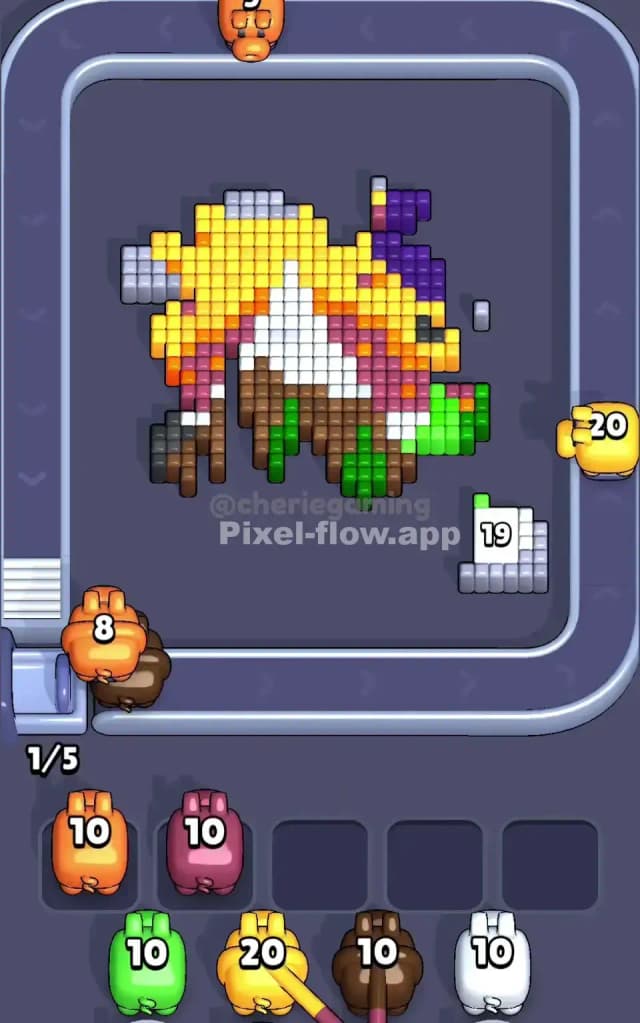
Fire your yellow pig next. Yellow is moderately sparse on the board, concentrated in the upper-right area with some accent cubes scattered elsewhere. Your yellow pig will demolish its targets quickly, drop into a waiting slot with significant ammo remaining, but that's perfectly fine. The key is that you've now freed up your cyan pigs to go again. Cycle through your second cyan pig at this point, pushing it to clear everything possible in the water region and the landscape. The second cyan pig should leave you with roughly three waiting slots filled and one free slot—a comfortable position.
End-Game: Finish Clean and Avoid Last-Minute Jams
You're now in the final stretch of Pixel Flow Level 366 with two red pigs, two cyan pigs, and one yellow pig already in waiting slots. Your remaining ammo is distributed among those waiting pigs. Fire your second red pig to finish off any red cubes you didn't target in your first red round. Follow immediately with your second yellow pig to complete the yellow targets. At this point, you should have nearly cleared the board; the remaining cubes are likely colors without pigs—dark grays, blacks, browns, or any stubborn pink that wasn't part of the easy zones.
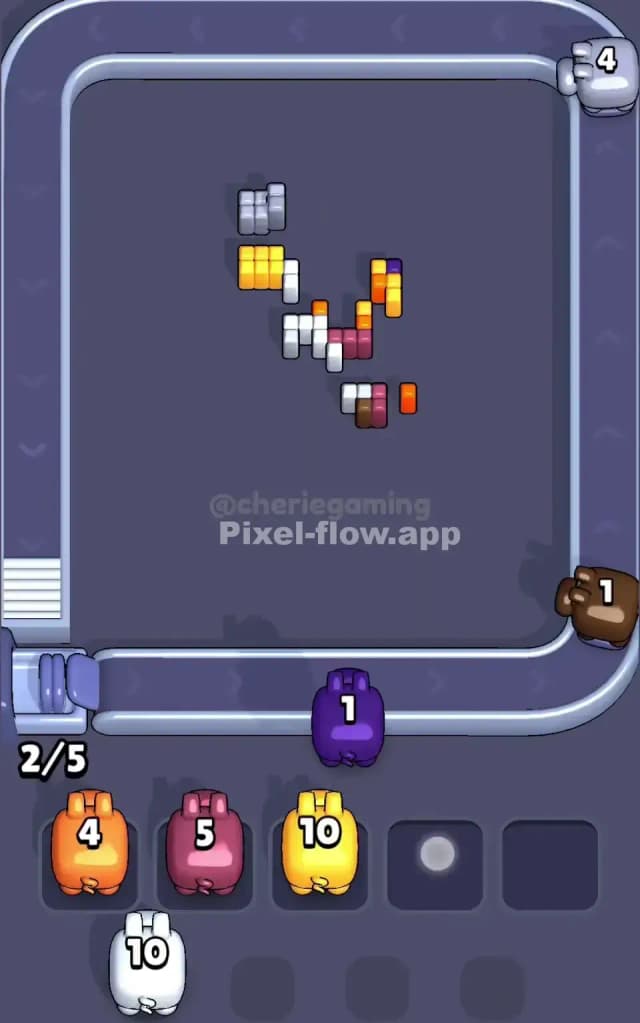
Here's the critical move: don't panic if the board still looks cluttered. You might see 10–15 cubes remaining that don't match red, cyan, or yellow. Fire your remaining cyan pigs strategically to expose any final targets. In Pixel Flow Level 366, the last few moves are often about waiting, watching, and letting the cascading destruction finish the job naturally. The waiting slots will gradually empty as pigs burn their remaining ammo on newly exposed targets.
The Logic Behind This Pixel Flow Level 366 Plan
Exploiting Order, Ammo, and Slots
The strategy works because Pixel Flow Level 366 follows strict mechanics: pigs fire in order, each shot consumes 1 ammo, and waiting slots are finite. By firing red first, you're removing the smallest color variable and guaranteeing yourself breathing room. By cycling through cyan heavily in the mid-game, you're exposing hidden layers without flooding your waiting slots—cyan's abundance means each cyan pig stays productive even at low ammo. Yellow fits neatly into the rotation as a "secondary" color that clears quickly. This isn't random; it's an exploitation of the fact that the board's structure dictates which colors are surface-level and which are trapped.
The waiting slots themselves are a resource. You want exactly two or three pigs sitting between moves, never four or five. This buffer prevents the jam scenario where a pig drops with ammo but no targets. The plan respects this limit by staggering your pig releases and monitoring the board state between each firing.
Staying Calm and Counting Ahead
The mindset that matters most for Pixel Flow Level 366 is patience. Before firing any pig, count its available targets. Before moving to the next pig, predict what will be exposed. This isn't fast-twitch gameplay; it's methodical puzzle-solving disguised as an action game. I typically count my current pig's targets aloud—"I see 14 red cubes; my red pig has 20 shots, so two red pigs will finish red entirely with room to spare." Then I watch the first pig fire, mark the board mentally, and adjust. Pixel Flow Level 366 rewards this deliberation because the deterministic nature of the game means your plan, if sound, will execute flawlessly.
You've got this. Pixel Flow Level 366 is tough, but it's conquerable with strategy and care.