Pixel Flow Level 369 Solution | Pixel Flow 369 Walkthrough
How to beat Pixel Flow Level 369: Video solution & walkthrough. The fastest way to pass Pixel Flow 369.
Is this the wrong level layout?🤔
Pixel Flow randomizes levels for different players. Don't worry, just upload a screenshot of your board, and our AI will find the correct video instantly.
Pixel Flow Level 369 Walkthrough
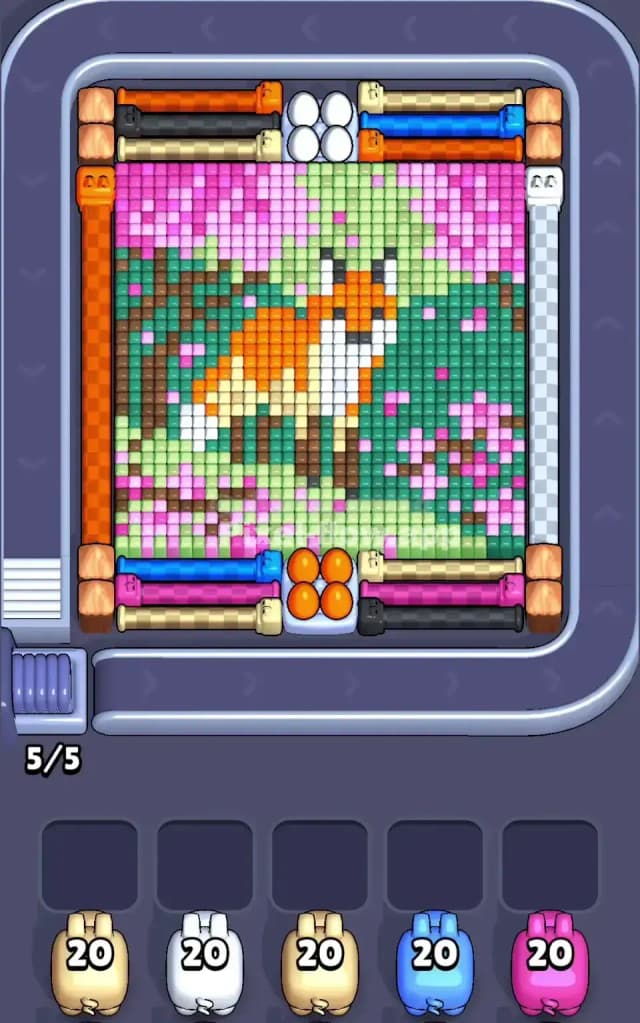
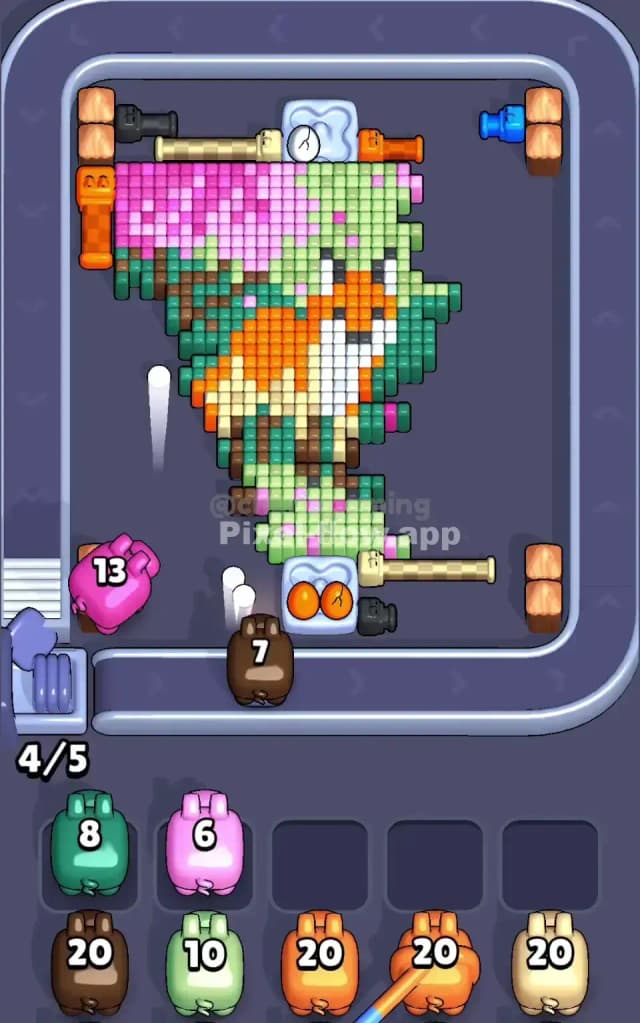
This level features a serene pixel art scene of a fox sitting under what looks like cherry blossom trees. The top is dominated by heavy pinks, while the middle and bottom are a mix of grassy greens, tree-trunk browns, and the bright orange and white of the fox itself.
The rules remain standard: match the pig color to the pixel color. However, Pixel Flow Level 369 is dense. The layering is thick. You need to clear the "foreground" elements (often the edges or large solid blocks) to reach the "background" pixels hidden underneath. Because of the scattered pink blossoms and the complex mix of green and brown near the fox's legs, it is easy to clog your waiting slots.
Is it hard? Yes. I would classify this as a very hard level. The color distribution is messy, meaning you rarely get clean, straight lines of a single color until late in the game.
Pixel Flow Level 369 Overview
The scene is charming but dangerous. A bright orange fox sits center-stage, looking to the right. Above it, a canopy of pink blossoms fills the sky. Below, green grass is speckled with fallen pink petals and interrupted by vertical brown tree trunks.
The board layout is deceptively symmetrical in shape but asymmetrical in color density:
- Top: Almost exclusively Pink and light Green.
- Center: The Fox (Orange/White) is the "meat" of the level, but it's buried deep.
- Bottom: A chaotic mix of dark Green, light Green, Brown, and Pink specks.
The real threat in Pixel Flow Level 369 is the "speckling." Look at the bottom right corner. It’s not just green grass; it’s green grass with random pink dots. If you grab a Pink pig too early to clear those dots, it might waste ammo or get stuck because the upper pink blocks aren't accessible yet.
Step by step solution walkthrough for Pixel Flow Level 369
First Color Zone to Erase in Pixel Flow Level 369
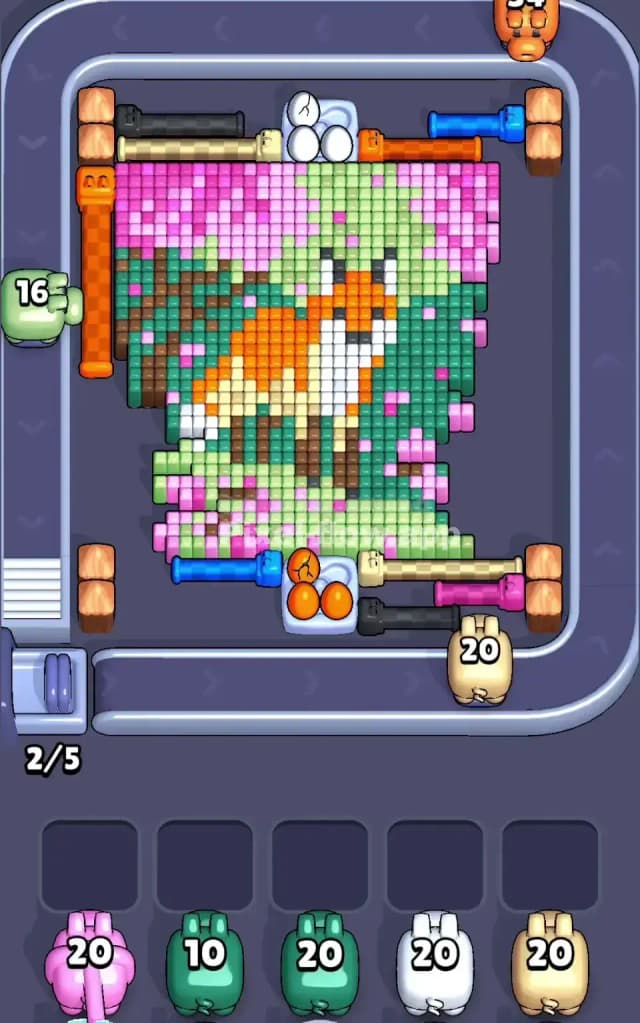
I start by targeting the Pink zone at the very top.
Here is the logic: The top third of the board is a massive, solid chunk of pink blossoms. It is the safest play. If you see a Pink pig on the belt, grab it immediately. Unlike the bottom area where pink pixels are scattered single blocks, the top area allows a Pink pig to unload 10-15 ammo in a single run. Clearing this top canopy exposes the fox’s ears and the upper green leaves, opening up the board significantly.
Do not start with Brown. The brown pixels are vertical tree trunks. They are narrow targets. A Brown pig often misses, hits only 2-3 blocks, and then clogs a slot waiting for the next layer. Stick to the big Pink blocks first.
How to pass Pixel Flow Level 369 without power ups or boosters
Once you’ve shaved off the top pink layer, the board looks half-destroyed. The fox's head is visible, but its body is still trapped.
At this mid-stage, you will face a "clog risk." You likely have a few pigs in your waiting slots (maybe a White one for the chest, or an Orange one). The belt will start feeding you Green and Brown pigs.
The Strategy shift:
- Ignore the Fox (for now): It’s tempting to try and finish the Orange fox body because it's cute. Don't. The fox is deep in the center. Focusing on it leaves the messy edges uncleared.
- Clean the Green: Focus entirely on the light Green background leaves. There is a huge vertical strip of green on the right side and scattered green on the left. Clearing Green often reveals the hidden Brown trunk pixels that were previously blocked.
- The Brown Trap: Only pick a Brown pig if you have a clear shot at the tree trunks on the left. If the trunks are still half-covered by green leaves, let the Brown pig pass. You cannot afford to have a Brown pig stuck in a slot with 15 ammo while you frantically look for targets.
If your slots are filling up, prioritize the color that appears widest on the current surface layer. In Pixel Flow Level 369, that is almost always Green during the mid-game.
Last Details You Clean Up in Pixel Flow Level 369
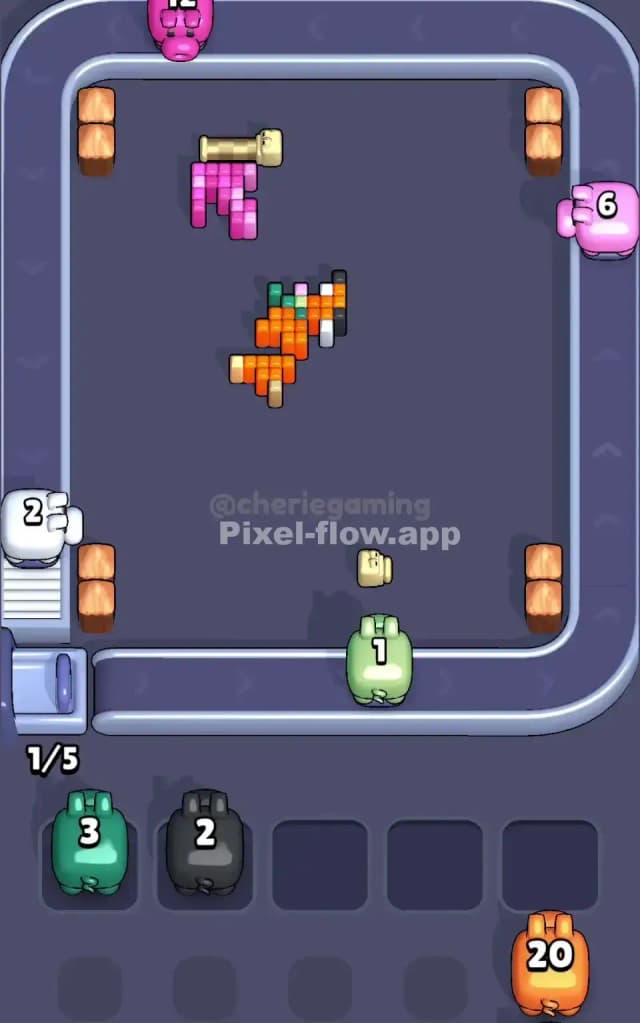
The end game is usually the Fox itself and the scattered "floor" pixels.
You will likely be left with the bright Orange body of the fox and the White patch on its chest. These are easy targets because they are grouped tightly in the center.
However, watch out for the Bottom Right Corner. There are often 3-4 lone pink pixels or dark green pixels hiding behind the fox's tail or legs. Check that corner carefully. If you finish the fox but miss those corner specks, you might not get the right color pig back on the belt in time. Clear the messy corners before you deliver the final blow to the main character.