Pixel Flow Level 370 Solution | Pixel Flow 370 Walkthrough
How to beat Pixel Flow Level 370: Video solution & walkthrough. The fastest way to pass Pixel Flow 370.
Is this the wrong level layout?🤔
Pixel Flow randomizes levels for different players. Don't worry, just upload a screenshot of your board, and our AI will find the correct video instantly.
Pixel Flow Level 370 Walkthrough
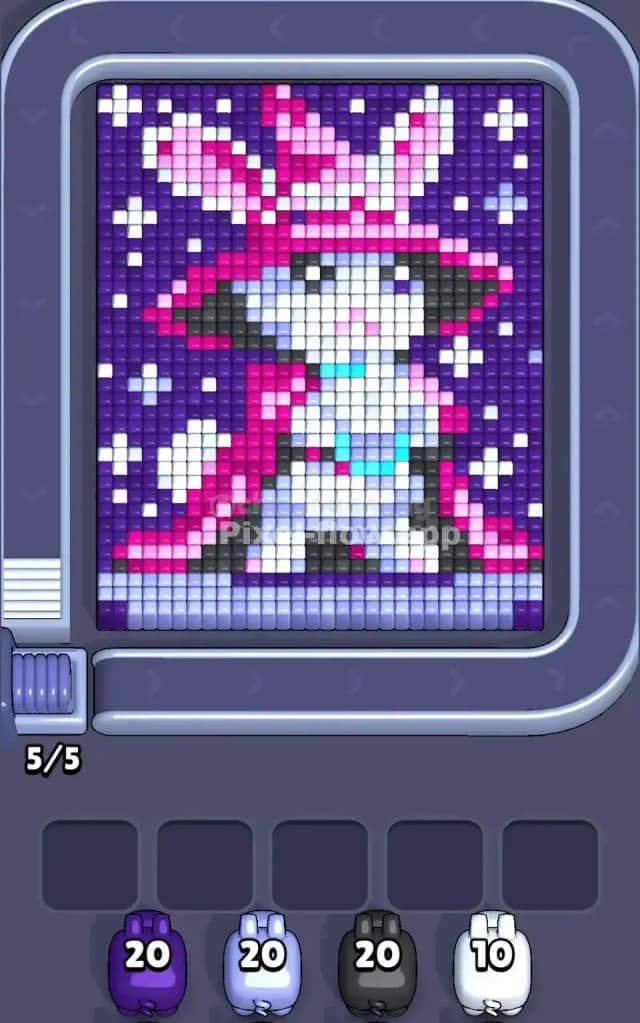
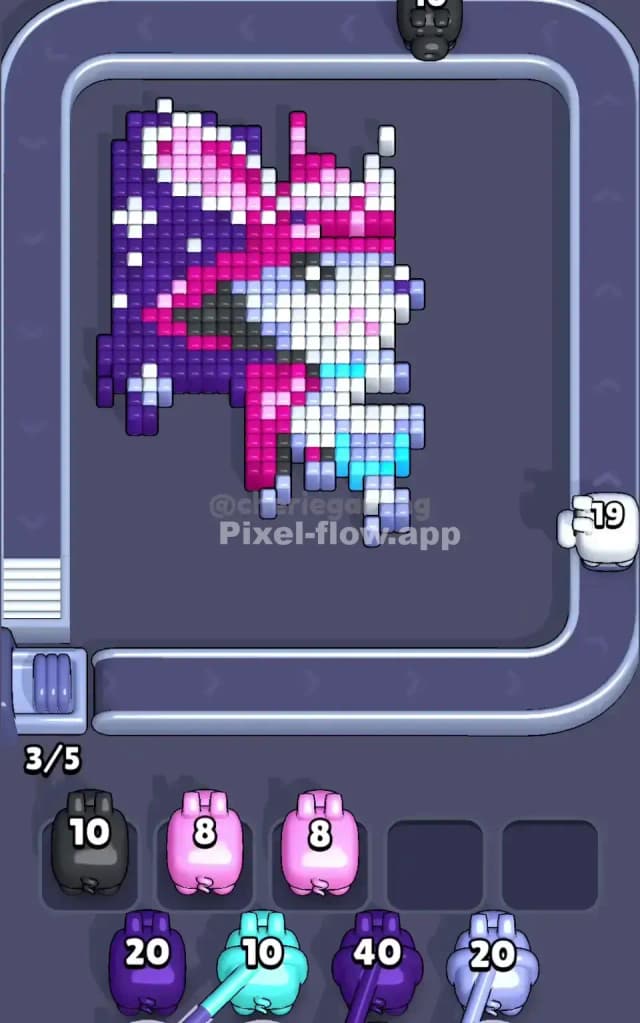
We are looking at a magical, voxel-art scene featuring a white bunny character dressed as a witch. The board is dense. You have a massive, solid background of dark purple representing a night sky, dotted with white stars. In the foreground stands the bunny wearing a giant pink wizard hat and a matching magenta cape, standing on a grey stone floor.
The rules for Pixel Flow Level 370 remain standard but unforgiving. You must select pigs from the bottom queue to shoot cubes of the matching color. Each pig has a specific ammo count (written on its back). If a pig destroys a block, it uses 1 ammo. If the pig runs out of valid targets on the current visible layer but still has ammo, it gets stuck in one of your five holding slots. Fill all five slots with useless pigs, and you fail. Because of the tricky "outline" layers in this artwork, I judge this to be a very hard level.
Pixel Flow Level 370 Overview
This isn't just a random shape; it’s a detailed character portrait. The central figure is a "Bunny Witch" casting a spell. The most dominant feature is the hat—it’s striped with two shades of pink and sits heavy on the top half of the grid. Below the face, a magenta cape drapes down the left and right sides, framing a white body. There are subtle Teal accents on the chest, looking like a tie or a magical amulet.
The background is where the trouble starts. It is a deep, dark purple field that wraps around the entire character. Scattered inside this purple void are bright white pixels acting as stars. These stars are dangerous. They share the same color as the bunny’s fur (White), which can confuse your targeting strategy.
The board is also asymmetrical in terms of density. The bottom row is a solid, boring line of light grey/blue blocks acting as a floor. The top corners are heavy with background purple. But the real asymmetry comes from the lighting—the "stars" are randomly placed, meaning a White pig might clear five blocks on the left but find zero targets on the right until you peel back more layers.
Step by step solution walkthrough for Pixel Flow Level 370
First Color Zone to Erase in Pixel Flow Level 370
You need to attack the Dark Purple Night Sky immediately. Ignore the character for a second.
Look at the board. The Dark Purple background occupies at least 40% of the visible pixels. It wraps around the bunny’s ears and fills the gaps between the hat and the board edge. If you see a Dark Purple pig (often carrying 20-40 ammo), take it.
Here is the logic:
- Safety: There are definitely more than 40 purple blocks exposed. You will not clog a slot. The pig will empty its clip and vanish.
- Exposure: Clearing the purple sky isolates the "floating" white stars and exposes the black outline of the bunny.
- The Trap: Do not start with the Black pig. The black pixels in Pixel Flow Level 370 form a thin, fragile outline around the bunny and hat. If you grab a Black pig with 20 ammo, it will likely hit 10 blocks, run out of targets because the rest are buried under the pink hat, and clog your slot.
Once the sky is thinned out, you can look at the Light Grey floor at the very bottom. It’s a single, uncomplicated strip. If a Light Grey pig appears, use it to knock out that bottom foundation quickly. It rarely overlaps with complex layers.
How to pass Pixel Flow Level 370 without power ups or boosters
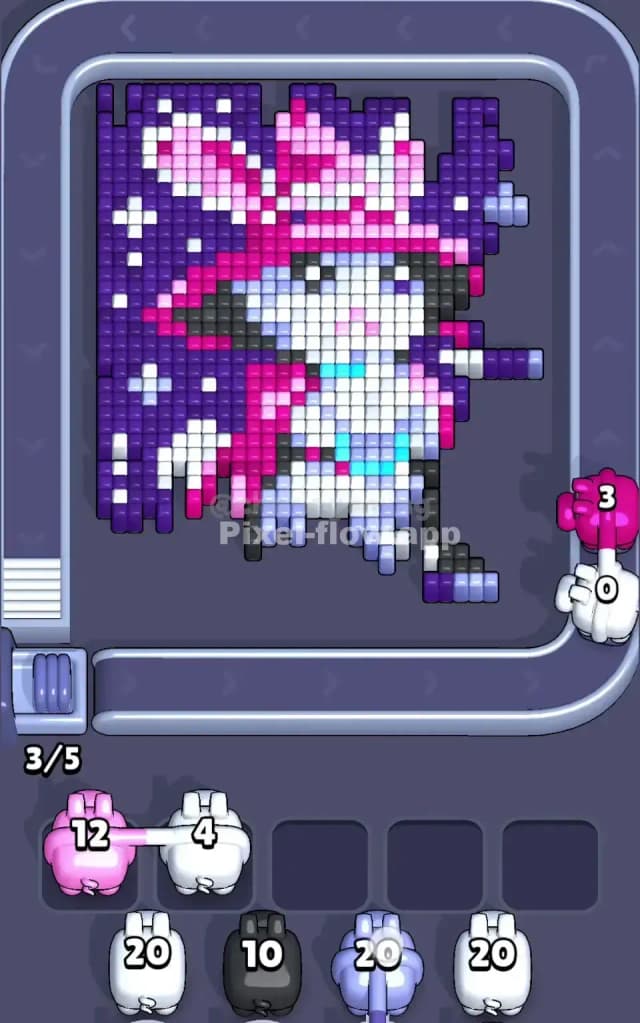
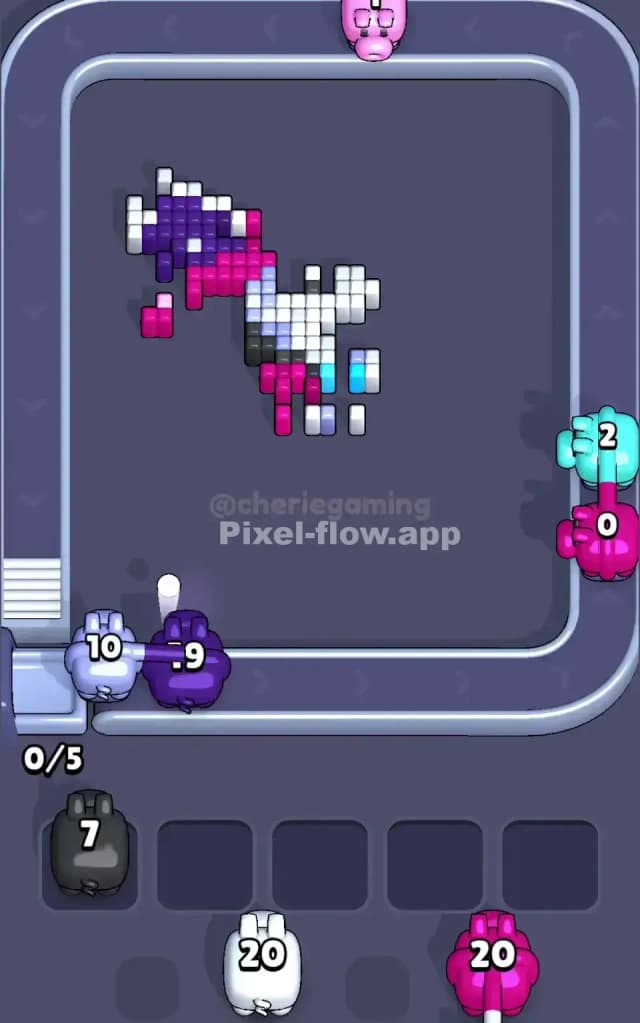
The mid-game of Pixel Flow Level 370 is messy. You have probably stripped away the easy purple background, and now you have a half-eaten bunny. The board usually looks like a floating skeleton of Black outlines and chunks of Pink.
This is the "danger zone" for your slots. You will likely see Pink and White pigs in the queue.
Handle the White Pigs carefully: The White pixels are split between the "Stars" in the background and the "Fur" of the bunny. Sometimes, the game engine considers these separate layers. You might grab a White pig intending to clear the bunny's face, but the pig targets the stars instead. Or vice versa. Before clicking a White pig, verify you have a lot of white exposed. If only the face is visible, a 10-ammo pig is fine. A 20-ammo pig is a risk.
The Teal Trap: Deep in the center of the chest, there are a few Teal/Cyan blocks. These are often buried under the White fur layer. Do not pick a Teal pig until you have physically created a hole in the bunny’s chest. If you pick it too early, it sits in your slot, useless, waiting for you to dig.
The Black Outline Strategy: By now, you should have exposed the edges of the hat and cape. The Black outline is now your friend. Use the Black pigs to "snip" the edges of the artwork. This separates the Pink Hat zone from the Magenta Cape zone, allowing you to clear them independently without layer conflicts.
Last Details You Clean Up in Pixel Flow Level 370
As you approach the end, you are usually left with "floating debris." The main bunny is gone, but the corners often hide secrets.
Pay attention to the Pink Hat Tips. The hat has two shades of pink (light and dark). Often, a few blocks of the lighter pink hide behind the darker magenta pixels. You might think you are done with Pink, but a single voxel remains.
Also, check the Corner Stars. Sometimes a single white star in the top-left or top-right corner survives the initial purple purge because it was on a deeper layer. If you have a White pig stuck in your slot from earlier, this is the moment it finally becomes useful. It will snipe that last star to end the level.
Finally, ensure the Grey Floor is totally gone. It sometimes has a second layer of darker grey behind the front row. Don't let a stray grey block ruin your run at 99% completion.