Pixel Flow Level 371 Solution Walkthrough | Pixel Flow 371
How to solve Pixel Flow level 371? Get instant solution for Pixel Flow 371 with our step by step solution & video walkthrough.


Pixel Flow Level 371 Overview
The Board Layout and Visual Subject
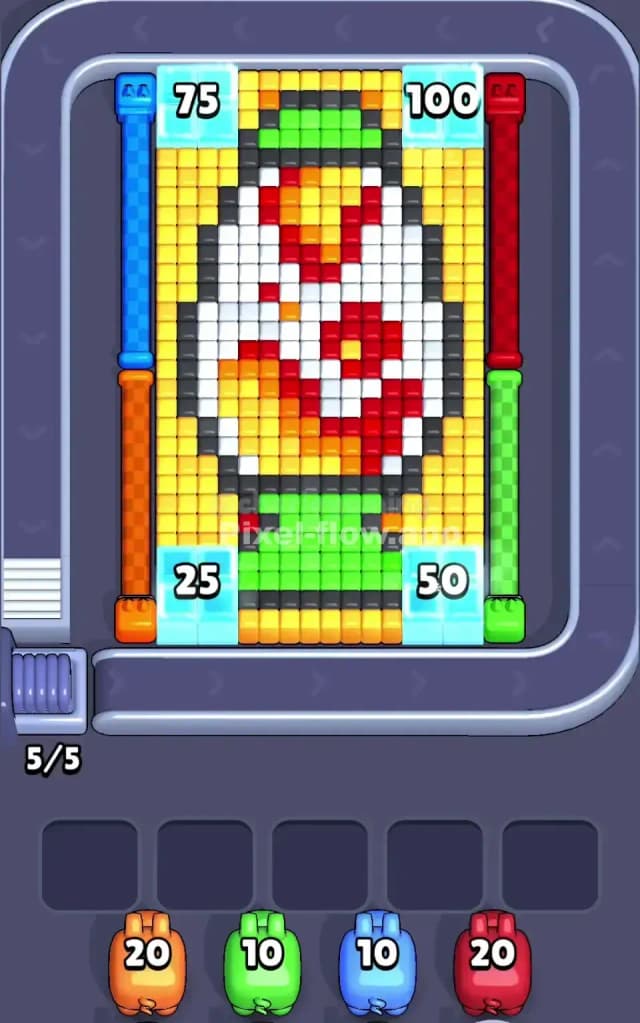
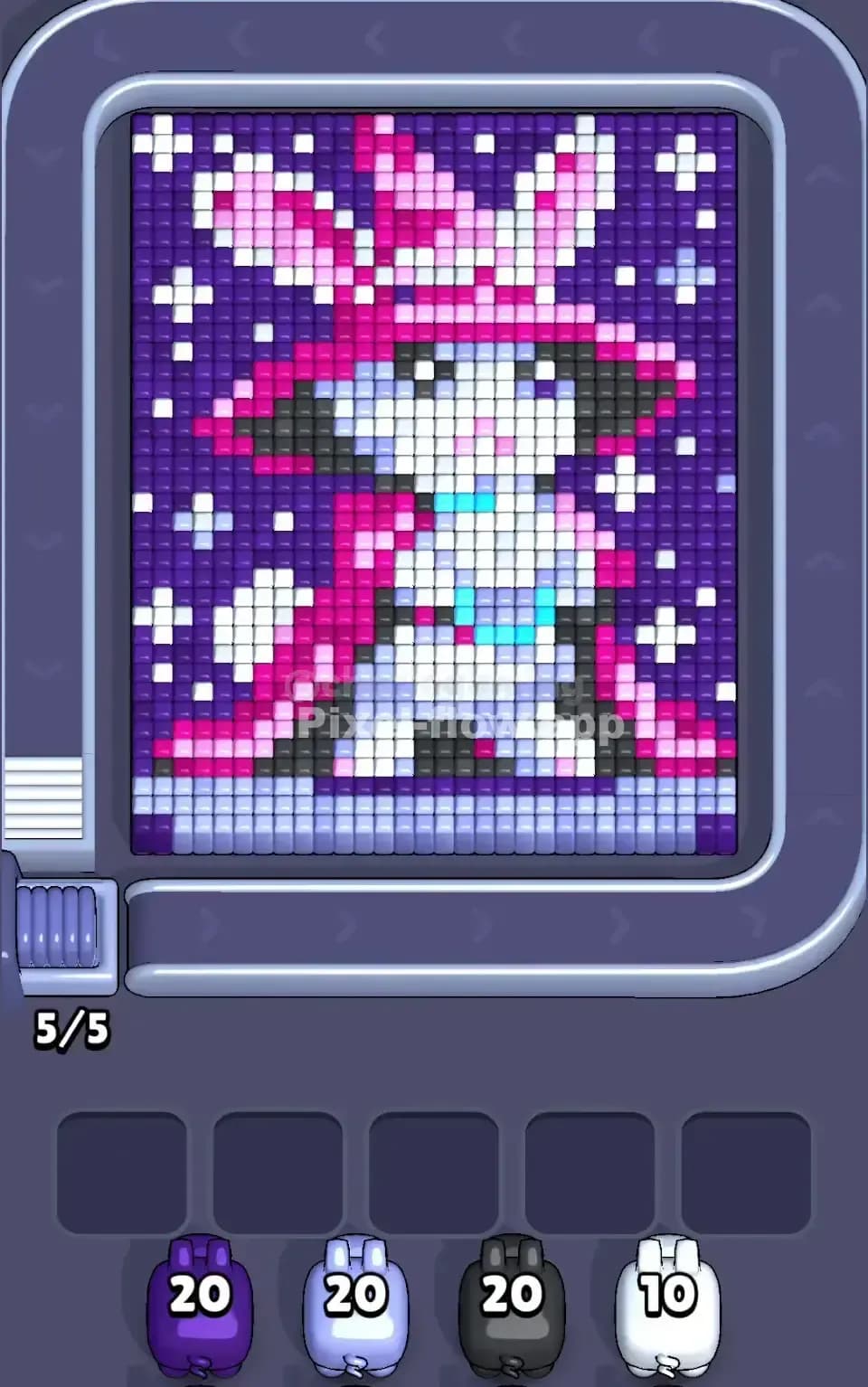
Pixel Flow Level 371 presents a charming pixel-art character—a cute creature or mascot with expressive features—layered across a multi-colored voxel grid. The dominant colors form the character's face and body in the foreground, rendered primarily in white, light blue, and magenta, while a rich purple background fills most of the board's upper and lateral regions. You'll also notice black and dark gray accents that define the character's eyes and outline, plus scattered cyan highlights that add dimension to the design. The board is structured as a true layered painting: the visible surface shows the character's immediate colors, but beneath those sit the purple and light blue blocks that form the deeper foundation. This layering is critical because you can't simply blast through colors randomly—you must expose and clear inner blocks deliberately to avoid trapping ammo-rich pigs with nowhere to shoot.
Winning and the Deterministic Nature of Pig Flow
Your goal in Pixel Flow Level 371 is straightforward: clear every single voxel cube from the board. You'll win only when the grid is completely empty. The game's beauty lies in its determinism—each pig has a fixed ammo count, a predetermined position in the queue, and will automatically shoot matching-color cubes until it runs dry or has no valid targets. In Pixel Flow Level 371, you're given four pigs with 20, 20, 20, and 10 ammo respectively, meaning you have exactly 70 total shots to work with. That's plenty of firepower, but only if you use it wisely and never let a pig with remaining ammo get stuck in the waiting slots with nothing to shoot.
Why Pixel Flow Level 371 Feels So Tricky
The Purple and Light Blue Bottleneck
The biggest obstacle in Pixel Flow Level 371 is the sheer volume of purple and light blue blocks that form the background and lower layers. You'll quickly realize that the character's colored sections (white, magenta, cyan, black) are actually the thinner outer shell, and once you've cleared those, you're left facing what feels like an endless purple sea. If you're not strategic about which pig shoots which color and in what order, you'll burn through your ammo on the character's details while the purple blocks remain untouched. Then, when you finally need to clear the purple, you might find yourself with a pig that has 8 remaining ammo but no purple targets visible—and boom, it's stuck in the waiting buffer with no way to spend that ammo.
Awkward Color Distribution and Hidden Layers
Pixel Flow Level 371 has several subtle traps. The magenta blocks are scattered across the character in a way that makes them look plentiful, but they're actually interspersed with other colors, meaning a single magenta pig might finish its ammo quickly if many blocks are concealed behind the outer layers. The light blue sections are similarly deceptive—they appear in the character's face and eyes, but also form a large band at the bottom of the board, which means you need to time when that bottom pig fires to avoid exposing too much at once. The black and dark gray accents, though few in number, are clustered tightly around the eyes and mouth, so it's easy to either clear them too early (wasting time) or miss them entirely and discover them too late when they're blocking your path to deeper colors.
When It Clicked for Me
Honestly, Pixel Flow Level 371 stumped me for a few attempts because I kept treating it like a simple "match the pig color to the blocks" puzzle. I'd fire the purple pig first (thinking it had the most ammo), watch it obliterate the background, and then realize I'd exposed the character layers in a chaotic order. The light blue pig would get stuck with 7 ammo and nothing to shoot, and I'd lose. The turning point was when I stepped back and asked myself: "What's the optimal order to expose each layer so that every pig finds a clean target zone?" Once I started planning backward from the end state—imagining the board completely empty—and then sequencing the pigs accordingly, the level became manageable and even enjoyable.
Step-by-Step Strategy to Clear Pixel Flow Level 371
Opening: Establish Control and Protect Your Buffer
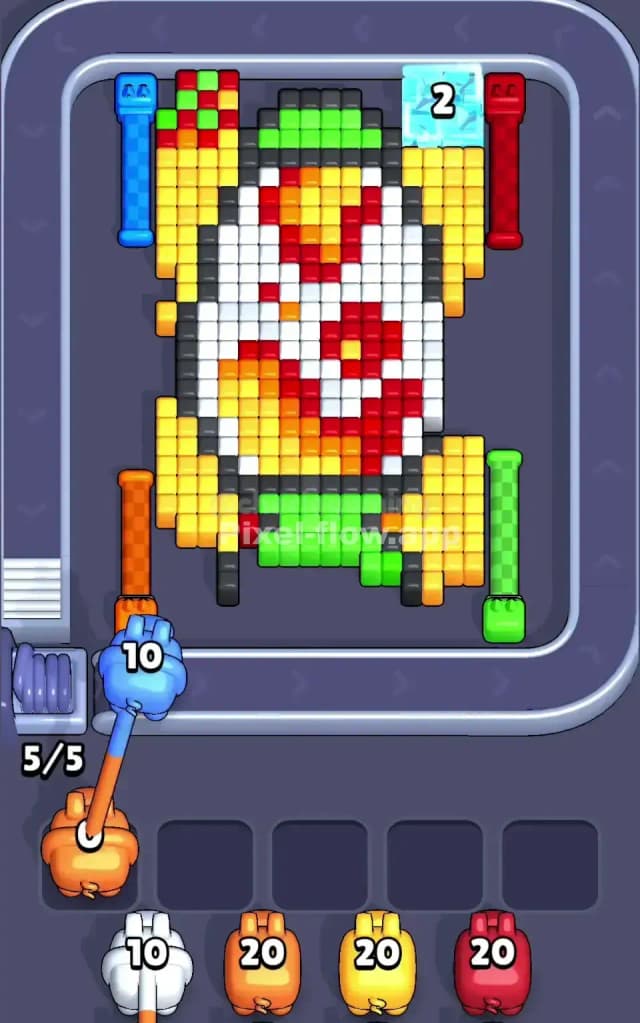
Start Pixel Flow Level 371 by firing your first pig very deliberately. I recommend leading with the white pig (20 ammo), since white blocks form much of the character's visible outline and face, and clearing them early exposes the other character colors beneath without committing you to the massive purple background. As the white pig shoots, you'll notice the magenta and cyan blocks start to peek through. Keep a close eye on your waiting slots—never let more than three pigs sit idle. If you see the white pig is going to finish its ammo cleanly (targeting only white blocks) before it runs out, that's excellent; it means you haven't created any stuck scenarios. After the white pig finishes, immediately queue the black pig (20 ammo) to clean up the dark accents around the eyes and mouth. The black blocks are concentrated, so this pig will spend its ammo quickly and move on without jamming.
Mid-Game: Layer Exposure and Ammo Precision
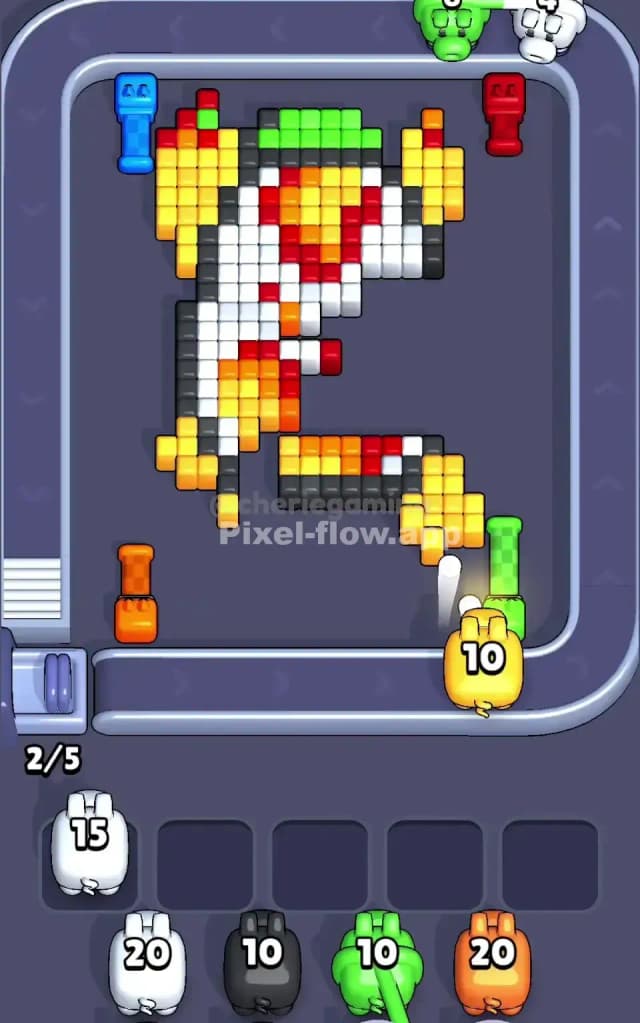
Once you've cleared white and black, your board should look significantly more open, with magenta and cyan now the primary visible colors on the character. Fire the magenta pig (20 ammo) next. This is where precision matters: as the magenta pig shoots, it will reveal chunks of light blue and purple beneath. Watch carefully for when the magenta pig's target list changes or shrinks—this signals that you're transitioning from the character's surface to the background layers. If the magenta pig still has 3–5 ammo left but all visible magenta blocks are gone, it will drop into the waiting buffer. That's okay, but only if you know you have a light blue pig coming next that can unlock more magenta blocks. This is where forward-planning saves you: count your remaining pigs, their ammo, and mentally map which colors will appear as each layer is exposed. In Pixel Flow Level 371, parking a pig with 4 remaining ammo is acceptable if you're absolutely certain the next pig will expose new magenta blocks.
End-Game: Cleaning the Background and Finishing Strong
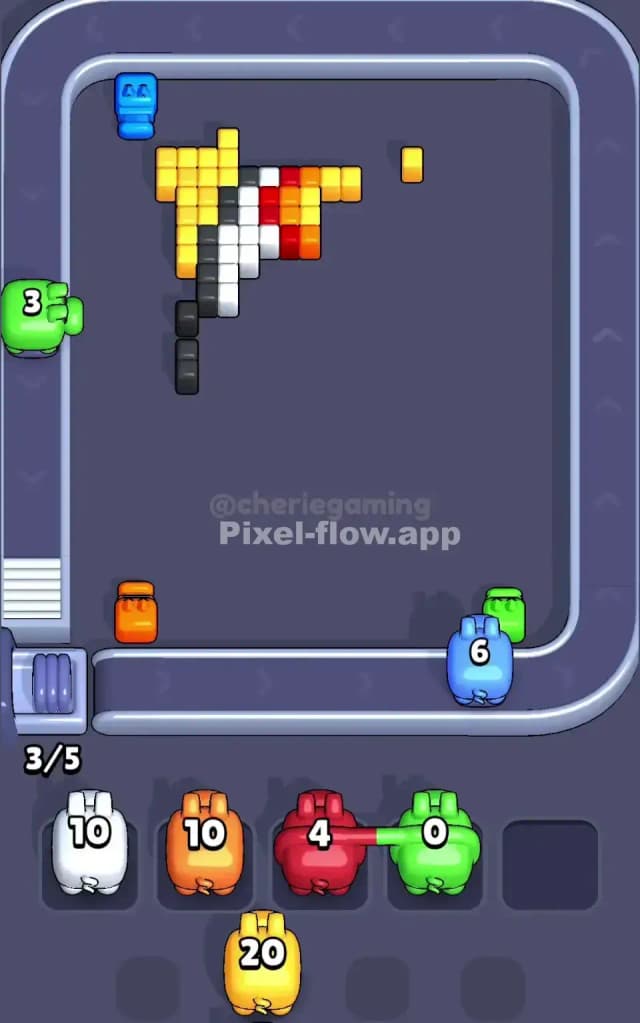
By the time you're in the end-game of Pixel Flow Level 371, the character should be completely gone, and you're left with light blue, purple, and possibly cyan in the lower portions of the board. Fire your light blue pig (20 ammo) third. This pig should have plenty of targets in the bottom section and the mid-layer areas. Let it run through its ammo, and then deploy your final white pig (10 ammo)—wait, actually, your fourth pig is also white with 10 ammo. This final pig is your safety net: it has limited ammo, which is perfect for mopping up any last few cyan or light blue blocks that the previous pigs missed. The final light blue pig should have cleared most of the background, leaving only scattered color pockets. Your closing white pig (10 ammo) should be able to finish those remaining cubes cleanly without leaving anything behind. Avoid the temptation to fire pigs out of order just because they're visually nearby; stick to the deterministic sequence, and you'll clear Pixel Flow Level 371 without a jam.
The Logic Behind This Pixel Flow Level 371 Plan
Why Sequence Matters More Than Speed
The strategy for Pixel Flow Level 371 isn't about clicking fast—it's about understanding that pig order determines which colors are visible when each pig fires. By leading with white and black, you're essentially "painting" the board in reverse, removing the top layers to reveal what's beneath. This ensures that when your ammo-heavy pigs (the two 20-ammo pigs) enter the field, they have maximum targets and spend their ammo completely. In contrast, if you fired purple first, you'd burn through the background quickly, leaving the character colors orphaned and forcing your later pigs to hunt for scattered blocks. The logic is simple: outer layers first, inner layers second, background layers third. This sequence is deterministic—there's only one optimal order, and Pixel Flow Level 371 reveals it through experimentation and observation.
Staying Calm and Counting Ahead
The mental skill that clinches success in Pixel Flow Level 371 is calm, forward-looking analysis. Before you fire each pig, take three seconds to ask yourself: "After this pig finishes, what colors will be visible, and does my next pig have a clean target zone?" Ammo counts are your safety metric—as long as no pig ends with leftover ammo and no valid targets, you're on track. Watch your waiting slots religiously. If you see three or four pigs stacking up, it's a warning sign that you've made a sequencing error, and you should restart before the fifth slot fills and you lose. Pixel Flow Level 371 rewards patient, deliberate play. Once you've cleared it once using this strategy, you'll feel the satisfying click of a perfectly solved puzzle—every pig fires, every block falls, and the board empties with zero waste.