Pixel Flow Level 373 Solution Walkthrough | Pixel Flow 373
How to solve Pixel Flow level 373? Get instant solution for Pixel Flow 373 with our step by step solution & video walkthrough.


Pixel Flow Level 373 Overview
The Starting Board and Main Visual
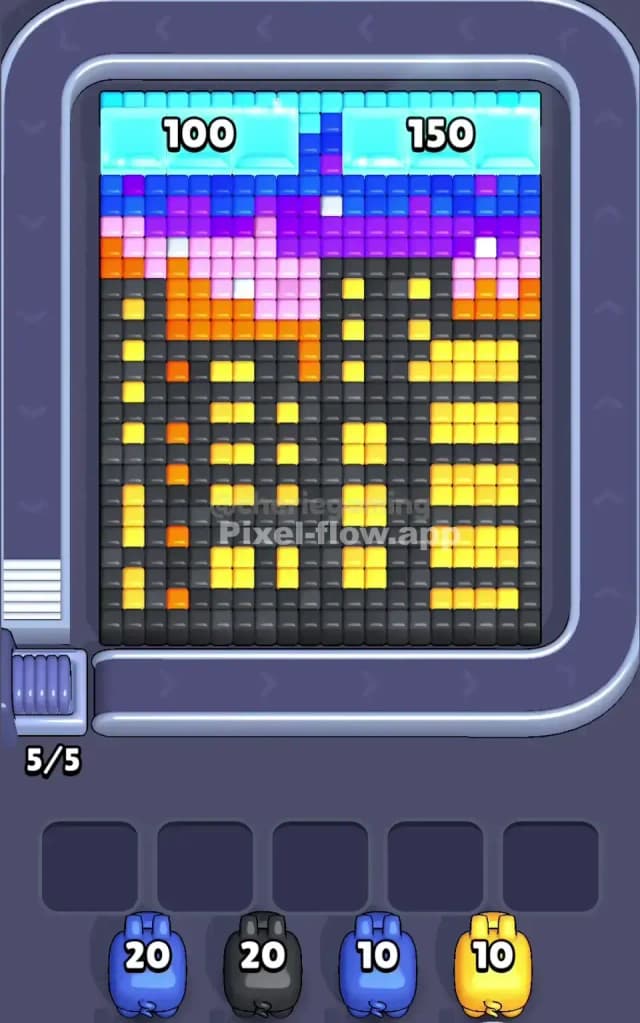
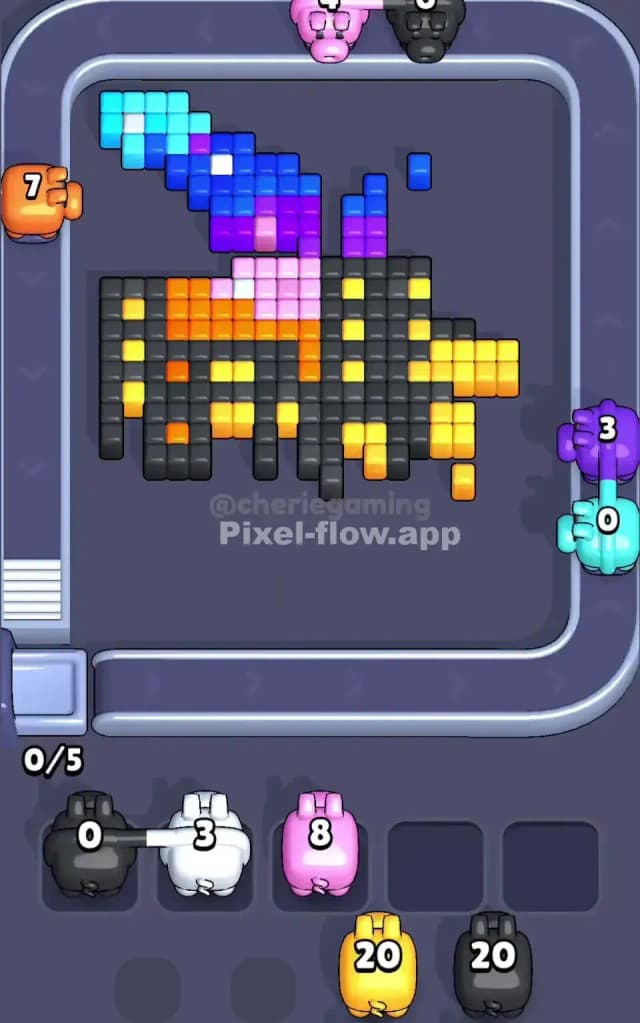
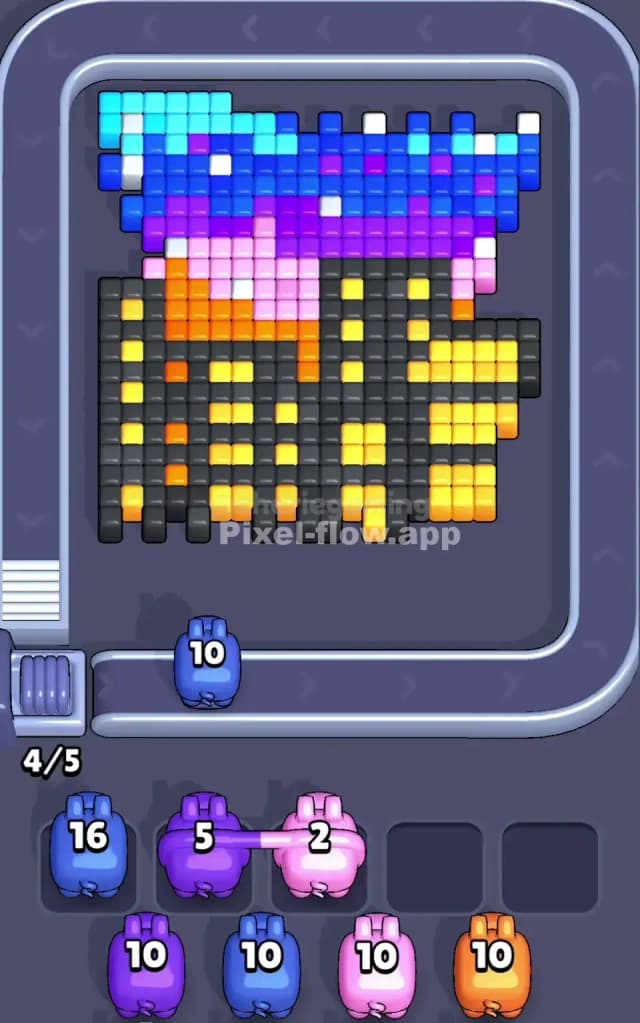
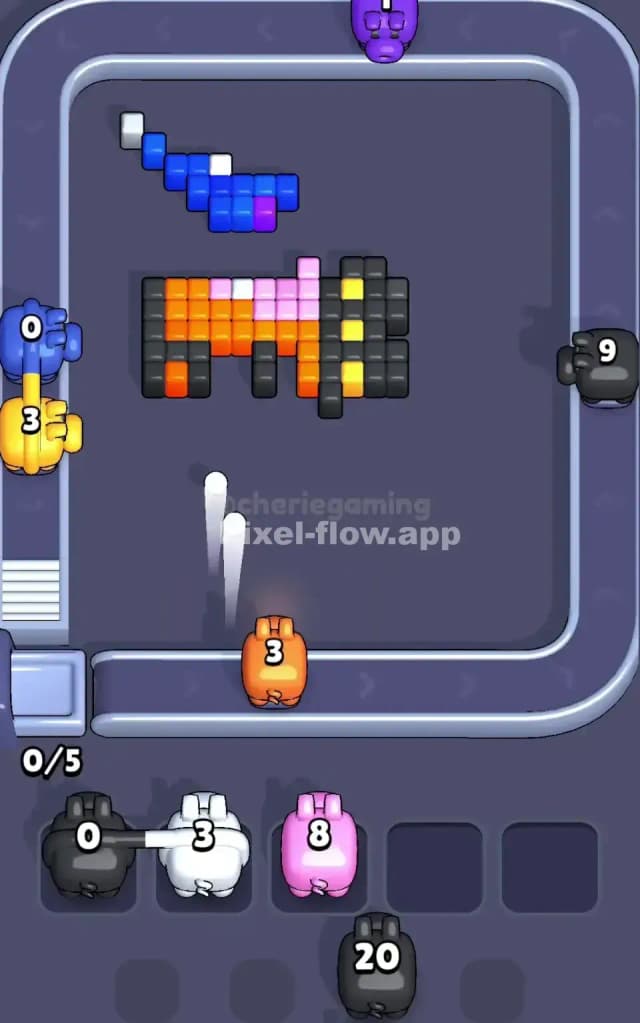
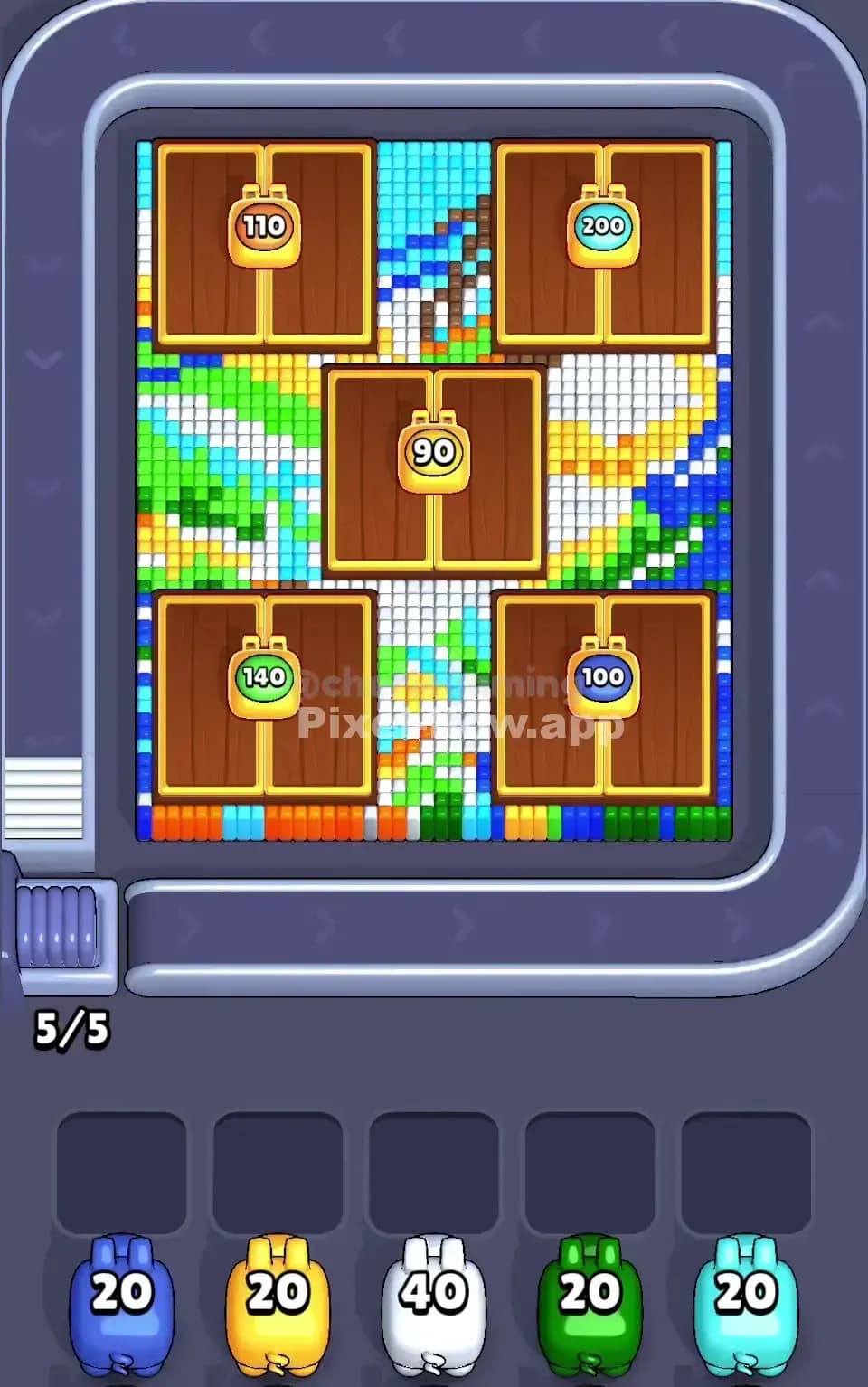
Pixel Flow Level 373 presents a vibrant, multi-colored pixel mosaic arranged across a 5×5 grid of conveyor belt positions. The dominant artwork features swirling patterns of cyan, lime green, yellow, white, and dark blue forming an intricate abstract or landscape design. Five pig stations sit ready at the top, bottom, and center of the board, each equipped with a fixed ammo counter: 110, 200, 90, 140, and 100 cubes respectively. The visual composition is deceptively complex—what looks like scattered color patches actually forms a deeply layered voxel structure, with cyan and green occupying the foreground and warmer tones (yellow, white) waiting beneath.
The immediate challenge you'll notice is the sheer ammo count: 640 total bullets across all pigs. That's a massive board, and it means you can't afford to waste a single shot or jam your waiting slots early. The artwork is split into distinct color zones—cyan dominates the upper-right and center regions, greens occupy the left and lower portions, and yellow sits in isolated pockets that will only become clear after surrounding colors vanish. This layering is the key to understanding Pixel Flow Level 373's true difficulty.
Win Condition and Deterministic Nature
Your goal is straightforward: clear every single voxel cube from the board. No partial victories here—even one remaining cube means failure. The good news? Pixel Flow 373 is entirely deterministic. Every pig's ammo is fixed, and the order in which they emerge from the conveyor is predetermined. There's no luck involved, only sequencing and foresight. If you understand the ammo-to-cube ratio and plan three moves ahead, you can solve this puzzle almost mechanically.
Why Pixel Flow Level 373 Feels So Tricky
The Waiting Slot Jam Threat
The moment you unlock Pixel Flow Level 373, the biggest threat becomes crystal clear: your five waiting slots. If you accidentally activate a pig with leftover ammo but no matching cubes on the board, it parks itself in a waiting slot. Do this four more times, and you've filled all five slots with "stuck" pigs. Now you're forced to wait for another pig to fire and expose matching colors—but your queue is locked, and you can't proceed. This is how runs fail, not through careless cube-clearing, but through poor pig sequencing.
On this particular board, the cyan and green colors are so plentiful that newer players often burn pigs early without planning what layers lie beneath. You'll fire the blue pig (20 ammo) at cyan, watch it clear happily, and then realize the next pig in the queue—let's say yellow—has no yellow targets visible. Boom: stuck pig in a waiting slot. By move seven, you're paralyzed, and Pixel Flow Level 373 feels impossible.
Color Pockets and Hidden Layers
Pixel Flow 373 conceals at least three distinct depth layers. The surface is cyan and bright green, but between those colors sit white and yellow voxels that are completely invisible until the overlying colors disappear. There are also small pockets of colors scattered asymmetrically—a patch of yellow in the upper-right that only exists because cyan surrounds it, or a sliver of white wedged between two green zones. These awkward layouts mean that some pigs will finish their ammo perfectly, while others will run dry with frustrating precision, leaving you one or two cubes of their color still buried.
Additionally, the central pig (90 ammo) sits in the middle of the board, which is prime real estate—but also dangerous. If you don't plan carefully, you'll expose colors around it that don't match the central pig's color, and you'll waste moves shuffling waiting pigs.
The Mental Hurdle and Breakthrough Moment
I'll be honest: Pixel Flow Level 373 stumped me for a solid twenty attempts. The board looks chaotic, the ammo values feel arbitrary, and every other run ends with a stuck pig and a retry screen. The frustration comes from not knowing where to start. Do you clear the obvious cyan first, or should you target green? The temptation is to just start blasting and hope the colors fall into place. They don't. The breakthrough came when I stopped reacting and started mapping: I took ten seconds to count cyan cubes, estimate green ammo needs, and ask myself, "Which pig must move first to unlock the rest?" Once I flipped that mindset from "clear fast" to "sequence correctly," Pixel Flow 373 went from maddening to elegant.
Step-by-Step Strategy to Clear Pixel Flow Level 373
Opening: Secure Your Slots and Expose Foundations
Your first move should be the blue pig (20 ammo) targeting cyan. Cyan is everywhere on the surface, and burning just 20 ammo removes a clean chunk of top-layer coverage. This works because the blue pig is low-ammo and guaranteed to succeed—it'll fire, hit cubes, and stay above water. Don't fire it yet; queue it in your mind.
Your second move is the cyan pig (20 ammo) on cyan. Yes, two blues in a row feels wasteful, but here's the secret: by using both low-ammo pigs on the abundant top color, you guarantee clean clears without jamming slots. You'll strip away enough cyan to reveal what's underneath without committing the heavy hitters prematurely. After these two moves, you should have 2–3 waiting slots still open and a much clearer picture of the white and yellow layers lurking below.
Next, assess the exposed board. You'll likely see white cubes clustered in the center and right side, yellow scattered in pockets, and green still dominant on the left. The white pig (40 ammo) is your next logical choice because white is now partially visible and concentrated. This is a safer move than jumping to green, which is tempting but premature—green layers run deep, and you don't want to commit the large green or yellow pigs until you're sure of the pattern.
By your fourth or fifth move, you've used three pigs, cleared three major colors, and still have 2+ free waiting slots. This buffer is your insurance policy against a jam.
Mid-Game: Layered Sequencing and Safe Parking
Now the yellow pig (20 ammo) and green pig (20 ammo) enter the picture. These small-ammo pigs are ideal for polishing up any remaining surface-level colors without overkill. Fire yellow next—it'll hit the exposed yellow pockets and leave you feeling in control. Then green, but only after you've verified there's genuine green on the board. If you misread the layers, park one of these small pigs in a waiting slot temporarily; you'll unlock it later.
The heavy hitters—the 140-ammo and 200-ammo pigs—are your precision tools for the buried layers. As you clear the upper colors, you'll reveal large swaths of green or white underneath. Now deploy the 140-ammo green pig. It'll carve through the exposed green layer, and because green is voluminous, you won't waste ammo. Watch its ammo count carefully; aim to end with zero or just a few remaining (which should correspond to green cubes you intentionally left for the final cleanup).
The 200-ammo pig is your board-cleaner—hold it in reserve. As you near the endgame, you'll have a clearer sense of which colors remain. If one color (likely white or a hidden layer) still has substantial density, unleash the 200-ammo pig on it. Its high ammo count can finish almost any single-color stretch, so you're not rushed.
Keep an eye on your waiting slots throughout this phase. Ideally, keep at least one slot empty until you enter the final three moves. This gives you flexibility if you miscalculate a pig's ammo or misjudge a color's density.
End-Game: The Final Cascade
By your twelfth or thirteenth move, the board should be mostly bare except for stubborn pockets of a single or two colors. Your remaining pigs should have enough collective ammo to close out any stragglers. The key here is sequencing the final pigs so that the last one—ideally the highest-ammo pig left—finishes with zero ammo on empty space. That's perfection.
If you have leftover pigs with ammo but no cubes, you've made a critical error earlier (likely overestimating a color's abundance or underestimating another). Don't panic—park them and reset. The waiting slots can hold them briefly while you use your remaining pigs to uncover new colors. Once you unlock a matching color, the "stuck" pig fires and contributes.
The absolute final move should leave zero cubes on the board and zero ammo remaining across all pigs. Anything less, and Pixel Flow Level 373 isn't solved.
The Logic Behind This Pixel Flow Level 373 Plan
Why Pig Order Matters More Than You Think
The reason this strategy works is that it respects the pig conveyor's determinism. You're not improvising; you're working with the order you're given. The three low-ammo pigs (20, 20, 40) are frontloaded because they're expendable—they remove top layers safely. The mid-tier pig (90) comes next, handling secondary colors without overkill. The two heavy hitters (140, 200) are your real power, held until the board is mapped and you know exactly where they're needed.
By sequencing this way, you guarantee that no pig fires blindly into a layer it can't penetrate. You also ensure that your waiting slots remain a safety valve, not a trap. Every early move provides information for later moves, creating a chain reaction of exposed colors and obvious targets.
Staying Calm and Counting Ahead
The hardest part of Pixel Flow Level 373 isn't the puzzle itself—it's staying methodical when the board feels chaotic. Before firing any pig, count its ammo and estimate the target color's density. If a color looks sparse, don't commit a high-ammo pig to it; use a small pig first as a probe. Watch the conveyor queue at the bottom; you need to know which pigs are coming next, not just the current one.
Plan two or three pigs ahead, not just the immediate move. Ask yourself: "If I fire this pig now, will the next pig have a target?" If the answer is no, rethink your sequence. This kind of foresight transforms Pixel Flow Level 373 from a frustrating gauntlet into a satisfying logic puzzle. You're not reacting to the board; you're controlling it.
With patience and this systematic approach, you'll clear every cube, empty every ammo counter, and unlock the next challenge. Good luck, and enjoy the elegant design of Pixel Flow Level 373!