Pixel Flow Level 374 Solution Walkthrough | Pixel Flow 374
How to solve Pixel Flow level 374? Get instant solution for Pixel Flow 374 with our step by step solution & video walkthrough.


Pixel Flow Level 374 Overview
The Board and Its Layered Composition
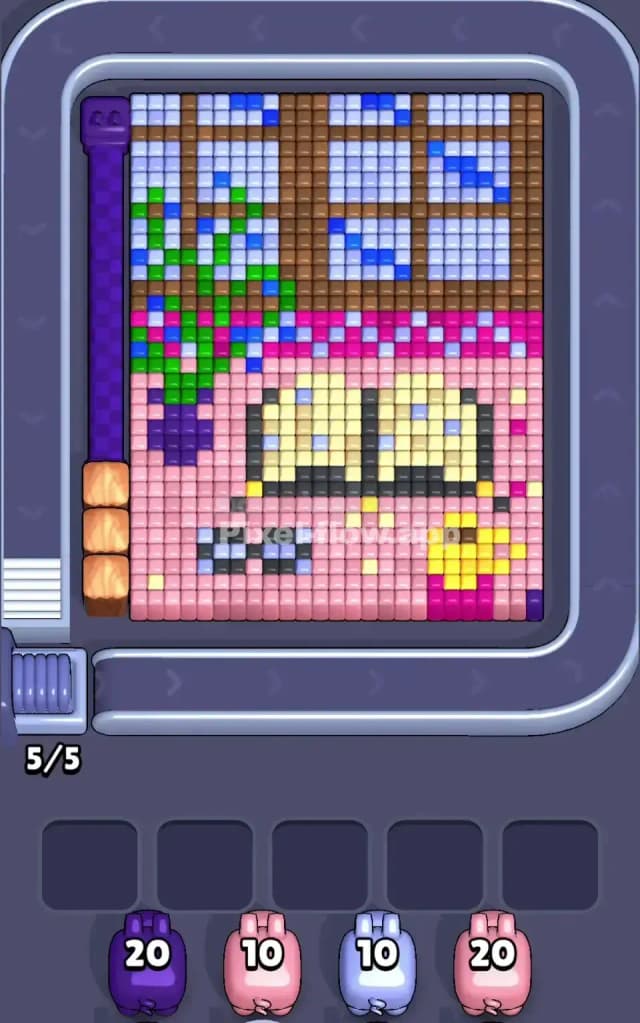
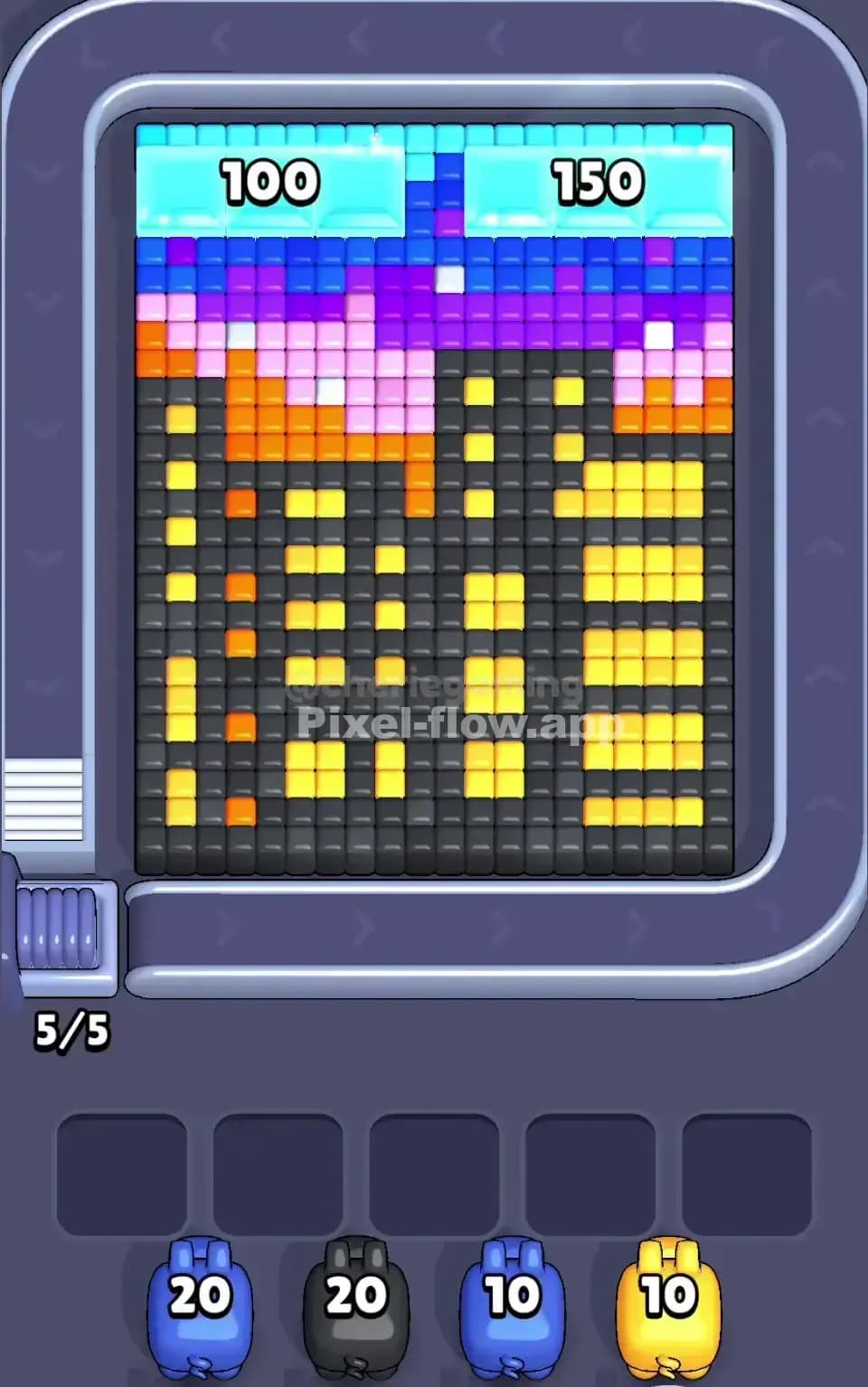
Pixel Flow Level 374 presents a beautifully complex voxel landscape that demands patience and careful planning. The board is dominated by a striking gradient of colors, with yellow and orange forming the densest cluster in the lower half, while cooler blues and purples occupy the upper regions. What makes Pixel Flow 374 visually deceptive is that these color zones aren't randomly scattered—they're arranged in distinct layers that you'll need to peel back systematically. The top section glows with cyan and deep blue, the middle transitions through pink and magenta, and the lower portion is packed with warm yellows, oranges, and dark gray cubes that act as structural supports. Think of it like an onion: you can't reach the inner layers until you've cleared away the outer shells first. The arrangement creates several natural choke points, particularly where orange and yellow cubes interlock with gray ones, making it easy to trap yourself if you're not deliberate about your move order.
Winning Condition and Deterministic Gameplay
Your goal in Pixel Flow Level 374 is straightforward on paper: clear every single cube from the board by matching them with the colored pigs that ride down the conveyor belt. What makes this level more intricate than it sounds is that every pig comes with a fixed ammo count, and those numbers must align perfectly with the cubes available when each pig's turn arrives. You're not choosing which pig fires when—the sequence is locked in from the start. You'll see at the bottom that you have pigs with 20, 20, 10, and 10 ammo waiting in the queue. That's your entire arsenal: 60 ammo total to clear the entire board. The deterministic nature of Pixel Flow Level 374 means there's exactly one (or a very small set of) winning sequences, and your job is to find it through thoughtful observation and planning rather than random tapping.
Why Pixel Flow Level 374 Feels So Tricky
The Waiting Slot Bottleneck
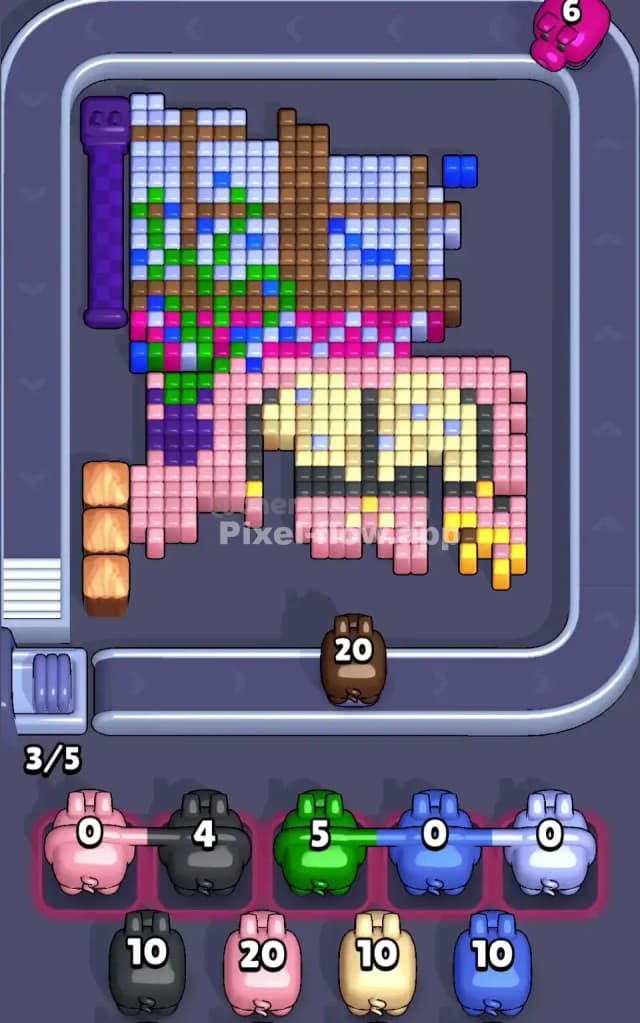
Here's where Pixel Flow Level 374 becomes genuinely challenging: once you've dispatched a pig and it's shot all its ammo, it needs somewhere to go. That "somewhere" is one of five waiting slots at the bottom of the screen. If you fill all five slots with pigs that still have ammo remaining—because they've run out of valid targets to shoot—you're locked into failure. There's no way to recover, no undo button, no second chances. Pixel Flow Level 374's big trap is that the yellow pig carries 10 ammo, and there are almost certainly more than 10 yellow cubes visible on the board at any given moment. But here's the cruel twist: not all of those yellows may be reachable when the yellow pig is active. Some might be buried under orange or gray. If the yellow pig fires at every reachable yellow it can see, spends its ammo, and there are still unreachable yellows deeper in the board, that pig gets parked in a waiting slot with zero ammo and zero purpose. Then you've wasted a slot and haven't made the progress you need.
Awkward Color Pockets and Hidden Dependencies
Pixel Flow Level 374 hides several color patches that don't reveal themselves until you've cleared layers above them. The gray and orange cubes in the middle-to-lower section are particularly sneaky because they blend together visually, making it hard to count exactly how many of each exist. You might think you can confidently clear all orange cubes with your first pig, but there are probably 2–3 hidden orange blocks nestled between the grays that you can't see yet. Similarly, the pink and magenta cubes in the upper-middle zone create a visual wall that obscures what's underneath. Pixel Flow Level 374 forces you to think in layers: which colors are blocking others? Which colors, once cleared, will expose new targets? If you carelessly burn through your blue ammo on surface-level blue cubes, you might miss that there are more blues hiding deeper, and by then your blue pig is gone forever. The level actively punishes impatience and requires you to study the board like a puzzle before you make your first move.
Personal Perspective on the Difficulty
I'll be honest: Pixel Flow Level 374 frustrated me for a solid ten attempts. I kept trying to go for quick wins, tapping the most obvious colors first, only to watch my pigs pile up in the waiting slots with ammo still in reserve. The turning point came when I stopped rushing and actually counted the cubes by color, layer by layer. Once I realized that Pixel Flow 374 was a sequence puzzle disguised as an action game, everything clicked. Knowing that I had exactly 60 ammo total meant every shot had to count, and that mindset shift transformed my approach completely.
Step-by-Step Strategy to Clear Pixel Flow Level 374
Opening: Establishing Control and Keeping Slots Free
Start Pixel Flow Level 374 by taking a full ten seconds—yes, really—to survey the board without firing anything. Identify which colors are most abundant and which are most exposed. Your first move should target a color that (a) has multiple reachable cubes and (b) won't leave orphaned cubes deeper in the board. In Pixel Flow Level 374, I'd recommend not starting with yellow, even though it's the most eye-catching. Yellow is abundant and will likely need two separate clearing sessions (once for surface yellows, once for deep yellows). Instead, begin with blue or cyan, which sit at the very top. Clearing the upper layer does two things: it earns you early momentum by removing 10–15 cubes quickly, and it exposes the magenta and pink zones beneath, which gives you better information for your next pig. Fire the first 20-ammo pig at the blue/cyan zone. Use the entire 20 ammo if possible, and let the spent pig drop into slot one. Your goal is to leave at least three waiting slots empty as you move into the mid-game.
Mid-Game: Layering Your Offense and Exposing Hidden Cubes
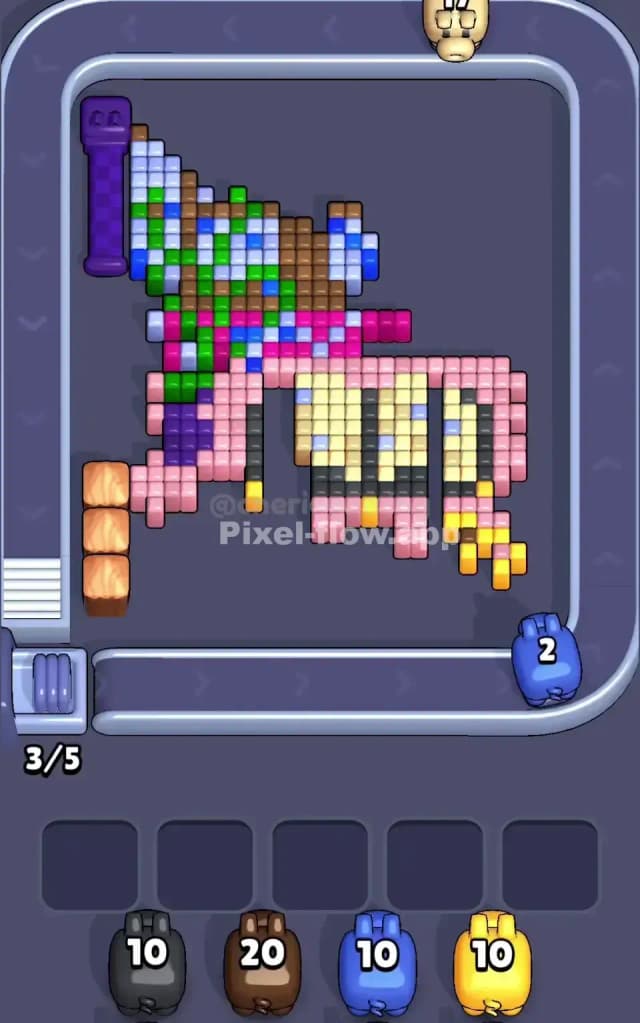
Once the upper blue layer is cracked, Pixel Flow Level 374's middle section becomes visible and navigable. Now send your second 20-ammo pig to handle magenta and pink. These colors are somewhat scattered, so your pig should find plenty of targets without running dry. With two pigs in the waiting slots and three remaining, you've got breathing room. As these mid-layer colors disappear, the orange and gray cubes start to reveal themselves. Here's the critical insight for Pixel Flow Level 374: orange and gray are interleaved. Don't try to clear all orange in one go. Instead, use your first 10-ammo pig to chip away at reachable orange cubes, allowing some gray cubes to absorb damage too if they're nearby. This hybrid approach prevents your orange pig from running out of targets and getting stuck. After this move, two slots are still occupied, three are free. You're in excellent shape. Pause and reassess the board before deploying your final pig.
End-Game: The Final Yellow Pig and Avoiding the Jam
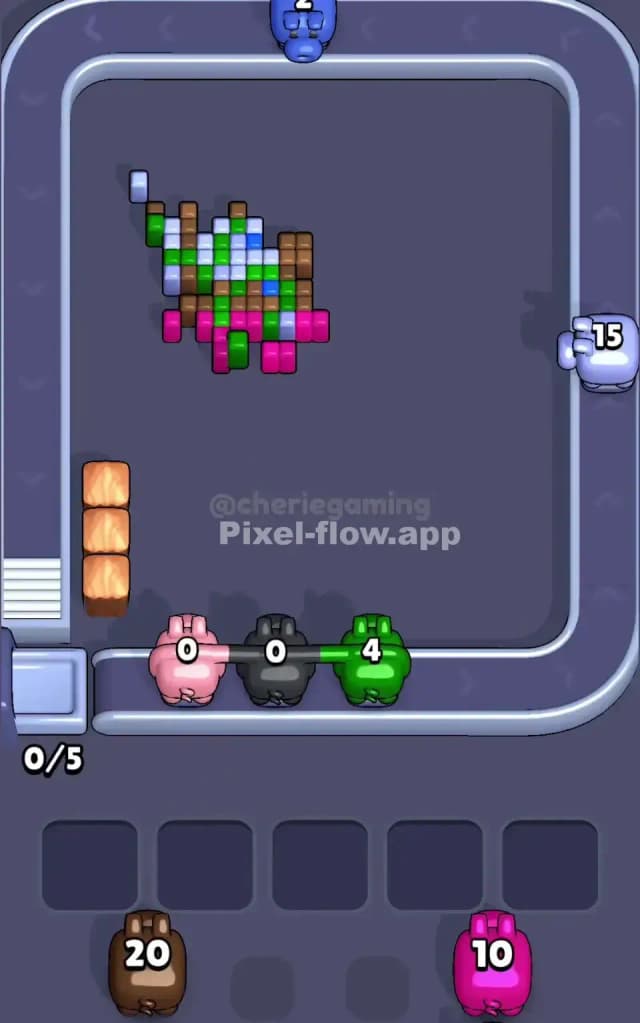
Your last 10-ammo yellow pig is the make-or-break moment in Pixel Flow Level 374. By now, most of the outer layers should be stripped away, leaving mostly yellow and whatever gray remains. Yellow cubes should be fully exposed and numerous. Fire the yellow pig and let it burn through all 10 ammo on yellow targets. If you've sequenced correctly, there should be exactly 10 yellow cubes left, or close to it. Any stragglers that remain after the yellow pig is spent can be mopped up by the waiting slots. But here's the key: if you're not at a clean finish—if the yellow pig still has ammo and there are no more yellows visible—you've made a sequencing error earlier. If that happens, don't panic; reset and try a different opening move. When everything lines up, you'll see all five waiting slots fill with spent pigs, the board will go empty, and Pixel Flow Level 374 will flash victory. That's the feeling you're aiming for.
The Logic Behind This Pixel Flow Level 374 Plan
Why Sequence Matters More Than Reflexes
The core insight behind beating Pixel Flow Level 374 is that pig order is predetermined, but when you activate each pig is your only real choice. You can't change which pig comes next or how much ammo it carries. What you can do is watch the waiting slots like a hawk and decide the exact moment to send each pig down the conveyor. If you're staring at a board with five exposed colors and two waiting slots are full, you must pick the pig that will spend the most ammo and leave the fewest orphans. Pixel Flow Level 374 teaches you to think probabilistically: if I fire this pig now, how many cubes will it realistically hit, and what's the risk it'll get stuck? By planning two or three pigs ahead instead of reacting to each one, you avoid the trap that catches most players. The strategy isn't flashy, but it's effective: methodical layering, color counting, and patience.
Staying Calm and Counting Your Way to Victory
Pressure is real in Pixel Flow Level 374, especially when you see the waiting slots filling up. Your best defense is mental discipline. Before each pig activation, count out loud how many cubes of its color are visible and reachable. If the number is less than the pig's ammo, you know it'll get stuck—don't send it yet. If the number matches or exceeds the ammo, send it with confidence. Watch how the board shifts after each pig, then recalculate for the next one. Pixel Flow Level 374 rewards this deliberate, measured approach far more than it rewards speed. You've got no time limit, so use that to your advantage. Take breaks between moves, step back, and look at the board fresh. The level will seem less overwhelming, and the winning sequence will reveal itself through calm observation rather than frantic tapping. You've got this—trust the process, trust the numbers, and Pixel Flow Level 374 will fall.