Pixel Flow Level 377 Solution | Pixel Flow 377 Walkthrough
How to beat Pixel Flow Level 377: Video solution & walkthrough. The fastest way to pass Pixel Flow 377.
Is this the wrong level layout?🤔
Pixel Flow randomizes levels for different players. Don't worry, just upload a screenshot of your board, and our AI will find the correct video instantly.
Pixel Flow Level 377 Walkthrough
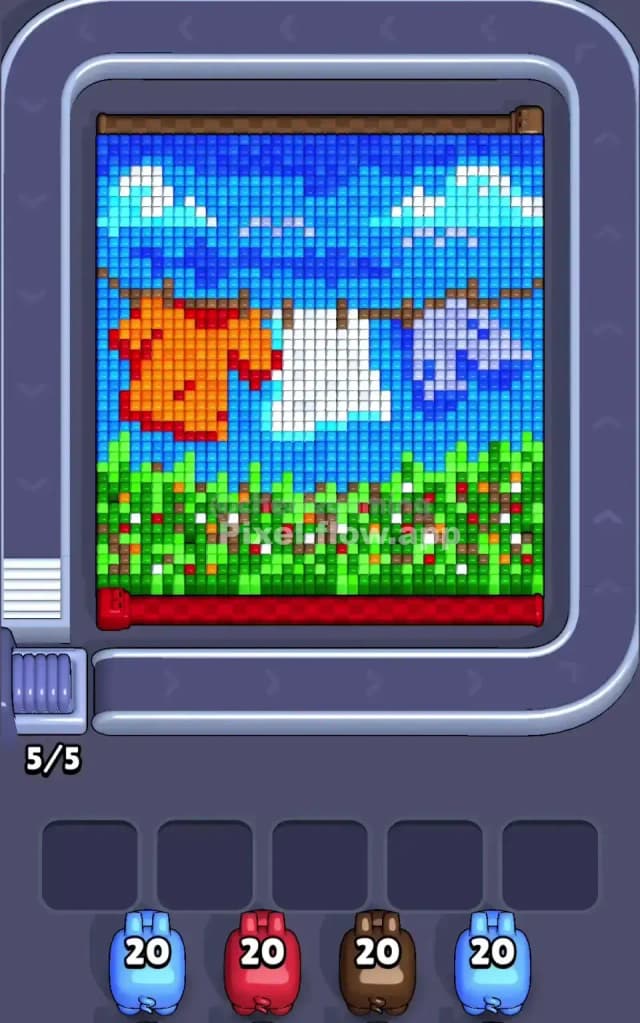
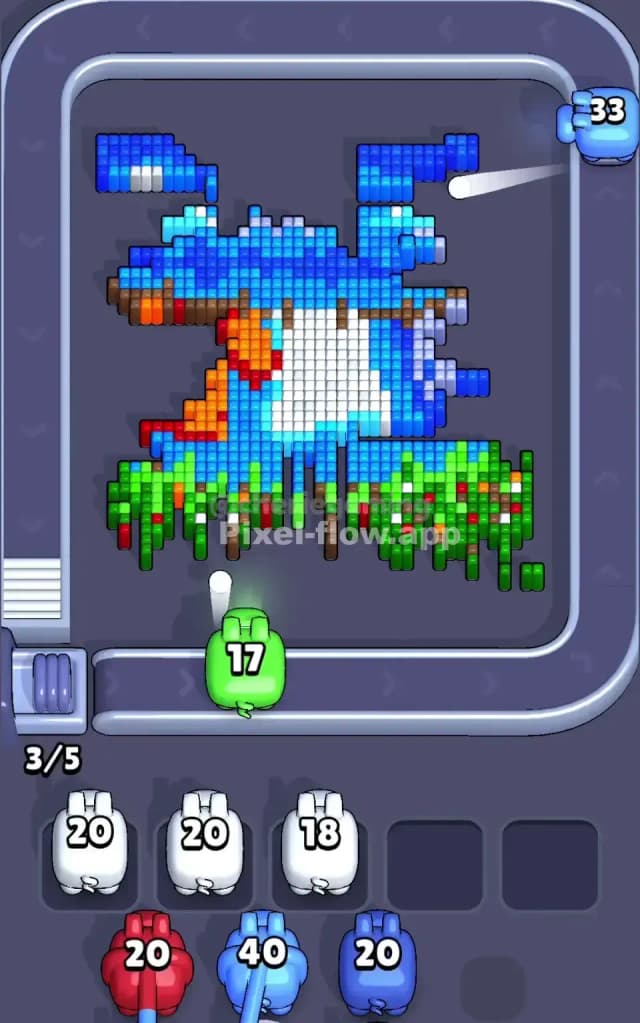
This level depicts a breezy outdoor scene with laundry hanging on a clothesline against a bright blue sky and grassy field. The main colors are split horizontally: a massive block of light blue/sky blue takes up the top half, while a dense block of bright green grass dominates the bottom third. In the middle, you have distinct splashes of orange, white, and purple for the clothes.
To beat Pixel Flow Level 377, you must prioritize clearing the massive background layers (sky and grass) to reveal the "core" pixels hidden underneath. The laundry items act as obstacles. You need to clear around them before you can fully clear behind them. This is a classic "peel the onion" level. Is it hard? No. It is not very hard, but it is tedious because the blue sky and green grass areas are huge and require many high-ammo pigs to clear completely.
Pixel Flow Level 377 Overview
Imagine looking out your backyard window on a summer day. That's this level. The scene features three items drying on a brown clothesline:
- Left: A bright orange T-shirt.
- Center: A stark white towel or shirt.
- Right: A light purple shirt.
The background is simple but heavy on ammo usage. The top is a gradient of blues representing the sky with white clouds. The bottom is a field of green grass speckled with tiny brown and orange flowers.
The board is fairly symmetrical, which usually makes things easier, but watch out for the "connection points." The clothesline (brown pixels) connects the three laundry items. If you don't clear the sky directly above the clothesline early, you might struggle to hit the top edges of the shirts later. The grass layer is also thicker than it looks—it's not just a flat surface; it has depth that will eat up multiple green pigs.
Step by step solution walkthrough for Pixel Flow Level 377
First Color Zone to Erase in Pixel Flow Level 377
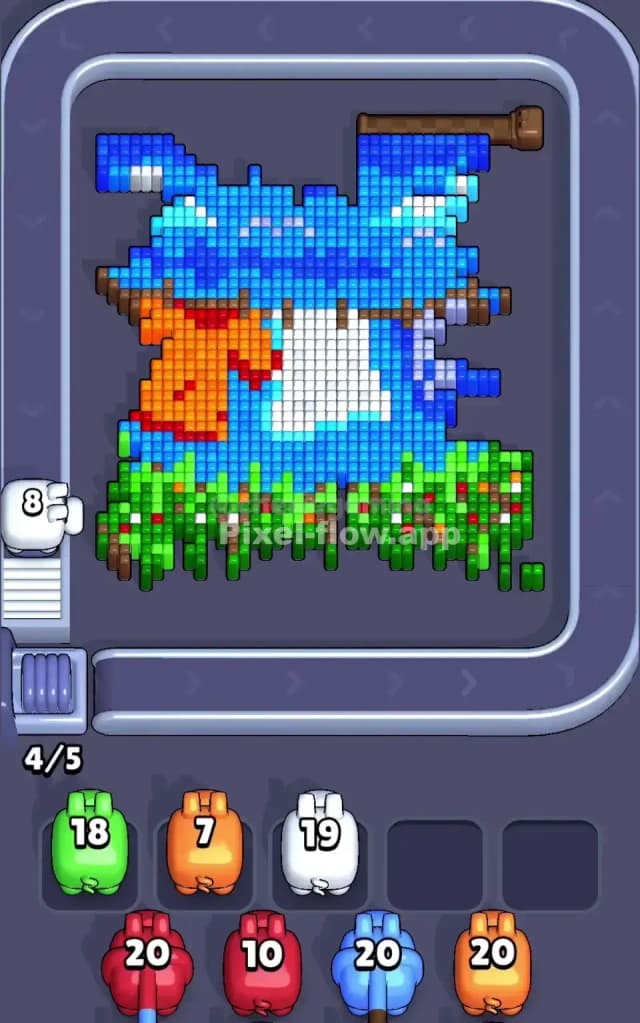
Go for the Green Grass first.
Here is the logic: The bottom third of the screen is almost entirely green. It is the most accessible, uninterrupted block of color. By sending green pigs immediately, you can clear out the bottom foundation of the image. This does two things:
- It frees up the "floor" of the level, making it easier to see what is happening behind the laundry.
- Green pigs often come with high ammo counts (17-20+). Since the grass is a solid block, you won't waste any ammo. Every shot will hit a target.
If you don't have green pigs in your queue, target the Blue Sky. The top half is wide open. Clearing the blue pixels early prevents the board from feeling claustrophobic and lets you clearly see the outline of the clothesline.
How to pass Pixel Flow Level 377 without power ups or boosters
The mid-game is where players get stuck on Pixel Flow Level 377. Once the easy outer layers of grass and sky are gone, you are left with the "floating" laundry items and the brown clothesline.
- Prioritize the Clothesline (Brown): The brown pixels are thin and span horizontally across the middle. They are hard to hit if you have a lot of trash pixels around them. Once the sky is mostly clear, use any brown pig immediately. This separates the top half from the bottom half visually and removes those annoying single-pixel obstacles.
- Focus on the Orange Shirt: The orange shirt on the left is the largest contiguous block of non-background color. It's an easy target. Clearing it often reveals hidden white or blue pixels behind it.
- Don't clog your slots with White Pigs early: The white towel in the middle is deceptive. It looks big, but it's often the last thing you can fully clear because it's sandwiched between the other items. If you hold too many white pigs in your waiting slots while trying to clear the orange or purple, you will lose. Only accept a white pig if you are sure you can dump at least 50% of its ammo immediately.
- Watch the "Flower" Pixels: The grass isn't just green; it has specks of orange and brown (flowers). Don't mistake an orange pig for a "shirt clearing" pig if the only orange pixels left are tiny flowers at the bottom. Check your target lines before releasing.
Last Details You Clean Up in Pixel Flow Level 377
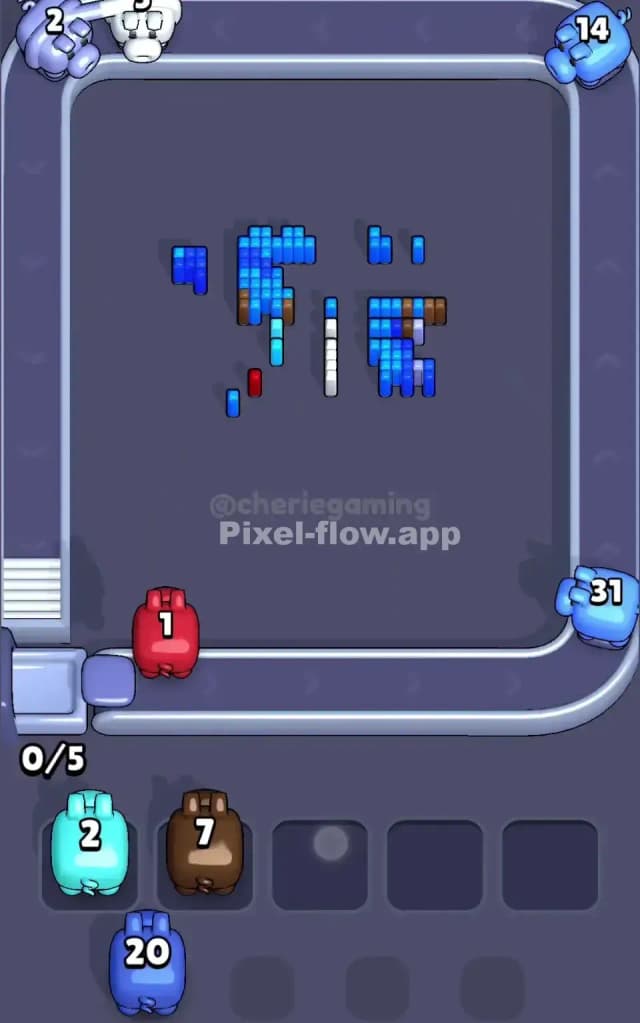
The end of Pixel Flow Level 377 is usually a cleanup of the White Clouds and the Purple Shirt.
Because the clouds are scattered in the top corners, they often get ignored while you focus on the main laundry items. You might end up with one or two white pixels tucked away in the top right corner. Save a small white pig specifically for this.
Finally, the purple shirt on the right often hides the last few blue background pixels. Once that purple block is gone, you might see a single column of blue remaining behind where it hung. Keep a blue pig in reserve (or in a slot) for this exact moment. If you burned all your blue pigs early on the sky, you'll be stuck waiting for a refresh while a single blue column mocks you. Kill the shirt, then kill the shadow behind it.