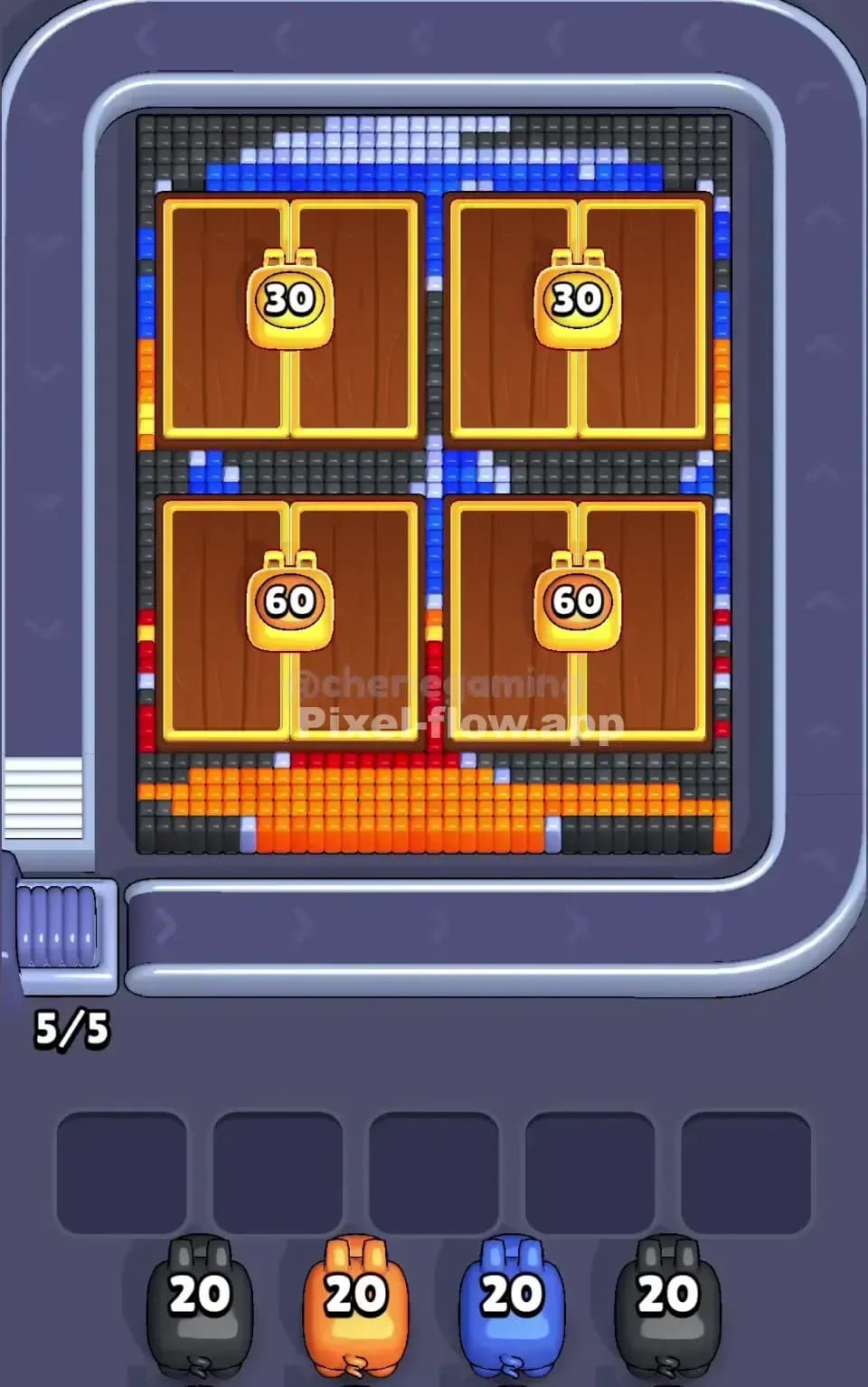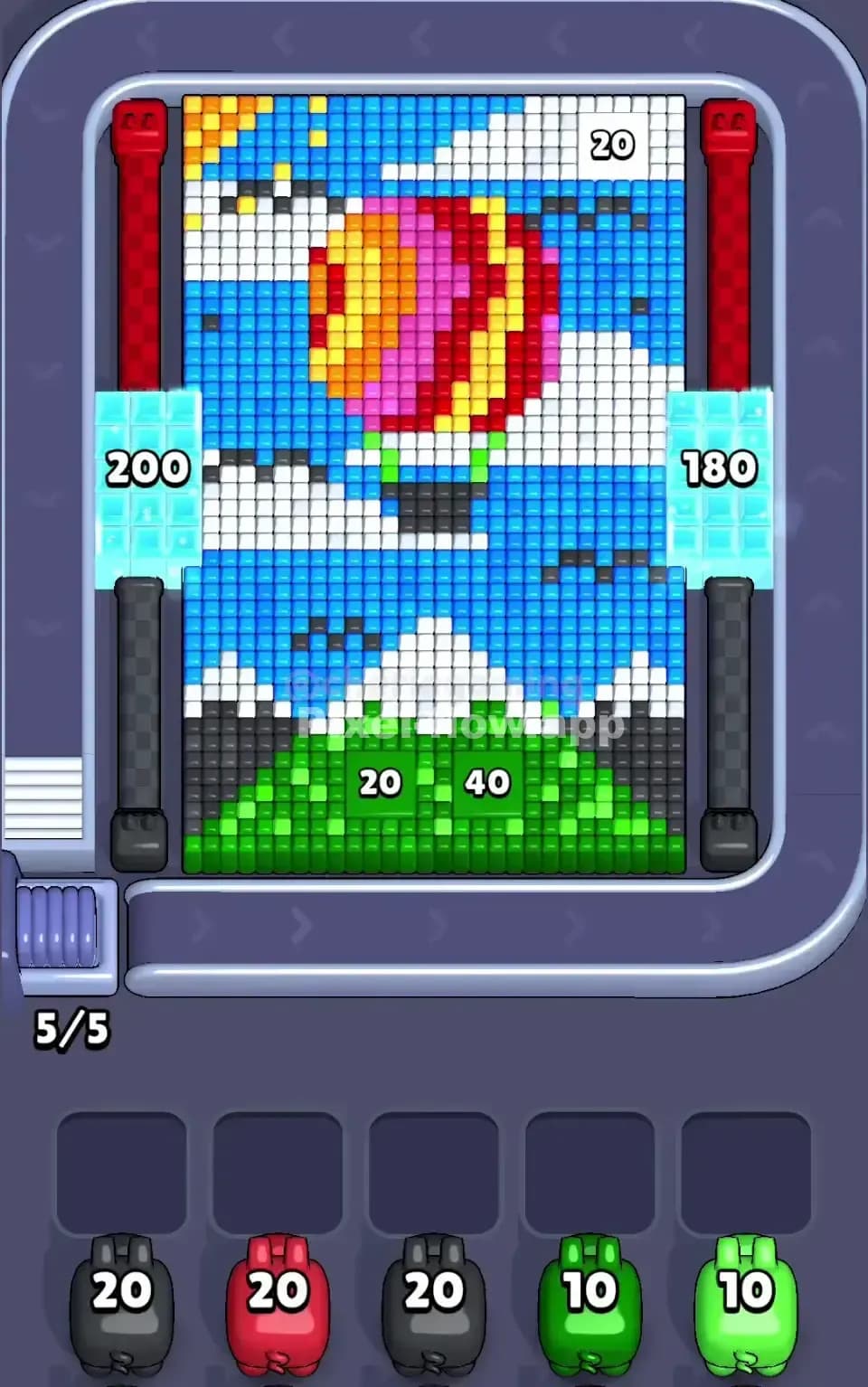
Pixel Flow Level 379 Solution | Pixel Flow 379 Walkthrough
How to beat Pixel Flow Level 379: Video solution & walkthrough. The fastest way to pass Pixel Flow 379.
Is this the wrong level layout?🤔
Pixel Flow randomizes levels for different players. Don't worry, just upload a screenshot of your board, and our AI will find the correct video instantly.
Pixel Flow Level 379 Walkthrough
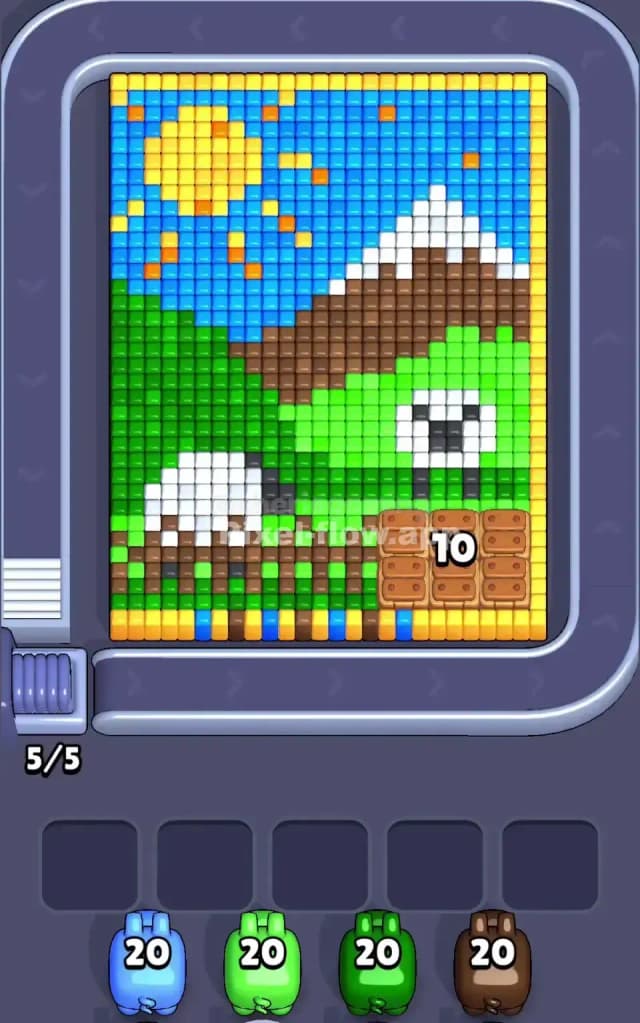
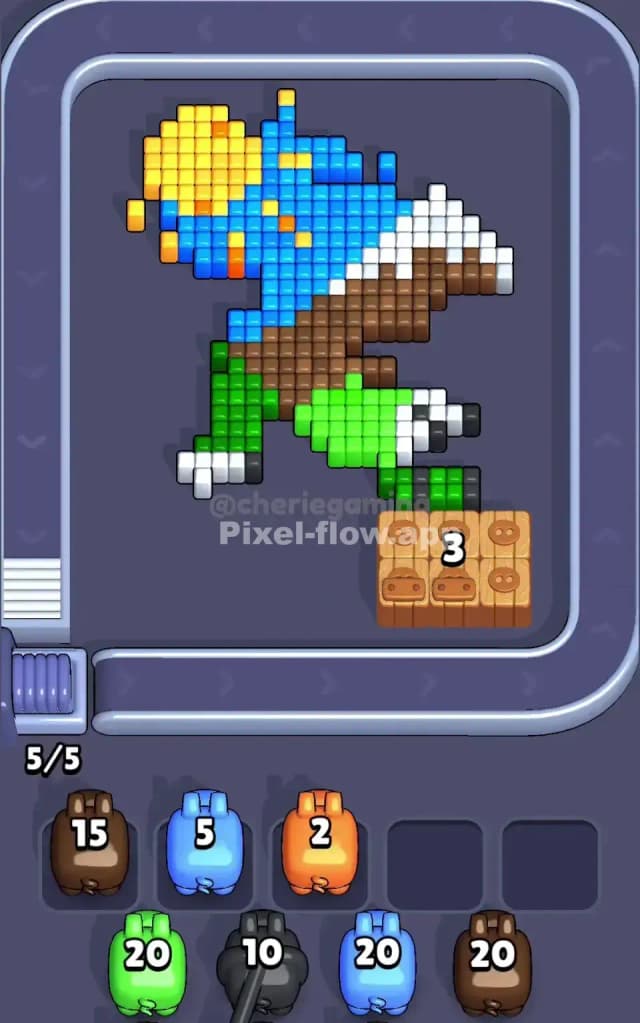
This level is a classic pastoral scene featuring a bright sunny sky, a snow-capped mountain, and some sheep grazing in a field. The board is cleanly divided: the top half is mostly sky and sun, while the bottom is dominated by grass and animals. The major gimmick here is the stack of wooden crates in the bottom right corner marked with a "10." These crates block your shots, protecting the pixels underneath them until you deal with the obstruction.
To beat Pixel Flow Level 379, you need to peel back the layers from top to bottom while ignoring the blocked corner until the very end. You must manage your waiting slots carefully; if you deploy a pig that needs to hit pixels hidden behind those crates, it will sit in your slot and clog up your flow. Because of this bottleneck, I judge this to be a very hard level.
Pixel Flow Level 379 Overview
Imagine a pixelated postcard from a farm. In the top left, you have a massive, chunky yellow sun blazing in a bright blue sky. Moving to the right, a brown mountain rises up with a white snowy peak. The bottom half is a rolling green field populated by two sheep—blobs of white wool with black faces.
The scene feels peaceful, but the board layout is asymmetrical and annoying. The left side is wide open and easy to hit. The right side, however, is guarded. That stack of brown crates in the bottom right corner sits directly on top of the grass and part of a fence. It acts as a shield. You cannot clear the pixels underneath it until the crate is destroyed or the counter reaches zero. This forces you to play "left-heavy," clearing the open side of the board while the right side stays frozen.
Step by step solution walkthrough for Pixel Flow Level 379
First Color Zone to Erase in Pixel Flow Level 379
I recommend starting with the Blue sky. It is the safest play.
Here is why: The blue zone spans the entire top width of the board and is completely unobstructed by the crates at the bottom. If you drop a Blue pig, it has immediate, 100% accurate targets across the top rows. It will shred the sky layer quickly.
If you try to start with Green or Brown, you run a risk. While there is plenty of green on the left, the green pixels on the right are dangerously close to the crate block. If your pig decides to target a pixel near the crate and can't reach it, or if the layer logic gets weird, you waste time. Clear the Sky first. It exposes the background layers of the sun (Yellow) and the mountain tips (White), giving you more valid targets for other colors later.
How to pass Pixel Flow Level 379 without power ups or boosters
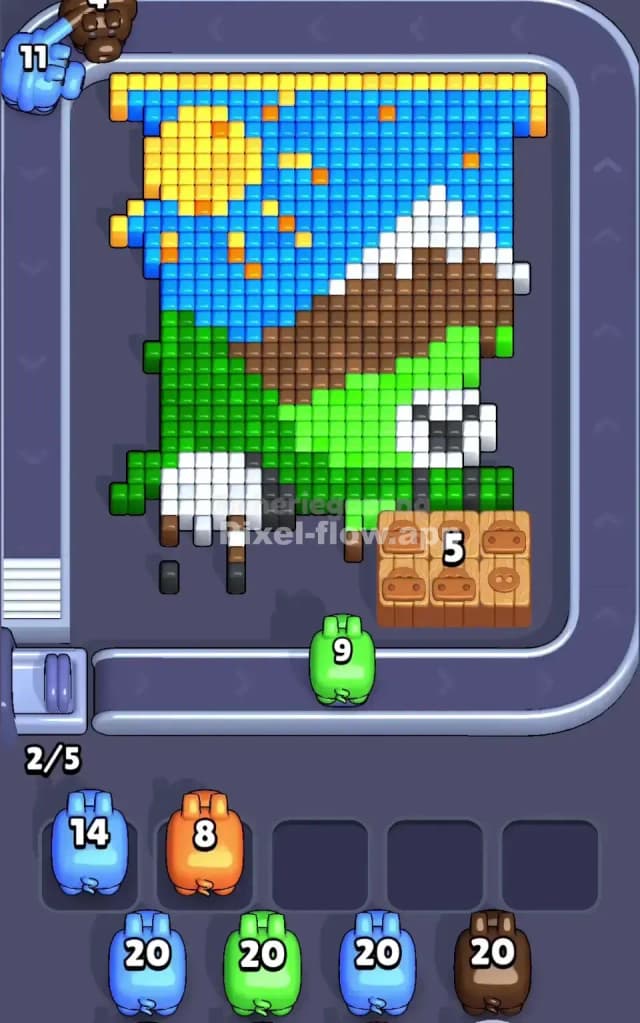
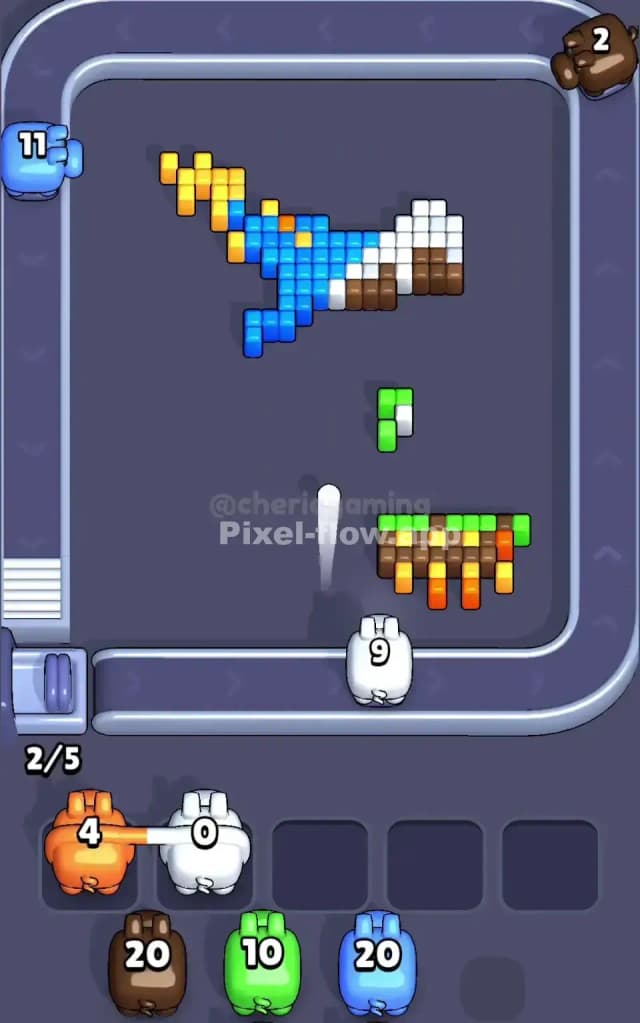
Once the sky is gone, the picture will look half-finished. You'll have the Sun floating in a void and the Mountain standing tall. This is the tricky mid-game phase.
You must switch your focus to the Light Green hills and the Brown mountain, but you have to be tactical.
- Watch the "10" Crate: Do not deploy a color if its only remaining visible pixels are behind or directly adjacent to the crates.
- Focus on the Left Sheep: Use White and Black pigs to clear the sheep on the left side of the screen. This area is safe. Clearing the sheep exposes the deeper grass layers.
- The Mountain: The Brown mountain is high up, well above the crate danger zone. Use your Brown pigs to eat away at the mountain. As you clear the mountain, you usually trigger cascading clears that help whittle down the crate's health or count.
If you see a pig in your queue that matches the color trapped behind the crate (likely Dark Green or Brown fence posts), hold onto it. Let it sit in the queue. Do not drop it into a waiting slot unless you are sure it has a target on the left side of the board.
Last Details You Clean Up in Pixel Flow Level 379
The end game is all about that bottom right corner. By now, the sky, the sun, the left sheep, and the mountain should be gone. The crate stack will finally break or vanish, revealing the patch of Dark Green grass and Brown fence rail it was hiding.
You will likely have a few straggler pixels here:
- The bottom right part of the fence (Brown).
- The grass directly under the fence (Dark Green).
- Maybe the legs of the right-side sheep (Black).
Save your final ammo for this specific spot. Once the crate pops, flood the board with the remaining pigs to scrub that corner clean. Victory depends on not letting that corner clog your slots earlier in the match.