Pixel Flow Level 383 Solution Walkthrough | Pixel Flow 383

How to solve Pixel Flow level 383? Get instant solution for Pixel Flow 383 with our step by step solution & video walkthrough.

Share Pixel Flow Level 383 Guide:
Pixel Flow Level 383 Gameplay
Pixel Flow Level 383 Solution 1
Pixel Flow Level 383 Solution 2
Pixel Flow Level 383 Solution 3

Pixel Flow Level 383 Overview

The Board Layout and Pixel Art Subject

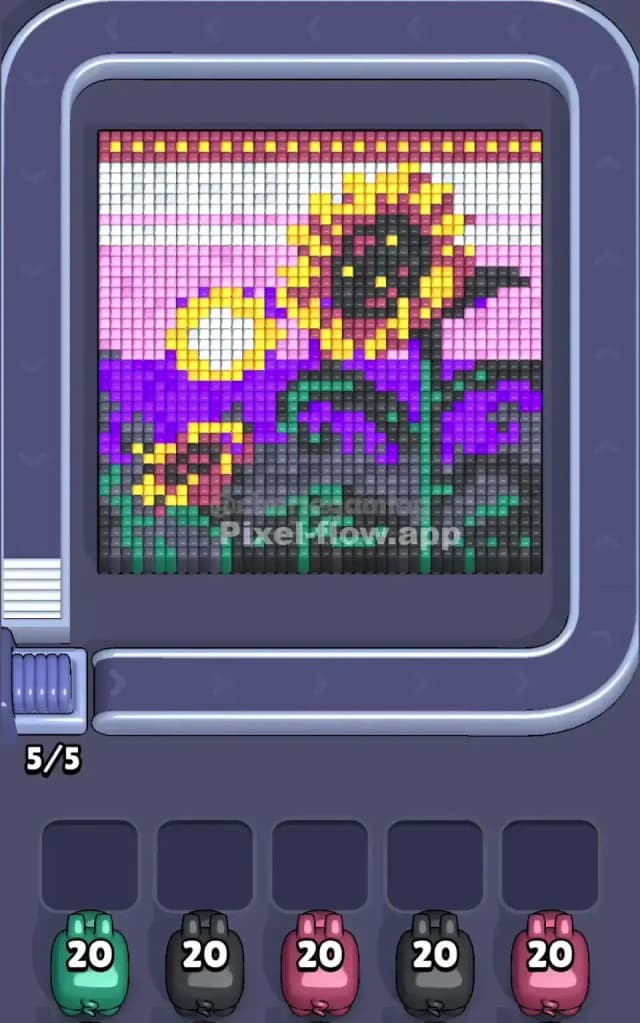
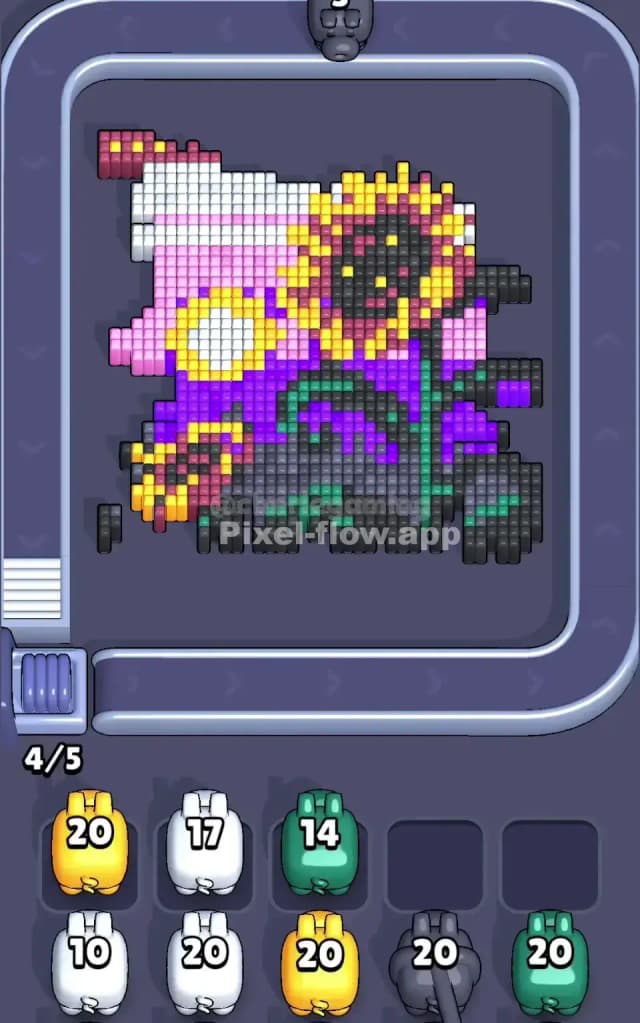
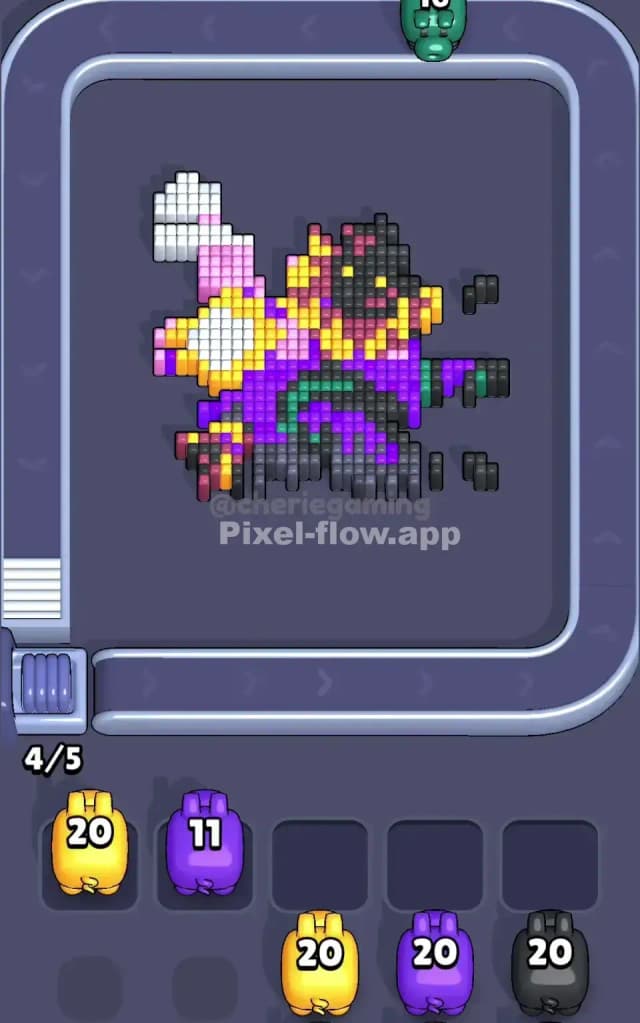
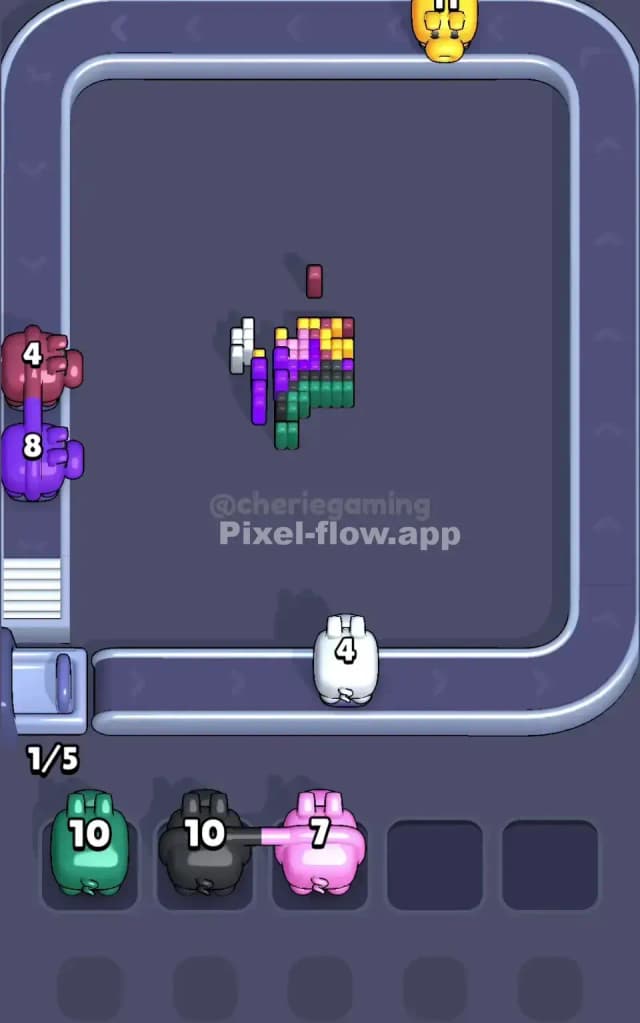
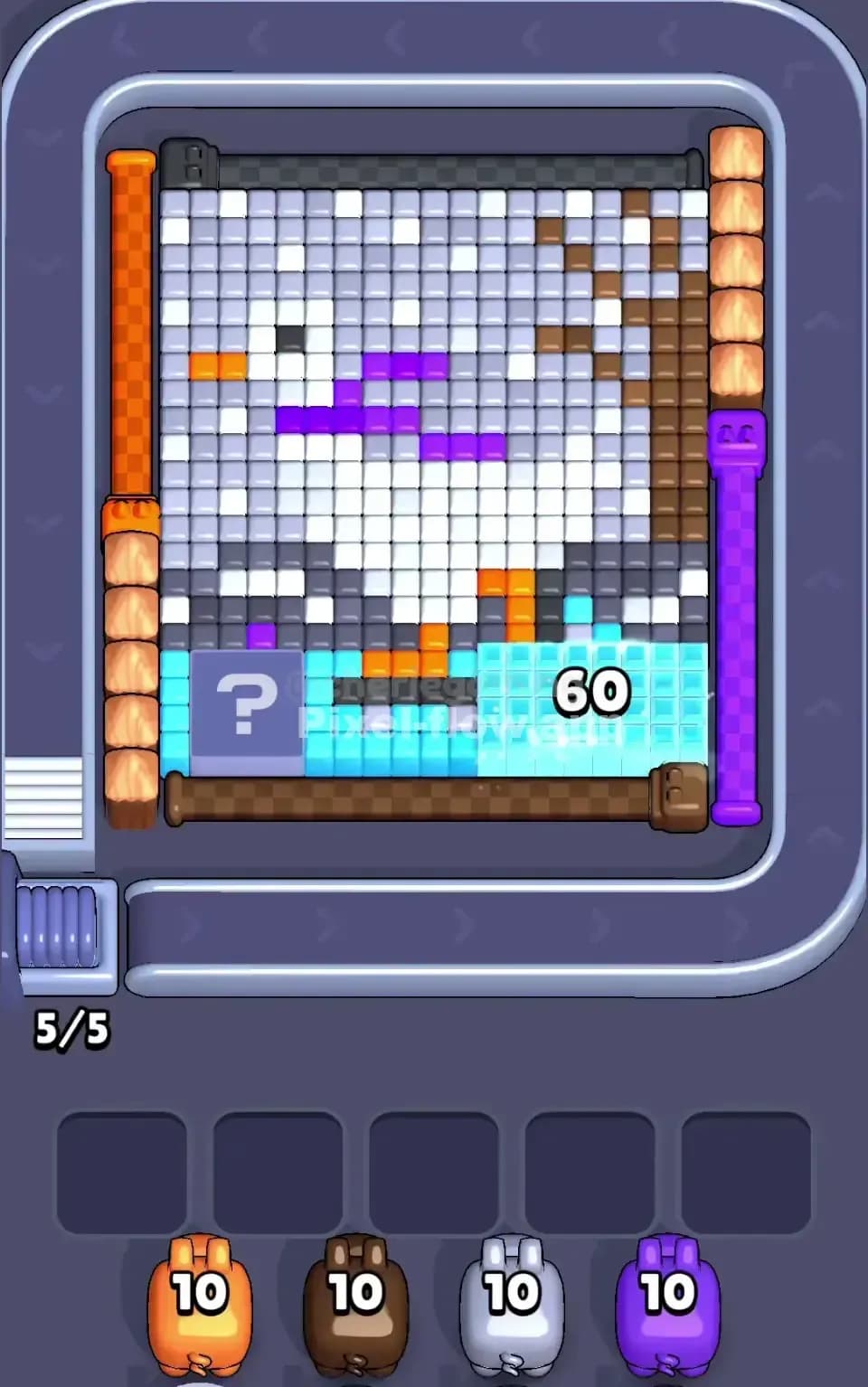
Pixel Flow Level 383 presents a complex, multi-layered voxel puzzle that'll make you pause and think before you dive in. The board is dominated by a sprawling composition with several distinct color regions: a large orange checkerboard pattern running down the left edge, a thick band of brown cubes across the right side, and a striking purple diagonal stripe cutting through the middle of the canvas. Beneath all that sits a dense foundation of white, gray, and cyan cubes that form the core structure you'll need to uncover. There's also a mysterious dark section near the bottom-left that hints at deeper layers waiting to be exposed. The 60-move counter tells you you've got a comfortable budget, but Pixel Flow Level 383 demands precision—you can't afford to waste shots on the wrong pigs or squander ammo on colors that lead nowhere.

The Win Condition and Deterministic Nature

Your goal in Pixel Flow Level 383 is straightforward: clear every single cube from the board by strategically releasing pigs and letting them fire their color-matched voxel shots. You're working with four pigs in queue (orange with 10 ammo, brown with 10 ammo, white with 10 ammo, and purple with 10 ammo), each locked into a fixed order and ammo count. The elegance of Pixel Flow Level 383 lies in the fact that every pig's behavior is completely predictable—they'll always shoot cubes of their color until they run out of ammo, then drop into a waiting slot if there are no more targets. Your job is to orchestrate the pig order so that each one lands its shots cleanly, exposes the next color layer at the right moment, and leaves you with a clear path to victory without jamming up your five waiting slots.


Why Pixel Flow Level 383 Feels So Tricky

The Orange and Purple Bottleneck

The biggest threat to your success in Pixel Flow Level 383 is the sheer volume of orange and purple cubes scattered across the board. Orange dominates the left edge in a dense checkerboard, and purple forms a bold stripe through the center—together, they account for a huge chunk of your total cube count. Here's the tension: if you fire orange too early, you'll expose brown and white beneath it, which might leave you with pigs in the queue whose ammo doesn't align with what's visible. Conversely, if you wait too long to deploy orange, you risk clogging your waiting slots with other pigs that have nowhere to shoot. Pixel Flow Level 383 forces you to thread this needle perfectly, which is why so many players feel stuck after the first three or four moves.

Awkward Color Patches and Hidden Layers

Another nasty surprise in Pixel Flow Level 383 is how the colors don't form neat, separable layers. There's a patch of cyan cubes in the lower-middle section that mingles with orange and gray, creating an awkward situation where you can't simply "clear orange" without thinking about cyan's position. The brown cubes on the right side also mix with white in a checkerboard pattern, meaning you can't safely deploy brown until you've stripped away some of the orange and purple that's blocking your view. The dark section near the bottom-left is even more mysterious—it's partially covered by cyan and white, so you won't fully understand what you're dealing with until you've exposed it. Pixel Flow Level 383 punishes hasty decisions because the board's internal structure isn't immediately obvious.

The Ammo-to-Target Mismatch Threat

When I first tackled Pixel Flow Level 383, I learned the hard way that having 10 ammo doesn't mean you'll find exactly 10 targets. Brown has plenty of visible cubes on the right side, but once you start clearing orange and purple, brown cubes blend into the remaining white and gray in ways that make them hard to spot. Purple's situation is even trickier: there are purple cubes in the queue display (the rightmost pig is purple with 10 ammo), but some of those purple targets are buried deep. If you deploy brown too early and it gets stuck in a waiting slot with ammo still loaded, you've just sacrificed one of your five precious buffer slots. The same goes for white—it's everywhere, but clustered and fragmented. The real "click" moment for Pixel Flow Level 383 came when I realized I needed to plan the first five pig moves before releasing a single shot, mapping out exactly which colors would be visible after each deployment.


Step-by-Step Strategy to Clear Pixel Flow Level 383

Opening: The First Three Pigs

Start Pixel Flow Level 383 by firing orange first. I know it's tempting to jump straight to purple because it looks prominent, but orange is your key to unlocking the board. Deploy orange and let it tear through the checkerboard on the left and the scattered cubes throughout the mid-section. Orange should deplete most or all of its 10 ammo, clearing enough space that you can finally see the deeper layers beneath. After orange finishes, you'll have a much clearer picture of where brown, white, cyan, and the mysterious dark cubes actually sit. Keep at least three waiting slots free during this phase—if orange doesn't fully empty its ammo and drops into a slot, you're still in good shape.

Next, fire brown. By the time brown gets its turn in Pixel Flow Level 383, you should have a clearer view of the right edge and the interior. Brown will target the dense brown cluster on the right side and any brown cubes that orange exposed. Brown's 10 ammo should handle most of its visible targets, but watch carefully for any brown cubes that might be tucked behind white or gray. If brown finishes with ammo remaining, let it drop into a waiting slot—that's perfectly fine at this stage, because you still have slots available and the next pig (white) will have plenty to shoot.

Mid-Game: White, Purple, and Strategic Layering

Once you're through orange and brown in Pixel Flow Level 383, fire white third. White is the "cleanup" pig of the early phase—it targets the white cubes scattered throughout the board, which form a significant portion of the structure. You'll notice white cubes in the upper-left area, mixed throughout the center, and forming the bottom edge. White should have a relatively easy time finding targets because white is ubiquitous. However, keep an eye on white's ammo: if white empties its 10 shots and there are still white cubes hiding beneath cyan or the dark section, white will drop into a waiting slot. That's okay; you've still got two slots left and the final pig (purple) incoming.

Now comes the tricky part in Pixel Flow Level 383: deploy purple. Purple is your heavy hitter and your last guaranteed pig, so you need to be absolutely certain it finds all 10 of its targets. By the time purple's turn arrives, orange, brown, and white should have exposed most of the center stripe where purple lives. Purple's cubes form a diagonal band and some scattered bits on the right edge (including the rightmost pig in the queue display). Purple should charge through and deplete its full 10 ammo. If purple gets stuck and needs to drop into a waiting slot, you'll still have one or two buffer slots remaining, which gives you room to maneuver if something unexpected happens.

End-Game: Cleaning Up the Cyan and Dark Sections

If you've executed Pixel Flow Level 383 cleanly, you should now have cyan and possibly some residual dark cubes remaining. Cyan is concentrated in the lower-middle area and should be relatively manageable—it's a secondary color that doesn't have its own dedicated pig in your starting queue, so you're probably looking at mopping up whatever's left over. The dark section beneath is the final mystery: once cyan clears, those dark cubes will become visible. Because the dark section was largely hidden, it's possible you still have ammo remaining from one of your parked pigs in the waiting slots. If an orange, brown, white, or purple pig dropped into a buffer slot early with ammo intact, that pig will fire again when you trigger it, targeting any remaining cubes of its color. Use these "second chances" to finish off dark cubes that match your waiting pigs' colors. The goal in Pixel Flow Level 383 is to empty the board and empty all your waiting slots simultaneously, with zero moves left on the clock (or as close as possible).


The Logic Behind This Pixel Flow Level 383 Plan

Exploiting Pig Order and Ammo Alignment

The strategy I've outlined for Pixel Flow Level 383 works because it respects the game's deterministic rules. Every pig has a fixed ammo count, and every pig will fire in the order they're queued. By deploying orange, brown, white, and purple in that sequence, you're essentially creating a "cascade" effect: each pig exposes the layer beneath it, making the next pig's targets visible and obvious. This isn't random or chaotic—it's a logical unfolding of the board state. Orange clears the checkerboard and surface noise, brown handles the right-side cluster, white moops up the structural filler, and purple finishes the diagonal and side patches. The beauty of Pixel Flow Level 383 is that if you trust this sequence, you'll rarely encounter a situation where a pig has ammo but no targets. The ammo counts (10, 10, 10, 10) are calibrated to match the cube counts in each color zone, assuming you clear them in the right order.

Staying Calm and Planning Two Pigs Ahead

Winning Pixel Flow Level 383 requires you to slow down and think rather than react. Before you fire a single shot, spend thirty seconds scanning the board and counting rough cube clusters by color. Ask yourself: "If I fire orange first, which color will become visible next? Does that color have its own pig coming up, or will it need to wait?" Keep your eyes on the waiting slots—once three or four are filled, you're skating on thin ice. If you see a pig about to drop into a slot, mentally note whether it still has ammo and whether future pigs will be able to spend it. By planning two pigs ahead (thinking about both the pig you're about to deploy and the one after it), you'll avoid the trap of deploying a pig that sounds good right now but creates a traffic jam thirty seconds later. Pixel Flow Level 383 is less about reflexes and more about foresight.

The move count of 60 is generous—it's telling you that you have plenty of time if you're efficient, but no room for mindless mistakes. Every shot counts, and every pig placement matters. Good luck clearing Pixel Flow Level 383, and remember: take your time, trust the sequence, and keep those waiting slots flowing.